
October is Arts and Humanities Month nationally and in Little Rock. Americans for the Arts has identified a different arts topic to be posted for each day in the month. Next up is a topic called simply “Inspired by….”
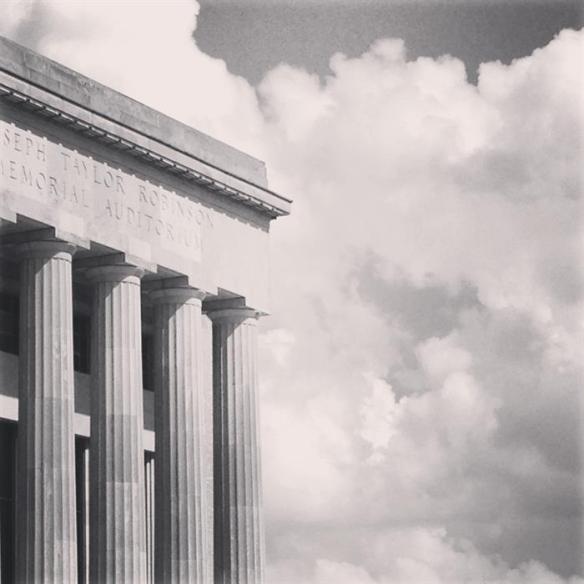
Many things, events, people, and occurrences have inspired me. But the architecture, history, and artistic & historic events from Joseph Taylor Robinson Memorial Auditorium (now known as Robinson Center performance Hall) may collectively have inspired me the most.
As a performance venue, it has played host to Marian Anderson, Alfred Lunt and Lynn Fontanne, Mikhail Baryshnikov, Duke Ellington, Louis Armstrong, Donna Axum, Elvis Presley, Glen Campbell, Carol Channing, Yo Yo Man, Bernadette Peters, Zuill Bailey, well the list could go on and on for multiple paragraphs.
It has been the resident home of the Arkansas Symphony Orchestra since 1973 and hosted Ballet Arkansas’ The Nutrcracker for 40 years. Touring Broadway shows and concerts come through on a regular basis.
It was the site of a memorial service for Daisy Bates. It was NOT the site of a Duke Ellington concert in 1961 because administrators refused to desegregate the facility. (He had previously played there in the 1950s). After a lawsuit, the national tour of Hair played there. Presidents Truman, Eisenhower, Clinton, and Bush 43 spoke at the building. Buzz Aldrin held court discussing his trip to the moon and his desire to see the US go to Mars. George Takei held the audience in rapt silence as he detailed his experiences as a child in a Japanese internment camp in Arkansas. Elvis’ first recorded version of “Hound Dog” took place in this building. Jesse Belvin’s final concert was in this building.
The architecture by Lawson Delony and George Wittenberg working with Eugene Stern combines neoclassical elements with Art Deco elements and good, old fashioned New Deal sensibilities. In 2014, Ennead Architects working with Polk Stanley Wilcox led a top to bottom reinvention of the space which brought the performance spaces into the 21st Century while also restoring much of the original 1940 decor which had been decimated in an early 1970s renovation.
This building was the culmination of an effort which started in the 1890s to create a municipal auditorium for Little Rock. Many Little Rock leaders worked on that effort for decades. Once New Deal funding made the project possible, the drama did not end. Construction funds ran out and Mayor J. V. Satterfield, Jr., had to use innovative financing methods to get the building completed. This February Robinson will turn 80.
While Senator Robinson had nothing to do with the project, as the state’s senior U.S. Senator, he certainly was involved in giving approval to it. After his death in the summer of 1937 it was announced in December 1937 the building would be named in his memory. Nearly 80 years later it still stands as a testament not only to him, but to the tens of thousands of performers who have been on its stage.
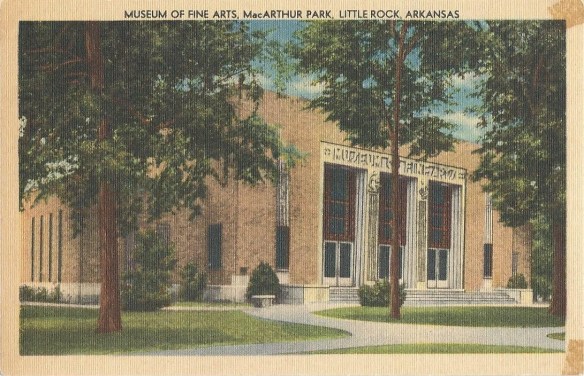 On Tuesday, October 5, 1937, the Fine Arts Club of Little Rock held its first meeting in the new Museum of Fine Arts. But it was not a typical meeting. It was an Open House and Dedication for the new building.
 In October 1939, it looked as if Robinson Auditorium would never open. The construction had run out of money. But in an effort to generate a little revenue and give the public the chance to see the building, a few events were booked in the lower level.
 The first four people to enter the building as paying guests were Mr. and Mrs. Alfred Wilheim, Frances Frazier and Bill Christian. Reports estimated 3,200 people attended and danced to the music of Jan Garber and His Orchestra.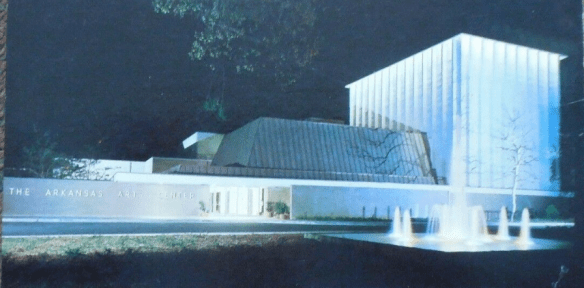

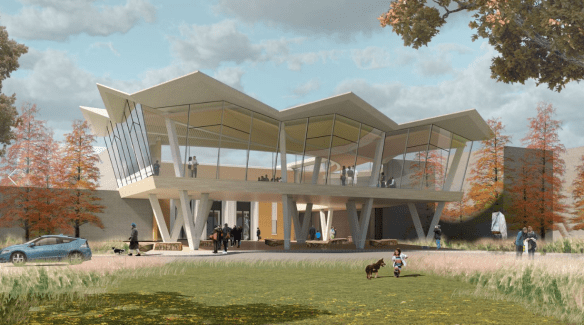


 On a very warm Friday, September 30, 2011, the Clinton Presidential Park Bridge was dedicated. This completed the eastern loop of the Arkansas River Trail as well as created another feature in Clinton Presidential Park.
 Little Rock Culture Vulture