
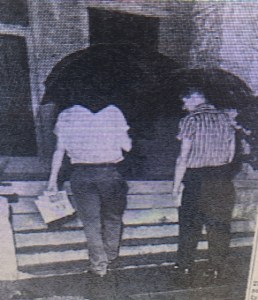
A rainy Sunday afternoon did not stop STOP canvassers on May 24, 1959.
Sunday, May 24, 1959, was election eve for the Recall Campaign. As such, the election figured into some Sunday morning sermons. Reverend M. L. Moser Jr. spoke from the pulpit of his church and described the issue of segregation as Biblical. As many had before him, and would after him, he used the story of Noah’s three sons as a way to justify segregation of the races.
(Supposedly one of the sons was the father of the white race, one the father of the African American race, and one the father of the Asian race. In this narrative, no explanation is given for other variations such as Native Americans and other indigenous people or persons from the sub-continent of India. Also excluded is the likely race of everyone in the story – those who live in the Middle East.)
At Trinity Episcopal Cathedral, Dean Charles A. Higgins prayed for the schools but did not tell his parishioners how to vote. Rev. Aubrey G. Walton at First Methodist Church spoke about the schools needing to be free from politics and pressure groups. (Though Rev. Walton did later appear that evening on a STOP sponsored TV show.)
Embattled School Board president Ed McKinley refused requests from the media and others to divulge his plans for the future of the Little Rock School District. Earlier he had stated he had an idea on how the schools could be reopened and segregated, but still remain in compliance with the courts. Across the river, segregationists were planning a rally in North Little Rock to head off any plans for future integration on the north side. Congressman Alford had already agreed to speak at this rally.
In paid time on TV, Governor Faubus spoke at length in a criticism of the Arkansas Gazette. He called the fired teachers pawns in a larger game. He noted in his remarks that he did not expect to sway any votes by this point.
Not to be outdone, STOP was on all three TV stations. Sometimes the program was aired on more than one station simultaneously. In an appearance sponsored by STOP, William S. Mitchell noted that May 24 was coincidentally Children’s Day. He noted that never before in Little Rock history had so many people volunteered for a cause as those who had worked on STOP and with STOP. The Women’s Emergency Committee, PTA Council, labor unions, and numerous other organizations had come together to raise money, knock on doors, and otherwise get the word out.
Finally, it was all over but the voting. Nineteen days of outrage, exasperation, and hyperbole was coming to an end. When dawn broke, it would be election day.
 While later known more as a punchline due to personal fallibilities, for decades Wilbur D. Mills was one of the most powerful men in the world. As the chair of the House Ways and Means Committee from 1958 to 1975, he was the architect not only of an overhaul of the tax code, but also determined ways to finance Medicare, Medicaid, and many other federal programs of the Eisenhower, Kennedy, Johnson, Nixon and Ford years.
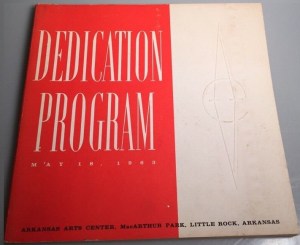 On Saturday, May 18, 1963, amidst fanfare and fans of the arts, the Arkansas Arts Center officially opened its doors. (This was thirty-five years and three days after the Fine Arts Club had opened the first permanent art gallery in Arkansas in the Pulaski County Courthouse).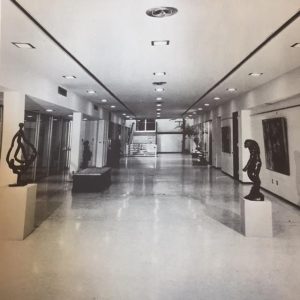
 On May 17, 1954, the U.S. Supreme Court issued its ruling in Brown vs. Board of Education of Topeka.
 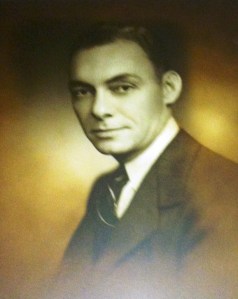 On May 14, 1902, future Little Rock Mayor John Vines Satterfield, Jr. was born in Marion. He grew up in Little Rock and Earle. J.V. was a star quarterback for the Earle football team and is featured in a painting of that team by respected painter Carroll Cloar.
 Last week, ACANSA announced the highlights for for the Sixth Annual ACANSA Arts Festival of the South. The 2019 edition has a slightly different format taking place on three successive weekends in September.
 Following the success of meetings at Forest Park Elementary and the Little Rock Chamber of Commerce, as well as other school, PTA, and civic meetings, the effort was underway to recall the three segregationist members of the Little Rock School Board.
 Little Rock Culture Vulture