Creative Class 2016: Jason Willey

cc16-willeyJason Willey often has people howling with laughter when he performs with Red Octopus Theater.

As one of the movers and shakers behind this troupe for the past decade or so, Jason often writes and produces and directs for this topical sketch comedy troupe in addition to acting in it.  He can also usually be found cranking out press releases for it and doing whatever needs to be done.

In addition to appearing with Red Octopus, Jason has been a fixture on the local theatre scene. He has appeared in many productions with The Weekend Theater as well as on other local stages.

Jason has also appeared in numerous Arkansas-based films over the past few years.  He has lent his talents on many film crews as well.  He is an avid supporter of local film festivals as well.

In short, if it comes to an aspect of the acting profession in Arkansas, Jason has probably been involved.

Creative Class 2016: Phillip Rex Huddleston

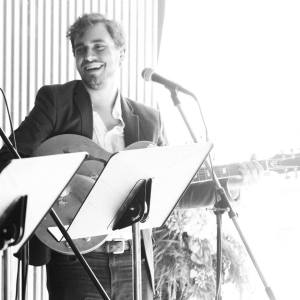
cc16-huddlestonRenaissance Man is probably the best way to describe Phillip Rex Huddleston.  He is a writer, a musician, a composer, an artist, a teacher, an arts promoter, and so many other things.

By day, he is the Visual Art Specialist for eStem Middle School.  There, he teaches his students a variety of styles of art.  His own visual art style varies from realistic sketches, to caricatures, to comic strips and witty distillations of epic literature into a few frames.

As a guitarist and pianist he can often be found performing with his many talented friends throughout Little Rock’s live music scene in formal settings and on front porches.  As a composer, he has contributed compositions and performances to a variety of films made in Arkansas. His most recent effort was in Mark Thiedeman’s White Nights, which premiered in August.

A graduate of the University of Central Arkansas with a BA in Philosophy and an MA in English Literature, he was an Adjunct Instructor at UCA in the English Department before beginning his stint at eStem.  While at UCA, he also worked with the Arkansas Shakespeare Theatre.

For several years, he and friends and roommates would host regular Garland House Shows, named for the street on which their house was located. These combined visual art exhibits with live music in celebrations of the art they created and the friends who created and appreciated it.

Creative Class 2016: Matt DeCample

cc16-decampleWhether a propensity for improv made Matt DeCample an excellent newsman and later PR professional, or whether his work in those occupations helped hone his improv skills is probably a chicken or the egg question.  But what is not up for debate is that Matt has elevated the visibility of and appreciation for improv as a form of entertainment.  He was a founder of Improv Little Rock and appears with The Joint Venture, the only weekly improv comedy show in Arkansas.

He also uses his love of film and PR acumen to promote film festivals in Arkansas.  Currently he is helping promote the 25th Hot Springs Documentary Film Festival this month.  An avid fan of movies, he has long been a supporter and promoter of films made in Arkansas, films made by Arkansans, and film festivals located in Arkansas.  He is also a fan of live music, so can often be found frequenting local music haunts in LR.

While he may have had to curtail his activities a bit this year due to health concerns, (his blog discussing his fight against liver cancer is likely to have you in tears…from laughter but is also full of information and honest insight), he is by no means stopping. In fact, he has recently taken the stage with stand-up comedy.


Creative Class 2016: Dave Anderson

cc16-andersonDave Anderson is an award-winning cross media storyteller best known for his work behind the lens. His photography and films have been exhibited, published, screened and lauded across the planet.  Anderson’s work has been profiled on numerous media outlets ranging from Good Morning America to The New York Times to The New Yorker, where Vince Aletti called Anderson’s photography “as clear-eyed and unsentimental as it is soulful and sympathetic.” NPR praised his films, saying they are, “in short…awesome.”

In addition to being a photographer and filmmaker, he currently serves as Winrock International’s Director of Communications and Public Affairs.  Previously Anderson worked as an adviser in the Bill Clinton White House and later oversaw MTV’s road-tripping multimedia election extravaganza, the Choose or Lose Bus, which traveled to 47 states and helped register over 250,000 young people to vote. He has spearheaded content and strategic media efforts for the White House, the U.S. Department of State, Viacom, New York University and Heifer International, among others. Anderson has shot and directed over 50 short films. His photographs can be found in the collections of museums and galleries in the United States and abroad, and have been exhibited across Europe, Asia and the U.S. His editorial photography has been featured in the pages of EsquireSmithsonian and Time among other publications. His long-running video series SoLost (for the Oxford American) won a National Magazine Award, and he has been recognized by the National Association of Black Journalists.

Little Rock Look Back: Ben Piazza

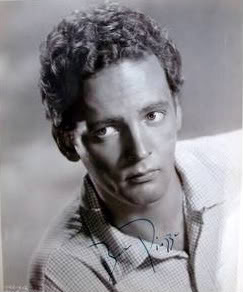
Ben compositeActor-director-playwright-author Ben Piazza was born on July 30, 1933, in Little Rock.  Piazza graduated from Little Rock High School in 1951 as valedictorian. He also had starred in the senior play that year (The Man Who Came to Dinner) and edited the literary magazine.

Keeping the Tiger as his mascot, Piazza attended college at Princeton University.  While there he continued acting, including an appearance in a Theatre Intime production of Othello.  Following his 1955 graduation, he moved to New York City and studied at the Actor’s Studio.

Piazza was an understudy in the 1956 play, Too Late the Phalarope at the Belasco Theatre.  In February 1958, he starred in Winesburg, Ohio sharing the National (now Nederlander) Theatre stage with James Whitmore, Dorothy McGuire, and Leon Ames. Other cast members included Claudia McNeil (who originated the part of Lena in A Raisin in the Sun) and Sandra Church (who originated the part of Gypsy Rose Lee in Gypsy).

In April 1959, Piazza starred in Kataki at the Ambassador Theatre. This two actor play also featured Sessue Hayakawa, who played a Japanese soldier who spoke only his native language.  Therefore, Piazza’s part was largely a very lengthy monologue.  For his performance, Piazza received one of the 1959 Theatre World Awards.

As the 1960s dawned, Piazza joined a small cadre of actors who had achieved status on Broadway who then also returned to acting Off Broadway.  Colleen Dewhurst, George C. Scott, and James Earl Jones were others in this select group who helped establish Off Broadway as an entity in itself, instead of being just a farm team for Broadway.

piazzaPiazza started the 1960s on Broadway starring at the Eugene O’Neill Theatre in A Second String with Shirley Booth, Jean-Pierre Aumont, Nina Foch, Cathleen Nesbitt, and Carrie Nye.   Following that, he started his association with Edward Albee by appearing as the title character in The American Dream.  That play opened at the York Playhouse in January 1961.  Later that year, he appeared in Albee’s The Zoo Story opposite original cast member William Daniels at the East End Theatre.


Also in 1961 Piazza starred in several plays during a South American tour sponsored by the American Repertory Company.  He played Christopher Isherwood in I Am a Cameraand Chance Wayne in Sweet Bird of Youth.  In 1962, he starred in a series of plays at the Cherry Lane Theatre.  Piazza returned to Broadway to star along with Jane Fonda and Dyan Cannon in The Fun Couple at the Lyceum Theatre. This play had a troubled rehearsal period, which was documented in a short film about Jane Fonda.

Ben Piazza stayed on Broadway and returned to Albee in February 1963.  He took over the role of Nick in the original run of Who’s Afraid of Virginia Woolf? when original actor George Grizzard left to play Hamlet at the Guthrie Theatre.  (He had participated in earlier readings of the play prior to it being mounted on Broadway.)

This play was at the Billy Rose Theatre, which marked a return for Piazza. He had acted at this theatre when it was the National while appearing in Winesburg. Piazza played Nick for the remainder of the run and acted with Uta Hagen, Arthur Hill, fellow Arkansan Melinda Dillon, Eileen Fulton, Nancy Kelly, Mercedes McCambridge, Rochelle Oliver and Sheppard Strudwick.
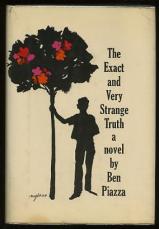
Exact and Very Strange cover

During the run of this show, Piazza’s novel The Exact and Very Strange Truth was published.  It is a fictionalized account of his growing up in Little Rock during the 1930s and 1940s.  The book is filled with references to Centennial Elementary, Westside Junior High, Central High School, Immanuel Baptist Church and various stores and shops in Little Rock during that era.  The Piazza Shoe Store, located on Main Street, was called Gallanti’s.

Following Virginia Woolf, he starred in The Zoo Story at the Cherry Lane Theatre in 1965.  In August of 1967, his play The Sunday Agreement premiered at LaMaMa.  This was Piazza’s first playwright output to be professionally staged.

As Sunday Agreement was opening, Piazza was in rehearsal for his next Broadway opening. He appeared with Alfred Drake in The Song of the Grasshopper in September 1967.  In 1968, he returned to Albee and starred in The Death of Bessie Smith and The Zoo Story in repertory on Broadway at the Billy Rose Theatre.

Later that season, in March 1969, a double bill of his one-acts: Lime Green/Khaki Blue opened at the Provincetown Playhouse.  It was directed by future Tony nominee Peter Masterson and starred Louise Lasser, Robert Walden (who starred in the 2013 production of Death of a Salesman at Arkansas Repertory Theatre), Clinton Allmon and Dolores Dorn-Heft, to whom Piazza was married at the time.

Throughout the 1960s and early 1970s, Piazza toured in many plays nationally and internationally. He also appeared in major regional theatres as an actor and a director.  During this time period he was in productions of Bus Stop, Who’s Afraid of Virginia Woolf?, You Know I Can’t Hear You when the Water’s Running  and Savages.  In 1970, he starred as Stanley Kowalski in a production of A Streetcar Named Desire in New Orleans.  As the 1970s progressed, he turned his focus to television and movies.
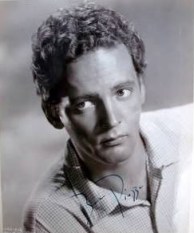
BDP early

Piazza’s film debut was in a 1959 Canadian film called The Dangerous Age. That same year, his Hollywood film debut came opposite Gary Cooper, Karl Malden, Maria Schell and George C. Scott in The Hanging Tree.  Though he received positive reviews for his performances, Piazza chose to return to New York and perform in stage and TV productions.

Throughout the 1950s and 1960s, he appeared in a number of TV shows including Studio One, Kraft Theatre, Zane Grey Theatre, The Naked City and Dick Powell Theatre.  He had a recurring role during one season of Ben Casey and appeared on the soap opera Love of Life.

In the 1970s, he starred in the films Tell Me That You Love Me, Junie Moon; The Candy Snatchers and I Never Promised You a Rose Garden.  He also starred as the City Councilman who recruits Walter Matthau to coach a baseball team inThe Bad News Bears.

Among his numerous TV appearances in the 1970s were The Waltons, Mannix, Switch, Barnaby Jones, Gunsmoke, Mod Squad and Lou Grant (where he was reunited with Walden).

BDP final

In the 1980s, he appeared in The Blues Brothers, The Rockford Files, Barney Miller, Hart to Hart, Family Ties, The Winds of War, Dallas, Dynasty, Too Close for Comfort, The A Team, Saint Elsewhere, Santa Barbara, The Facts of Life, Mr. Belvedere, Moonlighting and Matlock.

Piazza’s final big screen appearance was in the 1991 film Guilty by Suspicion.  He played studio head Darryl Zanuck in this Robert DeNiro-Annette Bening tale of Hollywood during the Red scare.

Ben Piazza died on September 7, 1991.

War Hero Cinema: Gary Cooper and Gregory Peck as LR natives

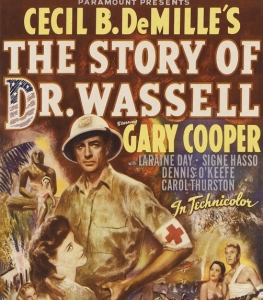
Dr. WassellThe exploits of two Little Rock natives during World War II have both been turned into Hollywood movies.  One was released during World War II and starred Gary Cooper as Dr. Corydon Wassell. The other was released in the 1970s and starred Gregory Peck as General Douglas MacArthur.

Born in Little Rock on July 4, 1884, Corydon McAlmont Wassell (called “Cory”) was born to Albert and Leona Wassell. A grandson of Little Rock Mayor John Wassell, he graduated from what is now UAMS in 1909. In 1911, he married Mary Irene Yarnell, with whom he would have four children.  In 1914, the couple volunteered to be Episcopal missionaries in China.  He served there until 1927. Following Mary’s death and his remarriage, he and new wife Madeline Edith Day Wassell returned to Arkansas in 1927.

Dr. Wassell resumed his medical practice. Given his experience with malaria in China, he proved to be an asset fighting malaria among Civilian Conservation Corps members in Arkansas. He was subsequently called to active duty in the Navy in 1936 and stationed in Key West.

After the outbreak of World War II, he was stationed in Indonesia. In early 1942, he refused to abandon his patients after the Japanese started invading Indonesia. Instead, he was able to evacuate a dozen severely wounded men over 150 miles to get to a ship. It took ten days for the ship to get to Australia, during which time it was attacked numerous times.  His official Navy Cross citation notes that he disregarded personal safety while caring for others.

He became an instant international hero. During the early days of the war, his heroism was one of the few bright spots. James Hilton wrote a biography of him; President Roosevelt praised him in a fireside chat. James Hilton wrote of Dr. Wassell in a book which was then adapted by Cecil B. DeMille into the 1944 movie starring Cooper.  Originally Arkansan Alan Ladd was wanted to play Cooper’s sidekick, but Ladd was pressed into military service and unavailable.

Thirty-three years after The Story of Dr. Wassell was released, MacArthur was brought to the screen by Universal Pictures.  It was their attempt to capitalize on the success of the movie Patton, including sharing some of the same members of the production team.

macarthur-gregory-peck-1977-everettTold entirely in flashback, it stars Gregory Peck as the fabled World War II general who was born in Little Rock. It focuses primarily on events in 1942 during the war, his dismissal by Truman in 1952, and his famous address to West Point in 1962.

Peck initially did not care for the subject or the script, but eventually stated that he grew to admire the challenges MacArthur faced.  Peck later called it one of his favorites roles, if not one of his favorite movies.

Producer Frank McCarthy, who worked on both Patton and MacArthur once said of Patton and MacArthur: “Both were complex men but General MacArthur was complex on a much broader scale. Patton had no ambition except to be a soldier and to command a field army. He was strictly command.”

Most of the film was shot on the backlot at the movie studio, which impacted the quality of the film.  The production budget simply would not allow for overseas location filming.

The film was released in July 1977.  One of the premieres was held in Little Rock. Peck attended a reception in the Arsenal Building where MacArthur was born. Now the home to the MacArthur Museum of Arkansas Military History, in 1977 the building still housed the Museum of Science and Natural History (now the Museum of Discovery).  Since MacArthur only spent a few hours in Little Rock as an adult, it is possible that Peck spent more time in the building than the General did.

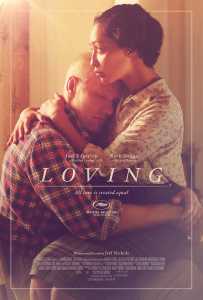
Arkansas Heritage Month – Cannes Critics Loving Jeff Nichols’ LOVING Film

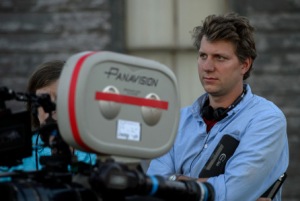
NicholsThe early reviews are starting to come in from the Cannes screening of Little Rock native (and Central High grad) Jeff Nichols’ latest opus LOVING.

The film screened on Monday in Cannes.  Oscar buzz has already started for the film, Nichols and his performers.

Here is what some of the critics had to say:

Vox says that the film’s: “subdued tone delivers a wealth of emotions in the film’s final minutes.”  It also declares “Loving is a period piece that feels eerily relevant today.”

IndieWire notes:

“In an impressive body of work accumulated over the past 10 years, Jeff Nichols has emerged as a skilled filmmaker who relishes in the poetry of Southern life. It was only a matter of time of time before he explored its history. With “Loving,” the director moves from the combination of otherworldly lyricism and genre storytelling in “Take Shelter,” “Mud” and “Midnight Special” toward more conventional drama — namely, the backstory of Loving v. Virginia, the 1967 Civil Rights case that overturned laws against interracial marriage. — by exploring the intimate details behind its legacy.”

And also credits “Nichols’ elegant screenplay, which pares down the events so that the emphasis is taken off the legal proceedings and avoids any overdone speechifying.”

loving-teaser-posterVariety calls the movie “a film of utmost sensitivity” and declares, “Though it will inevitably factor heavily in year-end Oscar conversations, Nichols’ film is seemingly less interested in its own glory than in representing what’s right.”

The Hollywood Reporter opines: “writer-director Jeff Nichols takes an appealingly low-key approach to an important American civil rights story in Loving.”  It also praises his “way of underplaying racism, even as he firmly notes its constant presence in daily life and makes it the overriding subject of his film, is refreshing as well as rare in the realm of socially conscious cinema,indicating a respect for his audience’s intelligence and a desire not to hit viewers over the head.”

THR concludes its review by stating “Nichols has delivered a timely drama that, unlike most films of its type, doesn’t want to clobber you with its importance. It just tells its story in a modest, even discreet way that well suits the nature of its principal characters.”

The Daily Beast notes “An anguished, but low-key, meditation on race—American’s ongoing obsession—Loving is the most high-minded sort of Oscar bait.”

In The Telegraph, Robbie Collins declares that Nichols “calmly dodges every expectation you have for the genre. Loving is short on grandstanding and hindsight, long on tenderness and honour, and sticks carefully to the historical record.”  He also says that, “The film’s determination not to overcook any single scene means the tears it eventually draws feel honestly come by.”

While Cannes tries to focus on art and not awards or commercialism, the positive early reviews for Loving, coupled with Focus Features’ November release date, should poise the film for awards season in late 2016 and early 2017. More importantly, this will continue to raise the profile of Jeff Nichols, who continues to make Little Rock proud.