Flag Day 2019

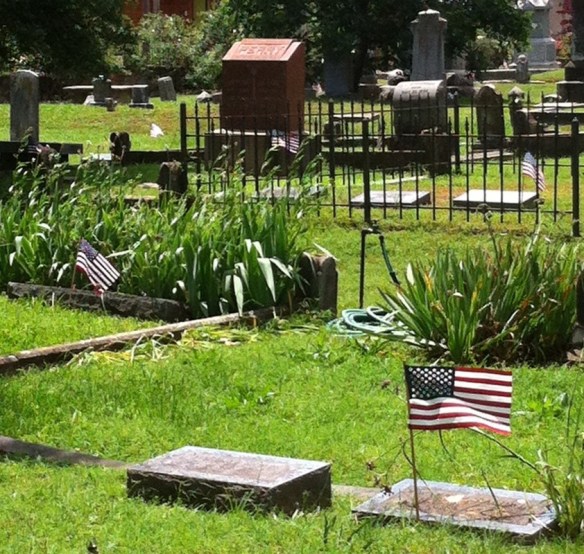
Flags mark graves at Mount Holly Cemetery

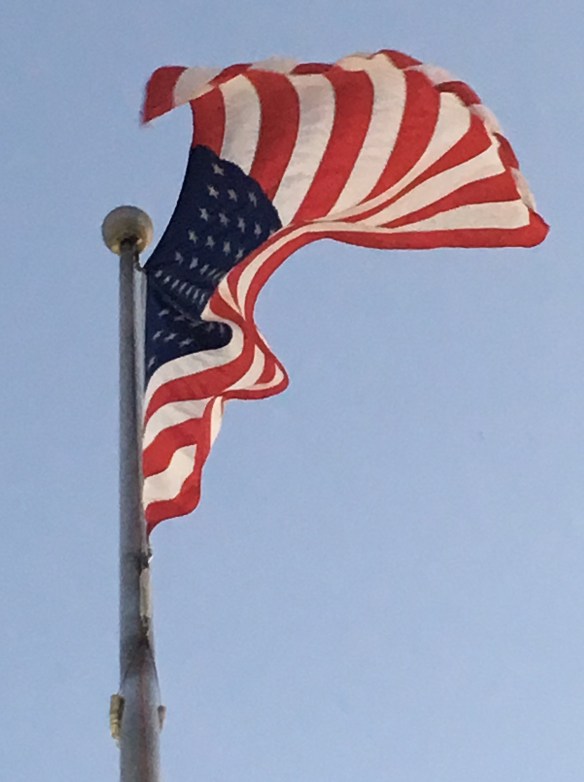
Flag at the Clinton Presidential Center

Flag at Robinson Center

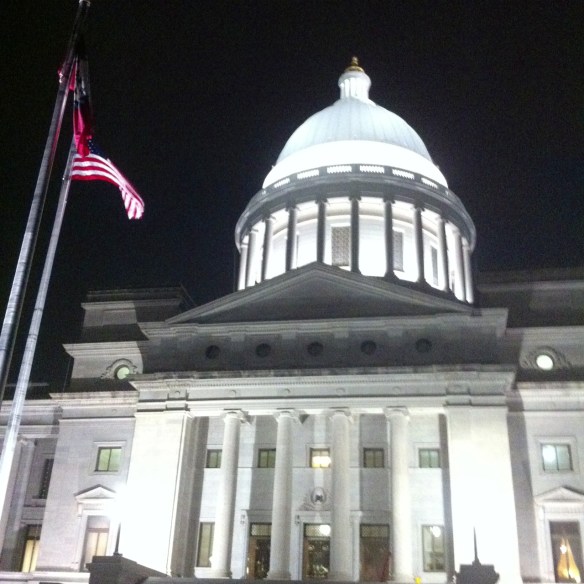
The red, white and blue stand out against the night sky and limestone of the Arkansas State Capitol.

The flag on the Capital Hotel balcony at Christmastime

CALS ONE OF 78 ORGANIZATIONS NATIONWIDE TO RECEIVE AN NEA BIG READ GRANT

Image result for nea big readThe Central Arkansas Library System (CALS) is a recipient of a $14,900 grant to host the NEA Big Read: CALS. An initiative of the National Endowment for the Arts in partnership with Arts Midwest, the NEA Big Read broadens our understanding of our world, our communities, and ourselves through the joy of sharing a good book.

CALS is one of 78 nonprofit organizations to receive an NEA Big Read grant to host a community reading. The NEA Big Read: CALS events will take place between March 16 and April 26, 2020.

“We are very excited to host Tim O’Brien and to explore his classic The Things They Carried throughout the library system and beyond,” said Mark Christ, CALS adult programming coordinator. “As an institution, we strive to improve literacy and encourage the exchange of ideas, social engagement, and cultural expression. We hope that additional partners will join with us before the NEA Big Read begins next March.”

The NEA Big Read showcases a diverse range of titles that reflect many different voices and perspectives, aiming to inspire conversation and discovery. The main feature of the initiative is a grants program, managed by Arts Midwest, which annually supports dynamic community reading programs, each designed around a single National Endowment for the Arts Big Read selection.

“It is inspiring to see both large and small communities across the nation come together around a book,” said National Endowment for the Arts Acting Chairman Mary Anne Carter. “We always look forward to the unique ways cities, towns, and organizations, like Central Arkansas Library System, explore these stories and encourage community participation in a wide variety of events.”

Planned events for the NEA Big Read: CALS include a lecture by Tim O’Brien, author of The Things They Carried; book clubs, readings and exhibits at CALS branch libraries; an Operation Song event at the MacArthur Museum of Arkansas Military History in Little Rock; a film and documentary series, panel discussions and dramatic readings at the CALS Ron Robinson Theater; readings and discussions of The Things They Carried by private book clubs in the area; Vietnam veteran oral history recordings by the Butler Center for Arkansas Studies staff in the CALS Bobby L. Roberts Library of Arkansas History & Art; performances by the Writeous Poets from Little Rock Central High School; special displays and discussions during the Welcome Home Vietnam Veterans event at the Jacksonville Museum of Military History, and other events.

Partners include the Arkansas Department of Veterans Affairs, Arkansas State Library, MacArthur Museum of Arkansas Military History, Little Rock Central High School, public radio station KUAR, the Jacksonville Museum of Military History, the Arkansas Educational Television Network, Central Arkansas Literacy Council, professors from Hendrix College, Arkansas State University and the University of Arkansas at Little Rock, and others.

Since 2006, the National Endowment for the Arts has funded more than 1,400 NEA Big Read programs, providing more than $20 million to organizations nationwide. In addition, Big Read activities have reached every Congressional district in the country. Over the past twelve years, grantees have leveraged more than $50 million in local funding to support their NEA Big Read programs. More than 5.7 million Americans have attended an NEA Big Read event, approximately 91,000 volunteers have participated at the local level, and 39,000 community organizations have partnered to make NEA Big Read activities possible. For more information about the NEA Big Read, please visit arts.gov/neabigread.

For more information about NEA Big Read: CALS, contact Mark Christ at (501) 918-3069 or mchrist@cals.org.

Little Rock Look Back: First Little Rock High School graduation

The Sherman School at 7th and Sherman Streets, which contained Little Rock’s first high school. It is now the site of the Kramer School apartments.

On June 13, 1873, the first Little Rock High School graduation ceremony took place. Newspaper accounts do not indicate how many were in the class.

The ceremony took place at the Centenary Methodist Episcopal Church, North, which was located on Main Street in the 400 block.  (Part of the Little Rock Technology Park is now on a portion of that site.)

Miss Eva K. Smith, the class Salutatorian was unable to attend and bring opening remarks due to illness.  However, several other speeches by students were given including “Earth’s Battlefields” by Mattie A. Chrisman, “Arkansas, Her Past and Future” by Marcus Mentzer, “Turning the Leaves” by Mary W. Smith, and “Water” by Ella Wood.  Mr. Mentzer also delivered a valedictory address which was praised by those in attendance, according to newspaper accounts.

School Board President Frederick Kramer also made remarks as did the school’s principal, Mr. Helm, and General A. W. Bishop.  Mr. Kramer also passed out the diplomas.

While education opportunities had been offered in Little Rock since the 1820s, these had been with private tutors or private academies.  A one room public school was created in the 1850s and governed by the City of Little Rock. No records exist of anyone graduating from that school.  In February 1869, the Arkansas General Assembly authorized the creation of school districts in cities as separate entities.  Little Rock voters approved the establishment of a Little Rock public school system.  Classes began in the autumn of 1869.

The Sherman School was originally built as one of Little Rock’s elementary schools but also contained the first high school classes.  In 1885, high school classes moved to 14th and Scott Streets to the Scott Street School. In 1890, they moved to the Peabody School at Capitol and Gaines Streets where they were located until the new Little Rock High School opened in 1905. This building was constructed on the site of the old Scott Street School. Today it is the East Side lofts. It served as Little Rock High School until 1927 when what is now Little Rock Central High School opened.

In the 1860s and 1870s, African American students studied at Capitol Hill and Union schools, which both contained elementary and secondary classes. By the early 1900s, Gibbs High School had opened as a new elementary and secondary school for African American students. It would serve as the City’s African American high school until Dunbar opened in 1929.

70 Years Ago Today – War Memorial Park dedicated by President Truman with foreign affairs address

Though President Truman was in Little Rock for a military reunion, he did conduct some official business while here.  In his Presidential role, he spoke at the dedication of War Memorial Park on June 11, 1949.

(It is sometimes erroneously reported that he dedicated the stadium.  That took place in September 1948, at a Razorback game with former Razorback player and future Lt. Governor Maurice “Footsie” Britt delivering the keynote.)

President Truman’s address took place inside War Memorial Stadium at 2:30 p.m..   It was not a brief dedicatory speech, but instead was a lengthy treatise on foreign affairs.  The address was carried live on nationwide radio (though some radio networks opted to broadcast it later).  The text of his address can be found here.

The stadium was by no means full.  A major reason for that was that many thousand individuals had turned out to witness a parade downtown in which President Truman marched along side Governor Sid McMath.  The parade was in conjunction with the military reunion.  Given the June heat in Arkansas (in which parade spectators had been standing for several hours) and the difficulty of getting from the parade route to the stadium, most (if not all) parade spectators opted for skipping the presidential address.

Before the parade, President Truman (who was still riding high from his upset victory in the 1948 election) was asked by a local reporter if he would run in 1952. He refused to answer stating that the national media would think he had planted the question with a local member of the press.

Prior to the name War Memorial Park, the land had been known as Fair Park.  It was a former location of the State Fair.  In the 1930s, it had briefly been known as Overman Park in honor of then-Mayor R. E. Overman.  The City Council had named it for him as a tribute to his work on a variety of projects. When he displeased them, they reversed their decision and renamed it to Fair Park.

The CALS Ron Robinson Theater $2 Terror Tuesdays continue tonight with WHITE ZOMBIE

Image of a film poster with a dark green background. Large eyes overlook two hands clasped together. The text at the top reads "With these zombie eyes, he rendered her powerless". In the middle is the title, White Zombie. Below is written "With these zombie hands he made her perform his every desire!".$2 Terror Tuesdays continue tonight (6/11) at the CALS Ron Robinson Theater with 1932’s WHITE ZOMBIE.
White Zombie is a 1932 American horror film independently produced by Edward Halperin and directed by Victor Halperin.

The screenplay by Garnett Weston, based on The Magic Island by William Seabrook, is about a young woman’s transformation into a zombie at the hands of an evil voodoo master.

The film stars Bela Lugosi as a zombie master, as well as Robert Frazer, Madge Bellamy, and John Harron.  It is considered the first feature-length zombie film.

The showing starts at 7pm.  Cost is $2.

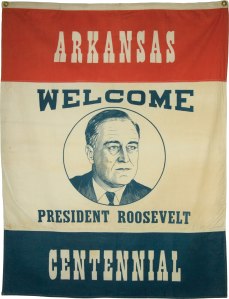
FDR in ARK for State Centennial

On June 10, 1936, President Franklin D. Roosevelt visited Little Rock as part of a day-long series of appearances in conjunction with the Arkansas Centennial celebration.  (The actual statehood dates is June 15.)

His day started in Memphis before he journeyed by train to Hot Springs. After events there that morning and lunch at Couchwood (his longtime friend Harvey Couch was chairman of the Centennial celebration).  He then traveled to Rockport and Malvern for appearances before arriving in Little Rock.  He made his remarks at the State Fairgrounds in a temporary structure called “Centennial Stadium.”

The street he traveled to get to the fairgrounds had been renamed Roosevelt Road in February 1935 in anticipation that he would visit Little Rock in 1936 as part of the state centennial and would likely use that route.  The street was officially named Franklin D. Roosevelt Road.  But given the unwieldy street signs that would be required to bear that name, the ordinance was amended to note that the signs would bear the name “Roosevelt Road.”

Following his remarks, which officially kicked off the six month Arkansas Centennial celebration, he retired to Senator Joseph T. Robinson’s house on South Broadway.  He dined with the Robinsons in the house before departing with the Senator at 8:45 that evening.  The Presidential entourage then journeyed to Texas for the next day.

70 Years Ago Today – Truman in LR

Outside of his capacity as President of the United States, Harry S. Truman visited Little Rock on June 10, 1949, for the annual reunion of the 35th Division, his World War I unit.  He was joined on this trip by members of Arkansas’ congressional delegation and his sister.

Upon arriving in Little Rock, President Truman gave brief remarks at a welcome reception inside Robinson Auditorium.  He also spoke at a reception at the Hotel Marion and following a ball given at Robinson Auditorium.

In all of his June 10th remarks, President Truman spoke of the hospitality he always enjoyed in Little Rock. He discussed visits he had made over the years, including a stay at the Hotel Marion while in Arkansas campaigning for Senator Hattie Caraway.

At the ball, he commented on how, as a Baptist, he had not learned how to dance.  He then joked that however he had picked up other habits which were perhaps not in keeping with his Baptist faith.

At one event, President Truman asked all in attendance to shake hands with their neighbors as a way to shake his hand by proxy.  He explained that on inauguration day, he had shaken over 25,000 hands. Given the fact that he signed 600 documents a day, regardless whether he was in Washington or not, he felt he could not keep up with shaking hands all day.

As he concluded the day, he previewed that he would be giving a national address the next day while in Little Rock.  In his usual, self-deprecating way, Truman remarked “…if you want to hear the President of the United States you had better come out to the stadium tomorrow, and I will tell you something that will be good for your souls.”

The texts of all of his remarks while in Little Rock can be found here.