Arkansas Chamber Singers highlight Old State House Museum’s December 2nd Friday Art Night

Image may contain: 4 people, indoor

The Old State House Museum has something festive lined up for December’s #2ndFridayLR – the Arkansas Chamber Singers will be here to share holiday joy!

The group will perform at 7 p.m. during Second Friday Art Night and then have additional concerts at 3 p.m. Saturday, Dec. 14, and 3 p.m. Sunday, Dec. 15.

This season brings a heightened sense of Revelry, Reflection, and Revelation, and the singers will bring music celebrating this ‘most wonderful time of year!

All three performances are free, but reservations are required for the Saturday and Sunday concerts. Get your tickets today before they sell out!

Free Admission! Snacks and alcoholic beverages are also free.

15th EVER Nog-Off takes place at Historic Arkansas Museum tonight!

Eggnog lovers everywhere, rejoice! It’s your favorite time of year!

The 15th Ever Nog-off, Historic Arkansas Museum’s friendly competition for the best eggnog in town, returns to bestow goodwill, joy, and a touch of whisky to all who gather.

Tonight, Friday the 13th!, from 5pm to 8pm at Historic Arkansas Museum.

Cleanse your palate and sharpen your pencil as you ready yourself to sample several festive eggnogs creatively prepared by local nog-ologists, and offer your critique and coveted vote. The nog with the most nods receives the People’s Choice Award.

Awards up for contention:

  • The Taster’s Choice Award – awarded by the celebrity panel of eggnog aficionados with this year’s judges being Ashlei King of Fox16, Rusty Mathis of Ben E. Keith Foods Mid-South and Kevin Shalin of The Mighty Rib
  • The People’s Choice Award – awarded to the eggnog as voted on by the evening’s attendees
  • The Not Your Great, Great, Great Grandfather’s Eggnog Award – awarded by attendees to the best “untraditional” eggnog
  • The Egg, No Nog Award – awarded to the best non-alcoholic eggnog as determined by a panel of “emerging tasters”

This year’s competitors include:

  • Allsopp & Chapple Restaurant + Bar
  • Arkansas Pioneers Association
  • The Capital Hotel
  • Little Rock Marriott
  • Loblolly Creamery
  • Mocktail Mo
  • The Root
  • Stone’s Throw Brewing and The Pizzeria
  • South on Main

This is a FREE event!

1917 Female Telephone Operators’ strike in Fort Smith is topic of Old State House Museum Brown Bag lunch

Today (December 13) at noon at the Old State House Museum, Kyra Schmidt, a graduate student at the University of Arkansas, will present her research about the female telephone operators’ strike in 1917 in Fort Smith.

Schmidt earned two bachelor’s degrees (one in history education and one in Spanish) from Southwestern Oklahoma State University and is currently working on her Master of Arts in History.

She specializes in minority politics with a focus on women’s labor movements in the 20th century and children in the Civil Rights Movement. Her presentation is entitled “Hello Girls on Strike: The Federal Government, Southwestern Bell Co., and the Strike That Turned Fort Smith Upside Done.”

Admission is free. Guests are welcome to bring their lunch, and the Old State House Museum provides drinks.

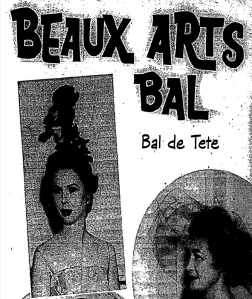
First Beaux Arts Bal raised money for fine art acquisition in Little Rock on December 12, 1958

Snow covered highways throughout the state on Friday, December 12, 1958.  However, the 400 guests at the Fine Arts Club’s first Beaux Arts Bal braved the roads and made their way to the blue drape bedecked ballroom of the Country Club of Little Rock. (Note, the event used the French spelling of Ball using only one “l.”)

Proceeds from the evening would be used by the Fine Arts Club to build up an acquisition fund for the Museum of Fine Arts. At the time, the club was in the process of launching an effort which would lead to the creation of the Arkansas Arts Center.

With the theme “bal de tete” (or “Head Ball”) guests were encouraged to come in their finest evening wear while sporting elegant and/or creative chapeaus atop their crowns.

Gege Darragh

Among the revelers were:

  • Elsie Stebbins, president of the Fine Arts Club, wearing a papier-mache silhouette of Arkansas adorned with the five flags which had flown over it
  • Howard Stebbins, president of Ducks Unlimited, wearing a replica of a duck blind complete with Mallard ducks
  • Daisy Jacoway, beneath a white Christmas wreath
  • Cooper Jacoway, clad in a black and white bear’s head with eyes flashing on and off
  • Carrie Dickinson, wearing a hat made of pink and red roses
  • Mayriann Hurst, bedecked in an epergne holding Christmas ornaments and fresh white orchids (as befitting the owner of Tipton Hurst florist)

Gege Darragh won a prize as “Most Artistic” hat which included lighted candles on a styrofoam base intermingled with white glitter oak leaves and silver balls. Her prize was a portrait by noted Arkansas artist Edwin Brewer.

The Hamiltons (as Marie Antoinette and her executioner) and the Kreths (as Siamese dancers)

Dr. and Mrs. K. M. Kreth won the prize for “Best Hats” which were a matching pair of elaborate gold peaked headdresses in the style of Siamese dancers. Their prize was a trip to Nassau.

The “Most Creative” prize went to Jeane and Jim Hamilton who wore hats depicting Marie Antoinette and her executioner.  They received a Swedish crystal masque.

The headgear was judged by a triumvirate of notables: Little Rock hotelier, restaurateur, and raconteur Sam Peck; future Arkansas First Lady Jeannette Rockefeller, and architect Edward Durrell Stone.

Among the many women serving with Elsie Stebbins on the planning committee were Jane McGehee, Daisy Jacoway, Raida Pfeifer, Buff Blass, and Kula Kumpuris.

Just as the Museum of Fine Arts made way for the Arkansas Arts Center, so too did this event change.  In 1971, the annual Beaux Arts Bal was replaced by Tabriz. In 1976, it became a two night event which took place every other year.
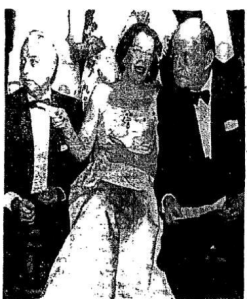
Peck, Rockefeller, and Stone judging the head wear

Dr. John Kirk discusses impact of Urban Renewal efforts on race and housing in LR at tonight’s QQA Preservation Conversation

The latest Quapaw Quarter Association’s Preservation Conversations will take place tonight, December 12, at 6:00pm, with a 5:30pm reception.  Dr. John Kirk will discuss “Race and Housing: How Urban Renewal Changed the Landscapes of Little Rock.”
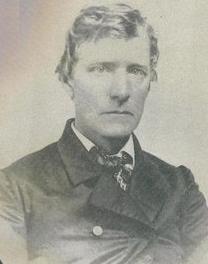
Join the QQA to hear Dr. John Kirk, George W. Donaghey Distinguished Professor of History and director of the Anderson Institute on Race and Ethnicity at the University of Arkansas at Little Rock share findings of his research on the impact of Urban Renewal policies on Little Rock’s built environment.

Dr. John A. Kirk is the George W. Donaghey Distinguished Professor of History at the University of Arkansas at Little Rock. His research focuses primarily on the history of the civil rights movement. He has published eight books and his ninth, an edited and annotated collection of primary documents titled The Civil Rights Movement: A Documentary Reader (New York: Wiley) will be published in early 2020.

Kirk has also published in a wide variety of journals, edited book collections, newspapers, and magazines, and he has held a number of grants and fellowships in both Europe and the United States, including at the Roosevelt Study Centre (Middleburg, The Netherlands), the John F. Kennedy Presidential Library (Boston), and the Rockefeller Archive Center (New York).

The event is free and open to the public, but space is limited. It will be in the Mixing Room at the Old Paint Factory in the East Village, 1306 East 6th Street. Please RSVP here:.

Parking: There is parking directly in front of the doors that are marked “live”, “print”, “meet.” If those spots are taken. park in the parking lot to the right. There is also street parking in front of the building.

Entrance: Enter the event space through the door facing 6th Street marked “Meet.”

200 years since the birth of Little Rock’s 23rd Mayor, early settler Gordon Neill Peay

On December 12, 1819, future Little Rock Mayor Gordon Neill Peay was born.  The Peay family arrived in Arkansas from Kentucky in 1825.  They quickly became one of Little Rock’s leading families.
Mayor Peay’s father, Nicholas Peay served on the Little Rock Board of Trustees (which existed before the town was incorporated) and later served on the City Council and was acting mayor.

It is Nicholas Peay’s Egg Nog recipe which inspired the Historic Arkansas Museum Nog Off! (2019 edition is Friday night!)

Godon N. Peay served as mayor of Little Rock from 1859 to 1861.  During the Civil War, Peay served as Captain and later Colonel of the Capital Guard.  He later received a pardon from the federal government.  In the days leading up to the Civil War and during it, Mayor Peay was one of a group of civic leaders who corresponded with Union leaders. It has been said that this conciliatory tone is a reason that Little Rock fared better during Federal occupation and Reconstruction than did many other Confederate cities.

The Peay family owned the Peay Hotel, Little Rock’s first hotel, and were also co-founders of what became Worthen Bank.  They were also a founding family of Christ Episcopal Church. Mayor Peay later served as Pulaski County Chancery Clerk.

He died on December 14, 1876, and is buried at Mount Holly Cemetery along with many members of his family.  A nephew of his, Ashley Peay, served on the City Council in the 1920s.  Mayor Peay’s great-grandson Joseph Barber Hurst, Sr. served on the Little Rock City Board of Directors from 1967-1971. One of Mr. Hurst’s sons, Howard, was born on Mayor Peay’s birthday.

40 years since the first Ballet Arkansas production of THE NUTCRACKER

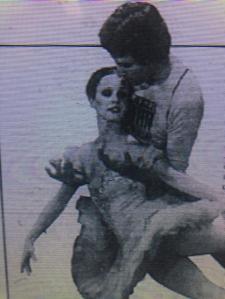
Burton and Tuzas from 1979 production

One of the sure signs of the Christmas season is the return of The Nutcracker to ballet companies across America.  Though the Little Rock Civic Ballet had first presented this ballet in 1968, by the mid-1970s, it was no longer performing the complete ballet.

In 1978, the Little Rock Civic Ballet was reorganized and re-christened Ballet Arkansas.  That first year, it did not perform The Nutcracker.  But on December 11, 1979, the tradition returned as Ballet Arkansas presented its first production of The Nutcracker.  It was once again at Robinson Center Music Hall.

The production was directed and choreographed by Lorraine Cranford, Ballet Arkansas’ Artistic Director.  The music was provided by musicians from the Arkansas Symphony Orchestra under the baton of guest conductor David Schimmell.  This was the first time in several years that the ballet had been accompanied by the ASO.

The guest artists were Anne Burton and Tanju Tuzer, both from Dallas.  The local dancers including David Twillie, Mirana, Peggy Howard, Carol Campbell, Jeffrey Stuart, Haven Cooper, Buddy Harris, Chris Clarke and Jeff Johns.

Tickets were $3.00 for the matinee. Evening performances ranged from $5 to $10 a person.