Little Rock Look Back: Elvis in his final Robinson Auditorium Show

Photo by Wayne Cranford

Photo by Wayne Cranford


After two visits in 1955 where he was down on the bill, Elvis Presley made his third and final appearance at Robinson Auditorium on May 16, 1956.  This time he was the star and Robinson was packed. The tickets were $1.50 in advance at Walgreens and $2.00 at the box office.

The ads featured 8 great acts in “his” variety show which consisted of the Jordonaires; Rick and Emil Flaim and their orchestra; vocalists Frankie Conners and Jackie Little and comedian-magician Phil Maraquin. A second show was added at 9:30 p.m. to accommodate the ticket demand.

About 30 minutes late, due to a missed flight, Elvis appeared on stage in a purple blazer and started singing “Heartbreak Hotel.”  The crowd rushed the stage. Little Rock police officers were able to control them eventually and get the teenagers back to their seats.  While the crowd was impressed, the police officers were less so.  One of the patrolmen told the Arkansas Gazette reporter: “I wouldn’t know him if I saw him. And I wouldn’t be here unless I was being paid.”

Disc jockey Ray Green recorded the concert that night.  Copies of the concert on CD (which also includes an interview with Presley) are prized possessions of Presley collectors.

The Arkansas Democrat-Gazette has a special section on its website containing quotes from some of the concert attendees.

Arkansas Heritage Month – Little Rock’s Jeff Nichols at Cannes

NicholsLittle Rock native Jeff Nichols’ latest film, Loving, premieres at Cannes today. The film showed at 8:30 am and 11:30 am Cannes time. (That would be at 1:30am and 4:30am, Little Rock time). It also shows at 7pm Cannes time (12 noon, Little Rock).

Loving, which was written and directed by Nichols, tells the story of the Mildred and Richard Loving, an interracial married couple who were sentenced to prison in Virginia in 1958. It is set for national release in November and is being distributed by Focus Features.

Nichols was first brought the project by Martin Scorsese. A 1997 graduate of Little Rock Central High, he was intrigued by the story and the opportunities it provided him as a filmmaker.

The film stars Joel Edgerton and Ruth Negga as the central couple. Others in the cast include Michael Shannon, Nick Kroll, and Bill Camp.  Edgerton, Shannon and Camp are part of Nichols’ informal repertory company of actors. Interestingly, Shannon and Camp are both nominated for Tony Awards in the same category (Featured Actor in a Play) for work they have done on Broadway this spring in American classics: Shannon in O’Neill’s Long Day’s Journey into Night and Camp in Miller’s The Crucible.

This is Nichols’ third film to screen at Cannes, following 2012’s Mud (which like Loving was in contention for the Palm d’Or) and 2011’s Take Shelter (which won the top prize at Cannes’ Critics Week).  His first feature film was 2007’s Shotgun Stories.

With Loving’s screening at Cannes, Nichols is in a select group of directors to have one film screen at the Berlin International Film Festival (where he showcased Midnight Special) and another at Cannes in the same year.

Arkansas Heritage Month – The Architecture of Little Rock Central High School

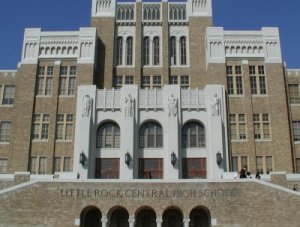
centralentranceArchitecture is often overlooked when considering the arts, but it is definitely an art form.

Built in 1927 as Little Rock Senior High School, Central was named “America’s Most Beautiful High School” by the American Institute of Architects. The New York Times called it the most expensive high school built at the time.

Designed as a mix of Art Deco and Collegiate Gothic architectural styles, the building is two city blocks long and includes 150,000 square feet of floor space. The project involved most of Little Rock’s leading architects who were still practicing at the time: John Parks Almand, George H. Wittenberg and Lawson L. Delony, Eugene John Stern, and George R. Mann.  Over the years, different architects would take credit for various facets of the building.  Given the size of the project, there was plenty of work for each architect to do.

More than 36 million pounds of concrete and 370 tons of steel went into the building’s construction. The building contained 150,000 square feet of floor space, upon its completion. It cost $1.5 million to construct in 1927. The school received extensive publicity upon its opening. An article in the Arkansas Gazette said, “we have hundreds of journalists in our fair city for the dedication” of the new high school.

At its construction, the auditorium seated 2,000 people between a main level and a balcony.  The stage was sixty feet deep and 160 feet long so that it could be used gymnasium. From 1927 until the opening of Robinson Auditorium in 1940, the auditorium would be Little Rock’s main site for hosting performances by musical and theatrical groups.

Subsequent additions would include a separate gymnasium, a library, and a football stadium. In 1953 the school’s name was changed to Little Rock Central High School, in anticipation of construction of a new high school for students, Hall High School.

In 1977, the school was listed on the National Register of Historic Places, and it was designated a National Historic Landmark in 1982. These were in recognition of desegregation events which took place in the school in 1957.

In 1998, President William Jefferson Clinton signed legislation designating the school and visitor center across the street as a National Historic Site to “preserve, protect, and interpret for the benefit, education, and inspiration of present and future generations…its role in the integration of public schools and the development of the Civil Rights movement in the United States.”

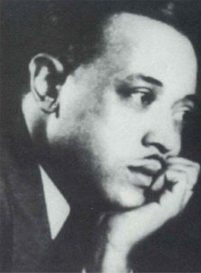
Little Rock Look Back: William Grant Still

bhm StillLong known as the Dean of African American composers, Dr. William Grant Still was a legend in his own lifetime.

Dr. Still, who wrote more than 150 compositions ranging from operas to arrangements of folk themes, is best known as a pioneer. He was the first African-American in the United States to have a symphonic composition performed by a major orchestra. He was the first to conduct a major symphony orchestra in the US; the first to conduct a major symphony in the south; first to conduct a white radio orchestra in New York City; first to have an opera produced by a major company. Dr. Still was also the first African-American to have an opera televised over a national network

Dr. Still was born May 11, 1895 in Woodville, Mississippi to parents who were teachers and musicians. When Dr. Still was only a few months old, his father died and his mother took him to Little Rock. Inspired by RCA Red Seal operatic recordings, his musical education began with violin lessons.  He graduated from Gibbs High School in Little Rock.

After his studies at Wilberforce University and the Oberlin Conservatory of Music, he played in orchestras and orchestrated for various employers including the great W. C. Handy. For several years he arranged and conducted the “Deep River Hour” over CBS and WOR.  He also played in the orchestra for the 1921 musical Shuffle Along, which was the first Broadway musical to feature an all African-American cast and writing team.  A musical is currently on Broadway about the creation of that musical, but Still is not a character in it.

In the 1920’s, Still made his first appearances as a serious composer in New York. Several fellowships and commissions followed. In 1994, his “Festive Overture” captured the Jubilee prize of the Cincinnati Symphony orchestra. In 1953, he won a Freedoms Foundation Award for “To You, America!” which honored West Point’s Sesquicentennial Celebration. In 1961, he received honors for this orchestral work, “The Peaceful Land”. Dr. Still also received numerous honorary degrees from various colleges and universities, as well as various awards and a citation from Arkansas Governor Dale Bumpers in 1972.

In 1939, Dr. Still married journalist and concert pianist Verna Avery, who became his principal collaborator. They remained together until Dr. Still’s death in 1978.  In a proclamation marking the centennial of Dr. Still’s birth, President Bill Clinton praised the composer for creating “works of such beauty and passion that they pierced the artificial barriers of race, nationality and time.”

In 1995, Dr. Still was posthumously inducted into the Arkansas Black Hall of Fame.

Arkansas Heritage Month – Townsend Wolfe of the Arkansas Arts Center

wolfe

Continuing with a focus on Little Rock recipients of the Governor’s Arts Awards, today’s focus is Townsend Wolfe, who led the Arkansas Arts Center for 34 years.

Though not the founding director of the Arkansas Arts Center, Townsend Wolfe was the director for well over half of the institution’s 53 year history. Hired in 1968 at the age of 32 (making him one of the youngest art museum directors in the US at the time), he retired in 2002.  That year he was honored with the Governor’s Arts Award for Lifetime Achievement by the Arkansas Arts Council.

A native of South Carolina, Wolfe holds a bachelor’s degree from the Atlanta Art Institute and a master’s degree from the Cranbrook Academy of Art. He also received a certificate from the Harvard Institute of Arts Administration, and honorary doctoral degrees from two other institutions.  He was recruited to the Arkansas Arts Center by Governor and Mrs. Winthrop Rockefeller.

During his tenure at the Arts Center, he first was responsible for creating financial stability. After drastic cost-cutting measures, he refocused programming which led to the creation of the current Museum School, a focus of works on paper for the collection, cultivating a thriving collectors group, establishment of a children’s theatre, expansion of statewide services, and several additions to the physical plant.

In addition to serving on the National Council of the Arts, Wolfe was a member of the National Museum Services Board and the board of the Elizabeth Foundation for the Arts in New York. He was curator for an exhibition in the First Ladies’ Sculpture Garden at the White House in 1995, and was the recipient of the 1997 Distinguished Service Award (outside the profession) by the National Art Educators Association.

Over the years, Wolfe has served in a variety of capacities for the Association of American Museums, the National Endowment for the Arts, and the Institute of Museum and Library Services.

Mother’s Day Little Rock Look Back: Eliza Cunningham, Founding Mother of Little Rock

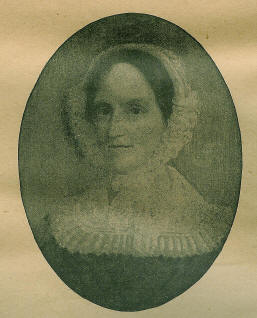
Eliza CunninghamEliza Wilson Bertrand Cunningham was the First Lady of Little Rock.  She literally was the first lady and the founding mother.

She became the first permanent female resident when she joined her husband Matthew Cunningham in Little Rock.  She gave birth to Chester Ashley Cunningham, the first baby born in Little Rock, as well as several other children with Cunningham.  When he became the first Mayor of Little Rock, she was the first First Lady of Little Rock. They hosted the first Little Rock Council meeting at their house on what is now the block downtown bounded by Third, Main, Fourth and Louisiana Streets.  Her son Charles P. Bertrand, from her first husband, later served as Mayor of Little Rock, making her the only woman to be married to a Mayor and be mother of a Mayor.

Born in Scotland in December 1788, she emigrated with her parents to the United States as a young girl.  In 1804 or 1805, she married a French businessman, Pierre Bertrand in New York City.  She lived in New York City, while he traveled to his various business ventures.  He never returned from a trip to his coffee plantation in Santo Domingo and was presumed to have died in 1808 or 1809.  She and Bertrand had three children, Charles Pierre, Arabella and Jane. (Jane may have died in childhood, because records and lore only indicated Charles and Arabella coming to Little Rock with their mother.)

Eliza married Dr. Matthew Cunningham in New York City.  He later moved to Saint Louis and settled in Little Rock in early 1820.  Eliza and her two children came to Little Rock in September 1820.  In 1822, she gave birth to Chester Ashley Cunningham, the first documented baby born in Little Rock.  (There are unsubstantiated reports that at least one slave child may have been born prior to Chester.)  She and Matthew also had Robert, Henrietta, Sarah and Matilda.  The latter married Peter Hanger, after whom the Hanger Hill neighborhood is named.

Dr. Cunningham died in June 1851.  Eliza died in September 1856. They and Chester (who died in December 1856) are buried in the Hanger family plot at Mount Holly Cemetery.

Arkansas Heritage Month – “Little Rock” Songs

Monroe RussellThe Capital City has popped up in a variety of songs in different genres over the years.  Today we look at five notable instances.

Collin Raye’s 1994 song “Little Rock” peaked at Number 2 on the Billboard Country charts and was Number 14 for the entire year.  Found on Raye’s album Extremes, it was written by Tom Douglas.  The song centers on a man who is trying to rebuild his life after battles with alcohol have affected his marriage.

Notable lyric: “I think I’m on a roll here in Little Rock.”


Hayes Carll’s take on Arkansas’ capital is also known as “Little Rock.” It was his title track from the 2005 album.  It tells the tale of a man who has traveled all over the US and is excited to make it back to Little Rock. With a driving country-rock beat, it typifies Carll’s style of music which has one foot squarely in both camps as a singer-songwriter.

Notable lyric: “All of my life I’ve tried to find/ “a piece of this earth for my peace of mind.”


Leo Robin and Jule Styne wrote the 1949 song “Little Girl from Little Rock” for their Broadway musical Gentlemen Prefer Blondes.  Introduced by Carol Channing, it told of quintessential 1920s vamp Lorelei Lee’s rise from “the wrong side of the tracks” to Manhattan’s elite neighborhoods.  It has remained part of Channing’s repertoire in nightclubs and concerts.  In 1953, it was retooled with sanitized lyrics and made into a duet for Marilyn Monroe and Jane Russell in the film version of the musical.

Notable lyric: “Then someone broke my heart in Little Rock/and I up and left old Arkansas.”


Little Rock has also appeared in several “List songs” including “I’ve Been Everywhere.” Originally written with Australian place names in 1959, it was adapted to North American places in 1962 by Hank Snow. Arkansan Johnny Cash recorded it in 1996.

Little Rock appears in the second verse: “Glen Rock, Black Rock, Little Rock, Oskaloosa,”


Billy Joel’s 1989 “We Didn’t Start the Fire” contains three references to Little Rock. In the first section’s look at 1949, the Rodgers and Hammerstein musical South Pacific is mentioned.  With a heroine from Little Rock, this musical was the most popular show on Broadway during the 1948-1949 and 1949-1950 Broadway seasons.  The second comes in the 1953 portion with “Rockefeller” which referenced playboy Winthrop Rockefeller’s abandonment of New York City for Arkansas. He had residences in both Little Rock and on Petit Jean Mountain. The final entry came in 1957, when Joel references the Central High integration crisis with the lyric “Little Rock, Pasternak, Mickey Mantle, Kerouac, Sputnik, Chou En-Lai, Bridge on the River Kwai.”