History of Arkansas State Fair focus of December Legacies & Lunch at noon

ark state fairThis month’s Legacies & Lunch program focuses on the Arkansas State Fair.

Numerous state fairs and livestock shows have been held in Arkansas since the 1860s.  The Arkansas Livestock Show Association has existed for 75 years. While early fairs promoted agriculture and tourism, these events struggled financially.  Following the social upheaval caused by the Great Depression, a group of businessmen, farmers and educators led by oilman T. H. Barton envisioned a new Arkansas economy not dependent on cotton farming.

Deb Crow, museum and archive director for the Arkansas State Fair, and Dr. Jim Ross, professor of history at UALR ,will share details about the fair’s rich history, including rare photographs.

Legacies & Lunch is a monthly program of the Butler Center for Arkansas Studies, a division of the Central Arkansas Library System.  The program, sponsored in part by the Arkansas Humanities Council, takes place at 12 noon.  This month’s program will be at the Darragh Center of the main library.

THE TOUGHEST JOB film on former Mississippi Governor shown tonight at Ron Robinson Theatre by Clinton School and LR Film Festival

Winter-Title-Page-240x135The Clinton School Speaker Series in partnership with the Little Rock Film Festival presents a new documentary tonight.  The Toughest Job focuses on the life and career of Mississippi’s 57th Governor William Winter and his fight to reform education in the state.  The movie addresses the mechanics of Mississippi state government, the political climate for education reform, and the decision-making of Governor Winter.

The film will be shown starting at 6pm at the CALS Ron Robinson Theater.

Here is more on the film:

The Toughest Job: William Winter’s Mississippi, a documentary directed by Matthew Graves for the University of Mississippi’s Southern Documentary Project (SouthDocs), chronicles the life and career of Mississippi’s 57th Governor William Winter and his fight to pass the 1982 Education Reform Bill.

The Toughest Job emphasizes William Winter’s role as a leader in education reform, economic development, and racial reconciliation. Utilizing materials from the Mississippi Department of Archives and History and interviews with Governor Winter, Elise Winter, Vernon Jordan, Dick Molpus, Myrlie Evers-Williams, Ray Mabus, Reuben V. Anderson, Charles Overby, President Bill Clinton, and others, the film examines the political life and policy accomplishments of one of Mississippi’s most progressive leaders.

The 1982 Education Reform Bill, which, among other things, established public kindergartens in the state, was a landmark legislative act in terms of both civil rights and economic development. William Winter “understood that education was essential for Mississippi to flourish in the future,” says Reuben V. Anderson in the film. President Bill Clinton, who was governor at Arkansas at the same time Winter served Mississippi, talks of Winter’s “personal strength and political openness” and courageous dedication to creating opportunity for the state’s children.

The film highlights the challenges of generating bipartisan change in a contentious political environment, a timely message for current political leaders. Executive producer and former gubernatorial advisor David Crews observed, “In an age of shrill, often gridlocked politics, we need more leaders with Winter’s courage, character, resolve and constructive leadership. This film portrays a rich, tumultuous period of history while documenting the accomplishments of a rare leader willing to tackle tough, vexing, important issues.”

Vernon Jordan notes the legacy of racial tensions in the state and Winter’s approach. “That kind of courage, that kind of willingness to speak out, to stand up, to take a position contrary to the consensus of white people was quite extraordinary.”  Winter played a key role in Clinton’s “One America” initiative to start a national conversation on race, bringing the only deep South public forum to the University of Mississippi. The legacy of this forum is the William Winter Institute for Racial Reconciliation at UM, which strives to end all difference-based discrimination through community building, youth engagement, and scholarship.

“It’s been a remarkable challenge attempting to condense a whole life’s worth of passion, bitter defeats, and momentous victories into an hour-long documentary but I feel very satisfied with what we’ve created,” said filmmaker Matthew Graves. “To me, it’s a thrilling story of perseverance and leadership and is truly a testament to what is possible in this state.”

For Southern Documentary Project director Andy Harper, this film fits perfectly into his mission of having Mississippians telling Mississippi stories. “I think it is vitally important that we document the stories of leaders like William Winter,” says Harper.

“Governor Winter felt a moral obligation to provide all Mississippians an adequate education and he worked tirelessly towards that end. It is our obligation to tell his story.”

Commemorate Native American Heritage Month at Historic Arkansas Museum

HAMCollectionHeadPotNovember is Native American Heritage Month.  It’s a great time of year to visit Historic Arkansas Museum and explore their permanent exhibit “We Walk In Two Worlds: The Caddo, Osage and Quapaw in Arkansas.”

And remember – Admission to the galleries at Historic Arkansas Museum is FREE!

This exhibit tells the story of Arkansas’s first people–the Caddo, Osage and Quapaw Indian tribes–from early times to today. More than 150 objects, such as pottery, clothing and weapons, are on display.

The exhibit has six thematic areas that are arranged chronologically.  Along with objects and a historical timeline are passages of relevant research from archeologists, historians and ethnographers.

Throughout the exhibit, is the dominant presence of the Native American voice, from each of Arkansas’s three prominent tribes. During the two years of exhibit development, many tribal members were interviewed and it is this voice that informs, educates and guides visitors through the exhibit. Historic Arkansas Museum chief curator and deputy director Swannee Bennett said, “What makes this exhibit unique is that it is a story of the Arkansas Native American told in large part with an Indian voice.”

This permanent exhibit enables the museum to tell the bigger story of Arkansas’s frontier history. “We Walk in Two Worlds is a milestone as the State of Arkansas officially partners with the Caddo, Osage and Quapaw Nations and the Smithsonian’s National Museum of the American Indian to tell this story of struggle and endurance.” said museum director Bill Worthen.

Little Rock Look Back: Charles P. Bertrand, LR’s 21st Mayor

Bertra1Two hundred and six years ago today, on November 23, 1808, future Mayor Charles P. Bertrand was born in New York.  He was the son of Pierre and Eliza Wilson Bertrand; his father died in 1809 in an uprising in Haiti and his mother eventually remarried.  With her new husband, Dr. Matthew Cunningham, she and the family moved to Little Rock in 1820.

After apprenticing with family friend William Woodruff at the Arkansas Gazette, Bertrand opened the Arkansas Advocate newspaper.  He later studied law under Robert Crittenden and entered the legal profession.

In 1835-1836, he served as State Treasurer for the Arkansas Territory, and in 1836 as secretary for the first constitutional convention. He was a member of the Arkansas House of Representatives from 1840-1841 and 1844-1849.

Bertrand followed in his stepfather’s footsteps and became Mayor of Little Rock.  (Dr. Cunningham had been the first Little Rock Mayor in 1831.)  He was in office from January 1855 through January 1857, serving two one-year terms.  He later served on the City Council and filled in as acting mayor. (Another influence on his upbringing was studying under future Mayor Jesse Brown who taught at the first school in Little Rock.)

Bertrand, as acting mayor, was involved in the negotiations of the surrender of Little Rock to federal troops in 1863.  He also later corresponded with President Lincoln on behalf of Little Rock citizens.  Though a staunch Confederate, his good will toward the Union soldiers and federal officials is credited with helping to save Little Rock from the destruction which befell many other Southern cities.  He is also credited with delaying the start of the Civil War.  Prior to the attack on Fort Sumner, members of the Arkansas Militia were planning to attack the Federal Arsenal at Little Rock during the absence of Governor Rector.  This would have been viewed as an act of war.  Bertrand was able to dissuade them from the attack.  Had he been unsuccessful, the Civil War would have likely started in Arkansas instead of South Carolina.

He had put his considerable fortune into Confederate money during the war. At the Civil War’s conclusion, the family was financially ruined. Though they had vast land holdings, those would be sold off in parcels to pay for taxes.

Bertrand died August 27, 1865, shortly after the conclusion of the Civil War.  He, like his mother, step-father, and several other relatives, is buried in Mt. Holly Cemetery.

Film CHOCTAW CODE TALKERS shown tonight at MacArthur Museum of Arkansas Military History

MacMus Code TalkTonight from 6:30 to 9:30 pm, in celebration of Native American Heritage Month and in commemoration of the beginning of World War I, the MacArthur Museum of Arkansas Military History will host a free film event, showing Choctaw Code Talkers, a PBS documentary that explores the military history legacy of Native American code talkers during World War I.

The free event is in partnership with the Sequoyah National Research Center at the University of Arkansas at Little Rock.  Light refreshments will be provided. Click here to watch a trailer for Choctaw Code Talkers

The MacArthur Museum of Arkansas Military History is a program of the City of Little Rock’s Parks & Recreation Department.

Little Rock Look Back: Skip’s Game Day

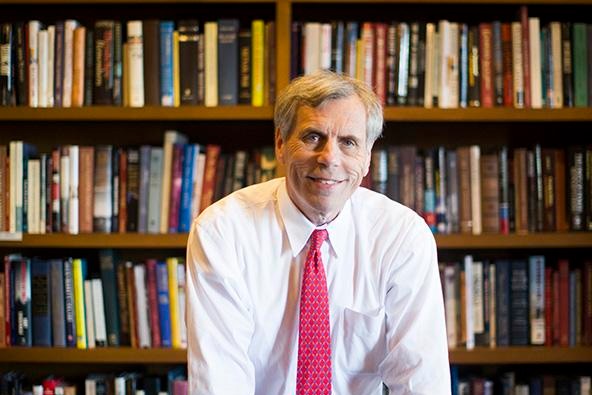
SkipTen years ago today was known simply as “Game Day” for a group of people.  The chief one was Skip Rutherford.

Overseeing the planning for the Clinton Presidential Center and the events surrounding it had been the focus of James L. “Skip” Rutherford for many years. A FOB for decades, he had stayed in Little Rock when so many went to Washington DC in 1993.

He oversaw the planning for the Clinton Library and led the Clinton Foundation.  No detail was too small or insignificant for him to consider. For months leading to the opening he led meetings to help restaurants, hotels, and attractions understand the scope of the opening.

Together with Dean Kumpuris and Bruce Moore on behalf of the City of Little Rock, he reviewed plans for the Clinton Presidential Park and the streets and neighborhoods around the Clinton Presidential Center.

He used his connections with the business community in Little Rock and throughout the state to discuss the importance of a Presidential Library regardless of one’s personal political affiliations.  He withstood critics who second-guessed everything from the cost, the design, the location, the purpose, and even the anticipated tourism and economic impacts.

Finally the big day had come.  If the weather was not ideal, that was almost inconsequential. It was still the culmination of more than seven years hard work.

However, the opening of the Clinton Presidential Center was not the end of the task. It merely was the move from one phase to another. A few years later, Skip’s role would change as he would leave the Foundation and become the second Dean of the Clinton School of Public Service.

Little Rock Look Back: The Opening of the William J. Clinton Presidential Center

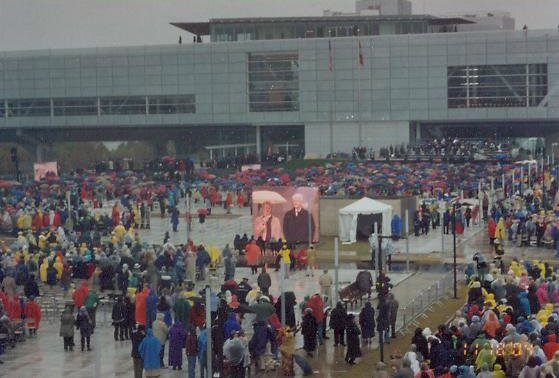
wjcopenrainArkansas Globecoming was the name given to the series of events in connection with the opening of the Clinton Presidential Center.  The week had been warm and sunny as Al Franken entertained at the Arkansas Repertory Theatre, Aretha Franklin performed with the Arkansas Symphony Orchestra and Senator John Glenn held court at the Museum of Discovery.  By Wednesday, November 17, Little Rock was filled with stars from the political and entertainment fields.  As many dignitaries as were here, there were rumors of even more who were supposedly here.

On Wednesday night, things reached a fever pitch. A reception at the Arkansas Arts Center was literally shoulder to shoulder. A preview tour of the Clinton Presidential Center was only slightly less crowded (because the space was so much bigger). Mary Steenburgen, Ted Danson and the Downtown Little Rock Partnership hosted a late night party at Nu.

As midnight approached, things slowed ever so slightly as people realized they had to be on site for the opening ceremony in a matter of hours.

Overnight a storm system came in. Not only did water fall, but so did the temperatures.

Those that did brave the weather had an unforgettable experience.  From performances by a rain-soaked Bono and The Edge to remarks by Presidents Carter, Bush 41, Bush 43 and Clinton, the event was memorable.  It was a Who’s Who of Washington, New York and Los Angeles.  All in Little Rock.

It took several hours for people to warm up and dry off after the event. But everyone agreed it was a memorable day for numerous reasons.