Middle East is the topic of the 2014 Rabbi Ira Sanders Distinguished Lecture Tonight

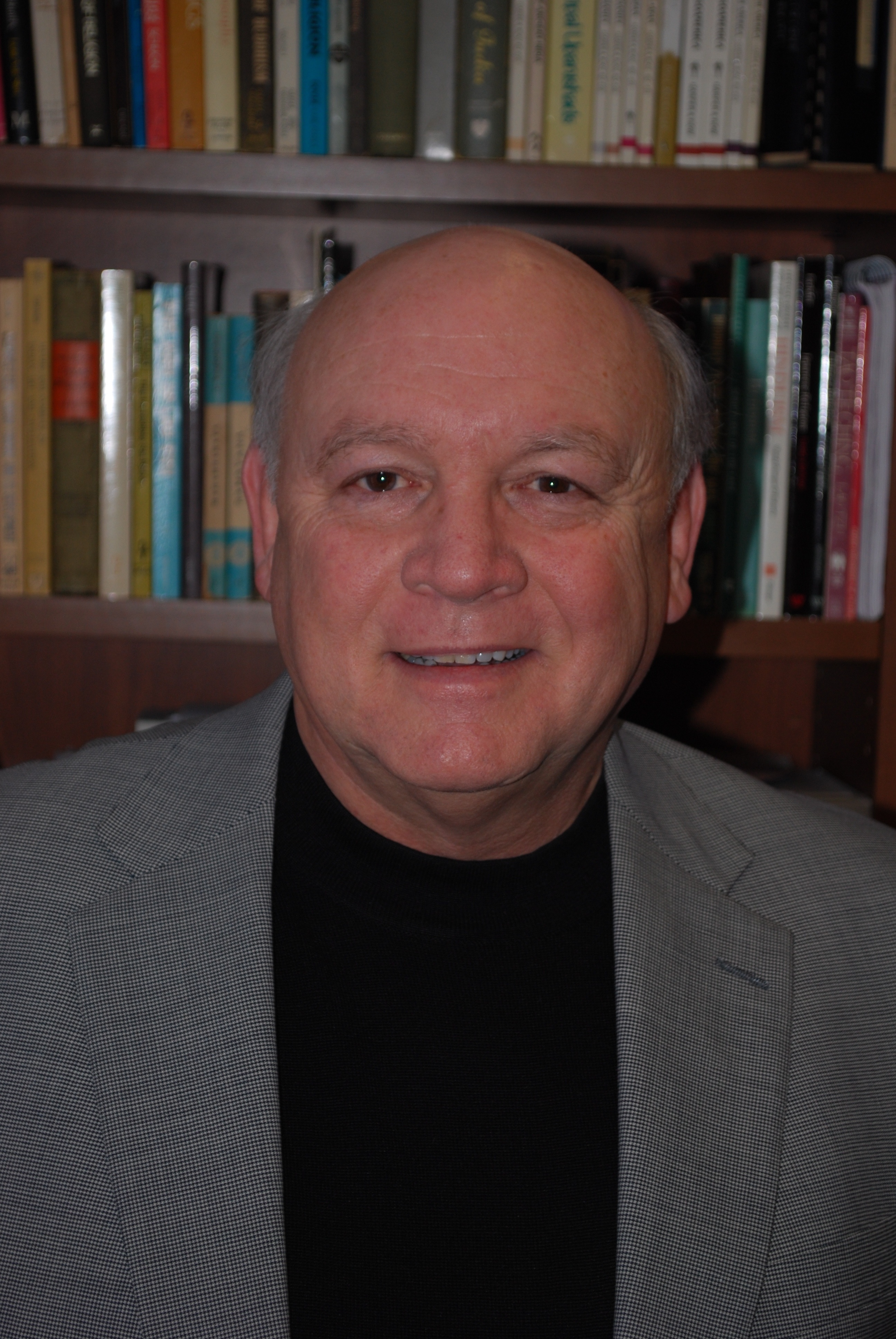
DrKimballphotocalsDr. Charles Kimball, author of When Religion Becomes Lethal: The Explosive Mix of Politics and Religion in Judaism, Christianity, and Islam, will present the Central Arkansas Library System’s (CALS) Rabbi Ira Sanders Distinguished Lecture on Thursday, September 4, at 6:30 p.m. in the CALS Ron Robinson Theater, 100 River Market Avenue. The lecture is free and open to the public, and will be followed by a reception and book signing.

Kimball is a graduate of Oklahoma State University and holds the M.Div. degree from Southern Baptist Theological Seminary. An ordained Baptist minister, he received his Th.D. from Harvard University. Kimball is an expert analyst on Islam, Jewish-Christian-Muslim relations, the Middle East, and the intersection of religion and politics in the U.S.

Dr. Charles Kimball is Presidential Professor and Director of Religious Studies at the University of Oklahoma in Norman, OK. Between 1996 and 2008, he served as Chair of the Department of Religion and the Divinity School at Wake Forest University in Winston-Salem, NC. During the 2006 fall term, Dr. Kimball was the Rita and William Bell Visiting Professor at the University of Tulsa. He is a graduate of Oklahoma State University and holds the M.Div. degree from The Southern Baptist Theological Seminary.

Reservations are requested, but not required. RSVP to pedwards@cals.org or 918-3009. For more information contact 918-3086 or sgele@cals.org.


MEMPHIS at Arkansas Rep is focus of Clinton School Program today at noon

THEREP_MEMPHIS (no credits)-page-001The Arkansas Repertory Theatre works in partnership with the Clinton School of Public Service to participate in the UACS’s Distinguished Speaker Series, hosting educational panel discussions on various Rep productions.

The latest in these takes place today, Thursday, September 4 at 12 noon at Sturgis Hall in Clinton Presidential Park.

Join Producing Artistic Director Bob Hupp, Memphis Director Lynne Kurdziel-Formato, cast members Brent DiRoma and Jasmin Richardson, and author Marvin Schwartz for a panel discussion on this Tony Award-winning musical.


Memphis opens officially on Friday evening and runs through Sunday, September 28.

“We Wanna Boogie” at Legacies & Lunch Today

we_wanna_boogieRockabilly great Sonny Burgess, of Newport, Arkansas, and his band the Legendary Pacers are the topic of We Wanna Boogie, a new release from Butler Center Books by Marvin Schwartz, who will speak at Legacies & Lunch, the Butler Center’s monthly lecture series, on Wednesday, September 3, at noon in the Main Library’s Darragh Center, 100 Rock Street. Books will be available for purchase; Schwartz, Burgess, and band members Jim Aldridge, Fred Douglas, Bobby Crafford, and Kern Kennedy will sign copies after the talk.

In We Wanna Boogie, Burgess and his band members tell of their original recordings for Sun Records in the 1950s and their shows with Elvis Presley, Johnny Cash, Jerry Lee Lewis, and others. Burgess, whose music evolved in the Silver Moon and other clubs around the Arkansas delta, has influenced rock and roll music internationally and has led the contemporary rockabilly revival in the U.S. and overseas. The book also tells the history of a once prominent and high spirited delta community of extensive agricultural wealth. Newport was home to numerous music clubs, which often housed both performances by national artists and illicit back-room gambling.

Legacies & Lunch is free, open to the public, and sponsored in part by the Arkansas Humanities Council. Attendees may bring a sack lunch; drinks and dessert are provided. For more information, contact 501-918-3033.

Last Week to see First Ladies Gowns

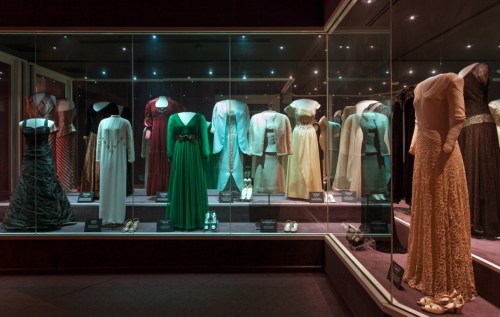
OSH GownsThe Old State House Museum’s First Ladies’ Gown collection, which contains over 120 years of inaugural gowns worn by Arkansas’s First Ladies, will temporarily close to the public on September 8, 2014, so the gowns can be assessed for conservation needs. The last day to see the collection before the assessment is September 7, 2014.

“The Arkansas First Ladies Gowns at the Old State House Museum are, through the years, our most popular artifacts,” said Bill Gatewood, director of the Old State House Museum. ”Our responsibility to preserve the gowns yet make them accessible to the public creates a very challenging situation.  The Museum staff’s decision to begin conservation of the gowns exhibit must balance both considerations.”

During routine assessments this summer, Old State House Museum staff began noticing deterioration of many gowns. Two gowns were immediately removed from display for conservation, and internal discussion began about the futures of every gown. The decision was made to quickly move to have the gowns assessed.

“During a routine survey of artifacts on exhibit I noticed signs of stress on certain gowns in our First Ladies gowns exhibit,” said Jo Ellen Maack, curator at the Old State House Museum. “Upon closer inspection I determined a conservator specializing in textiles should examine the collection. My goal is to create a prioritized list of conservation needs for gowns in the exhibit. Once these needs have been identified, treatment will begin. The challenge is to do this while keeping as much of the exhibit as possible open to the public.”

The assessment will take place at the Old State House Museum beginning September 8 and the exhibit will be closed during this process. The collection will be examined by Textile Conservation Services and handled by Harold Mailand, who first examined the gowns in 1983. Mailand will examine the condition of each gown and work with the professional staff at the Old State House Museum to create a preservation strategy, and may include immediate removal of some gowns from display. The exhibit will then re-open. At a later date, more gowns may be removed from exhibit at the Old State House Museum to an off-site location to make changes in casework and lighting in the exhibit. The exhibit would be closed for several months if the Museum feels it necessary to make those upgrades..

“Even though the physical gowns may not be on permanent display at the Old State House Museum, we’re committed to providing access to information, photos and educational programs about the gowns through the Web, our publications, and any emerging media that becomes available” Gatewood said.

The First Ladies’ Gowns collection was the first exhibit to showcase Arkansas history at the Old State House Museum, debuting in 1955. The oldest gown in the collection is from 1889 and belonged to Mary Kavanaugh Oldham Eagle, the wife of Arkansas’s 16th Governor James Philip Eagle. The collection contains 30 inaugural dresses, including four from former Arkansas First Lady and United States Secretary of State Hillary Clinton. Currently, visitors to the Museum are able to view all 30 gowns, minus the two removed earlier this year, belonging to Elizabeth Little and Ewilda Robinson. After the assessment, the ability for visitors to view all the gowns at once may change.

The First Ladies’ Gowns collection is just one of many collections the Old State House Museum is tasked with maintaining and preserving. Other textile collections curated by the Museum include Civil War flags and quilts sewn by black Arkansans.  The Old State House Museum will provide updates about the gowns on social media including Facebook, Twitter and e-mail lists.

About the Old State House Museum

The Old State House Museum is a museum of the Department of Arkansas Heritage and shares the goal of all seven Department of Arkansas Heritage agencies, that of preserving and enhancing the heritage of the state of Arkansas. The agencies are Arkansas Arts Council, Arkansas Historic Preservation Program, Arkansas Natural Heritage Commission, Delta Cultural Center in Helena, Historic Arkansas Museum, Mosaic Templars Cultural Center, and the Old State House Museum.

Arkansas Vietnam War Project launched by Butler Center for Arkansas Studies

cals_int_sponsor_butlerDuring the Vietnam War over 58,000 Americans were killed, including 592 Arkansans. The Butler Center for Arkansas Studies, a department of the Central Arkansas Library System (CALS), has launched the Arkansas Vietnam War Project to gather and share personal stories of Arkansans from the war.

The project collects letters, photographs, and diaries from Arkansans who served during the conflict, from family members of veterans, and from civilians who want to share memories of the war. The Arkansas Vietnam War Project seeks to record oral histories, allowing veterans, family members, and civilians to voice their recollections of the war. More information may be found at www.butlercenter.org/arkansas-vietnam-war-project, where participants’ contributions will be highlighted in coming months.

Thursday, August 7 marked the 50th anniversary of a significant incident, the passing of the Gulf of Tonkin Resolution. This congressional resolution gave President Johnson the power to continue to escalate United States military involvement in Vietnam without a formal declaration of war.

The Arkansas Vietnam War Project follows the award-winning FORGOTTEN: The Arkansas Korean War Project, accessible at www.butlercenter.org/koreanwarproject, and demonstrates the Butler Center’s continued commitment to collecting Arkansans’ military history. For more information about the project, call 501-320-5700 or email Brian Robertson, project director, at brianr@cals.org.

Little Rock Look Back: Drawing the Quapaw Line

quapawlineOn August 24, 1818, the Quapaw Line was drawn.  Starting at La Petite Roche and heading due south, this line formed the boundary between the Quapaw tribe lands and public lands available for settlement.  Though by 1824, the Quapaw were forced to give up all of their lands, the line continued serve as an important marker.  In the ensuing six years, the first permanent settlement of Little Rock took place and streets were planned.

It is interesting to note that the 1818 treaty referred to La Petite Roche as the Little Rock.  Some have speculated that this is the first official use of “Little Rock” to designate the outcropping.  When the Post Office was established in March 1820, it was given the name Little Rock.

There is a marker commemorating the beginning of the Quapaw Line located at La Petite Roche in Riverfront Park.  The first segment of the line is also noted in the park.  There are also sunken markers (such as the one to the left) place along the line at various points.  In MacArthur Park, at the corner of 9th and Commerce Streets, there is a marker noting that the line passed through at that location.

A good account of walking the Quapaw Line through downtown Little Rock can be found on this website.

Most of what is now called the Quapaw Quarter was located to the west of the Quapaw Line.  However, it did take its name from the fact that the tribe had once lived in that area and was later sequestered to lands near it.  The name for the area was chosen by a committee composed of David D. Terry, Peg Newton Smith, Mrs. Walter Riddick Sr., Dr. John L. Ferguson, and James Hatcher. They had been appointed to a Significant Structures Technical Advisory Committee to advocate for preservation of important structures as a component of the City of Little Rock’s urban renewal efforts.

QQA’S Rhea Roberts receives Historic Real Estate Development Professional certification

Orhearn August 11, 2014, Executive Director of the Quapaw Quarter Association Rhea Roberts received certification as a Historic Real Estate Development Finance Professional (HHDFP) from the National Development Council (NDC).  HHDFP Certification is a professional credential given to individuals who successfully complete NDC’s intensive historic real estate development finance training series.  The training provides individuals working in the field of housing development with instruction in housing development finance, rental housing development finance including problem solving and deal structuring, and the creation and implementation of development programs.

The two HHDFP Certification Program courses were five days in length and concluded with an exam.  Upon successful completion of the courses, the candidate is awarded HHDFP Certification.

The National Development council was established in 1969 and is a non-profit organization specializing in economic and housing development training and technical assistance for community development.  NDC has provided training to over 60,000 professionals working in the fields of economic and housing development.  Participants come from diverse backgrounds including city and state governments, public agencies, community-based organizations, professional organizations and banks.

Rhea Roberts has served as Executive Director of the Quapaw Quarter Association since August 2010.  The QQA’s mission is to promote the preservation of Little Rock’s architectural heritage through advocacy, marketing and education.  Incorporated in 1968, the QQA grew out of an effort to identify and protect significant historic structures in Little Rock during the urban renewal projects of the early 1960s.  Throughout its existence, the QQA has been a driving force behind preservation in Greater Little Rock.