Little Rock Look Back: Last City Council meeting in 1868 City Hall

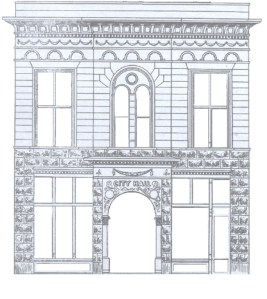
On March 30, 1908, the Little Rock City Hall held its final meeting in the 1868 City Hall.  The new city hall, located at Markham and Broadway streets, was nearing completion.  The meeting was presided over by Mayor W. E. Lenon.

The aldermen present were: John A. Adams, John Brod, A. B. Hightower, W. H. Jarrett, Christopher Ledwidge, Louie Miller, Jonathan S. Odom, R. C. Powers, A. L. Smith, George Stratman, Jonathan H. Tuohey, Louis Volmer, and L. N. Whitcomb.  Three aldermen missed the meeting: John Herndon Hollis, A. B. Poe and Benjamin S. Thalheimer.

The meeting was filled with typical requests for zoning and street improvements.  There was actually nothing out of the ordinary about the meeting.  If there was mention that it would be the final meeting, it did not make it into the minutes.

There was a request by the Arkansas Association of Pharmacists to have a meeting at the new building on May 12, 13 and 14.  It was referred to the City Hall Committee.  At prior meetings, there had also been requests by other groups to hold conferences at the new edifice.

At the conclusion of the meeting, it was noted that former City Clerk Clay Jones had died. A resolution memorializing him was proposed to be presented and adopted at the next meeting.

And with that, the meeting ended.  Forty years of City Council meetings at 120 to 122 West Markham came to a close.

Rockefeller & Pryor: The New Generation is focus of Clinton School program this evening

The next generation of two longtime Arkansas political families will be the focus of a Clinton School program this evening (March 29).

The program, starting at 6pm, will feature a conversation with Will Rockefeller and Adams Pryor moderated by Clinton School Dean Skip Rutherford.  It will be at Sturgis Hall.

Will Rockefeller works for Winrock Group Inc. in Little Rock and served on the staff of United States Senator John Boozman from 2011-2016.  He earned his B.A. in History from Rhodes College and an MBA from the University of Arkansas. He is currently pursuing a Master’s in Real Estate Development from Georgetown University. He is the son of the late Arkansas Lt. Gov Win Rockefeller and the grandson of the late Arkansas Governor Winthrop Rockefeller.

Adams Pryor graduated from the University of Arkansas and is currently a third-year law student at the University of Arkansas, Fayetteville. Following his law school graduation, he hopes to work for an international development NGO. He is the son of Arkansas Senator Mark Pryor and the grandson of Arkansas Governor and Senator David Pryor.

All Clinton School Speaker Series events are free and open to the public. Reserve your seats by emailing publicprograms@clintonschool.uasys.edu or by calling (501) 683-5239.

CALS Butler Center presents Page Harrington “Women’s Suffrage and Race Relations: A Divided Legacy” today at Noon

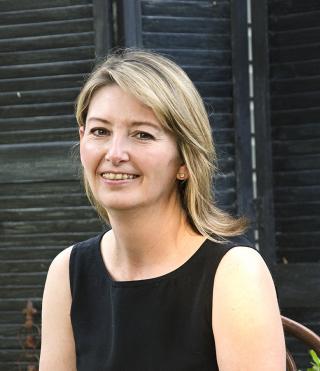
Today (March 29), Page Harrington will present the 2019 Betsey Wright Distinguished Lecture on the topic “Women’s Suffrage and Race Relations: A Divided Legacy.”  The event is co-sponsored by the CALS Butler Center for Arkansas Studies and the Arkansas Women’s History Institute.

The program begins at 12 noon at the Ron Robinson Theatre on the CALS Library Square campus.

As the Centennial of the 19th Amendment approaches in 2020, promoters and writers of history must be aware that an authentic narrative of the suffrage should be inclusive and respectful of the roles of all who worked to ensure women’s suffrage. Women and men of color worked for women’s suffrage for more than 70 years in multiple organizations. Some of the organizations were integrated and open to all, while others supported a culture of racial bias.

How, then, can today’s audiences interpret an accurate and honest representation of the campaign for suffrage without focusing on applying negative labels to any individual or organization? The centennial is an opportunity to reframe the public narrative of suffrage in a relevant and racially transparent way. Learn techniques and resources to navigate the politically divisive rhetoric and find the honest and productive tone for your community, organization, or historic site or project.

Page Harrington is a consulting public historian specializing in early 20th Century women’s history. As President of Page Harrington & Company, LLC, she advises museums on creative and practical strategies to integrate women’s history into existing museum interpretation, exhibits, and programs. Harrington’s forthcoming book, INTERPRETING THE LEGACY OF SUFFRAGE AT MUSEUMS AND HISTORIC SITES, will be released in fall of 2019.

Harrington is the former Executive Director of the National Woman’s Party at the Belmont-Paul Women’s Equality National Monument, the founding Co-Chair of the Women’s History Affinity Group for the American Association for State and Local History, and Co-founder of the Women’s Vote Centennial Initiative. She also served on the Scholar Committee to advise the U.S. Congressional Commission on their exploratory study for an American Museum of Women’s History. Harrington holds two master’s degrees from the University of San Diego: one in Public History & Historic Preservation and the second in Non-Profit Management & Leadership.

The Betsey Wright Distinguished Lecture focuses on matters of politics, government, and public policy of special interest to women. It pays tribute to the long political career and advocacy work of Betsey Wright, who served as chief of staff for Governor Bill Clinton for seven years and as deputy chair of the Clinton 1992 Presidential Campaign. She also served as executive director of the National Women’s Political Caucus and as campaign manager for Bill Clinton’s successful gubernatorial campaigns in 1982, 1984, and 1986.

Women Making History: Dr. Raye Montague

In February 2017, Raye J. Montague, RPE was recognized on “Good Morning America” for her work as a pioneering scientist. She was not only the first woman to design a U.S. Naval ship using a computer, or the first African American to do so, she was the first PERSON to do so.

She began a career in Washington, DC with the United States Navy in 1956 and retired in 1990 after serving in numerous leadership roles during her tenure of thirty-three and one-half years. Her work designing the FFG-7 Class in the early 1970s revolutionized naval ship design.  She also served as the first female Program Manager of Ships in the US Navy and was the first female professional engineer to receive the Society of Manufacturing Engineers Achievement Award.

Throughout her career she received many honors, and was often the first woman of any race to achieve statuses in the engineering profession.

In 2006, she returned to Arkansas.  She is involved with numerous civic activities including mentoring students in the sciences at UA Little Rock and also eStem Public Charter School.  She was inducted into the Arkansas Black Hall of Fame in 2013.

Dr. Montague died in October 2018. She will posthumously receive the Fribourgh Award from UA Little Rock later in 2019.  In her honor, Mayor Frank Scott Jr. declared today (March 28, 2019) as Dr. Raye Jean Montague Day.

Women Making History: Charlotte Stephens

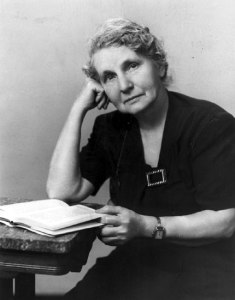
Charlotte Andrews Stephens was the first African American teacher in the Little Rock School District.  Between 1910 and 1912, when an elementary school for African Americans was named after her, she became the first woman to have a public building in Little Rock named after her.  For nearly fifty years, Stephens Elementary (which is now in its third building) would be the only LRSD building named after a woman.

Born into slavery, Charlotte Stephens was educated first by her father who ran a private school in what is now Wesley Chapel UMC.  At the age of 15, she started teaching at the Union School to finish out the term of a white teacher who had become ill.  She taught for 70 years, retiring at age 85 in 1939.

From 1870 to 1873, she attended college at Oberlin College, though not always every semester. (It is possible she was the first African American woman from Arkansas to attend college, but that cannot be verified.)  During her career with the LRSD, she taught students in all grades. She was twice principal of Capitol Hill School, and later headed the high school Latin Department.  At the time of her retirement, she was librarian of Dunbar High School.

The land on which Stephens Elementary now sits was once owned by Charlotte Stephens.  She donated the land and attended the 1950 dedication of the second Stephens Elementary.  That building was torn down in 1994 to make way for the current Stephens Elementary.  Some of her grandchildren attended the dedication of the new and current Stephens Elementary.

Women Making History – The Mount Holly Cemetery Association

Instead of featuring one woman, today’s entry focuses on scores of women. The Mount Holly Cemetery Association has been protecting, preserving, and promoting Mount Holly Cemetery for over 100 years. The organization was empowered with these roles by the Little Rock City Council at a time when women still did not have the right to vote.

The Mount Holly Cemetery is a treasure trove of history, architecture and horticulture on the edge of downtown Little Rock.  It was established in 1843 when Chester Ashley and Roswell Beebe donated the land to the city of Little Rock. Feeling the town fathers were not giving the cemetery the attention it deserved, a group of Little Rock businessmen formed a cemetery commission on March 20, 1877. Charter members of the commission were J. H. Haney, Fay Hempstead, James Austin Henry, Philo O. Hooper, and Frederick Kramer. However the private group of men did no better in maintaining the cemetery.

In 1914, a contingent of the town’s women became critical of the cemetery’s unkempt appearance and took over the reins from the men. Following adoption of City Ordinance No. 2199 in June 1915, the ladies’ Mount Holly Cemetery Association was incorporated on July 20, 1915. (It should be noted this action by the women came at a time when women did not have the right to vote.)

The Mount Holly Cemetery Association grew out of a meeting which took place on June 9, 1914 at the home of Mrs. A. H. Scott. Thirty-six women gathered for the purpose of improving the cemetery.

An executive committee was formed, and the women started working on improvements to the cemetery. Though first viewed by some men as an auxiliary to the Cemetery Commission, it quickly became apparent that the women were in no mood to take a back seat in matters pertaining to Mount Holly.

The first executive board (from June 1914 to July 1915) included Mrs. A. H. Scott, Mrs. B. S. Johnson, Mrs. George Thornburgh, Mrs. Moorhead Wright, Mrs. H. M. Bennett, Mrs. George Worthen, Mrs. W. E. Green, Mrs. George Stratman, Miss Louise Gibson and Miss Clara Hotze.

The July 1915 incorporators were Mrs. Scott as well as Julia E. Bennett, Eva C. Shields, Rosa M. Miller, Ruby P. Ratcliffe and Marguerite R. English. Mrs. Bennett, known affectionately as “Scrap” would serve as the first president, and Miss Miller was the first secretary.

Over the years the Association has undertaken countless projects large (construction of a mausoleum) and small (signs on the lanes) to improve Mount Holly Cemetery for its residents and for visitors.

In 1993, the Association published a history of the first 150 years of the cemetery.  More recently, they launched the annual RIP (Rest in Perpetuity) picnic held the last Sunday in April on the grounds.  They have also published a cookbook–Recipes in Perpetuity.

Today, the Mount Holly Cemetery Association is still going strong!

Women Making History: Bernie Babcock

Julia Burnelle “Bernie” Smade Babcock was an author and museum founder.  When her husband died, leaving her with five children, she starting writing for money. She published several temperance novels and later wrote for the Arkansas Democrat.  She also published a magazine, wrote plays which were performed in New York, and authored a poetry anthology.

She later became recognized as an expert on Abraham Lincoln and wrote several books about him, as well as other historical figures.  For her writing skills, she became the first Arkansas woman to be included in Who’s Who in America.

In 1927, after professional curmudgeon H. L. Mencken wrote derisively of Arkansas, she decided to start a museum. The Museum of Natural History and Antiquities was first located in a Main Street storefront.  In 1929, she “gave the City of Little Rock a Christmas present” by giving the museum to the city.  It was relocated to the unfinished third floor of City Hall, with her as its employee. After being closed during part of the Great Depression, she relocated the museum to the Arsenal Building and reopened it as the Museum of Natural History.  She was involved in the efforts to rename City Park in honor of Douglas MacArthur (who had been born there) and welcomed him when he came to Little Rock in 1952.

Following her retirement in 1953, she moved to Petit Jean Mountain where she wrote and painted.

After more name changes and a relocation, her museum is now known as the Museum of Discovery and is an anchor in the River Market district.