Little Rock Look Back: Little Rock becomes a First Class City

On March 9, 1875, the City of Little Rock became a City of the First Class in Arkansas. It was the first city in the state to receive this designation.

This was in conjunction with the adoption of the Arkansas Constitution of 1874 which created this status.  The Constitution defines them as: “All cities, which at the last federal census had, or now have, a population exceeding two thousand five hundred (2,500) inhabitants shall be deemed cities of the first class.”

March 9 is just one of several dates Little Rock could celebrate as a birthday.

  • January 6, 1866 – Little Rock government resumes operations following the Civil War
  • November 2, 1835 – Little Rock is incorporated as a City
  • November 7, 1831 – Little Rock is incorporated as a Town
  • October 27, 1825 – Little Rock given the right to elect a governing board of trustees
  • June 1, 1821 – Little Rock officially becomes capital of Arkansas
  • April 9, 1722 – Jean Batiste Benard de La Harpe sees Le Petite Roche

There could also be the dates in 1812 when William Lewis built the first home in Little Rock (a shack) or in February 1820 when the first permanent settlement was established.  But neither of those have exact dates that are remembered.

Women Making History: Myra Jones

The late, great Myra Jones was born on March 8. So today we highlight her.
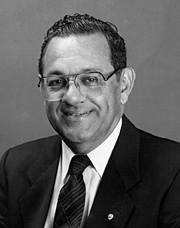

Myra Jones was elected to the Little Rock City Board in 1976. She served eight years on the Board, including four years as Vice Mayor of Little Rock.  She was the first female to serve as Vice Mayor of Little Rock.  In a nod to changing times, she was the first woman to be referred to in the City minutes by her own first and last name instead of being Mrs. followed by her husband’s name.

From 1985 to 1998, she served seven terms in the Arkansas House of Representatives and was the first woman to chair a standing committee:  the City, County and Local Government Committee.

Following her retirement from the legislature, she continued in business. She served on the board of Noram Energy (formerly ArkLa) for seventeen years becoming one of the first women from Arkansas to serve on a Fortune 500 Board. She later served as a local affairs lobbyist for the real estate industry. She once again became a fixture at Little Rock City Hall until her death in 2012.

A graduate of Oberlin College, she was a lifelong musician and would return in the summer to her native South Dakota to play clarinet with the Belle Fourche Cowboy Band. She had first joined the band as a high school senior.  Once it was reconstituted in 1980, the band (complete with white chaps, white hats, and red shirts) would play for the Black Hills Rodeo in Belle Fourche, march in the Fourth of July parade, and perform concerts in the area.

Little Rock Look Back: Suit filed calling to integrate LR public facilities

Attorney Wiley Branton, who filed the law suit

Attorney Wiley Branton, who filed the law suit

On March 8, 1962, 22 members of the Council on Community Affairs filed a lawsuit in U.S. District Court against the city Board of Directors for the desegregation of “public parks, recreational facilities, Joseph T. Robinson Auditorium and all other public facilities.”  The members included journalists, dentists, attorneys, school teachers and other members of Little Rock’s African American professional class.  Attorney Wiley Branton, Sr., filed the suit.

Though the City’s Auditorium Commission was mentioned in the suit, they were not served with papers. So when media contacted them, they made no comment.

Historian John A. Kirk has written, “Members of the City Board were willing to admit that the desegregation of public facilities was ‘a foregone conclusion’ if the case went to court, but they remained committed to fighting the lawsuit if only to buy time to devise other methods to avoid desegregation.”

The decision was rendered in February 1963 that the City must integrate its public facilities.

In 1951, the City’s library facilities had been integrated followed by the bus system in 1956. Both of these had been accomplished without incident.  Of course the same was not said for the integration of the public schools in 1957.

In 1961, there had been attempts to have Robinson Auditorium integrated after Duke Ellington threatened to cancel a concert rather than play to a segregated crowd.  The Auditorium Commission refused to change its policy, and Ellington did not play the concert.

Based on efforts of the Council of Community Affairs working with white business leaders, downtown lunch counters and businesses were integrated starting in January 1963.  The efforts of the Council of Community Affairs and the white business leaders are commemorated in the Arkansas Civil Rights Heritage Trail with medallions in front of the Little Rock Regional Chamber building.

2nd Friday Art Night – The Cons of Formant at the Old State House Museum

Tonight (March 8) from 5pm to 8pm, explore the Old State House Museum exhibits and the Museum Store, and enjoy the folk rock sounds of The Cons of Formant!

Combining backgrounds from old soul-filled hymns and rock & roll to blues and bluegrass, The Cons of Formant have established themselves as a core part of the Americana & Folk Rock movement. The diverse blend of styles has created a beautiful balance of sound that is uniquely their own.
Beer, soft drinks and light snacks will be provided.

2nd Friday Art Night – Bicentennial Bash at Historic Arkansas Museum

In conjunction with the 200th anniversary of the creation of the Arkansas Territory, Historic Arkansas Museum is hosting a Bicentennial Bash.

Join them from 5 – 8 pm, for 2nd Friday Art Night, with live music by Two Larks in the Morning and #ArkansasMade beer from 6 Mile Brewing of Ozark

Life in the Western Country: Arkansaw Territory from 1819-1836
This exhibit celebrates the 200th anniversary of the creation of “Arkansaw” Territory. Historical documents, like the deed to the first newspaper print shop west of the Mississippi, provide context for stories of opportunity and westward migration, while a needlework sampler stitched by a young Cherokee girl at the Presbyterian school known as Dwight Mission speaks to the displacement and cultural assimilation of Native Americans.
In the Theater
Celebrate 200 Years of Pulaski County with a talk in HAM’s Ottenheimer Theater at 6 pm, featuring Jim Metzger, a representative from the Pulaski County Historical Society, with an introduction by Pulaski County Judge Barry Hyde.

#5WomenArtists
Through their social media campaign #5WomenArtists, the National Museum of Women in the Arts (NMWA) asks, “Can you name five women artists?” HAM is participating by exhibiting the work of five forward-thinking, female Arkansas artists: Martha Barber, Jenny Delony, Louise Halsey, Elsie Freund, and Natalie Henry.

2nd Friday Art Night at CALS Library Square

Image may contain: text

The Bookstore at Library Square Gallery is proud to present “T.C. Tributes. Collections. Artists Inspired by T.C. Edwards” This exhibit celebrates the life of legendary rocker T. C. Edwards, the autistic lead singer in the band T. C. & The Eddies. Catch live music by Bill Jagitsch (AKA Bluesboy Jag) lead guitarist for T.C. & The Eddies, and EC Haynes at this very special 2nd Friday Art Night event.

At the CALS Bobby Roberts Library – Part to Whole: The Making of Art, the Artist, and the Artist Group with artists Mia Hall, Robyn Horn, Dolores Justus, Barbara Satterfield, Sandra Sell, and Elizabeth Weber

The newest exhibition tells the story of how work is made, why work is made, who the artist is, and how ongoing conversations among like-minded artists often lead to wholes greater than the sum of their parts.

Three other continuing exhibitions include Terry Brewer’s work from his time in Nepal, Charles Henry James in our Concordia Gallery, and Ron Robinson’s collection of vintage movie posters.

10 Years of UA Little Rock and CALS Collaborating on Arkansas History

UA Little Rock and the Central Arkansas Library System partnered 10 years ago to make accessible an extensive collection of Arkansas historical documents through a joint catalogue and a well-equipped research room in the CALS Roberts Library.

The UA Little Rock Center for Arkansas History and Culture and the CALS Butler Center for Arkansas Studies have worked together over the decade to provide more historical collections and expanded services to better serve Arkansans.

Celebrate with them at a reception in the Galleries at Library Square on March 8, 2019 from 5 pm until 8 pm.

Live music will entertain and celebratory cupcakes will be served.