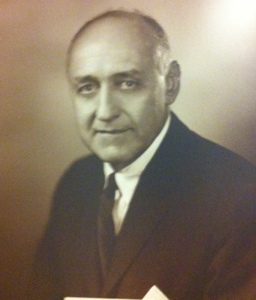
Little Rock Look Back: Police Chief George Counts

Little_Rock_PatchThis afternoon at 2pm, a ceremony will be held at Mount Holly Cemetery to commemorate the installation of a grave marker for former Little Rock Police Chief George A. Counts.

Chief Counts died in 1884 at the age of 35 years old.  For 130 years his grave has been unmarked.  Thanks to his Great-Grandson, Jim Counts, LR Chief of Police, Stuart Thomas and the Little Rock Police Department, his grave is now marked.

According to Police Department records, Chief Counts was the first chief of a full-time paid police force in 1874. He only served briefly at that time.  Then, in 1878, he was again elected Police Chief by the City Council.  His name was placed in nomination by City Councilman Isaac Gillam, who was one of Republican African Americans serving on the City Council at the time.  There were three candidates. In addition to Counts, the other two candidates were then-current Chief Joseph Plunkett and a gentleman named Tom Scott.

The first vote was five for Counts, five for Plunkett and one for Scott. This vote total continued for each of the 103 ballots that took place. Finally, on the 104th ballot, Alderman Dick Lewis (who had been the sole vote for Mr. Scott) changed his vote to former Chief Counts. This made Chief Counts again the Police Chief.  He served from 1878 until 1883 when he resigned due to health reasons.

Little Rock Look Back: General MacArthur Returns to Little Rock

MacArthur and Mayor Remmel

General MacArthur and Mayor Remmel

On Sunday, March 23, 1952, General Douglas MacArthur made his only post-infancy visit to Little Rock. He had previously been scheduled to visit Mississippi, and Little Rock Mayor Pratt Remmel had persuaded him to add a visit to Little Rock to the agenda. The fact that Little Rock now had a Republican mayor had apparently piqued the General’s interest.

General MacArthur, accompanied by his wife and son as well as several journalists and members of his military retinue, arrived at Little Rock Airport at 10:40 am. He was met by a delegation of civic leaders including Mayor Remmel. Alderman James Griffey made welcoming remarks on behalf of the city. Then the General and Mayor boarded an open car and led a motorcade from the airport to downtown.

The motorcade’s destination was Christ Episcopal Church at Capitol and Scott streets. It was at this church that MacArthur had been baptized as an infant. The delegation was greeted by the Episcopal Bishop R. Bland Mitchell, Rector J. Hodge Alves, and Rector Emeritus W. P. Witsell. (While he had been Rector, Dr. Witsell had garnered national attention by issuing an Easter blessing to Gen. MacArthur as he had been evacuating the Philippines at the height of World War II.) In order to gain admittance to the church that morning, church members and guests had to have tickets.

Following the worship service, the General and his party went to three events in the park named in his honor. The first was a tour of the Museum of Natural History (now the Museum of Discovery and located in the River Market; the current tenant of the building is the MacArthur Museum of Arkansas Military History), which was located in the building in which the General had been born. After the tour, he spoke at a dedication of a small rose garden adjacent to the museum. It was sponsored by the Little Rock City Beautiful Commission and the Garden Clubs of Greater Little Rock.

General MacArthur addressing several thousand in MacArthur Park.

General MacArthur addressing several thousand in MacArthur Park.

Though every stop of the General’s visit had featured crowds, the largest was at the third location in MacArthur Park. A crowd of several thousand greeted the General as he spoke from the Foster Bandshell in the park’s southwest corner. Chamber of Commerce president Richard C. Butler (brother-in-law of Mayor Remmel) was the master of ceremonies. Following an invocation by Methodist Bishop Paul Martin, the only other speaker was the General. In his remarks he spoke of his Southern heritage and of his appreciation for the support of the citizens of Little Rock over the years.

Several gifts were bestowed upon the MacArthurs at the ceremony. The City of Little Rock presented Mrs. MacArthur with an engraved silver serving tray.

Following the events in MacArthur Park, the family retired for a brief respite to the Hotel Marion. They then attended a luncheon buffet in their honor at the home of Howard and Elsie Stebbins on Edgehill Road. The General and Mrs. MacArthur circulated through the house greeting guests and then eschewed a special table in favor of balancing their plates on their laps and sitting in wingback chairs. Meanwhile Arthur MacArthur stayed upstairs and discussed stamp collecting and other hobbies with the Stebbins’ two teenage sons.

Following the luncheon, the MacArthur party went back to the airport and by 4:00pm, the plane was in the air.

Though this visit was coming at the end of a whirlwind of activities, by all accounts, the General and Mrs. MacArthur were very gracious and accommodating. The General was being mentioned as a potential GOP candidate for President, but purposefully steered clear of any political comments in his remarks. He and Mrs. MacArthur dutifully posed for photos not only for the media but also for amateur photographers. At lunch, the General even asked a Gazette photographer to take a photo of him with his Little Rock Police motorcycle escorts so that they could have a souvenir of the visit.

Little Rock Look Back: Gen. R. F. Catterson MD, Little Rock’s 30th Mayor

R_F_Catterson_BGen_ACWOn this date in 1835, future Little Rock Mayor Robert Francis Catterson was born in Indiana, the son of Irish immigrants.  He studied medicine in Ohio and established a medical practice in Indiana upon completion of his studies.

With the outbreak of the Civil War, he enlisted as a private in the Union Army.  Throughout the war, he was promoted and was eventually mustered out as a brigadier general in 1866.  During his service, he participated in the siege of Vicksburg, the Battle of Chattanooga, the Atlanta Campaign and Sherman’s March to the Sea.

Following his departure from the military, Catterson decided not to return to medical practice.  He moved to Arkansas and worked for a brief time in the cotton commodities field.  He later returned to military service commanding a militia fighting the Ku Klux Klan.  Catterson was appointed US Marshal and would also command the Brooks troops during the Brooks-Baxter War in Little Rock.

In November 1871, he was elected Mayor of Little Rock. His election ended a tumultuous two-year period where the Little Rock City Council tried unsuccessfully to remove Mayor A. K. Hartman.  Mayor Catterson served a relatively quiet two year term in office until November 1873.

Following the completion of his term, Mayor Catterson moved to Minnesota. He later moved to Texas where he died on March 30, 1914 at the age of 79.  He is buried in the San Antonio National Cemetery.

Little Rock Look Back: Pat L. Robinson

IMG_4517On this date in 1900, future Little Rock Mayor Pat L. Robinson was born.  While I cannot verify that he was indeed named after St. Patrick, it would be fairly reasonable to assume there might be a connection, especially given the fact that he was Catholic.

Robinson was a rising star of Little Rock Democratic politics.  In April 1929, just weeks after his 29th birthday, he was elected Mayor.  He had twice been elected as City Attorney (1926 and 1928) and was one of the youngest to serve in that position.

During Mayor Robinson’s tenure, he announced plans to construct a new airport.  That project led to the creation of what is now the Bill and Hillary Clinton National Airport.  Mayor Robinson was also involved in helping Philander Smith College secure the property where it is now located.  In addition, during his tenure, what is now the Museum of Discovery was folded into the City of Little Rock.

Single at the time he was in office and generally considered good looking, Mayor Robinson was sometimes referred to as the “Jimmy Walker of the Southwest.” Walker was the handsome and charming Mayor of New York City at the time.

Mayor Robinson ran afoul of some of the Democratic party leaders. Records don’t seem to indicate exactly what actions he took or did not take.  One thing that is brought up is that the City went into financial distress during his tenure.  Considering the Wall Street crash happened shortly after he took office, that financial state was not unique to Little Rock.

IMG_4532During this era in Little Rock, it was customary for an incumbent mayor to be given a second term. But City Clerk Horace Knowlton challenged Robinson in the primary.  It was a bitter campaign with Robinson linking Knowlton to disreputable denizens and Knowlton charging Robinson with “an orgy of spending.”  Robinson initially came out 17 votes ahead. But after a review and a lawsuit, it was found that Knowlton ended up with 10 more votes and became the nominee.  At the time, being the Democratic nominee was tantamount to election.

After he left office, Robinson practiced law for a few years in Little Rock and then left the city.  Records do not indicate where he went but he no longer appeared in the City of Little Rock directory by the early 1940s.

Septaquintaquinquecentennial of Christ Church in Little Rock (that means 175 years)

christchurch_scaledThough there have been several churches and institutions in downtown Little Rock for over a century, Christ Episcopal Church has been at Scott and Capital Streets since 1840. That marks probably the longest continuous single use of one location in Little Rock’s history.

Today, the church marks its Septaquintaquinquecentennial.  The first church service was held on March 10, 1839, at Little Rock’s Presbyterian Church, which was then on what is now Second Street. The Rt. Rev. Leonidas Polk, missionary bishop of Arkansas, conducted the service.  After it was concluded, a group met in the home of Senator Chester Ashley and organized Christ Episcopal Church, named after Christ Church in Alexandria, Virginia, of which several of those present had been members.

Among the early members of the church were several future Little Rock Mayors including Lambert J. Reardon, John Wassell, Samuel Webb and Gordon Peay.  Nicholas Peay, Gordon’s father and a member of the church, served on the Little Rock City Council.  Future Little Rock Mayor William Ashley was the first Little Rock resident to be married at Christ Church.

The first sanctuary was constructed in 1840-1841 and was later destroyed by fire in 1873 (most likely due to a lightning strike).  After meeting in a variety of places, a chapel was constructed on the property and served as the church’s primary place of worship while the new sanctuary was being built.  It opened in 1887.  It was in the chapel that future General Douglas MacArthur was baptized as an infant while his family resided in Little Rock.

In 1928, a Parish Hall was built. This was one of the first church buildings in the South which featured a gym and other spaces available for use not just by church members but by the entire city.  It would later serve as the temporary sanctuary of Christ Church.  On October 1, 1938, the second sanctuary burned just as a renovation had been completed.  Though there was no official cause of the fire, it was most likely due to spontaneous combustion of construction materials.

The cornerstone for the third, and current, sanctuary was laid on October 1, 1940.  Construction was completed in 1941.  It was designed by Edwin Cromwell with the unofficial assistance of the then-Rector, Rev. Dr. William Postell Witsell. (Dr. Witsell appreciated architecture and the arts. He was very instrumental in the design of the stained glass windows which hang in the church today.  Charles Witsell, one of the founders of the Witsell, Evans, Rasco firm, is a grandson of Dr. Witsell.) In the 1980s, an addition was built along Scott Street to connect the sanctuary with the Parish Hall.

Along with the revitalization of downtown, Christ Church has been active in implementing innovative programming in a variety of areas including sustainability and the arts. The Rector, Rev. Scott Walters, and Associate Rector, Rev. Dr. Kate Alexander, often pepper their sermons with references to poetry, music (both sacred and secular), writers, artists and even comedians.

The Arts at Christ Church program has brought such varied artists as Mavis Staples, Baltimore Konsort and the Vienna Boys Choir to Little Rock. In 1990, Nichols & Simpson, a Little Rock based organ builder of international renown, constructed a new organ for the Christ Church sanctuary replacing a 1954 organ.  While used in worship, it is also used for a variety of organ recitals throughout the year.  Christ Church has been a sponsor of the Arkansas Literary Festival for the past several years and participates in the 2nd Friday Art Night with a rotating gallery of Arkansas artists. In addition, the Undercroft debuted in late 2013. This intimate music space is located underneath the sanctuary and offers a venue for acoustic music.

To mark the 175th anniversary, Rt. Rev. Larry R. Benfield, the thirteenth Bishop of the Diocese of Arkansas will be conducting an Evensong service this evening.  Prior to being named Bishop, he served as Rector of Christ Church.

Little Rock Look Back: City Park renamed for MacArthur

GOn March 9, 1942, Little Rock’s first public park was renamed by the Little Rock City Council.  By a vote of fourteen ayes, zero nays and four absent, the alderman approved ordinance 6388 which renamed the park in honor of General Douglas MacArthur.

The text of the ordinance says that “it is fitting and proper that the bravery and glorious deeds of General Douglas MacArthur, a native son of Little Rock, should be commemorated.”  This was passed a few months after the United States’ entry into World War II. Though he was already a well-established military figure, most of the MacArthur legend during the war would take place after this naming.

The park land had originally served as a horse racetrack in the early days of Little Rock.  By 1836, the federal government purchased the land for construction of a military arsenal.  The flagship building, the Arsenal Tower building, is the only remaining structure from that time period.  The land served as a military outpost until 1892.  On April 23, 1892, a land swap took place where in the City of Little Rock was given the property with the stipulation that it would be “forever exclusively devoted to the uses and purposes of a public park.” (Never mind that the federal government took part of the land back for the construction of the Wilbur Mills Freeway.)  In return for giving the City this land, the federal government took possession of land on the north side of the Arkansas River (then part of Little Rock) – that 1,000 acres became Fort Logan H. Roots.

The park opened on July 4, 1893, with the name Arsenal Park. Since it was the City’s first and only park at the time, residents started referring to it as City Park. In time, the designation Arsenal Park fell from use.  In fact, it is referred to as City Park exclusively and officially in City documents throughout the first 42 years of the 20th Century.

The action of the City Council in March 1942, was accompanied by petitions encouraging the action which were submitted by the Arkansas Authors and Composers Society, the Arkansas Engineers Club and the Pulaski County Republican Central Committee.  City records do not indicate if anyone registered opposition to the name change.

It would be another decade before General MacArthur would return to the site of his birth, a place he had not visited since his infancy.

MacPark ordinance

Little Rock Look Back: Byron Morse, LR’s 55th Mayor

20130222-185157.jpgOn February 23, 1917, future Little Rock Mayor Byron R. Morse was born. A founder of the real estate firm of Rector-Phillips- Morse, he was long active in civic affairs of Little Rock.

Mayor Morse was first elected to the City Board of Directors in November 1960. In 1963, he was chosen as Little Rock Mayor. After serving two years as Mayor, he chose to not seek re-election to the City Board. In 1980, he was appointed to the City Board to fill out an unexpired term. He was later asked to fill another unexpired term but declined.

In 1983, he was elected national president of the Society of Industrial and Office Realtors. Mayor Morse also served as president of the Little Rock Chamber of Commerce, the Little Rock United Way, the Little Rock Red Cross, and was a member of the Board of Directors of the Little Rock Boy’s Club. He was a member of the Fifty for the Future. On July 25, 2001, Mayor Morse died.