On May 3, 1963, the first Arkansas Arts Center produced show took place in its theatre

The Arts Center Theatre view from the stage in 1963

On May 3, 1963, at 8:30 pm, the curtain rose as the Arkansas Arts Center produced its first show in its own theatre.  Though the building would not be officially dedicated until later in May (more about that later), programming had been taking place in the facility for several months.

In December 1962, a community theatre production was the first play in the Arkansas Arts Center theatre.  Over the ensuing months, it would play host to a variety of concerts and performances.  At the time, the Arkansas Arts Center planned to use the theatre as a house for its own productions (one series geared to adults, the other series geared to kids), other shows produced by Little Rock organizations, and touring shows which might be too small for Robinson Auditorium.

Friday, May 3, 1963, was a momentous evening, as the Arkansas Arts Center presented Rumpelstiltskin.  (Since the theatre space has been focused on children’s theatre since the late 1970s, it seems prescient that the first AAC produced play was a children’s production some fifteen years earlier.)

The production was overseen Joseph N. Carner, who was the theatre director.  It was his hope that the Arts Center plays geared toward children would also encourage other groups throughout the state to produce plays specifically for younger audiences.  Margaret Davies Carner, who taught speech at Little Rock University, directed the play.  She also taught drama classes at the Arts Center.

The cast included Garry White as the title character with Dell Blaine, Michael Hosman, Lesie Smith, Tom Abraham, Dickie Atchison, Butch Lashee, Henry Fletcher, Charles McRaven, Ann Thomson, Dannette Joe Baker, Sallie Penn, Paul Motes, Leslie Newell, and Robin Hosman.

In addition to a Friday night performance, there were 2:30 matinees on Saturday and Sunday that were geared toward children’s audiences.

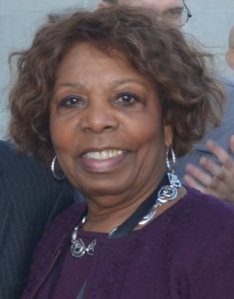
Happy Birthday to Lottie Shackelford, who served as Little Rock’s 68th mayor

On April 30, 1941, future Little Rock Mayor Lottie Shackelford was born. Throughout her career in public service she has been a trailblazer.
Active in community activities and politics, she ran for the City Board in 1974 and lost.  But she was appointed to the Little Rock City Board in September 1978 to fill a vacancy.

This made her the first African American woman to serve on he City Board, and indeed on any governing board for the City (during Reconstruction, there were at least six African Americans on the City Council, but they were all men.) She was subsequently elected to a full-term on the City Board in 1980 winning 55% of the vote over three male candidates.

She was subsequently re-elected in 1984 (unopposed) and in 1988 (with 60% of the vote).

In January 1987, Shackelford became the first female mayor of Little Rock when she was chosen by her colleagues on the City Board to serve in that position. She was Mayor until December 1988.  During that time, Mayor Shackelford invited the Little Rock Nine back to the City to be recognized for the 30th anniversary of their integration of Central High School.

From 1982 until 1992, she served as Executive Director of the Arkansas Regional Minority Purchasing Council.  She left that position to serve as Deputy Campaign Manager of Clinton for President.  She subsequently served on the Clinton/Gore transition team. She later served on the Overseas Private Investment Corporation from 1993 to 2003. She was the first African American to be in that position.

A graduate of Philander Smith College, she has also studied at the Arkansas Institute of Politics at Hendrix College and the Kennedy School of Government at Harvard University.

Mayor Shackelford has also served on numerous boards including the Little Rock Airport Commission, Philander Smith College, Chapman Funds (Maryland) and Medicis Pharmaceutical Corporation (Arizona).  She has the longest tenure of any serving as Vice-Chair of the Democratic National Committee.

Mayor Shackelford was in the first class of inductees for the Arkansas Black Hall of Fame.  In 2015, she was inducted into the Arkansas Civil Rights Heritage Trail.

Little Rock Look Back: Mayor Sam M. Wassell

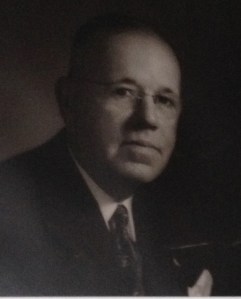
Wassell

On April 28, 1883, future Little Rock Mayor Sam M. Wassell was born.  His grandfather John W. Wassell had been appointed Mayor of Little Rock in 1868.  He is the only Little Rock Mayor to be a grandson of another Little Rock Mayor.

Sam Wassell served on the Little Rock City Council from 1928 through 1934 and again from 1940 through 1946.  He is one of the few 20th Century Little Rock Mayors who previously served on the City Council.

Wassell was an attorney; he practiced law privately and also served as an Assistant US Attorney.  In 1930, he ran unsuccessfully for the Democratic nomination for the US Congress representing the 5th Congressional District, which at the time included Little Rock.

Wassell ran for Mayor in 1947 and was unopposed in the general election.  (Though the Democratic primary was heated as he took on the incumbent Dan Sprick.)   He was unopposed in his bid for re-election in 1949.  During his second term, President Harry S. Truman visited Little Rock.  In 1951, he sought a third term as Mayor.  No Little Rock Mayor had been successful in achieving a third consecutive term since 1923.  Though he received the Democratic nomination, the Republican party nominated Pratt Remmel who defeated Wassell by a 2 to 1 margin.

With a new USS Little Rock recently put into naval service, it is interesting to note that Wassell’s wife, Ruth Wassell christened the previous USS Little Rock in 1944.

Mayor Wassell died on December 23, 1954 and is buried at Roselawn Cemetery in Little Rock.

Start of Little Rock’s park system with land swap to create Arsenal Park

April 23, 1892, marked the beginning of the City of Little Rock’s public park sLR City Parkystem.  On that date, the City officially took possession of land which would become what is now known as MacArthur Park.
The park land had originally served as a horse racetrack in the early days of Little Rock.  By 1836, the federal government purchased the land for construction of a military arsenal.  The flagship building, the Arsenal Tower building, is the only remaining structure from that time period.

The land served as a military outpost until 1892.  On April 23, 1892, a land swap took place where in the City of Little Rock was given the property with the stipulation that it would be “forever exclusively devoted to the uses and purposes of a public park.” (Never mind that the federal government took part of the land back for the construction of the Wilbur Mills Freeway.)  In return for giving the City this land, the federal government took possession of land on the north side of the Arkansas River (then part of Little Rock) – that 1,000 acres became Fort Logan H. Roots.

After clearing most of the buildings from the land and preparing it for recreation, the park opened on July 4, 1893, with the name Arsenal Park. Since it was the City’s first and only park at the time, residents started referring to it as City Park. In time, the designation Arsenal Park fell from use.  In fact, it is referred to as City Park exclusively and officially in City documents throughout the first 42 years of the 20th Century.

The City Council’s action to name it MacArthur Park in March 1942, was accompanied by petitions encouraging the action which were submitted by the Arkansas Authors and Composers Society, the Arkansas Engineers Club and the Pulaski County Republican Central Committee.

City records do not indicate if anyone registered opposition to the name change. It would be another decade before General MacArthur would return to the site of his birth, a place he had not visited since his infancy.

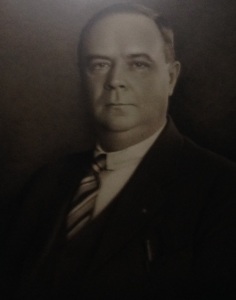
Little Rock Look Back: Charles Moyer, LR’s 44th and 49th mayor

On April 18, 1880, future Little Rock Mayor Charles E. Moyer was born in Glenwood, Minnesota. A man of contradictions, he was both a candidate backed by (and probably personally involved in) the Ku Klux Klan, yet he also brought the Goodwill Industries organization to Little Rock and Arkansas to help those less fortunate.

He came to Little Rock shortly after the turn of the 20th century as a clerk in the Post Office, and later served as a mail carrier. He then worked for Plunkett-Jarrell Wholesale Grocer Company in Little Rock. On January 1, 1921, he took office as County Judge for Pulaski County. In 1924, he ran against incumbent mayor Ben Brickhouse in the Democratic primary. Since Brickhouse had displeased the Klan, which was an active part of Democratic politics in Little Rock and throughout the nation at the time, Moyer won the primary.

Mayor Moyer led the City of Little Rock from April 1925 through April 1929. In 1927, the last lynching in Little Rock took place. While race-baiting crowds were surrounding City Hall demanding an African American prisoner be released to them for vigilante justice, Mayor Moyer was in hiding at an undisclosed location. Not able to get the prisoner they wanted, they took out their venom on another man who had assaulted a white woman and her daughter.

Mayor Moyer sought a third term, but was defeated in the 1928 Democratic primary.  After leaving office in 1929, Moyer moved for a time to Batesville. He returned to Little Rock and was a chief deputy sheriff. From 1937 to 1941, he served as Pulaski County Assessor. In 1941, he returned to the office of Little Rock Mayor after J. V. Satterfield opted to serve only one term and did not seek re-election. Mayor Moyer led Little Rock through most of World War II. He left office in April 1945 and died on May 29, 1945, barely one month after leaving City Hall.