
Little Rock Look Back: Mayoral Race of 1924

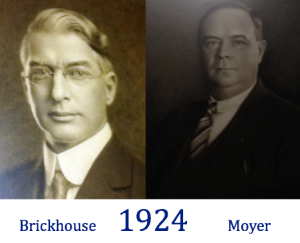
After serving three two-year terms as mayor, Ben D. Brickhouse decided to follow the precedent of his predecessor Charles Taylor and seek a fourth term in the Democratic Primary of 1924.  In the election for his third term, Brickhouse was unopposed. So it would have appeared that he was well-positioned for this fourth bid.

However…

Early in his third term, Brickhouse had broken ranks with the Ku Klux Klan. At the time, the Klan controlled much of Democratic Party politics in Little Rock (and indeed all of Arkansas).  Mayor Brickhouse did not appreciate local Klan leadership trying to dictate City appointments to him.  Beaten but unbowed, the Klan sought someone to run for mayor.  The candidate who was found was Pulaski County Judge Charles Moyer.

In October 1924, Moyer and Brickhouse both announced what everyone in Little Rock already knew, they would be seeking the Democratic nomination for Little Rock mayor.  Traditionally, the primary was in December before the April general election (in which the Democratic nominee was usually unopposed).  The Pulaski County Democratic Committee set the date for the election.

There was a bit of a surprise at the early November meeting of the Democratic Committee when it was announced the election would be in January. Neither Moyer nor Brickhouse nor their surrogates offered much comments on the change.  But Arthur Jones, who announced at the meeting he too would be seeking the office of mayor, protested the change.  The date was set for the later option.

However, a week later, the Committee met again and moved the elections back to the originally anticipated times.  Several of the Committee members had been unaware of the proposed change. Upon further reflection (and likely conversations with candidates), they opted to reverse the earlier vote.

At the start of the race, Moyer talked about the need for better control of City finances, better parks, and improving the police and fire.  Jones attacked the City’s police force and courts in general. He called Brickhouse a “double crosser” who got the City into debt and cannot get it out of it.  About Moyer, Jones said he was reactionary, non-progressive, opposed women’s suffrage, and only improved roads for political purposes.

While Jones was in the race, and lobbed charges at both Brickhouse and Moyer, it really was a two-man faceoff. In fact, neither Moyer nor Brickhouse seemed to discuss Jones much at all.

The major issues in the campaign revolved around government debt and the Klan.  Moyer accused Brickhouse of getting the City into debt and not paying with cash.  Brickhouse countered that the County had more debt than Moyer claimed, and that any fiscal improvements at the County were due to others such as the County Treasurer.  Further, Brickhouse stated he had inherited $1,000,000 in debt. But he gladly took ownership of the $750,000 in debt he had caused because that was the only way to improve the hospital and the parks.  He also laid out plans for a zoo and a City swimming pool.

Moyer was openly backed by the Klan.  Leadership of the KKK attacked Brickhouse. They said he had an attitude of ingratitude for the support he had previously received.  Moyer did not distance himself from the Klan but remained personally silent about the organization or his affiliation with it.  At one of his final rallies, a Moyer Glee Club sang. It was composed of Gus Blass department store employees and contained Jews, Catholics, and Klan members.

The Saturday before the Monday election, both Moyer and Brickhouse had parades on Main Street.  In fact, there were so many people either in the parades or watching them, a retailer estimated he had lost $10,000 in Christmas sales that night.

In the end, the election was not close.  Moyer won all of the City’s wards. His vote total was 5,534, while Brickhouse had 2,944. Jones received 100 votes.  Moyer was unopposed in the April 1925 election.

Many of the Little Rock aldermen were disappointed by the outcome.  Before taking office in April, Moyer met in private with the aldermen to try to assuage their concerns.
Little Rock Look Back: Mayor Woodrow W. Mann

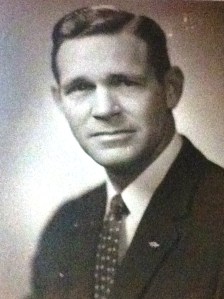
IMG_3231Future Little Rock Mayor Woodrow Wilson Mann was born on November 13, 1916, in Little Rock.  His tenure at Little Rock mayor was tumultuous from both things of his doing as well as events that catapulted him onto the international scene.

In 1955, he ran as the Democratic nominee for Mayor of Little Rock and defeated two term incumbent Pratt C. Remmel, a Republican.  He took office in January 1956 and immediately set about to make a lot of changes.  In addition to revitalizing the City’s bus system, and removing some color barriers at City Hall, he oversaw the dismantling of the copper dome on top of Little Rock City Hall (as opposed to the repair of the dome championed by Mayor Remmel).

Mayor Mann was caught up in a grand jury investigation into purchasing practices at City Hall as well as within the City government in North Little Rock.  Partially in response to this, Little Rock voters approved a new form of government in late 1956.  Mayor Mann opposed the switch to the City Manager form and refused to set the election for the new officials but was ultimately compelled to do so.

He was also Mayor during the 1957 integration of Little Rock Central High School.  He sought to keep the peace and to broker a deal between President Dwight Eisenhower and Governor Orval Faubus.  His powers within the city were, no doubt, hampered because of his lame duck status as Mayor.  In November 1957 following the election of the new City Board of Directors, he chaired his last City Council meeting and left office.

In January of 1958, a series of articles written by Mayor Mann detailed his perspective on the events at Central High. These were carried by newspapers throughout the US.

Because of ill will toward him due to the Central High crisis (he was criticized by both sides) and grand jury investigation, Mayor Mann felt it would be difficult to maintain his insurance business in Little Rock. He moved to Texas in 1959 and remained there the rest of his life.  He died in Houston on August 6, 2002.

An entry about Mayor Mann in the Encyclopedia of Arkansas History and Culture can be found here.

42 Years of Arkansas Rep

On November 11, 1976, the curtain went up on the first Arkansas Repertory Theatre production.  It was the Kurt Weill-Bertolt Brecht musical The Threepenny Opera.  Rep founder Cliff Baker directed the show and played the leading role of Macheath aka Mack the Knife.

Others in the cast included local attorney Herb Rule, Jean Lind, Theresa Glasscock, Connie Gordon and Guy Couch.  Byl Harriell was the technical director and production designer while Donia Crofton was the costume designer.

The production took place in the Rep’s home which was the converted former home of Hunter United Methodist Church on the eastern edge of MacArthur Park.  (Harriell’s business Bylites is now in that location.)

Baker had previously worked at the Arkansas Arts Center theatre when it was attached to a degree granting MFA program. He had also directed shows in other parts of Arkansas.  He returned to Little Rock and founded the Arkansas Philharmonic Theatre which performed in Hillcrest.  The Arkansas Repertory Theatre was a step forward with the establishment of a professional repertory company.

The first season of the Rep would include Company, Suddenly Last Summer, Marat/Sade, and Stop the World–I Want to Get Off. Season tickets for a total of seven shows were $30.

Baker served as Artistic Director of Arkansas Rep from 1976 until 1999.

Little Rock Look Back: LR voters create Airport Commission

On November 7, 1950, Little Rock voters approved the creation of the Little Rock Airport Commission.  This was an extremely rare initiated ordinance.
Local business leaders had tried two times prior to get the City Council to create an Airport Commission.  At the time, the Airport was managed by the Council’s Airport Committee, composed of aldermen.  Both times, the Council rejected the measure.  This prompted an organization called the Private Flyers Association to begin the drive to collect the signatures to place the ordinance on the ballot.  Mayor Sam Wassell was in favor of the creation of the separate commission to oversee the airport and was a member of the Private Flyers Association.

At the general election on November 7, 1950, the ordinance was on the ballot.  It passed with an overwhelming majority: 13,025 voters approved of it, and only 3,206 opposed it.  The Arkansas Gazette had been a proponent of the switch, endorsing it with a front page editorial entitled “An Airport for the Air Age.”

In many ways this movement was a precursor to Little Rock’s switch to the City Manager form of government later in the decade.  Where once the business leadership and city council had been one and the same, over the 1940s the two diverged.  Business leaders were less interested in party politics (and at the time the city races were partisan affairs) and more interested in professionally run government.  The main argument for a separate commission was that it would allow the airport to be run more efficiently and removed from party politics.  These would be the same arguments used by the Good Government Committee in 1956.

Also on the ballot in 1950 was a GOP challenger to a Democrat for one of the aldermen positions.  George D. Kelley, Jr., ran against incumbent Lee H. Evans.  Kelley was the first GOP contestant for a city race since Pratt Remmel ran unsuccessfully for City Council in 1938.  Remmel would be back on the ballot in 1951, this time for the position of mayor in a successful effort.

Little Rock Look Back: Little Rock announced as Clinton Library site

Refuse on the site where the Clinton Center would be built

On November 7, 1997, President Bill Clinton announced his intentions to locate his presidential library in Little Rock at the end of a warehouse district.

The Little Rock City Board met in a special meeting that day to rename part of Markham Street, which would lead to the site, as President Clinton Avenue.

While the announcement was met with excitement in many quarters, there were still some skeptics who had a hard time envisioning a presidential library and park in the middle of a wasteland worthy of a T. S. Eliot poem.

There would be many hurdles between the November 1997 announcement to the December 2001 groundbreaking. But for the moment, City of Little Rock leaders, celebrated the achievement.  Then Mayor Jim Dailey had appointed City Director Dean Kumpuris and City employee Bruce T. Moore to lead the City’s efforts.  Moore and Kumpuris worked with Skip Rutherford and others to narrow the potential sites.

In September 1997, the Clintons were in town for the 40th anniversary of the integration of Central High School.  They surprised Kumpuris and Moore with a decision for a Sunday afternoon visit to the warehouse district proposed site. Secret Service would not let the limousine drive in part of the property, so the Clintons, Moore, Kumpuris, and Rutherford walked up a path to the roof of the abandoned Arkansas Book Depository.  It was there that the Clintons could see the Little Rock skyline which would be visible from the library.

Of course by the time the library had opened in November 2004, the Little Rock skyline was different. Spurred on by the library, several new highrises had been constructed in downtown.

Little Rock Look Back: 1911 Mayoral Election (both of them)

The 1911 Little Rock mayoral election brought progressivism to the forefront in Little Rock’s municipal politics.

After incumbent Mayor W. R. Duley chose not to seek another term, three candidates emerged in late 1910.  The first, J. K. Riffle, was an attorney.  The second was businessman Charles E. Taylor. The third candidate was longtime alderman John H. Tuohey.  An eight-year veteran of the City Council, he had spent the past two years as chair of the Police Committee.

Riffle focused on public safety and the City’s finances.  He charged that if Taylor were elected he would be a pawn of the Arkansas Brick and Manufacturing Company, which Riffle felt had run the city for fifteen years.  Taylor had been an officer of the company but resigned before seeking office.

Tuohey ran a low-key campaign relying on surrogates to make many of his speeches. He was suffering from rheumatism during the campaign.  Mayor Duley and Police Chief Frank McMahon were identified as his advisors.

Taylor, for his part, sought to bring reforms to the City.  A staunch Southern Baptist, (he was Sunday School Superintendent at Little Rock’s Second Baptist Church), he fought against gambling, drinking, and prostitution.  He sought to improve health conditions in the City in addition to enhancing the overall moral tone.

Taylor and Tuohey both claimed to offer a “Square Deal for Laborers and Businessmen Alike.” Taylor called for dramatic changes, while Tuohey espoused the need for gradual growth.

The Democratic Primary for Little Rock was on January 12, 1911.  The election was open only to white men who were members of the Democratic Party.  The results were 1,530 for Tuohey, 1,493 for Taylor, and 506 for Riffle.  It appeared that Tuohey had won by 37 votes.

Taylor and his allies charged that there were 323 illegal votes.  He alleged that the names of dead men and African Americans had been used by voters, as well as voters from North Little Rock.  Taylor requested the poll tax lists from each of the City’s wards.

The central Democratic Committee was uncertain if it could investigate the charges or if they should go to the courts.  On January 11, the Committee agreed to handle the situation.  It gave Taylor ten days to investigate and file charges.  They planned to meet on February 8 to hear both sides and declare a winner.

On January 26, Taylor and Tuohey jointly announced they had agreed to a winner-take-all special election to take place on February 7. (By that time the number of illegal votes had shrunk to 250 after a review of the poll tax books.)

The campaign was intense with both sides holding numerous rallies and blanketing newspapers with advertisements.  Taylor mused, “if Tuohey knew he was right, why did he agree to a new race?”

Only ten fewer votes were cast in the special election than had been cast during the original primary.  The result was Charles Taylor with 1,874 votes and John Tuohey with 1,645.

The April 1911 general election was its usual anti-climactic self with Taylor running unopposed.

The Charles Taylor era of Little Rock, which would last eight years, was about to begin.

Little Rock Look Back: Civic Leader Adolphine Fletcher Terry

Adolphine Fletcher Terry was born on November 3, 1882 to former Little Rock Mayor John Gould Fletcher and his wife Adolphine Krause Fletcher.

Raised in Little Rock, in 1889 she moved into the Albert Pike House on East 7th Street, when her aunt transferred the title to her father. That house would be her primary residence the rest of her life.  Her sister Mary Fletcher Drennan never lived in Arkansas as an adult after marriage. Her brother John Gould Fletcher spent much of his adulthood in Europe before returning to Little Rock and establishing his own house, Johnswood.

At age 15, Adolphine attended Vassar. She later credited that experience as broadening her views on many issues.  After graduating at age 19, she returned to Little Rock.  Her parents both died prior to her 1910 wedding to David D. Terry, which took place at what was then known as the Pike-Fletcher House (and today is known as the Pike-Fletcher-Terry House).

She is perhaps best known today for establishing the Women’s Emergency Committee in 1958 and for her subsequent deeding of the family house to the City for use by the Arkansas Arts Center.  But her entire life was based on civic engagement.

She was instrumental in establishing the first juvenile court system in Arkansas and helped form the first school improvement association in the state. She was long an advocate for libraries, serving 40 years on the Little Rock public library board.  Through her leadership, the library opened its doors to African Americans in the early 1950s. Today a branch of the Central Arkansas Library System (the successor the Little Rock public library) is named after her.  Another branch is named after her Pulitzer Prize winning brother.

Adolphine formed the Little Rock chapter of the American Association of University Women, the Pulaski County tuberculosis association and the Community Chest.

In 1958, when the Little Rock public high schools were closed instead of allowing them to be desegregated again, she called Harry Ashmore the editor of the Gazette and exclaimed, “the men have failed us…it’s time to call out the women.”  With this, she formed the Women’s Emergency Committee to Open Our Schools. This group played a major role in getting the four high schools open the following year.

From 1933 to 1942, David Terry served in the U.S. Congress. During that time, Adolphine alternated her time between Washington DC and Little Rock. But she spent much time in Little Rock raising her five children.

After her husband’s death in 1963, she continued to remain active in civic affairs. In the 1960’s, she and her sister deeded the Pike-Fletcher-Terry House to the City of Little Rock for use by the Arkansas Arts Center upon both their deaths.  Following Adolphine Fletcher Terry’s death in 1976, Mary turned over the title to the City.

Adolphine Fletcher Terry is buried in Mount Holly Cemetery alongside her husband. Three of her children are also buried in that plot.  Her parents and brother are buried in a nearby plot.

Her granddaughters and their families carry on Adolphine Fletcher Terry’s commitment to making Little Rock better.