On 1/8, celebrating 81 Years of Elvis Presley

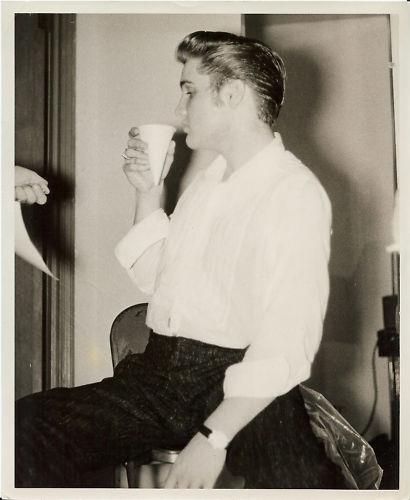
Photo by Wayne Cranford

Photo by Wayne Cranford

Eighty-0ne years ago today, Elvis Presley was born in Tupelo, Mississippi.  He would, of course, grow up to become a cultural phenomenon.

Elvis performed in Little Rock throughout his career.  In April 1972, he played at Barton Coliseum (with tickets on the arena floor going for a whopping $10!).  In the 1950s, he played three at Robinson Auditorium. His first appearance was as his career was just starting to take off. The final appearance on that stage, a mere 15 months later, was when he had become a national icon.

His first appearance at Robinson was on February 20, 1955.  Billed as the “WSM Grand Ole Opry” show, Elvis Presley was third on the bill behind the Duke of Paducah and Mother Maybelle and the Carter Sisters as he began week long tour of Arkansas and Louisiana.  On this date there were a pair of shows, at 3:00 and 8:15 p.m., at Robinson Auditorium. Tickets were 75-cents in advance, $1.00 at the box office and 50-cents for kids. It is believed that Gladys and Vernon Presley attended this performance, invited by Elvis who wanted to introduce them to the Colonel. Gladys was a big fan of the Duke of Paducah. Elvis Presley, Scotty Moore, and Bill Black receive $350 for these two shows instead of their usual $200 per day.  In August 1955, he returned and played Robinson as part of the All-Star Jamboree.

His third and final appearance at Robinson Auditorium was on May 16, 1956.  This time, the Auditorium was packed. The tickets were $1.50 in advance at Walgreens and $2.00 at the box office.  The ads featured 8 great acts in “his” variety show which consisted of the Jordonaires; Rick and Emil Flaim and their orchestra; vocalists Frankie Conners and Jackie Little and comedian-magician Phil Maraquin. A second show was added to accommodate the ticket demand.

About 30 minutes late, due to a missed flight, Elvis appeared on stage in a purple blazer and started singing “Heartbreak Hotel.”  The crowd rushed the stage. Little Rock police officers were able to control them eventually and get the teenagers back to their seats.  While the crowd was impressed, the police officers were less so.  One of the patrolmen told the Arkansas Gazette reporter: “I wouldn’t know him if I saw him. And I wouldn’t be here unless I was being paid.”
2nd Friday Art Night at Historic Arkansas Museum

PhillipRexHuddlestonThe second Friday of 2016 means it is time for the first 2nd Friday Art Night of the year.

Historic Arkansas Museum hosts a free evening of art, history and live music by Phillip Rex Huddleston!  It runs from 5pm to 8pm.

The evening offers a chance to explore two small exhibitions in the museum’s First Floor Hall, including: Maps of Arkansas (1822 – 1856) and Niloak Art Pottery Figurines (produced in Benton, Arkansas, 1909 – 1946).

Maps of Arkansas – This collection of historic maps of Arkansas, a gift of Parker Westbrook, illustrates the evolution of Arkansas from the Territorial Era through early statehood including the division and addition of many counties and a doubling of Arkansas’s population between 1840 and 1850. The maps are engravings on paper and skillfully hand-colored.

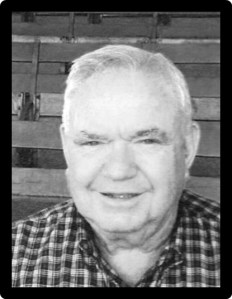
Parker Westbrook (1926 – 2015) is widely acknowledged as the “father” of historic preservation in Arkansas. He received many accolades in the field of preservation, was a museum commissioner for more than 30 years and served as chair for a time. Parker’s contributions to Historic Arkansas Museum include securing log structures for the museum farmstead, teaching us how to lay split-rail fencing, donating an array of historic objects to the museum’s collection and contributing many bottles of his famous muscadine wine to the live auction of our biennial fundraiser.

Niloak Art Pottery Figurines – Niloak is a line of American art pottery produced in Benton, Arkansas, from 1909 until 1946. Although best known for their distinctive mission swirl pottery, Niloak also began producing a castware line called Hywood Art Pottery in the 1930s. The capricious figurines in this display represent the expansive variety of cast pieces produced by the company. The name Niloak is Kaolin spelled backward. Kaolin is a type of fine-grade clay found in Benton, AR. This collection was generously donated to the museum’s permanent collection by former Arkansas congressman Vic Snyder.

Several other downtown museums and galleries participate in 2nd Friday Art Night.

Historic Arkansas Museum is an agency of the Department of Arkansas Heritage.

Happy New Year – Sixteen “16”s for 2016

Here are sixteen images of various 16s from throughout Little Rock.


1616 Scott

The intersection of 16th and Scott Streets


1616 Bus route

Rock Region Metro route 16


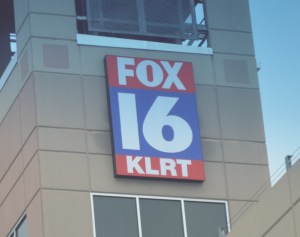
1616 fox

KLRT Fox 16 tower in downtown


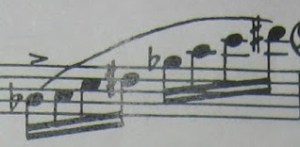
1616 Firebird

Sixteenth notes from FIREBIRD SUITE which will be played by the Arkansas Symphony Orchestra later this month.


1616 candles

Sixteen Candles movie is available for checkout from the Central Arkansas Library System


1616 june novel

The novel THE SIXTEENTH OF JUNE is available at Barnes & Noble


1616 Gas

Gas for $1.60 9/10 a gallon in Little Rock. (Yes, this is a slight cheat on the 16, but the 1 and 6 are still next to each other)


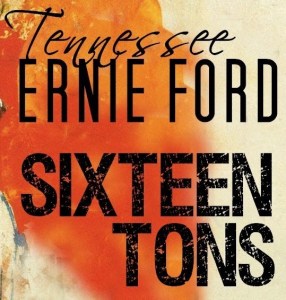
1616 Tons

Tennessee Ernie Ford’s LP “Sixteen Tons” available at music stores and in many homes in LR


1616 street

A street address which reverses the year – 1620 instead of 2016


1616 LRFD

Little Rock Fire Station Number 16 servicing Walton Heights and parts of Pleasant Valley


A clock in the Culture Vulture's car

A clock in the Culture Vulture’s car


A detail from an Arkansas license plate

A detail from an Arkansas license plate


A 16th birthday card

A 16th birthday card


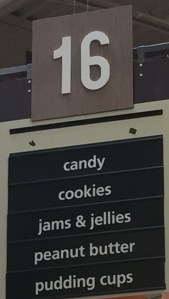
A grocery store aisle

A grocery store aisle


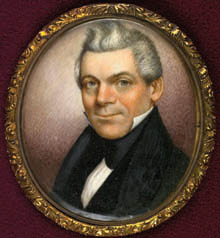
Roswell Beebe, Little Rock's 16th Mayor

Roswell Beebe, Little Rock’s 16th Mayor


Little Rock has the 16th square on the new Monopoly Here & Now Game. And rent is $160

Little Rock has the 16th square on the new Monopoly Here & Now Game. And rent is 160

Bonus Highlight of 2015 – Creative Corridor

Sep opening ccA grand opening to highlight the new features and completed sections of the Creative Corridor’s Low Impact Development (LID) streetscape took place on September 14 as the revitalization of Little Rock’s Main Street continues to take shape, block by block.  Earlier in the year, Matt McLeod’s mural Beneath the Surface was dedicated at the corner of Sixth and Main Streets.  Together with Lorri Acott’s sculpture Peace and mural banners by Stephano and Virmarie DePoyster, public art is taking shape along the Creative Corridor.

The most recently completed improvements in the 500 block of Main Street were opened to the public for strolling along the tree-lined boardwalk on the west side.  All of the pedestrian and environmentally friendly streetscapes in the 100, 200, 300 and 500 blocks of Main Street contain LID features such as bioswales, porous pavers, rain gardens, and other biodiverse vegetation.

The grand opening also celebrated the elements of creative place-making that have occurred. Recent public art installations and the clustering of artistic and creative organizations on Main Street are transforming the Creative Corridor into a downtown hub that supports a great level of pedestrian activity, sociability, recreation and aesthetics.

An arts open house and reception followed the tour, with the Arkansas Repertory Theatre, Arkansas Symphony Orchestra, Ballet Arkansas, Matt McLeod Fine Art, and Cranford Co. opening the doors to their new, connected spaces. Later that week, ACANSA kicked off with a street party showcasing the ASO.

The Creative Corridor is a mixed-use development project aimed at restoring the vitality of Main Street by creating an arts district and retrofitting a four-block segment of the street between President Clinton Avenue and 7th streets. The City of Little Rock estimates that more than $100 million in private and public investment has occurred to date to help make this vision a reality.

2015 In Memoriam – Bert Parke

1515 ParkeBert Parke enjoyed music.  While he may have been better known for listening to the organ at the baseball park (first Ray Winder Field, then Dickey-Stephens Ballpark), he also enjoyed the organ at Christ Episcopal Church.  Of course his affection for the church organ cannot be separated from the fact that his beloved Ann Blair was often in the choir singing with the organ.

To many in Arkansas (and — let’s be honest, beyond Arkansas), Bert was known for his decades-long association with the Arkansas Travelers. He was part of the small group of businessmen who kept baseball in Little Rock in the 1960s by turning the Travelers into the nation’s only community-owned professional baseball team. In the 1970s, he served as Treasurer of the Travelers before being elected as President in 1980. For the next 30 years, he served in that capacity until becoming President Emeritus in 2010. Just weeks before he died, Bert was elected to the Texas League Hall of Fame.

As a businessman, he led Democrat Printing & Lithograph through many innovations and changes. Through it all, he made sure it continued to serve its customers. He passed this on to his sons Frank and John. To his children and grandchildren, he also passed on to his family the importance of philanthropy and serving the community.  He and Ann Blair co-chaired the first Opus Ball for the Arkansas Symphony Orchestra. At the time, there were very few black tie balls in Little Rock, so their leadership was crucial to the success of the event.

Bert also was involved in the MacArthur Museum of Arkansas Military History; he was named an Honorary Lifetime Commissioner of that museum. A life-long member of Christ Episcopal Church, he held many leadership positions in the church and the Episcopal Diocese of Arkansas.

These words do poor service to the man who was Bert Parke. He had a perpetual twinkle in his eye. His mouth was always curled ready to burst into one of his generous smiles. He met no strangers.  For a while in 2015, he and I both were using walkers as we trudged down the side aisle at Christ Church. Well, I trudged. Bert reveled in the affection as he worked the crowd in a way that would be the envy of most politicians who try to work a rope line.  Each week, he would check on my progress as I recovered from a broken ankle.

For a better job at capturing the spirit of Bert Parke, here is the Rev. Scott Walters’ outstanding homily which was delivered at his service.

15 Highlights of 2015 – Recital featuring restored 1927 Steinway at Central High

 In September, the LRCH Tiger Foundation and Little Rock Central High School hosted a recital to celebrate the successful completion of the renovation of the 1927 Steinway & Sons grand piano.
It took place in the Roosevelt Thompson Auditorium at the school. The concert was free and open to the public and all were welcome.

The recital showcased the variety of music that has been played on the Model A III Steinway over the past 88 years. The piano was purchased for the school when it opened in September 1927. Over the years, it had fallen into disrepair and been improperly maintained. 

Due to the efforts of the Tiger Foundation (led by project chair Julie Keller), LRCHS Principal Nancy Rousseau and choral director Scott Whitfield, money was raised to restore the piano. A new onsite storage facility was also completed, paid for by donations.  

At the concert, it was announced that the piano would now be named “Scott” in honor of Mr. Whitfield. 

The $38,000 restoration project was undertaken by Mike Anderson of Anderson’s Piano Clinic who assembled a team of experts from Arkansas and Texas.

The Tiger Foundation is led by a 21-member board of dedicated volunteers, many of whom are Central alumni, who are passionate about the continued growth and success of Little Rock Central High School.

2015 In Memoriam – Jim Porter

1515 Porter

In these final days of 2015, we pause to look back at 15 who influenced Little Rock’s cultural scene who left us in 2015.

Jim Porter, Jr., spent a lifetime promoting music in Little Rock.  Along the way, he created social change as well.

A native of Little Rock, he graduated from Little Rock High School and the University of Arkansas.  After college, Jim started out in the family businesses and tried to follow a “traditional” path that his father had paved for him. Working in sales and public relations, he became active doing volunteer work.  Jim realized that the “traditional” path was not for him, and while working in the family businesses, he started bringing in top name entertainers, many of them black, to perform in Little Rock. He was not a singer, nor did he play any instrument, but his love for music and all things connected to music led him towards his calling as an agent/manager and promoter of musicians.

As a promoter of national artists and bands, Jim ran into southern racism and segregation. The Central High crisis in 1957 caused many black artists to refuse to come to Little Rock, fearful for their safety. Jim was forced to concentrate more on booking and managing local musicians through what was at the time Arkansas’ only full time booking and talent agency, Consolidated Talent Corporation (later to become Porter Entertainment). During his booking career from the late 50’s until his retirement in 2001, Jim placed talent across Arkansas (and even in Las Vegas) at clubs, hotels, restaurants, and private functions- anywhere that people needed entertainment.

Jim saw first hand the inequities of black musicians in Arkansas, the separate and very unequal accommodations, and the segregated venues. Never giving up promoting national artists, the 60’s led him and his co-investors to bring in such national names (mostly jazz artists) such as Louis Armstrong, Count Basie, Dizzy Gillespie, Al Hirt, Pete Fountain, Woody Herman, the Four Freshman, Dave Brubeck, George Shearing, Harry James and others.

In 1961, he was arrested for integrating a concert at Robinson Auditorium. A white man, he had entered the segregated balcony.  Knowing the challenges of booking acts in a segregated house (indeed Duke Ellington would cancel his booking at Robinson), Porter had tried to get the facility to change its rules.  It was 1966, when Louis Armstrong returned to Little Rock and played before an integrated house that the new rules were here to stay.  In the early 1970s, he helped bring the musical Hair to Little Rock, with the specter of full nudity causing consternation to Robinson Auditorium and some of the citizenry.

Jim was inducted into the Arkansas Entertainers Hall of Fame in 2005, and the Arkansas Jazz Heritage Foundation Hall of Fame in 2006. He was appointed to the Martin Luther King Commission in 2005 and entered politics to serve as a member of the Pulaski County Quorum Court from 1998 until 2006.

Always an entrepreneur, Jim also started MusAd Recording Studio, where commercial jingles were produced and bands could record demo tapes. The Hot Air Balloon Theatre (in the old Center Theatre on Main Street) was the site for G-movies and live entertainment for kids. The Yellow Rocket, an arcade in the “Heights” is still remembered by now middle-aged adults who spent afternoons and weekends feeding money into the game machines and eating snacks. Jim wrote several books, hosted TV shows (“After Five” and “Scene Around”) featuring restaurants, bars, clubs and their patrons and employees. He was featured on a weekly radio show about dining and entertainment, and wrote “Scene Around” columns and a dining and entertainment guide for the Arkansas Democrat.