
 The Board of Trustees of the University of Arkansas today unanimously accepted UA System President Dr. Donald R. Bobbitt’s recommendation to name Christina Drale, Ph.D., chancellor of the University of Arkansas at Little Rock.
Bobbitt previously named Drale acting chancellor following the resignation of former Chancellor Dr. Andrew Rogerson that went into effect on Sept. 1. The Board voted to approve Bobbitt’s recommendation to hire Drale as permanent chancellor at its regularly scheduled meeting today at the University of Arkansas, Fayetteville.
“I’m very pleased to have been given the confidence and support from Dr. Bobbitt and the Trustees to help guide UA Little Rock into a new era of improvement in many areas on campus,” Drale said. “This is a tremendous opportunity to bring the campus and the community together and work with our students, faculty, staff and alumni to move UA Little Rock forward in the most efficient and effective ways possible. I appreciate the supportive reception I’ve gotten so far on campus and in the community, and I look forward to helping make this institution all it can be.”
Drale has served as interim executive vice chancellor and provost at UA Little Rock since October 2018. She previously served as associate vice chancellor for faculty relations and administration. She earned a doctorate degree in sociology, a Master of Arts in sociology, and a Bachelor of Arts in communications, all from the University of California, San Diego.
“Dr. Drale is widely respected on campus and is equipped with the necessary skillset to guide UA Little Rock through the challenges it currently faces and help solidify its unique standing as a comprehensive metropolitan university serving our Capital City and the entire state,” Bobbitt said. “I appreciate her stepping in recently to accept the challenge as acting chancellor and look forward to working with her and supporting her efforts to improve the institution.”
The campus started out as Little Rock Junior College in 1927 and was housed inside the new Little Rock High School (now Little Rock Central High School). After transitioning to Little Rock University, in September 1969, it joined the University of Arkansas System and became the University of Arkansas at Little Rock.
Dr. Drale is the tenth permanent leader of the campus. Previous presidents and chancellors have been:
R.C. Hall (1927-1930)
John A. Larson (1930-1949)
Granville Davis (1950‐1954)
Carey V. Stabler (1956‐1972)
G. Robert Ross (1973‐1982)
James H. Young (1982‐1992)
Charles E. Hathaway (1993‐2002)
Joel E. Anderson (2003‐2016)
Andrew Rogerson (2016-2019)
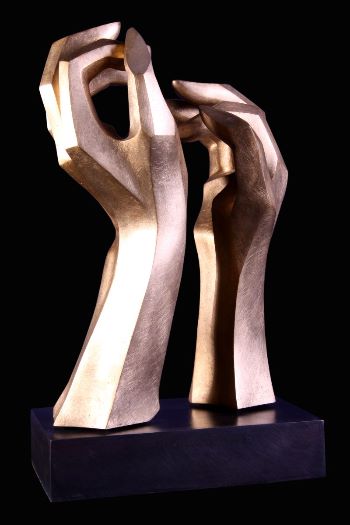 A new exhibit is now open at the Clinton Presidential Center. José Sacal: A Universal Mexican is presented in celebration of the CCIX Anniversary of the Independence of Mexico and National Hispanic Heritage Month
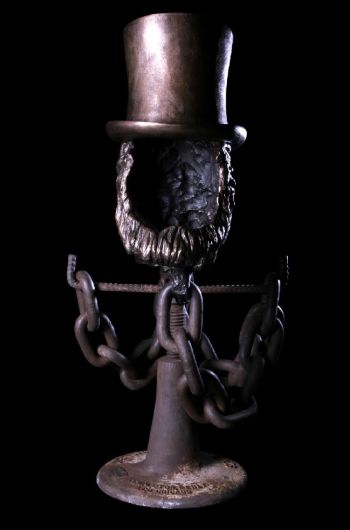 José Sacal: A Universal Mexican includes two groups of the artist’s work: sculptures inspired by other works of art and portraits of historical figures. In his works, Sacal finds the essence of each character or work. It can be a detail or an object, but the rest is something deeper. By recreating them, Sacal gives them a new meaning and establishes an artistic dialogue at a higher level. In his intelligent observation of art and history, Sacal reveals himself as a universal Mexican.


 Art classes and workshops continue this fall at the Arkansas Arts Center’s Riverdale space and select offsite locations. The Museum School offers classes and workshops in painting, drawing, ceramics, printmaking, metals, glass, jewelry and woodworking for all ages and skill levels. Registration for new students opens August 19, and classes begin in September.
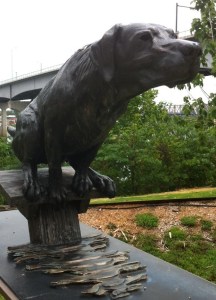 Ken Newman’s FOREVER READY was donated in 2009 by the Sculpture at the River Market. It is sited in the Vogel Schwartz Sculpture Garden. Mr. Newman is a member of the National Sculptors’ Guild. One of Mr. Newman’s specialties is animals. Cast in bronze, Forever Ready depicts a Labrador. Here is Mr. Newman’s artist statement on the piece.

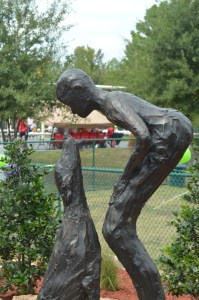 In 2015, the Little Rock Animal Village unveiled Lorri Acott’s WHO RESCUED WHO. Located at the entrance to the Little Rock Animal Village, it depicts a person and dog looking at each other. They are sharing a bond of respect, admiration and love.
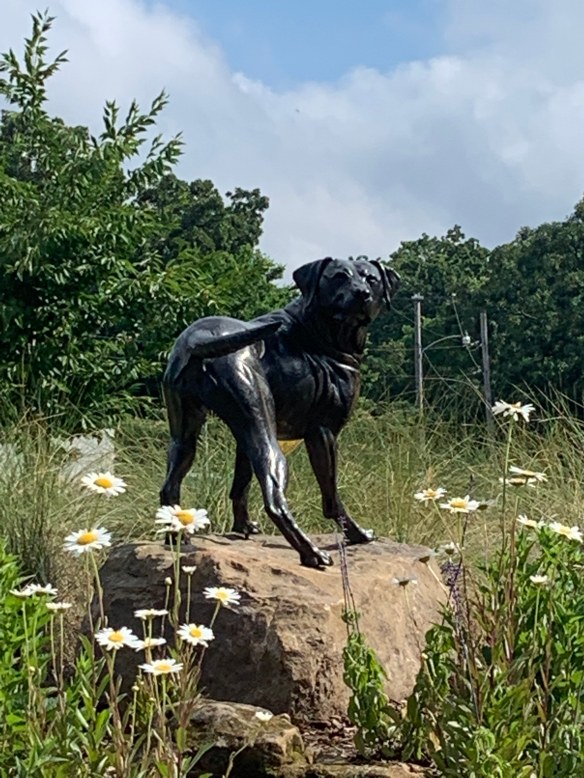 Little Rock’s newest canine sculpture is Ken Newman’s Taking Attendance. It is installed in the new roundabout at Kavanaugh and McKinley.
 Little Rock Culture Vulture