LR Cultural Touchstone: Dr. Sybil Jordan Hampton

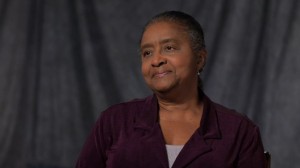
sybilDr. Sybil Jordan Hampton made history as the first African American student to attend each high school year at and graduate from Little Rock Central High School.  But her impact on history exceeds that and extends into classrooms throughout Arkansas.
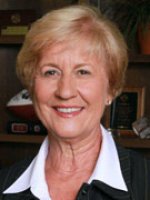
After a career which took her from elementary classrooms to corporate boardrooms, Dr. Hampton returned to Little Rock in 1996 to become the Executive Director of the Winthrop Rockefeller Foundation.  In that capacity, she oversaw many opportunities to broaden the ways the arts and humanities were used in classrooms and outside of classrooms.  Dr. Hampton led the WRF until her retirement in 2006.  Through her vision and leadership, many tens of thousands of dollars of support went to cultural institutions and organizations during her decade at the helm.

Following the untimely death of the Arkansas Symphony Orchestra’s executive director, Dr. Hampton served as acting executive director of the ASO while a national search could be conducted.  She had long been a supporter of the ASO and other cultural institutions as a patron.

Currently serving on the State Ethics Commission and the LR CENT Committee, Dr. Hampton continues to be involved with Little Rock’s cultural life through her involvement in the Mount Holly Cemetery Association. She is a tireless advocate for this living museum of Little Rock’s past.

LR Cultural Touchstone: Jeane M. Hamilton

Photo taken for SOIREE

Photo taken for SOIREE

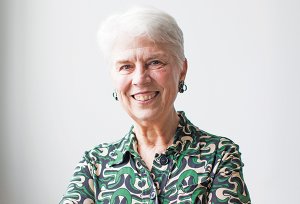
Jeane M. Hamilton is not a native Arkansan. But it was Little Rock and Arkansas’ good fortune that she married a Little Rock native and came here.

Arriving in Little Rock a young wife in 1952, she immediately set about to become involved in her new community as she and her husband James set up a household.  In the mid-1950s, the Junior League of Little Rock tapped her to chair the initiative to create a new art museum for Little Rock.  The two decades old Museum of Fine Arts was threadbare through years of neglect and unfocused programming and collecting.

Hamilton, along with Junior League President Carrie Remmel Dickinson and Vice President Martha McHaney, approached Winthrop Rockefeller (then a relatively new resident) to lead the fundraising effort for the new museum.  He agreed on a few conditions: one was that a base amount had to be raised in Little Rock first, and second that the museum would be for the entire State of Arkansas and not just Little Rock.

Hamilton and her colleagues set about to raise the funds. They raised $645,000 at the same time Little Rock’s business climate was stymied by the aftereffects of the Central High crisis.

Now a lifetime honorary member of the Arkansas Arts Center Board, Hamilton has spent much of her life working on Arkansas Arts Center projects since that visit in 1959.  She has served on the Board, chaired committees, chaired special events, served hot dogs, helped kids paint and danced the night away at countless fundraisers.  She was on the committee which hired Townsend Wolfe as executive director and chief curator.  Jeane has led art tours for the Arts Center to a number of countries over the years.

When she is not at the Arts Center, she is often seen at the Rep, the Symphony or any number of other cultural institutions.  While she enjoys seeing old friends at these events, she also loves to see a room full of strangers – because that means that new people have become engaged in the cultural life of Little Rock.

LR Cultural Touchstone: Charlotte Gadberry

charlotte-gadberryCharlotte Gadberry has long been a supporter of Little Rock’s various cultural institutions. She has both served on boards and consulted with boards in strategic planning.  She is a Cultural Touchstone, however, because of her vision to found ACANSA Arts Festival.

A trip to Charleston, South Carolina, amid it’s Spoleto USA arts festival inspired her to dream that Little Rock could play host to a similar endeavor.  Using her fundraising prowess and connections, she started to raise funds, friends and awareness for this idea.

In September 2013, the inaugural ACANSA Arts Festival was announced for September 2014.  Under her leadership, ACANSA (a name derived from an early Native American variation of what is now called Arkansas) incorporated both local cultural institutions as well as performers brought in for the event.

It kicked off on a Tuesday with a reception at the Governor’s Mansion and concluded the following Sunday with a reception at Wildwood Park for the Arts.  In between there was theatre, dance, mime, puppetry, instrumental music, choral music, opera, jazz, painting, photography, history, lectures, and gallery tours.

Under her leadership as founder, plans are already underway for the next edition.  ACANSA Arts Festival 2015 is scheduled for September 16-20. Tickets go on sale next spring.

LR Cultural Touchstone: Anita Davis

anita davisAnita Davis has founded a museum, a sculpture garden and nurtured an eclectic retail community which has transformed Main Street south of I-630 into a thriving SOMA with its own unique identity.

Starting in 2004, she began to acquire property along Main Street in the teen blocks.  After attending a conference and learning about “placemaking” she started to envision ways to transform South Main through various artforms.

On the site of a burned out fast food restaurant, she devised the plans for the Bernice Garden. This sculpture garden and community gathering spot has become a hotspot for festivals (including the annual Cornbread Festival – another of her projects – this year it will be November 3), community events and a farmer’s market.

More recently, she opened the ESSE Purse Museum.  ESSE grew out of a traveling exhibit selected from Davis’ extensive collection. From 2006 to 2011, “The Purse & the Person: A Century of Women’s Purses” (curated by Curatrix Group and managed by Smith Kramer Fine Art Services) traveled the country. The collection was exhibited in Concord, Mass.: Little Rock, Ark.; Edmund, Okla.; Columbia, S.C.; Pasadena, Calif.; Rockford, Ill.; Logan, Kan.; Fullerton, Calif.; Baton Rouge, La.; Dallas; Sacramento; and Seattle.

Now Davis has brought her handbags back to Little Rock for good and given them a home worthy of the part they have played in women’s lives and history. ESSE is housed in a historic building in SoMa, an up-and-coming, hip neighborhood in downtown Little Rock.  The Huffington Post declared it one of the hot museums for 2014.

LR Cultural Touchstone: Lucy Lockett Cabe

lucy-cabeLucy Lockett Cabe grew up in Missouri and died in Texas, but made an enormous impact on the cultural life of Little Rock and Arkansas.

While best known as the major benefactor of Wildwood Park for the Performing Arts, she also supported many other cultural organizations including the Arkansas Arts Center, Ballet Arkansas, Arkansas Symphony Orchestra, Arkansas Repertory Theatre and many smaller organizations. For over 30 years, it was rare for there to be a musical performance in Little Rock without Lucy as either a performer or in the audience.

A lifelong musician, as she aged, her voice shifted from soprano to alto to tenor while singing. She also served as a church organist. She studied piano from the age of eight.  Meeting her future husband Harold Cabe while summering in Michigan, she moved to Arkansas in 1940. From that time until 1975, she lived in Gurdon but was actively involved in the arts scenes of Arkadelphia and Little Rock.  The couple moved to Little Rock in 1975.  Harold died in 1984.

In 1971 she was one of the original appointees to the state Arts and Humanities Council. For her work with musical and volunteer groups, she was honored as the Arkansas Democrat-Gazette Woman of the Year in 1986. In 1993 she received the Arkansas Arts Council’s Lifetime Achievement Award and the Little Rock Arts and Humanities Ed Hanlin Memorial Award for Outstanding Individual Contribution to the Arts.

Lucy was an honorary life member of the Arkansas Symphony, the Community Theatre of Little Rock and Wildwood Park for the Performing Arts. She was involved in every step of the formation of the Arkansas Opera Theatre, which subsequently evolved into the Wildwood Park. She supported and was honored by Wildwood with the 625-seat Lucy L. Cabe Festival Theatre on the grounds.

In the early 2000s she moved to Dallas to be closer to her family.  She died in 2005.

It is fitting that she be remembered in October, as Halloween was her favorite holiday.  Starting on October 1, the Halloween jewelry, socks and shirts would be donned.

LR Cultural Touchstone: Phyllis D. Brandon

phyllisbrandon_t180Phyllis D. Brandon has played a unique role in shaping and supporting Little Rock’s cultural life.  As the first and longtime editor of the Arkansas Democrat-Gazette‘s High Profile section, she promoted cultural institutions, supporters and practitioners.

Since it started in 1986, being featured in High Profile has been akin to the Good Housekeeping Seal of Approval.  It exposes cultural institutions and events to new and wider audiences.  There is no way to put a monetary measure on the support Brandon gave to Little Rock’s cultural life during her time leading High Profile from 1986 to 2009.  From 2009 to 2011, she served as editor of Arkansas Life magazine, again supporting and promoting cultural life.

With her unassuming manner, she coaxed stories out of interview subjects and captured photos which highlighted events.  A journalist since her junior high school days in Little Rock, Brandon has also been a witness to history.  As a recent graduate of the University of Arkansas, Brandon returned to her alma mater, Little Rock Central High, to cover the events in early September 1957 for the Arkansas Democrat.  Eleven years later, she was in Chicago for the contentious and violent 1968 Democratic National Convention as a delegate.

From 1957 until 1986, she alternated between careers in journalism and the business world, as well as being a stay-at-home mother.  Upon becoming founding editor of High Profile, she came into her own combining her nose for news and her life-long connections within the Little Rock community.  As a writer and photographer, she created art in her own right. A look through High Profile provides a rich historical snapshot of the changes in Little Rock and Arkansas in the latter part of the 20th Century and start of the 21st Century.

Since retiring in 2011, Brandon has kept a relatively low profile. She can be seen from time to time spending time with friends and family and enjoying attending events. Only this time she generally does not have her trusty camera or notepad.

LR Cultural Touchstone: Deborah Baldwin

9 Deborah BaldwinAs a historian, arts patron, and administrator, Deborah Baldwin has had a hand in shaping Little Rock’s cultural scene for nearly thirty years.   As Chair of the UALR History Department from 1986 to 1992, she lead the department as it created the History Institute which sponsors the “Evenings with History” lecture series.  At the time it was started, it was one of the few lecture series in Little Rock (if not the only one).

A member of the UALR faculty since 1980, Baldwin is a specialist in modern Mexican history with a Ph.D. from the University of Chicago. She has published a book on the Mexican Revolution of 1910 and a variety of articles, primarily on Mexican social history topic.

As a History Department faculty member, she has lead the Public History seminar. This program has documented the history of several Little Rock cultural institutions over the years including the Arkansas Arts Center, Arkansas Symphony Orchestra and Museum of Discovery.  The Public History program has trained many of the museum professionals working in Little Rock today.  The Central High Museum, a private forerunner of the National Park Service Central High National Historic Site Visitor Center, was lead in a large part by persons associated with the UALR Public History Program.

Starting in the mid-1990s, Baldwin led the College of Arts, Humanities and Social Sciences.  In that capacity, she oversaw the visual and performing arts programming at UALR.  Under her leadership, the Departments of Art, Music, and Theatre & Dance were all revitalized.  As a part of this, she ensured that cutting-edge technology was being integrated to arts curriculum.  She also led efforts to upgrade the performance facilities.  During her tenure as Dean, the College also played leading roles in the commemoration of the 40th and 50th anniversaries of the integration of Central High School, the centennial of the Mexican Revolution, and the “Life Interrupted” exhibit which highlighted the Japanese-American internment experience in Arkansas.  She also oversaw the creation of Finale!, an event each spring which celebrates the arts in Little Rock and honors arts patrons.

With the creation of the Arkansas Studies Institute (a collaboration between UALR and Central Arkansas Library System), Baldwin took on additional duties as UALR’s supervisor on the project.

In 2014, UALR underwent a campus-wide administrative and academic reorganization.  In conjunction with that, Baldwin became Associate Provost for UALR Collections and Archives.  In that capacity she oversees the campus library system, Center for Arkansas History and Culture and the Sequoyah National Research Center.  She continues to teach in the Department of History.

She is a past member of the board of the Arkansas Humanities Council and the MacArthur Military History Museum Commission.