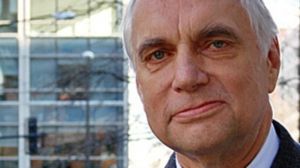
Little Rock Look Back: Mayor Elijah A. More

Mayor More Marker in MOOn January 20, 1799, Elijah A. More was born in Kentucky.  By the early 1830s, he was residing in Hempstead County and practicing law. Because of the court system being based in Little Rock, he spent a great deal of time in Pulaski County.
By January 1834, he had obviously established a permanent residence in Little Rock, because he was chosen as the third mayor.  He served from January 1834 until January 1835.  According to records, he apparently continued to alternate between residing near what is now Hope and living in Little Rock.  In 1839, his wife Caroline Owens More died and was buried in Little Rock. Though not originally buried at Mount Holly (it did not open until 1843), she is now buried there.

In 1840, More was the subject of a court case before the Arkansas Supreme Court resulting from actions he had taken as an executor of an estate and subsequently as Pulaski County Probate Judge.

By 1864, More resided in Missouri. There is a record of him swearing a loyalty oath to the Governor of Missouri in that year (presumably in response to actions associated with the Civil War).

He died on April 15, 1878 and is buried in Columbia Cemetery in Columbia, Missouri.

Oxford American nominated for 2016 National Magazine Award!

2e6b4_1320267846-oxa_logoLast week the Oxford American received some very good news: They were nominated for a 2016 National Magazine Award in General Excellence! 

This is the Oxford American’s thirteenth National Magazine Award nomination since the magazine’s founding in 1992, and their first for General Excellence since 1999.
Editor Eliza Borné and the OA staff are proud to be recognized among many other wonderful publications, and were grateful for our amazing writers, artists, contributors, and dedicated readers.
The American Society of Magazine Editors (ASME) will celebrate the 50th anniversary of the awards when each of the 114 finalists is honored at the annual awards dinner on Monday, February 1, at the Grand Hyatt New York.
The American Society of Magazine Editors is the principal organization for magazine journalists in the United States. The members of ASME include the editorial leaders of most major consumer and business magazines published in print and on digital platforms. Founded in 1963, ASME works to defend the First Amendment, protect editorial independence and support the development of journalism. ASME sponsors the National Magazine Awards in association with the Columbia Journalism School and publishes the ASME Guidelines for Editors and Publishers.

Nathalia Edenmont: Force of Nature exhibit brings larger than life photographs to Arkansas Arts Center

AAC LargerLifeToday through May 1, the Arkansas Arts Center plays host to photographer Nathalia Edenmont’s first major U.S. exhibition.

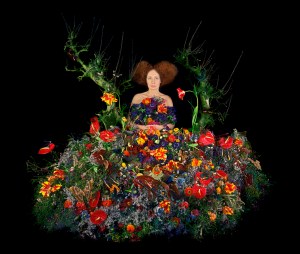
Nathalia Edenmont: Force of Nature is the artist’s first solo exhibition in a major American museum and features ten, richly colored, large-format photographs. Five of the photographs, including Eden, a self-portrait of the artist, are recent works and have never before been exhibited. Force of Nature is organized by the Arkansas Arts Center and Nancy Hoffman Gallery (New York City) and is presented in conjunction with the Garden Club of America Zone 9 annual meeting, which occurs in Little Rock in late-April 2016.

“Nathalia Edenmont’s photos are striking both in terms of their scale and colorful content,” said Brian J. Lang, chief curator and curator of contemporary craft at the Arkansas Arts Center. “We look forward to hosting Edenmont’s first major U.S. exhibition, giving Arkansans the opportunity to be among the first to see some of her most recent photos.”

Born in 1970 in Yalta, Ukraine, Nathalia Edenmont moved to Sweden by the age of 20, realizing that life in the former Soviet Union was disintegrating and held no future for her. At 27, Edenmont enrolled in the Forsbergs Skola to study graphic design. At the school her artist-mentor, Per Hüttner, encouraged her to visualize her inner pictures and to try to capture them with the camera.

All of Edenmont’s photographs derive from her life experience. “I only look inside my head,” the artist explains. “What I see in my mind is what I create. I do not sketch; the image is complete and sharp within me. I have absolute control over all aspects of what I do.”

Using a large-format Sinar camera with 8×10 film and many lenses, Edenmont works with a team of eight to twelve people over the course of one day to compose a single “shot.” She has two camera assistants (both professional photographers), a hair stylist and a dressmaker.

What each figure wears is central to the meaning of each work. The artist’s “portraits” reflect intensity, each subject stands expressionless and motionless against a pitch-black background, cloaked in flowers revealing only her neck and shoulders; light emanates from within. It is the “flower pile” or dress the artist composes that tells the tale, sometimes with birds or snakes, sometimes with fresh flowers or vegetables, and at other times with wilted blooms. “Since my childhood I have heard that a woman’s beauty is like a flower, it passes quickly,” Edenmont says. “That is why I switch from fresh flowers to dry and very old. I see much beauty in dried flowers. I grew up as a Russian Orthodox and in the cemetery the fresh graves covered in flowers looked like my flower piles from which I compose my dresses.”

Edenmont is a two-time recipient of the Konstnarsnamndens Arbetsstipendium, a grant awarded by the Culture Department in Stockholm, Sweden. Her work has been exhibited internationally, including museums in Sweden, Russia and Germany; Nathalia Edenmont: Force of Nature is the artist’s first solo exhibition in a major American museum.

Edenmont will speak at an AAC Member Lecture & Late Night event at 6 p.m. on Thursday, January 21. A book signing will immediately follow the lecture.

Nathalia Edenmont: Force of Nature is sponsored by Tipton & Hurst, Kara and David Dowers for Annie Dowers and Dr. and Mrs. Charles Cole.

LR Look Back: HAIR flows at Robinson Auditorium in 1972

Ad for the original production of HAIR in Little Rock. Note the ticket prices. And that they could be purchased at Moses Music Shops.

Ad for the original production of HAIR in Little Rock. Note the ticket prices. And that they could be purchased at Moses Music Shops.

Forty-four years ago today, on January 18, 1972, the musical Hair settled in for a week-long run at Robinson Auditorium.  The saga to bring the national tour to Little Rock had actually begun eleven months earlier.

In February 1971, a young Little Rock attorney named Phil Kaplan petitioned the Little Rock Board of Censors to see if it would allow a production of Hair to play in the city. He was asking on behalf of a client who was interested in bringing a national tour to Arkansas’ capital city. The show, which had opened on Broadway to great acclaim in April 1968 after an Off Broadway run in 1967, was known for containing a nude scene as well for a script which was fairly liberally sprinkled with four-letter words. The Censors stated they could not offer an opinion without having seen a production.

By July 1971, Kaplan and his client (who by then had been identified as Southwest Productions) were seeking permission for a January 1972 booking of Hair from the City’s Auditorium Commission which was charged with overseeing operations at Robinson Auditorium. At its July meeting, the Commissioners voted against allowing Hair because of its “brief nude scene” and “bawdy language.”

Kaplan decried the decision. He stated that the body couldn’t “sit in censorship of legitimate theatrical productions.” He noted courts had held that Hair  could be produced and that the Auditorium Commission, as an agent for the State, “clearly can’t exercise prior censorship.” He proffered that if the production was obscene it would be a matter for law enforcement not the Auditorium Commission.

The Commission countered that they had an opinion from City Attorney Joseph Kemp stating they had the authority. One of the Commissioners, Mrs. Grady Miller (sister-in-law of the building’s namesake the late Senator Robinson, she had served on the Commission since 1940), expressed her concern that allowing Hair would open the door to other productions such as Oh! Calcutta!

On July 26, 1971, Southwest Productions filed suit against the Auditorium Commission. Four days later there was a hearing before federal Judge G. Thomas Eisele. At that hearing, Auditorium Commission member Lee Rogers read aloud excerpts from the script he found objectionable. Under questioning from Kaplan, a recent touring production of Neil Simon’s Plaza Suite was discussed. That play has adultery as a central theme of one of its acts. Rogers admitted he found the play funny, and that since the adultery did not take place on stage, he did not object to it. Among those testifying in favor of it was Robert Reddington, who was director of performing arts at the Arkansas Arts Center.

Judge Eisele offered a ruling on August 11 which compelled the Auditorium Commission to allow Hair to be performed. Prior to the ruling, some of the Auditorium Commissioners had publicly stated that if they had to allow Hair, they would close it after the first performance on the grounds of obscenity. To combat this, Judge Eisele stated that the Commission had to allow Hair to perform the entire six day engagement it sought.

Upon hearing of the Judge’s ruling, Commissioner Miller offered a succinct, two word response. “Oh, Dear!”

In the end, the production of Hair at Robinson would not be the first performance in the state.  The tour came through Fayetteville for two performances in October 1971 at Barnhill Arena.

On January 18, 1972, Hair played the first of its 8 performances over 6 days at Robinson Auditorium.  In his review the next day, the Arkansas Gazette’s Bill Lewis noted that Hair “threw out all it had to offer” and that Little Rock had survived.

The ads promoting the production carried the tagline “Arkansas will never be the same.”  Tickets (from $2 all the way up to $8.50) could be purchased at Moses Melody Shops both downtown and in “The Mall” (meaning Park Plaza). That business is gone from downtown, but the scion of that family, Jimmy Moses, is actively involved in building downtown through countless projects. His sons are carrying on the family tradition too.

Little Rock was by no means unique in trying to stop productions of Hair.  St. Louis, Birmingham, Los Angeles, Tallahassee, Boston, Atlanta, Charlotte NC, West Palm Beach, Oklahoma City, Mobile and Chattanooga all tried unsuccessfully to stop performances in their public auditoriums.  Despite Judge Eisele’s ruling against the City of Little Rock, members of the Fort Smith City Council also tried to stop a production later in 1972 in that city. This was despite warnings from City staff that there was not legal standing.

Within a few years, the Board of Censors of the City of Little Rock would be dissolved (as similar bodies also were disappearing across the US). Likewise, the Auditorium Commission was discontinued before Hair even opened with its duties being taken over by the Advertising and Promotion Commission and the Convention & Visitors Bureau staff.  This was not connected to the Hair decision; it was, instead, related to expanding convention facilities in Robinson and the new adjacent hotel.  Regardless of the reasons for their demise, both bygone bodies were vestiges of earlier, simpler and differently focused days in Little Rock.

Little Rock Look Back: Rev. Dr. Martin Luther King, Jr.

Ernest Green, Dr. King and Daisy Bates share a relaxed moment -- which was probably rare for the three in 1958

Ernest Green, Dr. King and Daisy Bates share a relaxed moment — which was probably rare for the three in 1958

Today is the Martin Luther King Jr. Holiday.  It is an apt time to think about Dr. King and Little Rock.  A friend of L. C. and Daisy Bates, he attended the 1958 Central High School graduation to witness Ernest Green receiving a diploma. Each senior only received eight tickets to the ceremony at Quigley Stadium. Dr. King was in the state to address the Arkansas AM&N (now UAPB) graduation.

His attendance was briefly mentioned in the local press, but there was no media photo of him at the ceremony.  The Little Rock School District limited the press to one Democrat and one Gazette photographer. Other press were limited to the press box.

Ernest Green has a photo of him with Daisy Bates and Dr. King (pictured on this entry).

In 1968, when Dr. King was assassinated, Little Rock did not see the unrest that many cities did.  Part of that was probably due to quick action by Governor Winthrop Rockefeller. The Governor released a statement fairly quickly expressing his sorrow at the tragedy and calling for a day of mourning. He also made the State Capitol available for the NAACP to have a public memorial, as well as worked with a group of ministers to host an interdenominational service.

Little Rock Mayor Martin Borchert issued a statement as well:

We in Little Rock are disturbed about the incident in Memphis. We are disturbed regardless of where it had happened.  Killing is not the Christian solution to any of our problems today.

In Little Rock, we feel we have come a long way in 10 years toward solving some of our problems of living and working together regardless of race, creed or color.

The city Board of Directors in Little Rock has pledged itself toward continuing efforts to make Little Rock a better place in which to live and work for all our citizens.

We feel the efforts of all thus far have proved we can live in harmony in Little Rock and are confident such an incident as has happened will not occur in Little Rock.  We will continue our most earnest efforts toward the full needs of our citizens.

The day after Dr. King was assassinated, a group of Philander Smith College students undertook a spontaneous walk to the nearby State Capitol, sang “We Shall Overcome” and then walked back to the campus.  President Ernest T. Dixon, Jr., of the college then hosted a 90 minute prayer service in the Wesley Chapel on the campus.

On the Sunday following Dr. King’s assassination, some churches featured messages about Dr. King.  As it was part of Holy Week, the Catholic Bishop for the Diocese of Little Rock had instructed all priests to include messages about Dr. King in their homilies. Some protestant ministers did as well. The Arkansas Gazette noted that Dr. Dale Cowling of Second Baptist Church downtown (who had received many threats because of his pro-integration stance in 1957) had preached about Dr. King and his legacy that morning.

Later that day, Governor Rockefeller participated in a public memorial service on the front steps of the State Capitol. The crowd, which started at 1,000 and grew to 3,000 before it was over, was racially mixed. At the conclusion of the ceremony, Governor and Mrs. Rockefeller joined hands with African American ministers and sang “We Shall Overcome.”

That evening, Trinity Episcopal Cathedral was the site of an interdenominational service which featured Methodist Bishop Rev. Paul V. Galloway, Catholic Bishop Most Rev. Albert L. Fletcher, Episcopal Bishop Rt. Rev. Robert R. Brown, Rabbi E. E. Palnick of Temple B’Nai Israel, Gov. Rockefeller, Philander Smith President Dixon, and Rufus King Young of Bethel AME Church.

Earlier in the day, Mayor Borchert stated:

We are gathered this afternoon to memorialize and pay tribute to a great American….To achieve equality of opportunity for all will require men of compassion and understanding on the one hand and men of reason and desire on the other.

Mayor Borchert pledged City resources to strive for equality.

Another Little Rock Mayor, Sharon Priest, participated in a ceremony 24 years after Dr. King’s assassination to rename High Street for Dr. King in January 1992.  The name change had been approved in March 1991 to take effect in January 1992 in conjunction with activities celebrating Dr. King’s life.  At the ceremony, Daisy Bates and Annie Abrams joined with other civil rights leaders and city officials to commemorate the name change.

Little Rock Look Back: Mayor Webb Hubbell

Mayor HubbellOn January 18, 1948, future Little Rock Mayor Webster “Webb” Hubbell was born. After playing football in high school, he played for the University of Arkansas Razorbacks.  He also received his law degree from the U of A.

At the age of 30, already a successful attorney, Hubbell was appointed to the Little Rock City Board of Directors to fill a vacancy in September 1978.  In 1980, he was elected to a four year term on the City Board.

In June 1979, there was a vacancy in the office of Mayor of Little Rock.  Hubbell was selected by his fellow City Directors to serve as Mayor until December 1980.  In January 1981, he was selected to serve another term as Mayor.  In June 1981, he stepped down as Mayor but continued to serve on the City Board of Directors.

In 1984, Hubbell was appointed to serve as Chief Justice of the Arkansas Supreme Court to finish out the term of Richard B. Adkisson.  Following his service on the court, he returned to the practice of law at the Rose Law Firm.  He later served as the Associate Attorney General in the Justice Department during the Clinton administration.

Hubbell resigned from the Justice Department due to an investigation related to Whitewater.  He has been an author and management consultant.  His novel, When Men Betray, was published by Beaufort Books in May 2014.  His next novel Ginger Snaps was released in May 2015.  A Game of Inches, another mystery novel, will be released in 2016.

Final day to see OUR AMERICA exhibit at the Arkansas Arts Center

Today is the final day to enjoy the Arkansas Arts Center exhibition Our America: The Latino Presence in American Art.  This major collection of modern and contemporary Latino art from the Smithsonian American Art Museum has been here since October.

The exhibition Our America includes 93 works in all media by 72 artists who participated in various artistic styles and movements, including abstract expressionism; activist, conceptual and performance art and classic American genres such as landscape, portraiture and scenes of everyday life.

Our America presents the rich and varied contributions of Latino artists in the United States since the mid-20th century, when the concept of a collective Latino identity began to emerge. The exhibition is drawn entirely from the Smithsonian American Art Museum’s pioneering collection of Latino art.


Our America features bilingual labels for each work and a Spanish-language website created by the Smithsonian American Art Museum. Select works also feature podcasts with the artist’s commentary. Museum goers can simply call a number, scan a QR code or visit a website for more background on the artist and background on each piece—in English and Spanish.

Artists featured in the exhibition reflect the rich diversity of Latino communities in the United States. Our Americashowcases artists of Mexican, Puerto Rican, Cuban and Dominican descent, as well as other Latin American groups with deep roots in the United States. By presenting works by artists of different generations and regions, the exhibition reveals recurring themes among artists working across the country.

The 72 artists featured in the exhibition are ADÁL, Manuel Acevedo, Elia Alba, Olga Albizu, Carlos Almaraz, Jesse Amado, Asco (Harry Gamboa Jr., Gronk, Willie Herrón and Patssi Valdez), Luis Cruz Azaceta, Myrna Báez, Guillermo Bejarano, Charles “Chaz” Bojórquez, María Brito, Margarita Cabrera, María Magdalena Campos-Pons, Melesio “Mel” Casas, Leonard Castellanos, Oscar R. Castillo, José Cervantes, Enrique Chagoya, Roberto Chavez, Carlos A. Cortéz, Marcos Dimas, Ricardo Favela, Christina Fernandez, Teresita Fernández, iliana emilia garcía, Rupert García, Scherezade García, Carmen Lomas Garza, Ignacio Gomez, Ken Gonzales-Day, Hector González, Luis C. “Louie the Foot” González, Muriel Hasbun, Ester Hernandez, Judithe Hernández, Carmen Herrera, Carlos Irizarry, Luis Jiménez, Miguel Luciano, Emanuel Martinez, María Martínez-Cañas, Antonio Martorell, Ana Mendieta, Amalia Mesa-Bains, Franco Mondini-Ruiz, Delilah Montoya, Malaquias Montoya, Abelardo Morell, Jesús Moroles, Raphael Montañez Ortiz, Pepón Osorio, Amado M. Peña Jr., Chuck Ramirez, Paul Henry Ramirez, Sophie Rivera, Arturo Rodríguez, Freddy Rodríguez, Joseph Rodríguez, Frank Romero, Emilio Sánchez, Juan Sánchez, Jorge Soto Sánchez, Rafael Soriano, Ruben Trejo, Jesse Treviño, John M. Valadez, Alberto Valdés and Xavier Viramontes.

The exhibition is organized by E. Carmen Ramos, curator of Latino art at the Smithsonian American Art Museum.

Our America: The Latino Presence in American Art is organized by the Smithsonian American Art Museum. Generous support for the exhibition has been provided by Altria Group, the Honorable Aida M. Alvarez, Judah Best, The James F. Dicke Family Endowment, Sheila Duignan and Mike Wilkins, Tania and Tom Evans, Friends of the National Museum of the American Latino, The Michael A. and the Honorable Marilyn Logsdon Mennello Endowment, Henry R. Muñoz III, Wells Fargo and Zions Bank. Additional significant support was provided by The Latino Initiatives Pool, administered by the Smithsonian Latino Center. Support for “Treasures to Go,” the museum’s traveling exhibition program, comes from The C.F. Foundation, Atlanta.

Our America is sponsored in Arkansas by Donna and Mack McLarty, The Brown Foundation, Inc., of Houston, Consulate of Mexico in Little Rock and Alan DuBois Contemporary Craft Fund. Media sponsors include ¡Hola! Arkansas and Telemundo Arkansas.