Little Rock Look Back: First Little Rock Council Meeting in 1832

TowncouncilplaqueOn January 16, 1832, Mayor Matthew Cunningham MD presided over Little Rock’s first council meeting. Since Little Rock did not yet have a government hall, the Mayor and his wife hosted the meeting at their house. The Cunninghams owned the entire block which was bordered by what is now Main Street, 3rd Street, Louisiana Street and 4th Street.

A plaque at 3rd and Main Street commemorates this meeting and was placed at the northeast corner of the block in the 1930s. The Cunningham’s house was likely closer to the southwest corner of the block.

The plaque is on the Fulk building which now houses CJRW. The block also includes the Mann on Main project, which is comprised of the buildings originally constructed for the Gus Blass Department store.  Bruno’s and Samantha’s are also on the block.

Little Rock was chartered as a town in November 1831 and elections were subsequently held. Dr. Cunningham outpolled Rev. W. W. Stevenson to become the first Mayor.

Joining Mayor Cunningham at the first meeting were the original four Town Council members – Charles Caldwell, Benjamin Clemens, David Holt and John McLain.

In 1931 a plaque, as part of Little Rock’s Centennial, a plaque was erected to note the first meeting. The plaque erroneously implies that the first meeting was in 1831. This mistake is understandable since the legislation incorporating Little Rock was approved in November 1831. The plaque also refers to the body as the City Council. It was, in fact, the Town Council. There would not be a City Council until 1835 when Little Rock was elevated to City status.
Little Rock Look Back: LR Mayor Martin Borchert

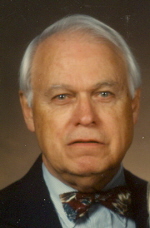
Mayor BorchertOn January 16, 1916, future Little Rock Mayor Martin Borchert was born in Stuttgart.  After graduating high school he moved to Little Rock.  During World War II, he served as a bomber.  He started work at ACME Brick and spent 21 years there before engaging in other business interests.  Among these businesses were Martin Borchert Co., ASCO Hardware, Dtection Systems Inc. and Component Systems Inc.  In 2005 he was inducted into the Arkansas Construction Hall of Fame.

Mayor Borchert was elected to the Little Rock City Board of Directors in 1964 and served from January 1965 through December 1968. He chose not to seek a second term.  In 1967 and 1968 he served as Mayor of Little Rock. During this time, he laid out the vision for what has become Riverfront Park along the Arkansas River.

Other civic achievements included being a member of the Board of the Little Rock Chamber of Commerce, being on the Governor’s Citizens Advisory Committee, a member of the Pulaski County Quorum Court, vice chairman of the Arkansas Planning Commission, and being on the Little Rock Air Force Base Community Council. In 1967 he served on the President’s National Advisory Council to the Small Business Administration. Mayor Borchert served on the Little Rock Water Commission, including a tenure as chairman. In 1985, he was chairman of the Metropolitan Transit Policy Board and as chairman oversaw the transfer of the Central Arkansas Transit system to the Central Arkansas Transit Authority. One of the achievements of which he was very proud of was that he was one of the very first in Arkansas to receive an Adopt the Highway road.

Mayor Borchert was married for 57 years to Rosemary “Biddy” Branch Borchert.  They had two children, a son, John “Topper” Borchert and a daughter, Leslie Borchert Wilson.  He died on May 11, 2007.

Documentary on MLK in Arkansas shown at Clinton School

mlk filmToday (January 15) at 12 noon, the Clinton School of Public Service is hosting a screening of the documentary “Dr. Martin Luther King Jr. in Arkansas.”

It originally aired on KATV-7 on January 19, 1987, as a 30-minute television special. Narrated by Arkansas native Deborah Mathis, it includes Dr. King’s attendance at Ernest Green’s Little Rock Central High School graduation and his commencement address at the University of Arkansas Pine Bluff.

It will be shown at the Clinton School.


Evolution of Jazz and its place on 9th Street focus of forum by Clinton School, Oxford American and Mosaic Templars

jazz forumTonight (January 14) at 6pm at the Mosaic Templars Cultural Center, the Clinton School Speaker Series is presenting a forum on Jazz.  “Jazz: Evolution of an American Art Form and Its Place on 9th Street,” Jazz Symposium will be presented in partnership with the Oxford American and Mosaic Templars Cultural Center.

This panel discussion will be moderated by musician and lifelong jazz enthusiast, Chris Parker, and feature panelists Amina Claudine Myers (born in Blackwell, Ark.), a New York-based jazz singer and pianist; John Cain, a Little Rock-based activist and 9th Street historian; and Nathan Hood, a Hot Springs-based baritone saxophone player. The panel will share personal experiences as jazz musicians and lovers of the genre, as well as the art form’s historical context within the African American microeconomics that existed in U.S. cities prior to the Civil Rights movement.

At 7:30 p.m. — following the 60-minute symposium — a jazz ensemble led by Chris Parker will play a 60-minute set of music. Featured members of the ensemble will include bassist Bill Huntington, drummer Yvette ‘Babygirl’ Preyer, and saxophonist Nathan Hood. Parker, Huntington, Preyer, and Hood have worked with an impressive and wide range of musicians, including Ellis Marsalis, Dr. John, Benny Powell, Art Pepper, Isaac Hayes, and Harold Ousley, among others. Admission for the performance is $10 regular or $5 for students/artists.

Art+History Throwback Thursday: Museum of Fine Arts

MFA postcardOn February 9, Little Rock voters will have the chance to say Yes to improving the Arkansas Arts Center, MacArthur Museum of Arkansas Military History and MacArthur Park.

Leading up to that election is a good time to look back at the development of these two MacArthur Park sited museums.

The Museum of Fine Arts opened in October 1937.  The groundbreaking was held on January 3, 1936, with the cornerstone laid on October 6 of that year.  Nearly one year later, the Fine Arts Club held its first meeting in the building and hosted a grand open house on October 5, 1937.

The front doorway to the museum is visible today inside a gallery of the Arkansas Arts Center.

Today’s Old State House Museum Brown Bag Lecture – AIRDOME: A HISTORY OF THE AIRDOME THEATER IN ARKANSAS

OSH Brown BagToday (January 14)  at noon at the Old State House Museum, the first Brown Bag Lecture of 2016 takes place.

In the early 20th century, several of Arkansas’s small towns and smaller cities were host to Airdome theaters, an open-air movie theater. Ralph S. Wilcox of the Arkansas Historic Preservation Program presents a talk about these early theaters for a Brown Bag Lunch Lecture at the Old State House Museum on Thursday, January 14, at noon. Once the Airdome appeared on the scene in Arkansas, it grew in popularity relatively quickly. By the mid-1910s at least sixteen communities in Arkansas had Airdomes. However, they closed just as quickly as they opened, and had virtually all disappeared by the mid-1920s. Learn more

Wilcox is a native of Meadville, Pennsylvania, and obtained his B.A. in History from Westminster College in New Wilmington, PA, and his M.S. in Historic Preservation from Ball State University in Muncie, IN.

The Old State House Museum is an agency of the Department of Arkansas Heritage.

Little Rock Look Back: Pulaski Heights officially part of Little Rock 100 years ago today

Ninth WardOn January 13, 1916, the Little Rock City Council formally accepted Pulaski Heights into the City of Little Rock.

The Council had held a regular meeting on Monday, January 10, 1916, which was the same evening as the final meeting of the Pulaski Heights City Council.  Three days later, on Thursday, January 13, 1916, Mayor Charles Taylor again convened the Little Rock City Council to take the steps to officially annex Pulaski Heights into Little Rock.

By Ordinance 2259, the City’s boundaries were increased to include the land which had been Pulaski Heights.  Resolution 918 directed city staff to replat the land, which was necessary to bring the land in accordance with existing city plats and documents.

Resolution 919 set forth January 20 as a special election date to elect the two new members of the Little Rock City Council who would represent the new Ninth Ward of Little Rock.  Those who won would serve until April 1916.  The election would also serve as the primary for the April election.  Back then, winning the Democratic primary for a City race was tantamount to winning the race.  Since there were two seats being created, one would have a two year term, the other would be for only one year.  The candidate receiving the most votes on January 20 would, after April, take up the two year term and be able to run for re-election in April 1918. The candidate with the second highest total of votes would win the one-year term and be up for re-election in April 1917.  At the time, there were three publicly declared candidates for the two seats.  Another had been interested, but dropped out that morning.

Making Pulaski Heights the Ninth Ward was not the only focus of the City Council meeting.  An ordinance was also approved which allocated $438 for the purchase of beds, mattresses, chairs and other furniture for the City hospital.  (That is the equivalent of nearly $10,000 today.)  The Council then reimbursed a doctor the $438, which presumably had been spent on making the purchases.