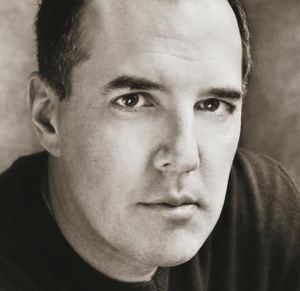
Happy Birthday to Pulitzer & Tony winner David Auburn, an alum of Hall High and Arkansas Arts Center Children’s Theatre

November 30 is the birthday of Pulitzer Prize and Tony Award winning playwright David Auburn. A 1987 graduate of Hall High School, he participated in the Arkansas Arts Center Children’s Theatre while he spent his teen years in Little Rock.

Born in Chicago, he grew up in Ohio. He moved to Arkansas when his parents took jobs here, first in Jonesboro then Little Rock. After graduating from Hall, he returned to Chicago to attend the University of Chicago, where he graduated with a degree in English literature.  While there he was involved with a performance group and also wrote theatre reviews.

In 1992, he went to New York to take part in Julliard’s playwriting program.  In 1997, his first Off Broadway play was produced, Skyscraper.  In May 2000, Manhattan Theatre Club produced his play Proof at one of its Off Broadway theatres. Following the success of that run, it transferred to Broadway in the autumn of 2000.

In 2001, Proof won the Pulitzer Prize for Drama, the Tony Award for Best Play, the New York Drama Critics Circle Award for Best American Play, and Best Play awards from the Drama Desk, Outer Critics Circle, and Drama League.

That spring he also served as a script consultant for tick…tick…BOOM! a musical written by the late Jonathan Larson. He was asked by Larson’s family to write the book based on the several different drafts Larson had written prior to his 1996 death.

Subsequently, Auburn has moved between writing plays and movies as well as directing. He has also served as a teacher and playwright in residence. His plays include The New York Idea, The Columnist, and Lost Lake.

He is currently one of the screenwriters on the upcoming new Charlie’s Angels movie.

Happy Birthday to Hall High and Arkansas Arts Center alum, award winning actor Daniel Davis

On November 26, 1945, future actor Daniel Davis was born in Gurdon.  As a child, his family moved to Little Rock where his parents ran a movie theatre.  As a child, he appeared on “Betty’s Little Rascals” local TV show with Betty Fowler.

While a student at Hall High, Davis had the lead as Horace Vandergelder in The Matchmaker (which would soon be musicalized on Broadway in Hello, Dolly!), appeared in Judgment at Nuremburg, sang in the Hallmarks (concert choir), and was a Harlequin Player (drama club). He was also on the staff of the Warrior (yearbook), War Whoop (newspaper), and Inkwell (literary magazine). His fellow members of the class of 1963 voted him the Wittiest boy in the class.

Davis at Hall in 1963

After graduating from Hall, Davis remained in Little Rock and enrolled in the new Arkansas Arts Center school of Art and Drama, a degree granting program.  While there, he appeared in numerous plays.  One of them was The Persecution and Assassination of Jean-Paul Marat as Performed by the Inmates of the Asylum of Charenton under the Direction of the Marquis de Sade.  National theatre critic Henry Hewes of the Saturday Review came to Little Rock to review the production, which was presented a year after the play had won a Tony for Best Play.  Hewes actually liked the Little Rock production better.

After completing studies at the Arts Center, Davis worked with the Oregon Shakespeare Festival, American National Theatre Academy, Stratford Festival, and American Conservatory Theatre. He also started appearing in television, including a stint in the soap “Texas” and guest starring in many TV series. In 1993, he started a six year, 145 episode run as Niles the butler in “The Nanny.”  His British accent on the show caused many in the public to think he was from England instead of Arkansas.

Davis has continued to act frequently on stage.  In 1969, he made his Broadway debut as the Dauphin in Henry V followed by an appearance in Othello.  He was a replacement as Salieri in the original production of Amadeus.   In 2003, he received an Obie Award for his appearance in Alan Bennett’s Talking Heads.  Three years earlier he was nominated for a Tony for his appearance in Wrong Mountain.  Other recent Broadway appearances include The Invention of Love, The Frogs, La Cage aux Folles and Noises Off.

Little Rock Look Back: The 2004 opening of the Clinton Presidential Center

wjc library openingIt has been fourteen years since the Clinton Presidential Center opened on a wet, cold Thursday.

The days leading up to it had been glorious.  And while the weather may have literally dampened spirits a bit, it was still an important day for Little Rock and Arkansas.

The events leading up to the opening included a concert by Aretha Franklin with the Arkansas Symphony Orchestra and an appearance by Senator John Glenn at the Museum of Discovery.  Events were hosted by the Arkansas Arts Center, Arkansas Repertory Theatre, Historic Arkansas Museum, and Old State House Museum.  There were scores of receptions and parties as Hollywood, New York, and DC descended on Little Rock.

November 18 dawned rainy and cool.  As the day continued on the precipitation continued while the temperature did not warm up.  Years of planning for a grand opening ceremony came down to this.  But at the appointed time, festivities began.

On the site of an abandoned warehouse district and unofficial dump which had previously been a train station, many leaders of the free world were gathered.  They rubbed shoulders with thousands of Arkansans from probably every county in the state.

It had been seven years and eleven days since Bill Clinton had announced the site of his presidential library.  It had been five years since artifacts and articles started arriving from Washington DC in Little Rock.  There had been lawsuits, threats of lawsuits, the threat of a Counter-Clinton Library, and countless meetings.

After speeches from Presidents Carter, Bush 41 and Bush 43, remarks from President Clinton and then-Senator Clinton (who was made even wetter by water pouring off an ill-placed umbrella), and even a musical performance by Bono and The Edge, Chelsea Clinton turned over the ceremonial key from the Clinton Foundation to the National Archives to officially open the Clinton Presidential Center.

In his capacity leading the Clinton Foundation, Skip Rutherford oversaw the planning for the Clinton Library and the grand opening festivities.  He, along with the foundation’s Executive Director Stephanie S. Streett, oversaw a phalanx of volunteers and staff to anticipate every detail.  The 1,000 days countdown sign that had been on the construction site (the brainchild of Tyler Denton) finally reached 0.

Isabelle Rodriguez, Shannon Butler, Mariah Hatta, Jordan Johnson, Lucas Hargraves, Ben Beaumont, Denver Peacock — among others — had been putting in twelve plus hour days for months on end to get ready for the opening.  City Manager Bruce T. Moore led a team of City officials who had assisted on the planning and execution of the site preparation and making sure Little Rock was ready to welcome the world.  Moore and City Director Dean Kumpuris had been appointed by Little Rock Mayor Jim Dailey to lead Little Rock’s efforts to land the library.  After Clinton’s announcement of the site, Dailey, Kumpuris and Moore continued to work together to ensure the library would be successful.

Among those present were Oscar winning actors Barbara Streisand, Robin Williams, and (of course) Arkansan Mary Steenburgen.  Future Oscar winner Morgan Freeman was also in attendance. Among the Oscar nominees who were present were Bono and The Edge (who performed at the ceremony) and Alfre Woodard.  It was the first public appearance by Senator John Kerry after his loss earlier in the month to President George W. Bush. Scores of Senators and members of Congress as well as countless Clinton Administration staffers were also in attendance.

While the weather on November 18, 2004, may have been a disappointment, the people who were gathered knew they were witnesses to history.  And fourteen years later, is a day people still talk about.



The Arkansas Arts Center’s Kelly Fleming honored as Fundraising Professional of the Year

At the 2018 AFP National Philanthropy Day, Kelly Kinard Fleming of the Arkansas Arts Center was honored by the Arkansas Chapter of the Association of Fundraising Professionals as the Fundraising Professional of the Year!

(This honor also garnered her the front cover of this month’s INVITING ARKANSAS – featured with this entry.)

As the AAC’s Director of Development, Kelly is a proven fundraising professional with a commitment to philanthropy.  She leads a staff which continues to surpass annual goals of approximately $2 million, as well as surpassing special event goals, and founded the Townsend Wolfe Society, a planned giving program.

Kelly is an integral part of the AAC’s recent completion of its strategic plan, its re-accreditation, and its aggressive building project and capital campaign.

Prior to coming to the Arkansas Arts Center, Kelly served in fundraising at the Arkansas Repertory Theatre and Heifer Foundation. She is a member of the Little Rock Arts+Culture Commission, and has been an active supporter of many Little Rock arts organizations.

Expanded partnership between Arkansas Arts Center and Central Arkansas Library System announced

The Arkansas Arts Center and the Central Arkansas Library System are launching a long-term partnership to build valuable creative connections between two Central Arkansas cultural institutions.

This collaboration with CALS is the first of several community partnerships the Arkansas Arts Center will offer as its building in MacArthur Park undergoes a transformational renovation. Beginning in the fall of 2019, arts patrons will find Arts Center collection works and programming at a variety of locations around Arkansas, including 15 Central Arkansas Library System locations. More details about additional partnerships will continue to be announced throughout 2019.

“CALS has always served as a partner and host for our regional arts institutions. Our many branch locations provide a perfect venue to share with local neighborhoods the cultural richness of the Arkansas Arts Center’s collection,” CALS Executive Director Nate Coulter said. “We are also delighted to enable the continuation of the Arts Center’s educational programs during their construction process, thanks to our many community classrooms and meeting spaces. It is our pleasure to collaborate with the Arts Center to support our arts community, and we know CALS patrons will greatly enjoy these classes as an addition to our regular library programming.”

Beginning in early 2019, patrons of CALS branches will see works from the Arkansas Arts Center’s extensive collection of contemporary craft objects as they browse their neighborhood libraries. Nearly 10% of the craft collection’s 1,500 works will be on view at all 14 CALS branches, as well as the Butler Center for Arkansas Studies, with each installation carefully curated to the environment, history and mission of each individual library branch. These installations in communities across Central Arkansas will show off the incredible diversity of the Arts Center’s collection of contemporary craft objects.

Beginning in September 2019, CALS patrons will also find some of their favorite Arts Center youth and adult programs at their neighborhood libraries, with programs carefully placed to fit the communities already present at each library.

“Partnerships within our community have always been critical to our mission,” said Laine Harber, Arkansas Arts Center interim executive director. “As we look toward the future, we want to continue to build the Arts Center into a true community gathering space. During our construction process, we look forward to building community with our many partners across the state.”

42 Years of Arkansas Rep

On November 11, 1976, the curtain went up on the first Arkansas Repertory Theatre production.  It was the Kurt Weill-Bertolt Brecht musical The Threepenny Opera.  Rep founder Cliff Baker directed the show and played the leading role of Macheath aka Mack the Knife.

Others in the cast included local attorney Herb Rule, Jean Lind, Theresa Glasscock, Connie Gordon and Guy Couch.  Byl Harriell was the technical director and production designer while Donia Crofton was the costume designer.

The production took place in the Rep’s home which was the converted former home of Hunter United Methodist Church on the eastern edge of MacArthur Park.  (Harriell’s business Bylites is now in that location.)

Baker had previously worked at the Arkansas Arts Center theatre when it was attached to a degree granting MFA program. He had also directed shows in other parts of Arkansas.  He returned to Little Rock and founded the Arkansas Philharmonic Theatre which performed in Hillcrest.  The Arkansas Repertory Theatre was a step forward with the establishment of a professional repertory company.

The first season of the Rep would include Company, Suddenly Last Summer, Marat/Sade, and Stop the World–I Want to Get Off. Season tickets for a total of seven shows were $30.

Baker served as Artistic Director of Arkansas Rep from 1976 until 1999.

Little Rock Look Back: Civic Leader Adolphine Fletcher Terry

Adolphine Fletcher Terry was born on November 3, 1882 to former Little Rock Mayor John Gould Fletcher and his wife Adolphine Krause Fletcher.

Raised in Little Rock, in 1889 she moved into the Albert Pike House on East 7th Street, when her aunt transferred the title to her father. That house would be her primary residence the rest of her life.  Her sister Mary Fletcher Drennan never lived in Arkansas as an adult after marriage. Her brother John Gould Fletcher spent much of his adulthood in Europe before returning to Little Rock and establishing his own house, Johnswood.

At age 15, Adolphine attended Vassar. She later credited that experience as broadening her views on many issues.  After graduating at age 19, she returned to Little Rock.  Her parents both died prior to her 1910 wedding to David D. Terry, which took place at what was then known as the Pike-Fletcher House (and today is known as the Pike-Fletcher-Terry House).

She is perhaps best known today for establishing the Women’s Emergency Committee in 1958 and for her subsequent deeding of the family house to the City for use by the Arkansas Arts Center.  But her entire life was based on civic engagement.

She was instrumental in establishing the first juvenile court system in Arkansas and helped form the first school improvement association in the state. She was long an advocate for libraries, serving 40 years on the Little Rock public library board.  Through her leadership, the library opened its doors to African Americans in the early 1950s. Today a branch of the Central Arkansas Library System (the successor the Little Rock public library) is named after her.  Another branch is named after her Pulitzer Prize winning brother.

Adolphine formed the Little Rock chapter of the American Association of University Women, the Pulaski County tuberculosis association and the Community Chest.

In 1958, when the Little Rock public high schools were closed instead of allowing them to be desegregated again, she called Harry Ashmore the editor of the Gazette and exclaimed, “the men have failed us…it’s time to call out the women.”  With this, she formed the Women’s Emergency Committee to Open Our Schools. This group played a major role in getting the four high schools open the following year.

From 1933 to 1942, David Terry served in the U.S. Congress. During that time, Adolphine alternated her time between Washington DC and Little Rock. But she spent much time in Little Rock raising her five children.

After her husband’s death in 1963, she continued to remain active in civic affairs. In the 1960’s, she and her sister deeded the Pike-Fletcher-Terry House to the City of Little Rock for use by the Arkansas Arts Center upon both their deaths.  Following Adolphine Fletcher Terry’s death in 1976, Mary turned over the title to the City.

Adolphine Fletcher Terry is buried in Mount Holly Cemetery alongside her husband. Three of her children are also buried in that plot.  Her parents and brother are buried in a nearby plot.

Her granddaughters and their families carry on Adolphine Fletcher Terry’s commitment to making Little Rock better.