

Little Rock Look Back: Jim Dailey – LR’s 71st Mayor

cityoflr_img_board_dailyOn July 31, 1942, future Little Rock Mayor Dalton James “Jim” Dailey, Jr. was born to Dalton and Ellen Dailey.  After graduating from Little Rock Catholic High School, he attended the University of Arkansas at Fayetteville.  He graduated with a Bachelor of Science degree in Business Administration. He joined his father in the family business, Dailey’s Office Furniture.

In 1974, Dailey was elected to the City of Little Rock Board of Directors.  He served one four-year term. The last two years of that term, he was the Vice Mayor of Little Rock.

Following that term, he remained engaged in civic activities including serving in leadership capacities in community campaigns.  He also served as president of the National Office Products Association – the first Arkansan to do so.  Dailey also served as the founding chair of Leadership Greater Little Rock.

In 1988, Dailey was elected to return to the City Board.  He was reelected in 1992.  Dailey served as Vice Mayor in 1991 and 1992.  In January 1993, he was chosen by his fellow City Directors to serve a two year term as Mayor.  Under his leadership, the Future-Little Rock goal-setting process took place.

Following a voter-approved change to the City structure, the position of Mayor was changed to be elected by the people while maintaining the City Manager form of government.  On January 1, 1995, Jim Dailey was sworn in as the first popularly-elected Mayor of the City of Little Rock in over 38 years.

cityoflr_img_mayor_01Dailey has served on the Board of Directors for the Little Rock Regional Chamber of Commerce, Metroplan, Communities in Schools, Arkansas BioVentures and New Futures for Youth. He was appointed to the National League of Cities Board of Directors and the Municipalities in Transition on Public Finance.

As Mayor, he served as Chair of the Intergovernmental Advisory Committee of the Federal Communications Commission. He was also a member of the United States Conference of Mayor’s Communications Task Force.  He also served as president of the Arkansas Municipal League in 2002 and 2003.

While he was Mayor of Little Rock, he was a strong proponent of the development of the River Market and worked to locate the Clinton Presidential Library in Little Rock.  He also worked to increase public safety support.  He also oversaw the establishment of Central Arkansas Water, the development of downtown headquarters for Acxiom Corporation and Heifer International, and the creation of Prevention, Intervention and Treatment programs.  In addition, he was instrumental in leading the efforts for the 40th anniversary of the integration of Little Rock Central High in 1997.

Mayor Dailey was re-elected in 1998 and 2002.  His fourteen years as Mayor of Little Rock set a longevity record.  Upon his retirement the City’s fitness center was renamed the Jim Dailey Fitness and Aquatic Center.  This was in recognition of his lifelong interest in wellness activities.

Since leaving office, he has continued his civic involvement by serving as a member of the Little Rock Airport Commission which oversees the Bill and Hillary Clinton National Airport. He is also involved in commercial real estate.

Since 1965, he has been married to the former Patti Murphy.  They have four children and six grandchildren.
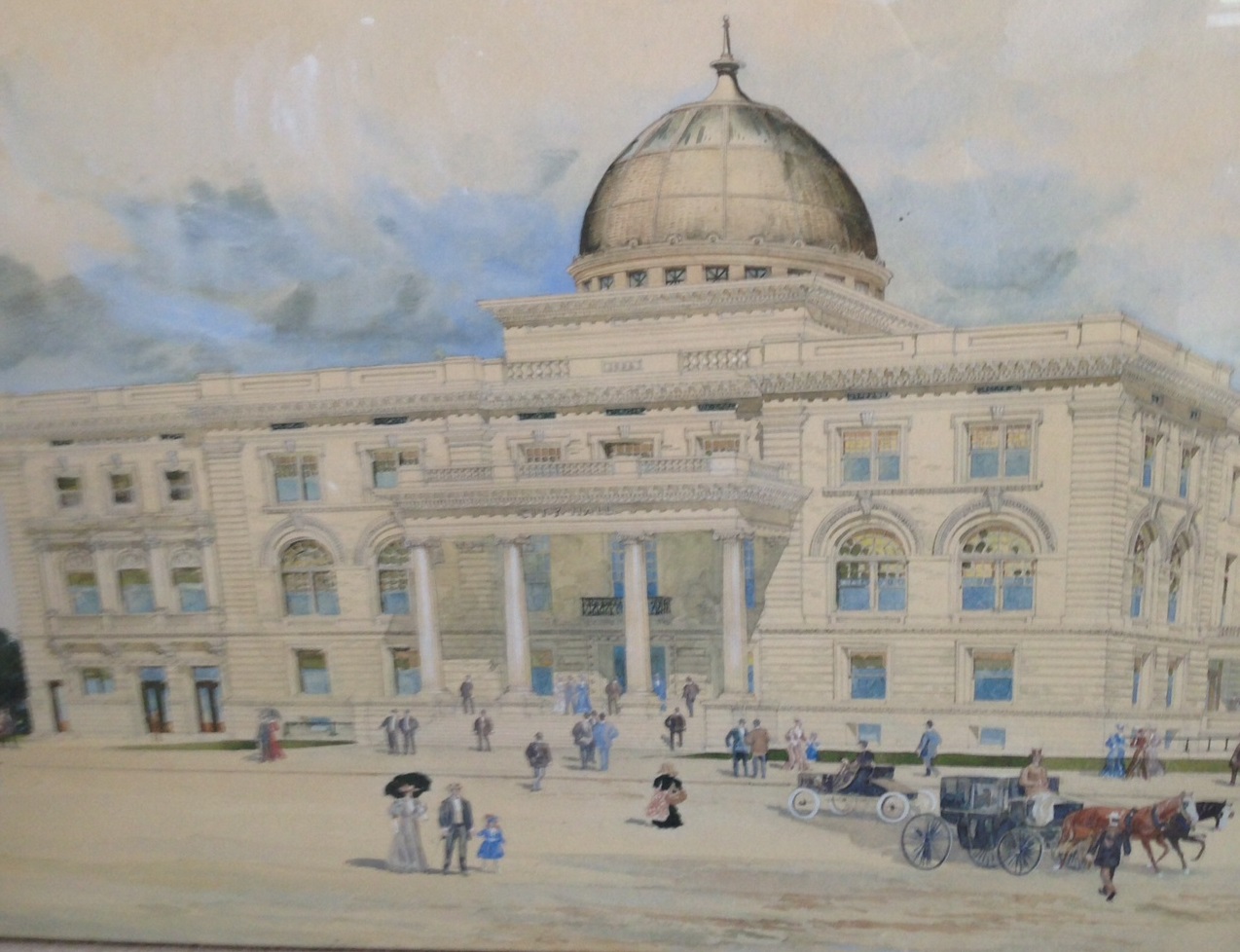
Little Rock Look Back: Plans for new City Hall go on trial

The 1906 plans for City Hall with the Municipal Auditorium on the left portion.

The 1906 plans for City Hall with the Municipal Auditorium on the left portion.

The Little Rock City Council approved Charles Thompson’s plans for a new city hall, auditorium and jail on July 9, 1906, by the adoption of Resolution 281 and Ordinance 1,295.  This did not set well with the powers that be at the Arkansas Gazette.  A lawsuit was filed against the City. The lead plaintiff was J. N. Heiskell, the owner and editor of the Gazette.  From July 24 through July 27, the Arkansas Gazette featured stories and editorials on its front page decrying the action.  (It most likely stems from the fact that the editor was trying to get the City Council to construct a public library.  He ostensibly felt that money spent on a new city hall and auditorium would divert funds from construction of a library.)

In response to the lawsuit, a temporary restraining order was issued on July 24 stopping the City from any further action on the new building plans until the trial had taken place.  The plaintiffs’ four main points were that state law did not authorize a city government to construct an auditorium, that the contract exceeded the amount authorized by the City Council, that the City did not own the land on which the city hall and auditorium would be built, and that “the city of Little Rock now has a city hall sufficient for all necessary purposes.”

The trial started on Friday, July 27, 1906.  Among the legal team for the plaintiffs were J. H. Harrod and former Arkansas Governor Daniel Webster Jones.  The City’s legal team included City Attorney W. Burt Brooks joined by three attorneys from prominent Little Rock families: former City Attorney Ashley Cockrill, John Fletcher and Thomas Mehaffy.

The trial began on a Friday, continued on Saturday (!) and concluded on a Monday.

Architect Frank W. Gibb (who had applied for but not been selected to design the new city hall and auditorium) was called as a witness by the prosecution.  He stated that, based on his review, the capacity for the auditorium would be between 1,700 and 2,000.  This was used to bolster claims by the plaintiffs that the auditorium, if built, would be insufficient to the meet the needs offered by proponents.  Mr. Gibb also estimated that the auditorium wing was about forty-two percent of the cost for the entire project.  He was asked by the defense about the adequacy of the existing City Hall.  The architect replied that the current seat of municipal government was not large enough to meet all the present needs.

Mayor Lenon was the only defense witness; in his testimony he addressed the inadequacies of the current City Hall which echoed the points raised by Mr. Gibb. The mayor also detailed the purchase of the land for the new project.  While the plaintiffs charged the city had not purchased the land, Mayor Lenon pointed out the land was under contract.  He further stated that the work was done through a third party for fear that if the land owners had known the city was the interested buyer, the price might have been inflated by the potential sellers.

Next up were the closing arguments.  More on those and the verdict next week.

Last weekend for Young Arkansas Artists exhibit at Ark Arts Center

This weekend is the last chance to see the 53rd Young Arkansas Artists exhibition in the Alice Pratt Brown Atrium and the Sam Strauss Sr. Gallery at the Arkansas Arts Center.

“At the Arkansas Arts Center, we believe that the arts have the ability to educate and empower our children while cultivating a positive form of self-expression,” said Arkansas Arts Center executive director Todd Herman. “We strive to promote quality arts education initiatives and achievement in the visual arts and through this exhibition, we are offering a wonderful platform to celebrate artwork created by our very own Arkansas youth.”

First presented in 1961, the 53rd Young Arkansas Artists exhibition is a celebration of both the creative achievements of young artists and the youthful spirits of Arkansans. Now in its sixth decade, this annual children’s art exhibition showcases artwork by Arkansas students from with hopes to ensure learning, inspiration and creative expression are occurring in our state’s classrooms. In 2013, teachers from 127 schools across Arkansas submitted 508 works for consideration. Of those, 102 works were selected for inclusion in the exhibition.

The exhibition is open to all Arkansas students from kindergarten through 12th grade. Art must be original and completed within the current 2013-2014 school year. Original works in all media including drawings, paintings, prints, photographs, collages, crafts, and sculpture are eligible. Teachers may submit only one artwork per grade level per school or program. Entries must be made through a public, private or home school teacher or instructor of an art program. All artists whose works are selected will receive notification on March 18 and the deadline for delivery of all selected entries is April 11.

arkartsWorks will be selected for the exhibition by the Arkansas Art Educators Association. A juror selects one Best of Class and two Honorable Mentions for each grade, and each winning artist’s school receives a monetary award to supports its art program. Selected works from the exhibition travel to schools and other venues around the state as part of the Arkansas Arts Center’s State Services Program. The juror will also select the following awards: one Middle School and one High School level Art and the Written Word Award, the Ray Smenner Best in Show Painting Award and the Mid Southern Watercolorists Best in Show watercolor award.

The 53rd Young Arkansas Artists exhibition is sponsored by Barbara and Steve Bova, Dale and Lee Ronnel, The Philip R. Jonsson Foundation and The Central Arkansas Library System. Awards for the exhibition are sponsored by Arkansas Children’s Hospital.

Today there will be a Family Festival and Awards Ceremony in celebration of the 53rd Young Arkansas Artists exhibition on May 10 from 11 a.m. – 2 p.m. Activities for kids of all ages will be offered and awards will be presented at 1 p.m. in the Lecture Hall. The events are free for members and exhibition artists, $5 for a non-member individual and $20 for a non-member family. Guests are similarly invited to enjoy a matinee performance of Sleeping Beauty at 2 p.m. in the Children’s Theatre that will also be held on May 10.

For more information, visit arkansasartscenter.org/yaa or call (501) 372-4000.

Little Rock Look Back: Harold “Sonney” Henson LR’s 56th Mayor

On July 18, 1928, future Little Rock Mayor Harold E. “Sonney” Henson, Jr. was born in Fayetteville to Harold E Henson Sr. and Dollie Croxdale Henson.  He and his sister Sara Sue grew up in Springdale.
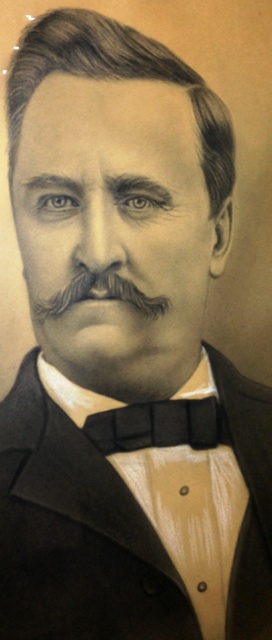
Henson graduated from Springdale High School and was later inducted as one of the first inductees into the Springdale High School Hall of Fame where he participated in the state high school championship in football and basketball. He attended the University of Arkansas in 1945 on an athletic scholarship where he participated in three sports, golf, basketball and football, and graduated in 1949 with a degree in Business Administration.

He was active in ROTC at the university and graduated as a second lieutenant in the U.S. Army. Henson served in Korea as a captain and commander during the Korean conflict. He attained the rank of major as an active member of the Army reserve post his duty in Korea.

Henson’s professional career began with First National Bank of Springdale and soon moved to Little Rock where he served as Vice President at the Worthen Bank on Asher Avenue. In 1962 he was elected to the City of Little Rock Board of Directors.  From January 1965 to December 1966, he served as mayor of Little Rock.  In November 1966, he was unopposed in his bid for a second term on the City Board.  However in October 1967, he resigned from the City Board because he was taking a position with a bank in Joplin, Missouri.

From 1966 to 1972, he served as President of Security National Bank Joplin.  While there, he was a Missouri amateur championship golfer.  Herbert Thomas then asked him to move to Ft. Smith to head up City National Bank (present Bank Corp South) where he served as President and CEO from 1972 to his retirement in 1993 at the age of 65. He continued his service to Bank Corp South as an active board member for several years.

Among his many civic activities throughout his career were the Springdale Junior Chamber of Commerce,  Sparks Regional Medical Center board of directors of Fort Smith, president and active member of the board for the Arkansas Sports Hall of Fame and Razorback Foundation, on the board for the University of Arkansas for Medical Sciences foundation, the Westark area council for Boy Scouts, the Arkansas State Chamber of Commerce, the Small Colleges of Arkansas, Leadership Fort Smith, the Community Rescue Mission and the President of the Arkansas Bankers Association to name a few.  In 1995 he received the meritorious service award by the Arkansas Sports Hall of Honor for his lifelong commitment to Arkansas sports.

Henson was married for 53 years to Helen Garrott Henson. He had four children, 16 grandchildren and one great-grand child.

Little Rock Look Back: James A. Woodson, LR’s 37th Mayor

IMG_0298On July 14, 1848, future Little Rock Mayor James Alexander Woodson was born in North Carolina.  The son of two prominent eastern families, he and his parents moved to Pine Bluff in 1849.  His father died within two weeks of the family’s arrival in Arkansas.

With the outbreak of the Civil War, he enlisted as a drummer boy in the Ninth Arkansas infantry but was discharged because of his youth. He worked as a clerk at a general store in Pine Bluff. After the Civil War ended, he attended school in Virginia and Maryland before returning Pine Bluff. Upon his return he worked in the steamboat business and eventually started working in railroads. He was instrumental in putting together one of the forerunners of the Missouri Pacific Railroad and worked for them for 18 years.

Woodson moved to Little Rock in March 1881 and continued working for the railroad until 1891.  Working in the mercantile business allowed him more time to be engaged in civic affairs.  In 1895 he was elected mayor.   He handily defeated former mayor W. G. Whipple who was seeking to return to office.

During Mayor Woodson’s tenure, he oversaw renovations of the 1867 Little Rock City Hall (which was located at the time on the north side of Markham between Main Street and Louisiana Street).  He also championed the construction of a city hospital and the first free bridge across the Arkansas River.  Mayor Woodson was reelected in April 1897 and April 1899.

In April 1890, he resigned to take over the Arkansas and Southwestern Railway.  After restoring it to sound financial footing, he later led the Arkansas Asphalt Company.  That company provided the first asphalt for paving Little Rock city streets.

Woodson served as a director of the Little Rock board of trade (forerunner to the Little Rock Regional Chamber of Commerce), director of the Mercantile Trust Company and president of the state board of trade (forerunner of the Arkansas State Chamber of Commerce).

Woodson married Virginia Lanier in 1868.  They had six children, five of whom lived to adulthood.  Mayor Woodson died on October 19, 1908 and is buried in Mt. Holly Cemetery.  His wife lived until 1937 and is buried next to him.  Also buried in Mount Holly are their children James Alexander Woodson, Benjamin Morehead Woodson and Gertrude Woodson Hardeman; each of whom died before their mother.  Mrs. Hardeman’s husband and son are also buried in Mount Holly.

In 2013, Mayor Woodson was one of the characters portrayed at the annual Parkview High School “Tales from the Crypt” program at Mount Holly.

Little Rock Look Back: New City Hall approved

1906 City Hall watercolor

Watercolor of Charles Thompson’s original plan for a Little Rock City Hall complex

On July 9, 1906, the Little Rock City Council approved Resolution 281 and Ordinance 1,295. These actions approved the plans for a new City Hall complex to be constructed on land at the northwest corner of Markham and Broadway Streets.  A few days later, the contract was awarded for the construction of the new building.

Mayor Warren E. Lenon had first called for a new city hall complex in his annual address in April 1904. He repeated his request in April 1905.   The City Council took up Mayor Lenon’s quest for a new city hall in December of 1905.  The Council appropriated money for the purchase of land for a city hall, jail and auditorium.

In response to this, the Arkansas Gazette daily newspaper ran a story featuring the viewpoints of a few civic leaders weighing in on the need for a new city hall complex which would also include a new jail and a city auditorium.  Two of the respondents, L. B. Leigh and P. Raleigh, stressed the need for paved streets and better sewers instead of a new city hall and auditorium.

The other three businessmen interviewed were more favorable to Mayor Lenon’s proposal.  Morris M. Cohn, a former Little Rock City Attorney, stated “I do not think we can make a better investment than in a fine city hall and auditorium.”  (Mr. Cohn, though an M. M. Cohn, was not related the M. M. Cohn who was the namesake for the longtime Little Rock department store.) County Judge William Marmaduke Kavanaugh offered his satisfaction with the action of the City Council on that matter.  R. E. Walt, a banker, opined that he thought $150,000 was not enough; he suggested $200,000 should be spent.

Later that month the Gazette reported that a site had been selected for the city hall and auditorium complex.  The proposed location was most of a city block located at the corner of Markham and Broadway Streets.  Mayor Lenon was vague as to the details of the deal because negotiations were still underway with the property owners

As 1906 dawned, Mayor Lenon and other city leaders continued to take steps to build the new city hall and auditorium.  They invited three local architects to make presentations for the chance to design the new complex.  The three were Charles L. Thompson, Frank W. Gibb and George R. Mann.  Mr. Thompson was chosen to receive the assignment.

On February 5, 1906, Mayor Lenon announced the creation of a special committee to work on the planning for a future city hall complex.  This committee consisted of Aldermen Louis Walther, A. B. Poe, L. N. Whitcomb, Christopher Ledwidge, and John A. Adams.

Mayor Lenon further stated that the new city hall complex and several private developments would “put us in that march of progress with which nothing can prevent us from having a 100,000 population in a few years.”

The saga to get the building built was just starting.

Little Rock Look Back: Matthew Cunningham MD, LR’s First Mayor. And Doctor. And Husband of First Woman. And Father of First Baby. And….

M_Cunningham_fFuture Little Rock Mayor Dr. Matthew Cunningham was born on July 5, 1782 in Pennsylvania. After receiving his medical degree from the University of Pennsylvania, he ended up in New York City.

It was there he met and married a young widow, Eliza Wilson Bertrand. After a brief stint in St. Louis, Dr. Cunningham was one of the first settlers of Little Rock in February 1820. He became the first physician in Little Rock.

In September 1820, Mrs. Cunningham and her children joined him. She became the first female in the Little Rock settlement. Dr. and Mrs. Cunningham had a son, Chester, who was the first white baby born in Little Rock. (Though not supported by any public records, there is some unsubstantiated thought that one of the African American slaves they had gave birth to a child before Chester was born.) The Cunninghams had several other children.  One daughter, Matilda, would marry Little Rock businessman Peter Hangar.  (The Hangar Hill neighborhood is named after Peter Hangar.)

In 1831, Dr. Cunningham was elected the first Mayor of Little Rock. He won the race 23 to 15 over Rev. W. W. Stevenson. The first City Council meeting took place at the Cunningham house on the block which is the southwest corner of what is now 3rd and Main Streets. Records are incomplete as to where on the block the Cunningham house was located, but a plaque is on 3rd Street near Main on the side of the Fulk Building which Cranford Johnson Robinson Woods is now renovating for their future office space.

Dr. Cunningham served one year as Mayor. He lived until June 15, 1851 and is buried at Mount Holly Cemetery. His wife, son, and the Hangar family are buried next to him.  His stepson – Charles P. Bertrand – also served as Mayor of Little Rock.