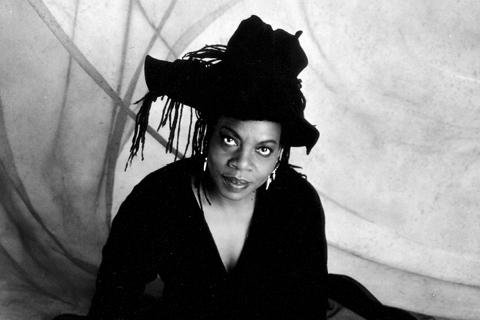
Rebecca Wells headlines first day of 12th Annual Arkansas Literary Festival

2015 ALF 1The 12th annual Arkansas Literary Festival kicks off today.

  • From 5pm to 7pm, there will be a book sale preview party at River Market Books & Gifts in the Cox Creative Center.
  • At 5:30, the exhibit “Page Turners” featuring Bryan Collier will open at Hearne Fine Art.
  •  At 6pm, there will be a Summer Reading Club Preview on the 3rd floor of the Main Library.
  •  Rebecca Wells will discuss “Divine Secrets” at 7pm on stage at the Ron Robinson Theatre. She is the author of the “Ya Ya Sisterhood” books. She will also return to Little Rock in 2016 to perform her one-woman show at the Arkansas Rep.

Through the Writers In The Schools (WITS) initiative, the Festival will provide presentations by several authors for Pulaski county elementary, middle, and senior high schools and area colleges.

Support for the Literary Festival is provided by sponsors including Central Arkansas Library System, Friends of Central Arkansas Libraries (FOCAL), Arkansas Humanities Council, Fred K. Darragh Jr. Foundation, Mosaic Templars Cultural Center, ProSmart Printing, Little Rock Family, KUAR FM 89.1, Arkansas Democrat Gazette, Sync, Arkansas Life, Clinton Foundation, MacArthur Museum of Arkansas Military History, Windstream, Arkansas Federal Credit Union, Arkansas Times, Wright, Lindsey & Jennings LLP, Hampton Inn Downtown/McKibbon Hotel Group, Capital Hotel, Historic Arkansas Museum , TransAmerica, Witt Stephens Jr. Central Arkansas Nature Center, Arkansas Library Association, Pulaski Technical College, Union Pacific, Sequoyah National Research Center, Gibbs Elementary School, Rockefeller Elementary School, Hendrix College, Hendrix College Project Pericles Program, Arkansas Women’s Forum, Philander Smith College, University of Arkansas Clinton School of Public Service, East Harding, University of Arkansas at Little Rock English Department, University of Arkansas at Little Rock Department of Rhetoric and Writing, Pyramid Art, Books & Custom Framing/Hearne Fine Art, Stickyz Rock ‘n’ Roll Chicken Shack, Literacy Action of Central Arkansas, Christ Episcopal Church, and Lamar Advertising. The Arkansas Literary Festival is supported in part by funds from the Arkansas Humanities Council and the National Endowment for the Humanities.

The Arkansas Literary Festival is a project of the Central Arkansas Library System. The Festival’s mission is to encourage the development of a more literate populace. A group of dedicated volunteers assists Festival Coordinator Brad Mooy with planning the Festival. Katherine Whitworth is the 2015 Festival Chair. Other committee chairs include Kevin Brockmeier, Talent Committee; Susan Santa Cruz, Festival Guides; Laura Stanley, Hospitality Gifts; and Amy Bradley-Hole, Moderators.
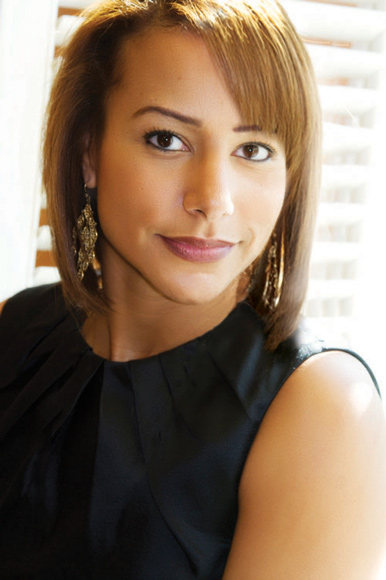
Tonight Amy Dubois Barnett speaks at Bless the Mic on Philander Smith campus

amy-dubois-barnettPhilander Smith College’s free lecture series “Bless the Mic” finishes the season tonight with journalist Amy Dubois Barnett.  She will speak at 7pm in the M.L. Harris Auditorium on the Philander Smith campus.

In August 2014, she was named Executive Editor of ESPN’s The Undefeated.  Prior to that, Barnett was Editor-in-Chief of Ebony, the oldest and largest African-American magazine in the country. At Ebony, Barnett executed the publication’s first top-to-bottom redesign in its 68-year history and also re-launched Ebony.com, both to critical acclaim.

Before Ebony, Barnett was the Deputy Editor-in-Chief of Harper’s Bazaar. Barnett was also the Managing Editor of Teen People. Before Teen People, Barnett served as Editor-in-Chief of Honey magazine where she oversaw a major redesign of the magazine.  Prior to Honey, Barnett was with Essence magazine, heading up the publication’s style content and lifestyle department.

For her work as a journalist, Barnett was named the 2012 Media Executive of the Year by Target Market News.  In 2013, she was included on the Folio 100, a list that honors the most innovative and influential professionals in magazine media.

This past school year, Barnett was also an Adjunct Professor of Management & Organizations at Northwestern University’s Kellogg School of Management, teaching a Spring semester class on Shifting Business Frameworks in Media and Entertainment.

Little Rock Look Back: St. Patrick’s Day with Mayor Pat L.  Robinson 

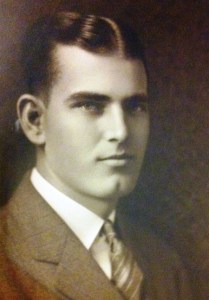
On this date in 1900, future Little Rock Mayor Pat L. Robinson was born.  While I cannot verify that he was indeed named after St. Patrick, it would be fairly reasonable to assume there might be a connection, especially given the fact that he was Catholic.

Robinson was a rising star of Little Rock Democratic politics.  In April 1929, just weeks after his 29th birthday, he was elected Mayor.  He had twice been elected as City Attorney (1926 and 1928) and was one of the youngest to serve in that position.

During Mayor Robinson’s tenure, he announced plans to construct a new airport.  That project led to the creation of what is now the Bill and Hillary Clinton National Airport.  Mayor Robinson was also involved in helping Philander Smith College secure the property where it is now located.  In addition, during his tenure, what is now the Museum of Discovery was folded into the City of Little Rock.

Single at the time he was in office and generally considered good looking, Mayor Robinson was sometimes referred to as the “Jimmy Walker of the Southwest.” Walker was the handsome and charming Mayor of New York City at the time.

Mayor Robinson ran afoul of some of the Democratic party leaders. Records don’t seem to indicate exactly what actions he took or did not take.  One thing that is brought up is that the City went into financial distress during his tenure.  Considering the Wall Street crash happened shortly after he took office, that financial state was not unique to Little Rock.

IMG_4532During this era in Little Rock, it was customary for an incumbent mayor to be given a second term. But City Clerk Horace Knowlton challenged Robinson in the primary.  It was a bitter campaign with Robinson linking Knowlton to disreputable denizens and Knowlton charging Robinson with “an orgy of spending.”  Robinson initially came out 17 votes ahead. But after a review and a lawsuit, it was found that Knowlton ended up with 10 more votes and became the nominee.  At the time, being the Democratic nominee was tantamount to election.

After he left office, Robinson practiced law for a few years in Little Rock and then left the city.  Records do not indicate where he went but he no longer appeared in the City of Little Rock directory by the early 1940s.

Black History Month Spotlight: Ozell Sutton

Ozell Sutton has been a writer and eyewitness to history, while making some of his own too.

Born in Gould, he moved with his family to Little Rock and graduate from Dunbar High School and Philander Smith College. In 1950, he became the Arkansas Democrat‘s first African American reporter.

He was at Central High when the Little a Rock Nine integrated, marched with Dr Martin Luther King Jr. in Washington in 1963 and was with Dr King when he was assassinated in 1968.

He served as an aide to Gov. Winthrop Rockefeller from 1968 to 1970. From 1972 to 2003 he work for the U.S. Department of Justice Community Relations Service in Atlanta. In that capacity he was often on the forefront in efforts to diffuse racially tense situations.

In 1962, he received an honorary doctorate from Philander Smith in recognition of his political activism in the civil rights movement. He was awarded the Distinguished Service Award by the Department of Justice in 1994.
He also was awarded the Medallion of Freedom by the National Association for the Advancement of Colored People (NAACP).

In 2012, he was presented with the Congressional Gold Medal in recignition for his being one of the first African Americans to serve in the Marine Corps. His book “From Yonder to Here:” A Memoir of Dr. Ozell Sutton was publiahed in 2009.

Ozell Sutton was inducted into the Arkansas Black Hall of Fame in 2001. For more on Ozell Sutton and the other inductees, visit the exhibit at Mosaic Templars Cultural Center, an agency of the Department of Arkansas Heritage.

Black History Month Spotlight – Art Porter Sr.

bhm art srArthur Lee (Art) Porter Sr. was a pianist, composer, conductor, and music teacher. His musical interest spanned from jazz to classical and spirituals.

Born on February 8, 1934 in Little Rock, he began his music education at home. He played in church at age eight; played his first recital at twelve; and, by fourteen, hosted a half-hour classical music radio program on KLRA-AM. He earned a bachelor’s degree in music from Arkansas AM&N College (now UAPB) in May 1954. The next year, he married Thelma Pauline Minton. Following his marriage, he pursued graduate study a the University of Illinois, University of Texas and Henderson State University.

He began his teaching career at Mississippi Valley State University in 1954.  When he was drafted into the Army, his musical talents were responsible for him being assigned as a chaplain’s assistant in New York.  In the late 1950s he returned to Little Rock and taught at Horace Mann High School, Parkview High School and Philander Smith College.

He also started playing piano jazz in the evenings. This led to the creation of the Art Porter Trio, which became THE music group for events.  Many musicians who came to Arkansas to perform in Little Rock or Hot Springs would often stop by and join in with Porter as he played.  From 1971 to 1981 he hosted The Minor Key musical showcase on AETN.  His Porterhouse Cuts program was shown in 13 states.

Often encouraged to tour, he instead chose to stay based in Arkansas.  He did, from time time, perform at jazz or music festivals.   He also performed classical piano with the Arkansas Symphony Orchestra, founded the Art Porter Singers, and created a music group featuring his four oldest children.  Though Porter received many honors and awards, he found particular satisfaction in the “Art Porter Bill” enacted by the state legislature, which allowed minors to perform in clubs while under adult supervision. Porter’s children thus were able to perform with him throughout the state. Governor Bill Clinton, at the time a huge fan and friend of Porter, often joined Porter’s group on his saxophone.

In January 1993, Porter and his son Art Porter, Jr., performed at festivities in Washington DC for the Presidential Inauguration of his friend Bill Clinton.  In July 1993, he died of lung cancer.  He was eulogized at Bethal AME Church, where he had been organist for 35 years.  He is buried at Little Rock National Cemetery.  Today his legacy lives on in the Art Porter Music Education Fund as well as in the lives of the many musicians and fans he touched.

He was posthumously inducted into the Arkansas Black Hall of Fame in 1994.  For more on Art Porter Sr. and other inductees into the Arkansas Black Hall of Fame, visit the permanent exhibit at the Mosaic Templars Cultural Center. That museum is an agency of the Department of Arkansas Heritage.

Black History Month Spotlight: Amina Claudine Myers

bhm aminaAmina Claudine Myers was born in Conway County and grew up in the Dallas/Fort Worth area.  She started singing and playing the piano and organ as a child in church choirs.  Returning to Arkansas, she graduated in concert music and music education from Philander Smith College in the early 1960s. After graduation, Myers moved to Chicago where she taught music, attended classes at Roosevelt University and worked with musicians such as Sonny Stitt and Gene Ammons. In 1966 she joined the AACM in Chicago, focusing on vocal compositions and arrangements, and recording her first jazz album with Kalaparusha Maurice McIntyre in 1969.

In 1976 Myers relocated to New York City, where she intensified her compositional work and expanded it into the realm of Off-Broadway productions. She also continued performing and recording as a pianist and organist. In 1985 she joined Charlie Haden’s Liberation Music Orchestra. Notable collaborations also include recordings with Bill Laswell, Marian McPartland, the Art Ensemble of Chicago, Archie Shepp, David Murray, Arthur Blythe, Frank Lowe, Leroy Jenkins, Jim Pepper and Ray Anderson.

In 1976 Amina moved to NY and became involved with the creative musicians that had migrated from Chicago and St. Louis, playing music in the lofts of NYC.  For a year she became a teacher at SUNY ((State Univ. of NY) developing the gospel chorus there.  Myers received several grants from the National Endowments for the Arts, Meet the Composer and NY Foundation for the Arts.                                                                           .

Myers began touring Europe with The Lester Bowie Quintet and The NY Organ Ensemble around 1978.  This began her European (all of Western Europe, Hungary, Turkey and Poland), Japanese, Canadian and U.S. performances of concerts, festivals and clubs as a soloist, with her trio, quartet, sextet and voice choir. This included workshops, seminars and residencies in universities and schools in the U.S. as well as Europe. Myers had the opportunity to perform in Cape Town, South Africa at The North Sea Jazz Festival with saxaphonist/composer Archie Shepp and to Accra, Ghana (West Africa) with composer/ vibraphonist Cecilia Smith during their jazz festival.

Myers’ works of blues, jazz, gospel and extended forms continues.  She teaches privately, giving lessons in theory, composition, piano, voice, organ, classical piano and assisting clients interested in stage/ performances. Amina  has  performed at Lincoln Center, Carnegie Hall, Town Hall, The Brooklyn Academy of Music, The Iridium Club, Birdland and other sites with her groups and with other artists and still continues to perform nationally and internationally.

She is a 2001 inductee into the Arkansas Black Hall of Fame.  For more on Amina Claudine Myers and other inductees into the Arkansas Black Hall of Fame, visit the permanent exhibit at the Mosaic Templars Cultural Center. That museum is an agency of the Department of Arkansas Heritage.

Black History Month Spotlight – Lawrence Hamilton

LawrenceHamiltonLawrence Hamilton, the son of the Dr. Oscar and Mae Dell Hamilton, was born in the small southwest Arkansas town of Foreman With an interest in music stemming from childhood, Hamilton earned a music scholarship to attend Henderson State University in Arkadelphia where he studied piano and voice He graduated in 1976 with a bachelor’s degree in music education.

From Arkansas, Hamilton traveled to Florida to work as a performer at Walt Disney World in Orlando, Florida where he would meet talent manager, Tommy Molinaro. This fateful meeting would prove to be a life-changing encounter, as Molinaro would invite Hamilton to come to New York to audition for the famed actor/director Geoffrey Holder. This marked the beginning of Hamilton’s bold and creative career in the performing arts, leading to performances on Broadway and on tours in Sophisticated Ladies, The Wiz, Uptown – Its Hot, Porgy and Bess, Big River, Play On!, and Jelly’s Last Jam among others. Perhaps his crowning achievement was starring in Ragtime.

Hamilton has been a member of the Southern Ballet Theater, Brooklyn Dance Theater, Ballet Tap USA, and the Arkansas Opera Theater He has performed in concert with the legendary Lena Horne at the White House for President and Mrs. Ronald Reagan, and at the Vatican for Pope John Paul II. Hamilton’s career also led to a stint as musical director for the renowned opera legend Jessye Norman, as well as vocal coach/arranger for the pop group New Kids on the Block

Upon his return to Arkansas, Hamilton served for several years as director of choral music at Philander Smith College. He also appeared in several plays at the Arkansas Repertory Theatre.  In addition, he performed at countless concerts, benefits and galas throughout Arkansas.  In 2003, he was inducted into the Arkansas Black Hall of Fame.  In 2008, he was appointed to the Little Rock Mayor’s Task Force on Tourism.

Hamilton died in New York in April 2014 due to complications from surgery.  Just weeks prior to the surgery, he had appeared in August Wilson’s The Piano Lesson in Cape Fear, North Carolina.  He had also starred in that play at Arkansas Rep a few years earlier.

For more on Lawrence Hamilton and other inductees into the Arkansas Black Hall of Fame, visit the permanent exhibit at the Mosaic Templars Cultural Center. That museum is an agency of the Department of Arkansas Heritage.