Architects of Little Rock the focus of June’s Legacies & Lunch

Architects of LR bookCharles Witsell and Gordon Wittenberg, retired principals of Little Rock architecture firms and co-authors of the newly released Architects of Little Rock: 1833-1950, will discuss Little Rock’s architectural history at Legacies & Lunch on Wednesday, June 4, noon-1 p.m. in the CALS Main Library’s Darragh Center, 100 Rock Street.

Witsell and Wittenberg are retired principals of WER Architects/Planners (Witsell, Evans and Rasco) and WD&D (Wittenberg, Delony and Davidson). Architects of Little Rock: 1833-1950 profiles thirty-five architects, including George R. Mann, Thomas Harding, Charles L. Thompson, and more. Famous buildings such as the Arkansas State Capitol, St. Andrews Cathedral, the Pulaski County Court House, Central High School, and Robinson Auditorium are showcased as well. Copies of the book will be available for purchase; Wittenberg and Witsell will sign copies after their talk.

Legacies & Lunch, the Butler Center’s monthly lecture series, is free, open to the public, and supported in part by the Arkansas Humanities Council. Programs are held from noon-1 p.m. on the first Wednesday of each month. Attendees are invited to bring a sack lunch; drinks and dessert are provided. For more information, contact 918-3033.
ROCKing the TONY AWARDS – Klein, Arnaz & Luckinbill

Rock the Tonys

Klein, Luckinbill and Arnaz. Photo by Aubrey Reuben

Klein, Luckinbill and Arnaz. Photo by Aubrey Reuben

Robert Klein, Lucie Arnaz, Laurence Luckinbill

Little Rock connection: Klein and Arnaz appeared with the Arkansas Symphony in a semi-staged version of the Tony nominated musical They’re Playing Our Song at Robinson Center Music Hall. Arnaz and her husband Luckinbill (who hails from Fort Smith) have appeared in Little Rock for personal visits as well as in touring shows.

Tony Awards connection: Klein was nominated for his performance in They’re Playing Our Song and has appeared on numerous Tony programs. Arnaz has appeared on Tony ceremonies as well.  Luckinbill was nominated in 1977 for Featured Actor in a Play for his performance in The Shadow Box.

ROCKing the TONY AWARDS – Agnes de Mille

Rock the Tonys

Photo by courtesy Anderson Ferrell

Photo by courtesy Anderson Ferrell

AGNES DE MILLE

Little Rock connection: In 1951 she and her dance troupe performed at Robinson Auditorium.

Tony Awards connection: Won Tony Awards for Choreography for Brigadoon (1947) and Kwamina (1962). Was nominated for a Tony for choreographing Goldilocks.  In 1993, accepted a special Tony for the 50th anniversary of Oklahoma!

ROCKing the TONY AWARDS – Joe E. Brown

Rock the Tonysharveybrown3JOE E. BROWN

Little Rock connection: Appeared at Robinson Auditorium in the national tour of Harvey in 1948.

Tony Awards connection: At the 1948 Tonys, received a special Tony Award for touring in Harvey while the original play still was on Broadway.  He had previously played the role on Broadway earlier in the run (succeeding original star Frank Fay). The original production of Harvey was directed by Antoinette Perry, after whom the awards were named.

The photo on the right was a publicity photo showing Brown taking down a painting of Fay with Harvey to mark the fact that Brown was taking over the role.

Book on LR Architects celebrated tonight

Architects of LR bookTonight, the Historic Arkansas Museum will be hosting a lecture and book signing for the recently released Architects of Little Rock: 1833–1950, penned by Little Rock architects, Charles Witsell and Gordon Wittenberg.

The evening will begin at 5:30 with a special presentation and lecture discussing the book. Speakers will include Bill Worthen, Historic Arkansas Museum; Tom Adams, WD&D; John Greer, WER Architects/Planners; Bobby Roberts, Central Arkansas Library and a special presentation will be given by Wesley Walls, President AIA Arkansas.

A reception and book signing will begin immediately following the lecture. All are invited to attend this special evening. “There are many ways of knowing the built environment. In their Architects of Little Rock, Mr. Witsell and Mr. Wittenberg explore the always complex relationship between buildings and the visionary thinkers—sometimes ordinary craftsman— who produced them. In so doing, they not only have uncovered the design rationales and circumstances of production that influenced a wide spectrum of Little Rock architecture but moreover have written a significant work of architectural scholarship that addresses the history of the architect’s profession,” Ethel Goodstein-Murphree, architectural historian and professor of architecture, University of Arkansas.

Architects of Little Rock: 1833–1950, is being released this month. The book is co-written by Little Rock architects, Charles Witsell and Gordon Wittenberg and edited by Marylyn Jackson Parins. Architects of Little Rock provides biographical and historical sketches of the architects at work in Little Rock from 1833 to 1950. It is the story of the people behind the city’s most important buildings. Thirty-five architects are profiled, including George R. Mann, Thomas Harding, Charles L. Thompson, Max F. Mayer, Edwin B. Cromwell, George H. Wittenberg, Lawson L. Delony, and others. Famous buildings, including the Historic Arkansas Museum, the Old State House, the Arkansas State Capitol, St. Andrews Cathedral, Little Rock City Hall, the Pulaski County Court House, Little Rock Central High School and Robinson Auditorium are showcased, bringing attention to and encouraging appreciation of the city’s historic buildings.

Charles Witsell and Gordon Wittenberg are retired principals of the Little Rock architecture firms WER Architects/Planners (Witsell, Evans and Rasco) and WD&D (Wittenberg, Delony and Davidson), respectively.

ROCKing the TONY AWARDS – Charles Boyer & Cedric Hardwicke

Rock the Tonys

Hardwicke & Boyer

Hardwicke & Boyer

Charles Boyer and Cedric Hardwicke

Little Rock connection: The pair were part of a touring cast of Don Juan in Hell which is adapted from Shaw’s Man and Superman.  It played at Robinson Auditorium in 1951.

Tony Awards connection: Boyer received a Special Tony in 1952 for creating and directing Don Juan in Hell.  He also received a Tony nomination in 1963 for starring in the play Lord Pengo.  Hardwicke received a 1959 Tony nomination for Actor in a Play for his performance in A Majority of One.

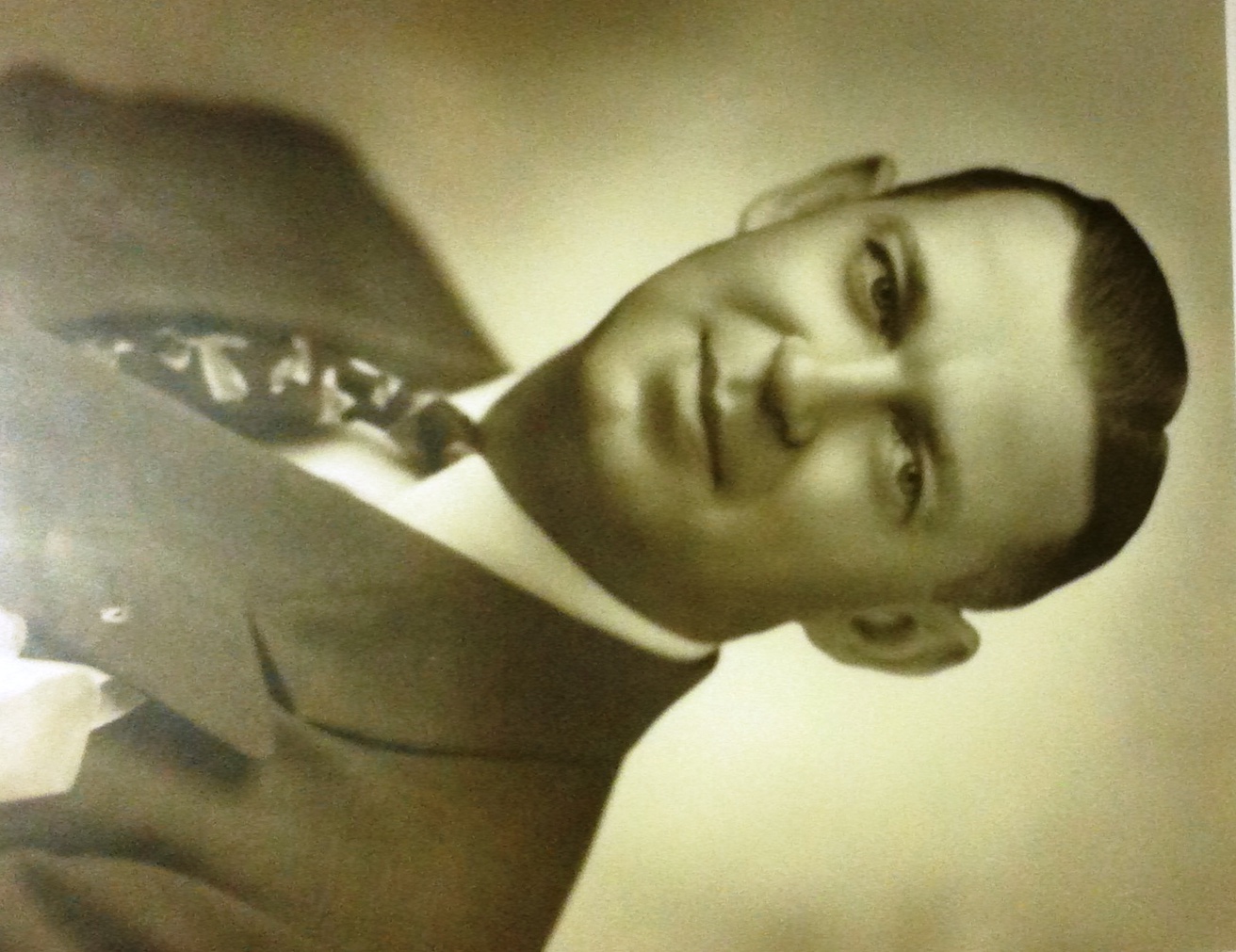
Little Rock Look Back: Dan Sprick, LR’s 50th Mayor

SprickFuture Little Rock Mayor Dan T. Sprick was born on May 19, 1902.  He served three terms on the Little Rock City Council (from 1935 to 1941).  In 1945, he was elected Mayor of Little Rock and served one term. During his tenure on the City Council, he was the sole vote against locating Robinson Auditorium at Markham and Broadway.  He had favored another location.

He was not alone, however, in being held in contempt of court and spending part of the day in jail.  On Monday, December 4, a dozen of Little Rock’s aldermen (which included Sprick) reported to the county jail to serve sentences for contempt of court. The previous Monday, the twelve council members had voted against an ordinance which had been ordered by the judge in an improvement district matter. The other aldermen had either voted in the affirmative or had been absent. Because the twelve had refused to change their votes since that meeting, the judge ordered them jailed.

Mrs. C. C. Conner, the only female, was not jailed but was fined $50. The eleven men were held at the jail, though not in cells. In order to get out of jail, the judge gave the aldermen the chance to change their votes. The mayor asked the judge to let them leave the jail to attend the meeting at City Hall, which was nearby. He requested that the city be allowed to maintain “what little dignity remained” by not having the meeting at the jail. The judge relented, and the aldermen were escorted by deputies to the council chambers. After the aldermen changed their votes, the judge suspended the remainder of their sentences.

His tenure as Mayor was relatively quiet. He took office the same month that World War II ended. While in office, the Sprick administration was marked by growth in the city budget and in city positions. As a part of that growth, there were many more new purchases taking place which had prompted extra scrutiny of the City’s purchasing procedures. A thorough investigation toward the end of his tenure found no malfeasance or misfeasance, it did note that the city needed to do a better job of anticipating cash flow. Much of the City’s focus during the Sprick tenure was on growth and keeping up infrastructure needs.

Sprick later served for ten years in the Arkansas State Senate (from 1961 to 1970).  During his tenure in the Senate, Sprick was closely aligned with Gov. Orval Faubus.  When the Little Rock high schools had been closed a year to ensure segregation, Sprick had served on the board of a private school set up by some of the leaders of the segregation movement.

His time in the Senate was also marked by controversy.  He was one of three Senators to opposed Muhammad Ali’s speaking at the University of Arkansas at Fayetteville.  After an Arkansas Gazette editorial lambasted him, Sprick sued the paper for libel. The Gazette settled with him out of court because his health was poor.

Sprick died in January 1972.