LR Look Back: Webb Hubbell, Little Rock 64th Mayor

Mayor HubbellOn January 18, 1948, future Little Rock Mayor Webster “Webb” Hubbell was born. After playing football in high school, he played for the University of Arkansas Razorbacks.  He also received his law degree from the U of A.

At the age of 30, already a successful attorney, Hubbell was appointed to the Little Rock City Board of Directors to fill a vacancy in September 1978.  In 1980, he was elected to a four year term on the City Board.

In June 1979, there was a vacancy in the office of Mayor of Little Rock.  Hubbell was selected by his fellow City Directors to serve as Mayor until December 1980.  In January 1981, he was selected to serve another term as Mayor.  In June 1981, he stepped down as Mayor but continued to serve on the City Board of Directors.

In 1984, Hubbell was appointed to serve as Chief Justice of the Arkansas Supreme Court to finish out the term of Richard B. Adkisson.  Following his service on the court, he returned to the practice of law at the Rose Law Firm.  He later served as the Associate Attorney General in the Justice Department during the Clinton administration.

Hubbell resigned from the Justice Department due to an investigation related to Whitewater.  Following conviction and serving time in prison, he has been an author and management consultant.  His novel, When Men Betray, was published by Beaufort Books in May 2014.  This coming May, his next novel Ginger Snaps will be released.
“Then and Now – The Central High Neighborhood” focus of architecture lecture tonight

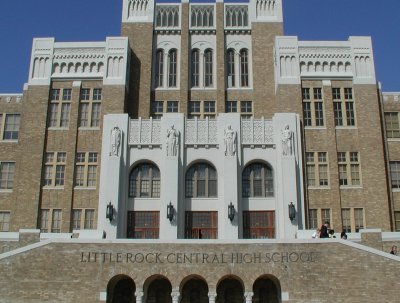
centralentranceThe Architecture and Design Network is hosting a panel presentation on the historic Central High neighborhood this evening at 6pm at the Arkansas Arts Center.

Panelists are:

  • Rachel Silva, Arkansas Historic Preservation Program
  • Kwendeche, an architect
  • Nancy Rousseau, principal of Central High School
  • Vanessa McKuin, president of the Central High School Neighborhood Assocation

The westward expansion of Little Rock in the mid-1890’s gave rise to the West End, a section of the city which, in time, became known as the Central High School neighborhood. At the time the high school was completed in 1927 it was designated by the American Institute of Architects as “the most beautiful high school in America.”  For its time it was the largest and most expensive high school building in the United States.  Thirty years later its reputation would be changed as it became the site of international media coverage of efforts to fight the integration.

In addition to discussing the history and development of the area, the panel will talk about the future of historic properties in the neighborhood. A trio of neighborhood groups is actively involved in the effort. The three are: Wright Avenue Neighborhood Association, Capitol Hill Neighborhood Association and Central High Neighborhood Association.

The Architecture and Design Network is a non-profit organization. It is supported, in part, by the Arkansas Arts Center, Central Arkansas section of the Arkansas Chapter of the American Institute of Architects, the Fay Jones School of Architecture and friends in the community.

A reception will begin at 5:30 prior to the lecture.

Photographing Everyday Arkansas Architecture the focus of talk tonight by Prof. Geoff Winningham

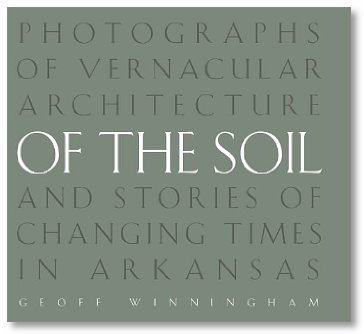
adn g winningham bookWORKING IN THE EYE OF THE SUN: Photographing the Vernacular Architecture of Arkansas is the title of remarks this evening by Geoff Winningham a Professor at Rice University and holder of the Lynette S. Aubrey Chair in the Humanities.

Arkansas has its share of vernacular architecture, everyday structures built by and for ordinary people, architecture without architects, so to speak. Working in the early eighties with Professor Cy Sutherland of the University of Arkansas School of Architecture, Geoff Winningham traveled throughout the state, identifying and photographing vernacular forms – houses, barns, silos, churches, schools, stores and more. Winningham will share a number of those images with his audience when he talks about Arkansas’s vernacular architecture.

Selections from his collection of black and white images of those structures, plus interviews with people long familiar with them, are the makings of “OF THE SOIL”, a book just published by the University of Arkansas Press. Professor Jeff Shannon of the Fay Jones School of Architecture, served as its editor.

Professor Winningham is presented by the Architecture & Design Network as part of their monthly lecture series. The talk will take place this evening, Tuesday, December 9, 2014 at 6pm. It will be preceded by a reception at 5:30 pm at the Arkansas Arts Center lecture hall.

Supporters of the Architecture and Design Network (ADN) include the Arkansas Arts Center, UA’s Fay Jones School of Architecture, the Central Arkansas Section of the Arkansas Chapter of the American Institute of Architecture. All ADN lectures are free and open to the public. For additional information contact ardenetwork@mac.com. This project is supported in part by a grant from the Arkansas Humanities Council and the National Endowment for the Humanities.

LR Cultural Touchstone: Stella Boyle Smith

stellaStella Boyle Smith, who died at the age of 100 in 1994, was well known for her love of music and philanthropy. The Stella Boyle Smith Trust, a trust with a longtime history of supporting the arts and music at the University of Arkansas, has made a $200,000 gift to fund student scholarships.

Stella Boyle Smith was a Little Rock philanthropist and founder of the Arkansas Symphony Orchestra. She lived to be 100, but ensured that her legacy would continue.  In her lifetime, she donated more than $2.5 million to organizations in the music and medical fields.  Since her death, the Stella Boyle Smith Trust has donated more than $5 million.

She was born in Farmington, Mo., into a large, musically inclined family, which moved to Arkansas when she was two. She began singing at the age of three and graduated from high school at 14. In 1922, she moved to Little Rock with her first husband, Dandridge Perry Compton, who died in 1935. Her second husband, George Smith, held various business interests and extensive farms in Woodruff and Arkansas counties, which allowed them to engage in philanthropy. Mr. Smith died in 1946.

In 1923, Smith’s love for music inspired her to start The Musical Group in her living room of her residence at 102 Ridgeway Drive in Little Rock, where she lived until she died. Through several iterations, the group eventually became the Arkansas Symphony Orchestra in 1966. Her initial objective was to establish the symphony as an educational tool for children, and, in 1968, she helped establish the Youth Orchestra. In 1972, the symphony board of directors named her an honorary life member. Smith established a trust fund for the symphony’s permanent endowment in 1985. A loyal friend of music and the symphony, she attended nearly every performance and most rehearsals.

Smith was also a pianist. In 1988, she gave UALR a grand piano as well as an endowed trust of $500,000. UALR renamed its concert hall the Stella Boyle Smith Concert Hall as a tribute to her. That year the university also gave her an honorary doctor of humane letters degree. Interest from the trust provides scholarships each year for music students studying string instruments, piano or voice.

Smith enabled many students around the state to attend college through the more than 200 scholarships that she financed.

Other organizations that have benefited from her generosity include Arkansas Arts Center and Historic Arkansas Museum as well as the University of Arkansas.

LR Cultural Touchstone: Margaret Deane Smith Ross

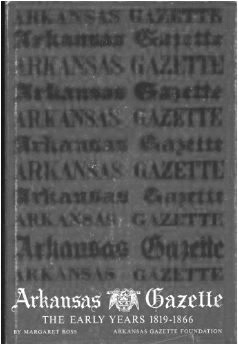
Ross bookMargaret Deane Smith Ross was born August 24, 1922 in Central Arkansas.  She attended both what is now Arkansas Tech University and the University of Arkansas. A journalism major at the latter, she left the university before graduating to marry Captain Edwin L. Ross in September 1942; he was killed in combat in Normandy on July 4, 1944.

Following the death of her husband, she lived in Little Rock and worked as a freelance writer for the Arkansas Democrat. In 1953 she became an associate editor of the Arkansas Historical Quarterly, a position she retained until 1993. She was a charter member of the Pulaski County Historical Society, and from 1953 to 1957 served as its journal’s first editor. From 1954 to 1957 she was a research assistant at Arkansas History Commission.

In 1957 she became the Arkansas Gazette historian and curator of the J.N. Heiskell Collection of Arkansiana; she remained with the Gazette for twenty-seven years. From 1958 to 1968 she wrote a historical column for the Gazette, the “Chronicles of Arkansas.” She was a charter member of the Arkansas Genealogical Society, founded by Walter Lemke in 1962. In 1968 she became a member of the Arkansas Historical Association’s board of directors, a position she occupied until 1980. In 1969 she published a book, Arkansas Gazette: The Early Years, 1819-1866: A History; it received the Award of Merit from the American Association for State and Local History. From 1979 to 1984 she wrote “Grass Roots,” a genealogical column for the Gazette. Also in 1979 she became the first fellow of the Arkansas Museum of Science and History. In April 2000 she received a lifetime achievement award from the Arkansas Historical Association.

As a historian for the Gazette, she became the de facto historian for the State of Arkansas.  Her knowledge of Arkansas history was unsurpassed during her lifetime.  She also served as an unofficial teacher to generations who were interested in learning more about the history of their state, and how to do that research.


She died in Little Rock in December 2002.

LR Cultural Touchstone: Jane Rogers

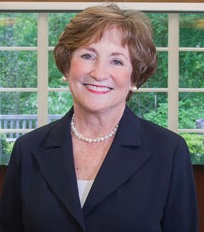
Jane RogersJane Rogers is a Little Rock native who has had a hand in developing two different cultural entities in her hometown.  She helped organize the first Riverfest to be held in Riverfront Park in 1983.  Continuing her involvement, she later served as the first full-time executive director of Riverfest.  Under her leadership the festival experienced significant growth.  This, in turn, brought more people down to the banks of the Arkansas River and the new Riverfront Park.  Because of this, more people were familiar with the area which helped the fledgling River Market take hold in the mid-1990s.

Shortly after he became Governor, Mike Huckabee tapped her to lead the Department of Arkansas Heritage.  In that capacity, she oversaw the Arkansas Arts Council, Old State House Museum, Historic Arkansas Museum, Delta Cultural Center, Arkansas Historic Preservation Program and Arkansas Natural Heritage Commission.  She served as Director for two years.

In 2003, she was appointed to the University of Arkansas Board of Trustees.  In that capacity, she has been involved in efforts to strengthen cultural offerings and facilities at the various campuses in the University of Arkansas system.

Her most recent cultural endeavor has been as a founder of Sculpture at the River Market.  In 2007, she helped recruit volunteers to create Little Rock’s first nation-wide sculpture invitational show and sale.  Since that time, Sculpture at the River Market has built a $2,000,000+ collection of public sculpture placed in beautiful surroundings along the banks of the Arkansas River in downtown Little Rock.  As a result of pieces of these efforts, the Vogel Schwartz Sculpture Garden was created in Riverfront Park.

LR Cultural Touchstone: Jana Beard

BeardJana Beard has taught dance in the central Arkansas area for over 30 years and has been the owner and director of her own studio for over twenty of those years.

In addition to being committed to offering the highest quality of instruction and the opportunity to experience all forms of dance, she has enjoyed performing in many Arkansas Rep productions, including Sweet Charity, Guys and Dolls, Chicago, Good Woman of Setzuan, A Soldiers Tale, Evita and Into The Woods.

Jana attended the University of Arkansas at Fayetteville as a dance major, and while at UALR she performed in the productions of Cabaret and Pippin.  She has also been an instructor in the Theatre and Dance Department.

She has served for many years as director and choreographer for the bi-annual legal cast spoof The Gridiron (which returned this year after a hiatus) and has also served as the stage director for the Arkansas Symphony Orchestra’s Christmas Spectacular.

A few years ago, Ballet Arkansas was on the brink of closing its doors.  Jana let the organization use space within her studio complex for offices, classes and rehearsals.  She sometimes served as the only staff member as the ballet was trying to regain its footing.  In addition, for several years she was the coordinator of The Nutcracker which was Ballet Arkansas’ only revenue source during the lean years.

Because of her lifeline, Ballet Arkansas is now poised to grow to heights never seen in the company’s history.  The move to Main Street, the new programming and statewide touring would not have been possible had Jana not offered a home when it needed it.

In addition, Jana choreographed high school musicals in which the Culture Vulture appeared in the 1980s.