Little Rock Look Back: The City says HELLO, DOLLY! to Carol Channing

52 years ago tonight, on November 15, 1966, Carol Channing opened a six day stint in HELLO, DOLLY! at Robinson Auditorium.  She would play 8 sold out shows over those six days.

Channing, who had won the 1964 Tony Award for Best Actress in a Musical for her role in this show, had recently returned to the national tour.  She had just wrapped filming THOROUGHLY MODERN MILLIE (for which she would receive an Oscar nomination). She had specifically requested that Little Rock be added to the tour.

Her breakout role was in 1949’s GENTLEMEN PREFER BLONDS. In that show she introduced the song “Little Girl from Little Rock.”  Since it had helped make her a star, she had long felt an affinity for the Arkansas capital.  Therefore when she rejoined the tour, she required that LR be one of her stops before she left the tour.

While in Little Rock, Channing was entertained at the Arkansas Governor’s Mansion and feted at parties.  She was made an honorary citizen of Little Rock, as well.

But she was here to perform. And perform she did. She was rarely known to miss a performance and always gave her utmost.  Bill Lewis, in his review in the ARKANSAS GAZETTE, stated “To hear Channing sing ‘Hello, Dolly!’ Is one of the great experiences of all musical theater to date…”

In assessing the show’s run in Little Rock (which would be seen by more than 20,000 people), Lewis summed up what many felt at the time — and to hear the reminiscences from a half century later, it still is a heartfelt sentiment — “A week’s too little.”

Expanded partnership between Arkansas Arts Center and Central Arkansas Library System announced

The Arkansas Arts Center and the Central Arkansas Library System are launching a long-term partnership to build valuable creative connections between two Central Arkansas cultural institutions.

This collaboration with CALS is the first of several community partnerships the Arkansas Arts Center will offer as its building in MacArthur Park undergoes a transformational renovation. Beginning in the fall of 2019, arts patrons will find Arts Center collection works and programming at a variety of locations around Arkansas, including 15 Central Arkansas Library System locations. More details about additional partnerships will continue to be announced throughout 2019.

“CALS has always served as a partner and host for our regional arts institutions. Our many branch locations provide a perfect venue to share with local neighborhoods the cultural richness of the Arkansas Arts Center’s collection,” CALS Executive Director Nate Coulter said. “We are also delighted to enable the continuation of the Arts Center’s educational programs during their construction process, thanks to our many community classrooms and meeting spaces. It is our pleasure to collaborate with the Arts Center to support our arts community, and we know CALS patrons will greatly enjoy these classes as an addition to our regular library programming.”

Beginning in early 2019, patrons of CALS branches will see works from the Arkansas Arts Center’s extensive collection of contemporary craft objects as they browse their neighborhood libraries. Nearly 10% of the craft collection’s 1,500 works will be on view at all 14 CALS branches, as well as the Butler Center for Arkansas Studies, with each installation carefully curated to the environment, history and mission of each individual library branch. These installations in communities across Central Arkansas will show off the incredible diversity of the Arts Center’s collection of contemporary craft objects.

Beginning in September 2019, CALS patrons will also find some of their favorite Arts Center youth and adult programs at their neighborhood libraries, with programs carefully placed to fit the communities already present at each library.

“Partnerships within our community have always been critical to our mission,” said Laine Harber, Arkansas Arts Center interim executive director. “As we look toward the future, we want to continue to build the Arts Center into a true community gathering space. During our construction process, we look forward to building community with our many partners across the state.”

Food for Fines this December at CALS

Shed unwanted library fines this holiday season. The Central Arkansas Library System (CALS) is continuing its tradition of helping those in need by holding its annual Food for Fines event from Sunday, December 2, through Saturday, December 8.

Food for Fines gives patrons an opportunity to help others in central Arkansas and to reduce fines for overdue library materials. During Food for Fines, patrons may bring in donations of non-perishable food items to offset overdue fines on their library accounts. Each non-perishable food item will offset $1 in fines up to $10. Fines accrued for billed items or replacement fees are not eligible under the program.

Food collected in Pulaski County during the drive will be donated to the Arkansas Foodbank. Donations collected at Milam Library will be donated to Partners for Progress in Perryville.

CALS libraries in Little Rock:

  • Main Library, 100 Rock Street
  • Hillary Rodham Clinton Children’s Library and Learning Center, 4800 W. 10th Street
  • Dee Brown Library, 6325 Baseline Road
  • Fletcher Library, 823 North Buchanan Street
  • Terry Library, 2015 Napa Valley Drive
  • McMath Library, 2100 John Barrow Road
  • Thompson Library, 38 Rahling Circle
  • Oley E. Rooker Library, 11 Otter Creek Court
  • Williams Library, 1800 Chester Street

For more information about Food for Fines, call 918-3000 or visit http://www.cals.org.

The Central Arkansas Library System includes 14 branch libraries located in Little Rock, Perryville, and throughout Pulaski County. CALS has the largest research collection in central Arkansas. Most of its more than one million items may be reserved online and picked up at any branch that is convenient to the patron. Library Square, the library system’s downtown Little Rock campus, includes the Main Library, as well as the Ron Robinson Theater, the Bobby L. Roberts Library of Arkansas History & Art, and the Bookstore at Library Square.

2019 Season for Arkansas Rep is set

Arkansas Repertory Theatre, the state’s largest nonprofit professional theatre, announced its 2019 “Rebuild the Rep” Season. Beginning in February, the new season marks the return of The Rep after productions were suspended in April because of funding shortages.

“Storytelling will be our focus in 2019 at The Rep,” said Ruth Shepherd. “Our 2019 Season brings a diverse array of uniquely American stories.  We feel passionate about each and every one of these stories, and I am truly excited about the combination.”

The 2019 “Rebuild the Rep” season includes the following productions:

Chicago (Running February 20 to March 24, with opening night on February 22, 2019).
Director and choreographer Ron Hutchins makes a return to Arkansas Rep to helm this musical of murder, greed, corruption and show business. With a score by Fred Ebb and John Kander, this musical tells the story of Roxie Hart and Velma Kelly as well as lawyer Billy Flynn, reporter Mary Sunshine, and the other colorful characters from the 1920s.

Native Gardens (April 17 to May 5, with opening night on April 19, 2019)
Written by Karen Zacarias, this comedy is about
 a young, up-and-coming Latinx couple who move in next door to an older, well-established white couple. Everything is downright neighborly until it’s discovered that the fence separating their backyards is over the property line — a property line that cuts right through a prize-winning flowerbed!

Million Dollar Quartet (September 4 to October 6, with opening night on September 6, 2019)  On December 4, 1956, in the studios of Sun Records in Memphis, Elvis Presley, Johnny Cash, Carl Perkins, and Jerry Lee Lewis gathered to meet with legendary producer Sam Phillips. What happened next was pure rock and roll magic. The show has a collection of hit songs that includes “Blue Suede Shoes,” “Folsom Prison Blues,” “Great Balls of Fire,” and “Hound Dog.”  The show is written by Colin Escott and Floyd Mutrux from an original idea by Mutrux.  Directed by original cast member Hunter Foster (a Tony-nominated actor), 

It’s a Wonderful Life:  A LIVE Radio Play (December 4 to 22, with opening night on December 6, 2019)
Back by popular demand, The Rep brings this holiday classic back to our stage to close the 2019 season. Ring in the holidays with an entertaining spin on a familiar holiday favorite. Set in a 1940s radio station on Christmas Eve, enjoy a live radio version of Frank Capra’s classic 1946 film as the actors on stage transform into dozens of characters from Bedford Falls. 


NEW IN 2019 – EDUCATION AT THE REP ON THE MAINSTAGE

Willy Wonka Jr. (June 21 to 30, 2019)
Adapted for the stage by Leslie Bricusse and Timothy A. McDonald, it features a score by Bricusse and Anthony Newley.  
The scrumdidilyumptious adventures of Willy Wonka’s chocolate factory light up the stage this summer at The Rep. Featuring many of the enchanting songs from the 1971 film, generations of candy lovers will delight in this devilishly delicious adaptation of Roald Dahl’s classic tale, brought to life by a company of young artists. 

SEASON SUBSCRIPTIONS
Season Subscriptions are on sale online or by calling the Box Office starting November 14. At a cost of $88 (for students) or $155 (for adults), a subscription to The Rep is the most economical way to see all of the productions included in the 2019 Season. There is also a Pay-Your-Age subscription option for young adults ages 22-40. Season subscriptions provide one ticket to each of the four productions. Tickets to Willy Wonka Jr. are sold separately. Single ticket sales open in January 2019.

For more information about Season Subscriptions, call the Box Office at (501) 378-0405, Monday – Friday, 9 a.m. – 5 p.m., or visit www.TheRep.org.


ARKANSAS REPERTORY THEATRE 
Arkansas Repertory Theatre was founded in 1976 with a mission to produce a diverse body of work intended to illuminate the human condition through great storytelling and is the largest non-profit professional theatre company in the state. Having produced more than 350 shows (including 40 world premieres), the 377-seat theatre is located in downtown Little Rock where it serves as the anchor of the city’s Creative Corridor. For more information, visit www.therep.org.

Little Rock Look Back: Mayoral Race of 1924

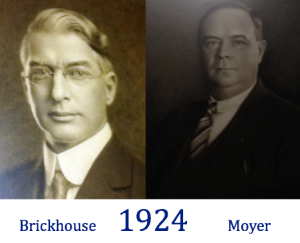
After serving three two-year terms as mayor, Ben D. Brickhouse decided to follow the precedent of his predecessor Charles Taylor and seek a fourth term in the Democratic Primary of 1924.  In the election for his third term, Brickhouse was unopposed. So it would have appeared that he was well-positioned for this fourth bid.
However…

Early in his third term, Brickhouse had broken ranks with the Ku Klux Klan. At the time, the Klan controlled much of Democratic Party politics in Little Rock (and indeed all of Arkansas).  Mayor Brickhouse did not appreciate local Klan leadership trying to dictate City appointments to him.  Beaten but unbowed, the Klan sought someone to run for mayor.  The candidate who was found was Pulaski County Judge Charles Moyer.

In October 1924, Moyer and Brickhouse both announced what everyone in Little Rock already knew, they would be seeking the Democratic nomination for Little Rock mayor.  Traditionally, the primary was in December before the April general election (in which the Democratic nominee was usually unopposed).  The Pulaski County Democratic Committee set the date for the election.

There was a bit of a surprise at the early November meeting of the Democratic Committee when it was announced the election would be in January. Neither Moyer nor Brickhouse nor their surrogates offered much comments on the change.  But Arthur Jones, who announced at the meeting he too would be seeking the office of mayor, protested the change.  The date was set for the later option.

However, a week later, the Committee met again and moved the elections back to the originally anticipated times.  Several of the Committee members had been unaware of the proposed change. Upon further reflection (and likely conversations with candidates), they opted to reverse the earlier vote.

At the start of the race, Moyer talked about the need for better control of City finances, better parks, and improving the police and fire.  Jones attacked the City’s police force and courts in general. He called Brickhouse a “double crosser” who got the City into debt and cannot get it out of it.  About Moyer, Jones said he was reactionary, non-progressive, opposed women’s suffrage, and only improved roads for political purposes.

While Jones was in the race, and lobbed charges at both Brickhouse and Moyer, it really was a two-man faceoff. In fact, neither Moyer nor Brickhouse seemed to discuss Jones much at all.

The major issues in the campaign revolved around government debt and the Klan.  Moyer accused Brickhouse of getting the City into debt and not paying with cash.  Brickhouse countered that the County had more debt than Moyer claimed, and that any fiscal improvements at the County were due to others such as the County Treasurer.  Further, Brickhouse stated he had inherited $1,000,000 in debt. But he gladly took ownership of the $750,000 in debt he had caused because that was the only way to improve the hospital and the parks.  He also laid out plans for a zoo and a City swimming pool.

Moyer was openly backed by the Klan.  Leadership of the KKK attacked Brickhouse. They said he had an attitude of ingratitude for the support he had previously received.  Moyer did not distance himself from the Klan but remained personally silent about the organization or his affiliation with it.  At one of his final rallies, a Moyer Glee Club sang. It was composed of Gus Blass department store employees and contained Jews, Catholics, and Klan members.

The Saturday before the Monday election, both Moyer and Brickhouse had parades on Main Street.  In fact, there were so many people either in the parades or watching them, a retailer estimated he had lost $10,000 in Christmas sales that night.

In the end, the election was not close.  Moyer won all of the City’s wards. His vote total was 5,534, while Brickhouse had 2,944. Jones received 100 votes.  Moyer was unopposed in the April 1925 election.

Many of the Little Rock aldermen were disappointed by the outcome.  Before taking office in April, Moyer met in private with the aldermen to try to assuage their concerns.

Little Rock Look Back: Mayor Woodrow W. Mann

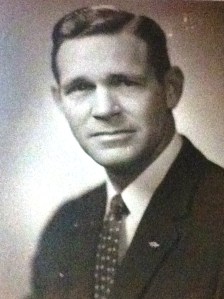
IMG_3231Future Little Rock Mayor Woodrow Wilson Mann was born on November 13, 1916, in Little Rock.  His tenure at Little Rock mayor was tumultuous from both things of his doing as well as events that catapulted him onto the international scene.

In 1955, he ran as the Democratic nominee for Mayor of Little Rock and defeated two term incumbent Pratt C. Remmel, a Republican.  He took office in January 1956 and immediately set about to make a lot of changes.  In addition to revitalizing the City’s bus system, and removing some color barriers at City Hall, he oversaw the dismantling of the copper dome on top of Little Rock City Hall (as opposed to the repair of the dome championed by Mayor Remmel).

Mayor Mann was caught up in a grand jury investigation into purchasing practices at City Hall as well as within the City government in North Little Rock.  Partially in response to this, Little Rock voters approved a new form of government in late 1956.  Mayor Mann opposed the switch to the City Manager form and refused to set the election for the new officials but was ultimately compelled to do so.

He was also Mayor during the 1957 integration of Little Rock Central High School.  He sought to keep the peace and to broker a deal between President Dwight Eisenhower and Governor Orval Faubus.  His powers within the city were, no doubt, hampered because of his lame duck status as Mayor.  In November 1957 following the election of the new City Board of Directors, he chaired his last City Council meeting and left office.

In January of 1958, a series of articles written by Mayor Mann detailed his perspective on the events at Central High. These were carried by newspapers throughout the US.

Because of ill will toward him due to the Central High crisis (he was criticized by both sides) and grand jury investigation, Mayor Mann felt it would be difficult to maintain his insurance business in Little Rock. He moved to Texas in 1959 and remained there the rest of his life.  He died in Houston on August 6, 2002.

An entry about Mayor Mann in the Encyclopedia of Arkansas History and Culture can be found here.

2019 Arkansas Rep Season Reveal Tonight (11/13) at 5:30

The Arkansas Rep has made plans for the NEXT ACT and will announce the 2019 Season on Tuesday, November 13, at 5:30 p.m.
The event is sold out, but will be available for watching on Facebook.
In preparation for that, here is a summary of the Rep’s progress since the April 2018 announcement about the Rep suspending operations.
Progress to date:
Since April 24, The Rep has:
  • Received two matching grants totaling $1,025,000;
  • Eliminated all operating debt;
  • Sold the Peachtree Apartments, cutting our property debt by half;
  • Welcomed seven new board members;
  • Reached over 325 students during summer and fall Education at The Rep programs;
  • Listened to the community through emails, calls, letters, personal visits, town hall meetings, focus groups, and an online survey;
  • Worked with the board, staff and a steering committee to envision the future;
  • Raised more than $875,000 from over 1,850 individual gifts and pledges.
What’s next?
With this momentum, the Rep is looking to the future. Plans include:
  • Hiring for critical staff positions throughout the fall and winter;
  • Continuing Education at The Rep programming – winter schedule is coming soon!
  • Fundraising continues – we have $1.2 million still to raise to create financial stability and sustainability for The Rep’s future, including:
    • Reserve funds – operating, facilities, artistic and subscription escrow
    • Needed repairs at scene shop and upgrades in the auditorium
    • Retire remaining property debt
  • Annual fundraising continues – with an estimated $3 million budget for 2019, the Rep needs to raise approximately $1.3 million for operating expenses for the year. With the support and encouragement the Rep has felt during the last few months from the community, this is an achievable goal.