Little Rock Look Back: LR Voters Approve Municipal Auditorium

muni aud elect ad editedOn January 26, 1937, Little Rock voters went to the polls to vote on three different municipal bond issues.  One of them was the construction of a municipal auditorium (what would become Joseph Taylor Robinson Memorial Auditorium, now Robinson Center Music Hall).

The bonds for the auditorium would be $468,000 in general obligation bonds which would be paid off between 1940 and 1971. This was toward a total cost of $760,000 for the entire project.

The official campaign for the auditorium was sponsored by the Little Rock Forward Committee which was led by W. H. Williams. In campaign advertisements it showed the value of conventions in New York City which was estimated at $100 per convention attendee. Little Rock organizers were estimating a $10 a day expenditure by visitors, which the committee stressed was very conservative. The campaign committee emphasized the importance of acting at that time due to the federal government money involved.

Various committees and organizations endorsed the auditorium project including the Little Rock Chamber of Commerce, Little Rock Federation of Women’s Clubs, and the Young Business Men’s Association.

The thrust of the campaign focused on the economic benefit to Little Rock as well as the fact that the auditorium would be for all citizens. This message was picked up in editorials by both the Democrat and Gazette. In editorials on January 23 and 25, the Democrat opined that the benefits of the auditorium would be distributed among all classes of the citizenry. The next day, both papers ran editorials which touted the economic boon an auditorium would bring through conventions and meetings.

The Democrat’s approach broke down the current value of conventions to Little Rock with, what it termed, the city’s “existing inadequate” facilities. The paper emphasized a conservative estimate of what the added value to Little Rock’s economy would be with the new auditorium.

In expressing support for the auditorium the Gazette stressed the values for local, statewide and national groups. “An auditorium would provide a more convenient and better adapted community center for all kinds of local gathering,” and continued that it would make Little Rock “the logical meeting place for state conventions of every sort.” In discussing the value of state, regional and national meetings the paper stressed that the outside money spent by convention attendees has an impact beyond stores, hotels and restaurants.

Both papers also echoed the importance of the federal government financing to make this possible. TheDemocrat noted that the Public Works Administration grant and federal low cost loan made this an ideal time.

On January 26, 1937, Little Rock voters approved the auditorium bond by a vote of 1,518 to 519. It passed in each of the city’s 23 precincts. Little Rock Mayor R. E. Overman expressed his pleasure at the outcome of the vote and extended his thanks to the voters.

After the election, a Gazette editorial commented on the low turnout for the special election by commenting that the weather had been nice and there were no other barriers to voting. The editorial writer opined that those not voting in the election must not have been opposed to the endeavor.
Arts+History Throwback Thursday: Arsenal Building in 1942

Associated Press photo

Associated Press photo

On February 9, Little Rock voters will have the chance to say Yes to improving the MacArthur Museum of Arkansas Military History, Arkansas Arts Center, and MacArthur Park.

Leading up to that election is a good time to look back at the development of these two MacArthur Park sited museums.

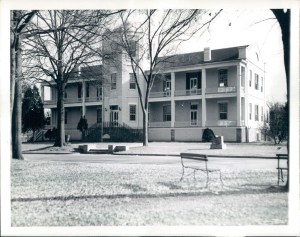
This is a 1942 Associated Press photo of the Arsenal Building.  Completed in 1840, it was decommissioned in 1890 after fifty years as a military arsenal and later officer barracks.  In 1893, the land on which it sits was transferred from the Federal Government to the City of Little Rock. The land became Little Rock’s first public park.  Briefly known as Arsenal Park, it was known as City Park until 1942, when it was renamed MacArthur Park after the five star general who was born there in 1880.

From 1942 until 1996, it was home to the Museum of Science and History (under several different names). The building was restored in preparation for the museum moving in.  After the building was vacated again in 1997 (when the museum moved to the River Market to become the Museum of Discovery), it stood vacant in preparation for a proposed military history museum. In 1999, the building was hit by a tornado which severely damaged part of the roof and caused some interior flooding.  The building was repaired and restored while plans for the new museum were underway.  In May 2001, the MacArthur Museum of Arkansas Military History opened.

Art+History Throwback Thursday: Museum of Fine Arts

MFA postcardOn February 9, Little Rock voters will have the chance to say Yes to improving the Arkansas Arts Center, MacArthur Museum of Arkansas Military History and MacArthur Park.

Leading up to that election is a good time to look back at the development of these two MacArthur Park sited museums.

The Museum of Fine Arts opened in October 1937.  The groundbreaking was held on January 3, 1936, with the cornerstone laid on October 6 of that year.  Nearly one year later, the Fine Arts Club held its first meeting in the building and hosted a grand open house on October 5, 1937.

The front doorway to the museum is visible today inside a gallery of the Arkansas Arts Center.

Architecture Design Network tonight presents Tommy Pacello discussing Innovations in City Building

150511_Tommy_U3_Philly_Langdon_004INNOVATIONS IN CITY BUILDING: Lessons from Memphis, a lecture by Tommy Pacello

     DATE: Tuesday, January 19, 2016

    TIME:  6:00 p.m., preceded by a reception at 5:30 p.m

PLACE: Arkansas Arts Center, 9th and Commerce, Little Rock, AR

Tommy Pacello will talk about lessons to be learned from the Memphis (TN) Mayor’s Innovation Delivery Team (MMIDT), a body charged with helping struggling city neighborhoods become economically viable once again. Tasked with bringing about change, team members, with the assistance of public-private partnerships, work with distressed  communities as they deal with the challenges of urban blight, vacant properties, youth gun violence and the lack of adequate community services. Through the team’s efforts many distressed neighborhoods have been made livable again and enabled to sustain their viability.

Tommy Pacello is an attorney and city planner. He specializes in innovative yet pragmatic approaches to city buildings. He is currently consulting with U3 Advisors developing an Anchor Strategy around nine institutional anchors in Memphis, TN.

Prior to working with U3 Advisors, Tommy served as the Director of the Innovation Delivery Team in Memphis, Tennessee. This non-profit team, originally funded by Bloomberg Philanthropies, is charged with developing strategies to address the city’s most pressing challenges. In Memphis, the team’s focus is on generating economic vitality in core city neighborhoods, reducing youth gun violence, reducing the number of blighted and vacant properties, and improving service delivery among city departments.

Tommy previously worked with the Austin, Texas based firm Code Studio where he managed several national planning and development code projects. Tommy started his career as an Assistant City Attorney in Memphis representing the city on legal matters involving planning, zoning, and constitutional law and managed the development of the city’s first unified development code.

Tommy was recently named one of the top 40 Real Estate Professionals under the age of 40 by Urban Land Magazine and serves as the Chairman of Mission Advancement for the Memphis Chapter of the Urban Land Institute. He is also actively involved with the Congress for the New Urbanism and is a frequent national speaker on civic innovation and urban issues.

Tommy earned his Bachelor of Business Administration from the University of Georgia, Terry College of Business, and a Master of City and Regional Planning from the University of Memphis’ School of Urban Affairs and Public Policy.  Tommy holds a Juris Doctor from the University of Memphis’ Cecil C. Humphreys School of Law.

Pacello’s lecture is free and open to the public. Reservations are not required.

ADN supporters include the Arkansas Arts Center, the UA Fay Jones School of Architecture and Design, the Central Arkansas Section of the Arkansas Chapter of the American Institute of Architects and friends in the community.

For additional information, contact ardenetwork@me.com .  

Committee for Arts and History Kicks off Campaign for Arts Center, Military Museum & MacArthur Park today at noon

Today at Noon Campaign Kick-Off

Join us in supporting Arts + History at the official campaign kick-off

Tuesday, January 5 at 12 p.m.

The Arkansas Arts Center outside of the Children’s Theatre entrance

The Committee for Arts and History is a group of citizen advocates campaigning for Little Rock residents to vote FOR a bond issue backed by an already approved hotel tax on out-of-town visitors to improve the Arkansas Arts Center, MacArthur Museum of Arkansas Military History, and MacArthur Park in a special election on February 9, 2016.

The improvements are of vital importance for the Arkansas Arts Center to keep its accreditation in 2016, to preserve a National Historic Landmark, and for Little Rock citizens to protect our cultural attractions.


Happy New Year – Sixteen “16”s for 2016

Here are sixteen images of various 16s from throughout Little Rock.


1616 Scott

The intersection of 16th and Scott Streets


1616 Bus route

Rock Region Metro route 16


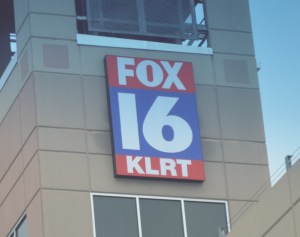
1616 fox

KLRT Fox 16 tower in downtown


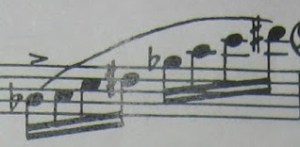
1616 Firebird

Sixteenth notes from FIREBIRD SUITE which will be played by the Arkansas Symphony Orchestra later this month.


1616 candles

Sixteen Candles movie is available for checkout from the Central Arkansas Library System


1616 june novel

The novel THE SIXTEENTH OF JUNE is available at Barnes & Noble


1616 Gas

Gas for $1.60 9/10 a gallon in Little Rock. (Yes, this is a slight cheat on the 16, but the 1 and 6 are still next to each other)


1616 Tons

Tennessee Ernie Ford’s LP “Sixteen Tons” available at music stores and in many homes in LR


1616 street

A street address which reverses the year – 1620 instead of 2016


1616 LRFD

Little Rock Fire Station Number 16 servicing Walton Heights and parts of Pleasant Valley


A clock in the Culture Vulture's car

A clock in the Culture Vulture’s car


A detail from an Arkansas license plate

A detail from an Arkansas license plate


A 16th birthday card

A 16th birthday card


A grocery store aisle

A grocery store aisle


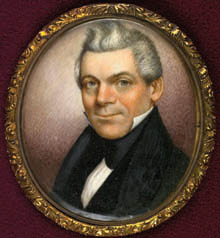
Roswell Beebe, Little Rock's 16th Mayor

Roswell Beebe, Little Rock’s 16th Mayor


Little Rock has the 16th square on the new Monopoly Here & Now Game. And rent is $160

Little Rock has the 16th square on the new Monopoly Here & Now Game. And rent is 160

2015 In Memoriam – Parker Westbrook

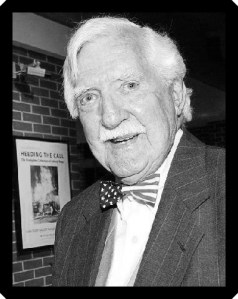
1515 WestbrookParker Westbrook WAS Mr. Preservation for Arkansas. But even though he is gone, it does not mean that preservation efforts in Arkansas are dormant.  Quite the contrary.  Like any good teacher, Parker used his knowledge to inspire others to share his interest in preservation.

It is no surprise that the organization he helped found, the Historic Preservation Alliance of Arkansas (now called Preserve Arkansas), names its lifetime achievement award after him.  He was not only the founding President of Preserve Arkansas, he was active in it until his final days.  It was not his only founding: he was a founder of Pioneer Washington Foundation (the oldest historic preservation organization in the state), the Main Street Arkansas Advisory Board, Historic Arkansas Museum Commission, the Arkansas State Capitol Association, and the Arkansas State Review Board for Historic Preservation. He served on the latter board from 1975 until his death this year, with the exception of five years from 2002 to 2007.  In recognition of his work in the field of heritage tourism, he was a 2007 inductee into the Arkansas Department of Parks and Tourism’s Hall of Fame.

His work was not limited by the boundaries of his home state.  He was an Advisor Emeritus to the National Trust for Historic Preservation and a 2001 recipient of a Preservation Honor Award from the Trust. Rep. Mike Ross declared him a “National Treasure” in the Congressional Record. He also served for two terms on the President’s Advisory Council on Historic Preservation and was named Chairman of the Committee on National Historic Landmarks on the National Park System Advisory Board.

A public servant, he worked for several federal officials from Arkansas, most notably Senator J. William Fulbright. He returned to Arkansas to work for Governor David Pryor.  But whether he worked in Washington DC; Little Rock; or his beloved hometown of Nashville, he was always interested in ensuring the past came alive. It might be through historic preservation, or it might be recounting a colorful moment of Arkansas history. Either way, Parker was a proponent of living history. He did not want it to be relegated to a musty, dusty book or building.
In 2007, he donated papers collected by his late sister Lucille and himself. The Lucille and Parker Westbrook Arkansas and Genealogy Collection is housed in the $20 million Arkansas Studies Institute, a joint project of the Central Arkansas Library System (CALS) and the University of Arkansas at Little Rock.  This collection has three parts: the first part focuses on Southwest Arkansas and contains genealogical sources and 3,000 historic photographs; the second highlights his public service and political career including much about the state’s architectural history; the third part consists of family papers, letters and photographs which document the Westbrooks’ deep roots in Arkansas.
He was the epitome of the Southern gentleman.  Not only did he look the part, he acted it. He was gracious in sharing credit with others; generous with his time, labor and talent; and did his best to keep up the lost art of writing letters and notes.