Little Rock Look Back: Plans for new City Hall go on trial

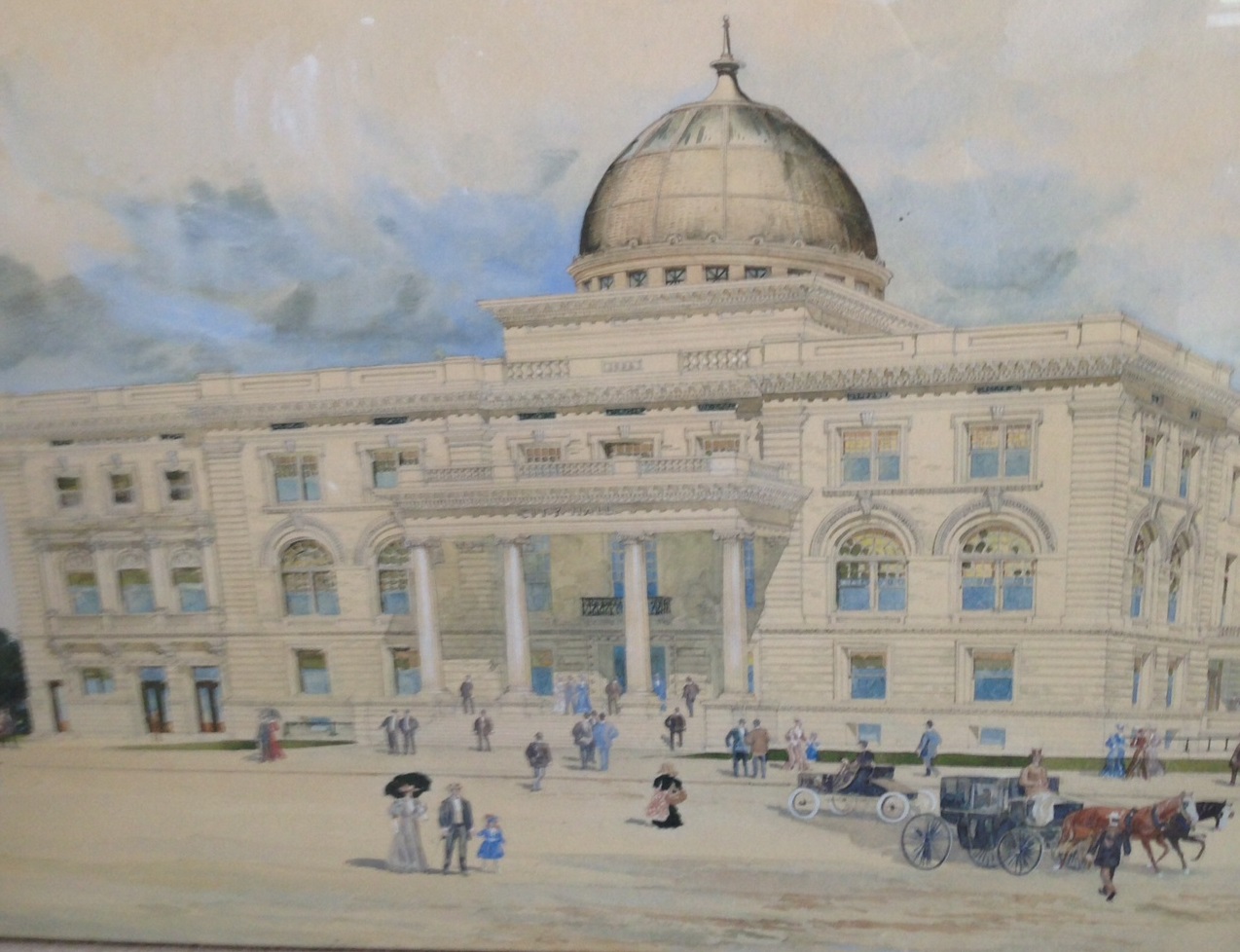
The 1906 plans for City Hall with the Municipal Auditorium on the left portion.

The 1906 plans for City Hall with the Municipal Auditorium on the left portion.

The Little Rock City Council approved Charles Thompson’s plans for a new city hall, auditorium and jail on July 9, 1906, by the adoption of Resolution 281 and Ordinance 1,295.  This did not set well with the powers that be at the Arkansas Gazette.  A lawsuit was filed against the City. The lead plaintiff was J. N. Heiskell, the owner and editor of the Gazette.  From July 24 through July 27, the Arkansas Gazette featured stories and editorials on its front page decrying the action.  (It most likely stems from the fact that the editor was trying to get the City Council to construct a public library.  He ostensibly felt that money spent on a new city hall and auditorium would divert funds from construction of a library.)

In response to the lawsuit, a temporary restraining order was issued on July 24 stopping the City from any further action on the new building plans until the trial had taken place.  The plaintiffs’ four main points were that state law did not authorize a city government to construct an auditorium, that the contract exceeded the amount authorized by the City Council, that the City did not own the land on which the city hall and auditorium would be built, and that “the city of Little Rock now has a city hall sufficient for all necessary purposes.”

The trial started on Friday, July 27, 1906.  Among the legal team for the plaintiffs were J. H. Harrod and former Arkansas Governor Daniel Webster Jones.  The City’s legal team included City Attorney W. Burt Brooks joined by three attorneys from prominent Little Rock families: former City Attorney Ashley Cockrill, John Fletcher and Thomas Mehaffy.

The trial began on a Friday, continued on Saturday (!) and concluded on a Monday.

Architect Frank W. Gibb (who had applied for but not been selected to design the new city hall and auditorium) was called as a witness by the prosecution.  He stated that, based on his review, the capacity for the auditorium would be between 1,700 and 2,000.  This was used to bolster claims by the plaintiffs that the auditorium, if built, would be insufficient to the meet the needs offered by proponents.  Mr. Gibb also estimated that the auditorium wing was about forty-two percent of the cost for the entire project.  He was asked by the defense about the adequacy of the existing City Hall.  The architect replied that the current seat of municipal government was not large enough to meet all the present needs.

Mayor Lenon was the only defense witness; in his testimony he addressed the inadequacies of the current City Hall which echoed the points raised by Mr. Gibb. The mayor also detailed the purchase of the land for the new project.  While the plaintiffs charged the city had not purchased the land, Mayor Lenon pointed out the land was under contract.  He further stated that the work was done through a third party for fear that if the land owners had known the city was the interested buyer, the price might have been inflated by the potential sellers.

Next up were the closing arguments.  More on those and the verdict next week.
Read and LEED – Two CALS library branches have received LEED Green Building Certification

Two Central Arkansas Library System (CALS) branches have been awarded prestigious LEED® (Leadership in Energy and Environmental Design) Green Building Certification by the U.S. Green Building Council and verified by the Green Building Certification Institute (CBGI). The first LEED certified project for CALS, Oley E. Rooker Library has been certified LEED Silver, and Hillary Rodham Clinton Children’s Library & Learning Center has been certified LEED Gold.

LEED is the nation’s preeminent program for the design, construction, and operation of high performance green buildings. In the central Arkansas area, Rooker Library is one of only nine LEED Silver projects, and the Hillary Rodham Clinton Children’s Library & Learning Center is one of only ten LEED Gold projects.

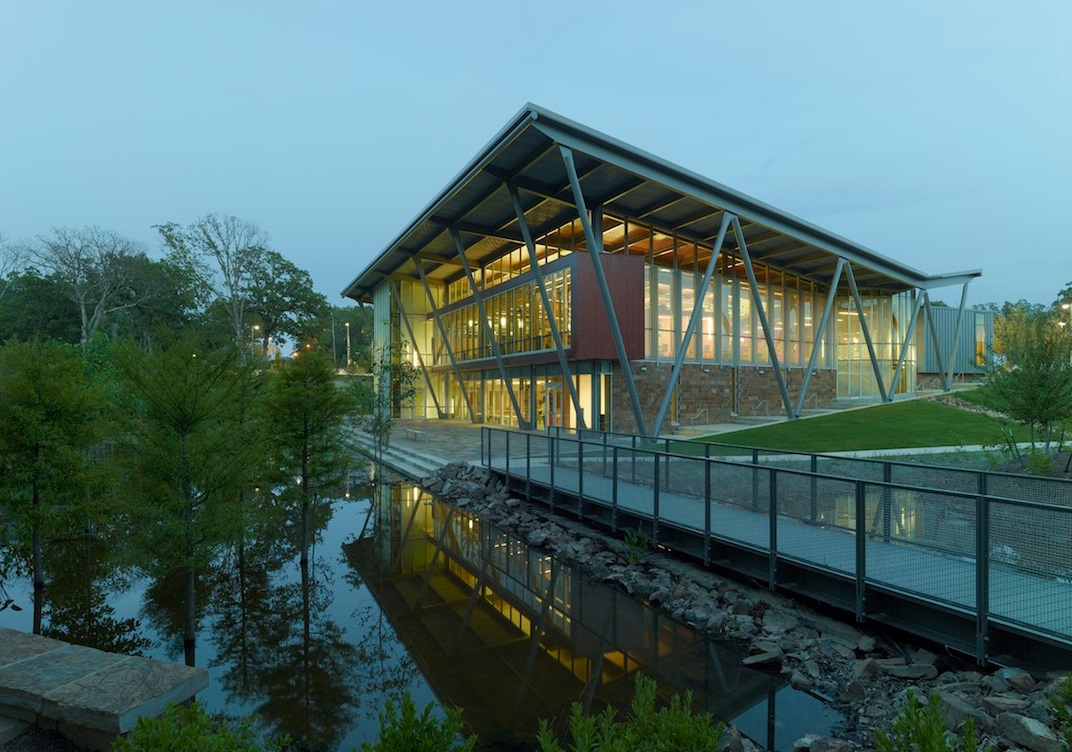
OLEY ROOKER LIBRARY (photo courtesy of CALS)

OLEY ROOKER LIBRARY (photo courtesy of CALS)

A building’s structure, access, and personality reflect the materials and design that went into its construction. CALS strives to show its respect for the history of our community and for its natural resources in its building design and choice of materials. With CALS’ commitment to sustainable building techniques or adaptable reuse of existing facilities in mind, Allison Architects designed the Rooker Library and James H. Cone, Inc. served as general contractor. Polk Stanley Wilcox Architects managed the Hillary Rodham Clinton Children’s Library & Learning Center design and East-Harding Construction provided construction services.

The Rooker Library and Hillary Rodham Clinton Children’s Library & Learning Center achieved LEED certification for energy use, lights, water, and material use as well as incorporating a variety of other sustainable strategies. By using less energy and water, LEED certified buildings save money for families, businesses, and taxpayers; reduce greenhouse gas emissions; and contribute to a healthier environment for residents, workers, and the larger community.

LEED certification of the libraries was based on a number of green design and construction features including:

  • Geothermal heating and cooling systems and high performance building envelopes which reduce the energy needed to maintain the buildings
  • High performance glazing with sunscreens which allow for abundant daylight
  • Deep roof overhang with fritted glass filtering system
  • Maximizing open space on the site
  • Use of local materials, rapidly renewable materials, and materials with recycled content
  • Bioswale and open-grid paving
  • Use of mature tree to provide natural shade
  • Water management system including a butterfly roof and wetland for water efficient landscaping, with native plants to help break down pollutants
  • Bicycle storage on site
  • Low flow water fixtures
  • Construction practices which include reducing construction site waste, preventing pollution from erosion, and managing the building to limit air contamination


Oley E. Rooker Library

The $5 million, 13,450 square-foot Rooker Library includes sustainable features such as a geothermal HVAC system and cork or linoleum flooring throughout, and building materials include copper and Arkansas sandstone. Amenities at the library include public meeting rooms, smaller study rooms, and public access computers. Exterior features include a reflecting pool with three sculpture otters and a pavilion that can be used for library and community functions.

Funding for the Rooker Library was made available by Little Rock voters’ approval of a bond issue in 2004.


Hillary Clinton Children' s Library and Learning Center (photo courtesy of Polk Stanley Wilcox)

Hillary Clinton Children’ s Library and Learning Center (photo courtesy of Polk Stanley Wilcox)

Hillary Rodham Clinton Children’s Library & Learning Center

Set on a six-acre site, the $12 million, 30,000 square foot Children’s Library includes a computer lab with fourteen computers, teaching kitchen, large activity area, individual and group study rooms, theater, and community room in addition to a collection of more than 21,000 books, DVDs, and CDs.

In 2007, Little Rock voters approved a bond issue to provide funding for the Children’s Library.

The Children’s Library’s grounds are integral to the entire facility’s program. A greenhouse and teaching garden help children learn about growing healthy foods as well as provide produce that will be used in the teaching kitchen programs. The grounds reflect the topography of Arkansas’s ecosystems, from the native hardwood trees in the highlands to vegetation of the wetland areas, which are both planted and original to the site. Walking paths offer families an attractive place for exercise while learning the names of the trees and plants, and an amphitheater has seating for outdoor programs or nature watching.

Little Rock Look Back: New City Hall approved

1906 City Hall watercolor

Watercolor of Charles Thompson’s original plan for a Little Rock City Hall complex

On July 9, 1906, the Little Rock City Council approved Resolution 281 and Ordinance 1,295. These actions approved the plans for a new City Hall complex to be constructed on land at the northwest corner of Markham and Broadway Streets.  A few days later, the contract was awarded for the construction of the new building.

Mayor Warren E. Lenon had first called for a new city hall complex in his annual address in April 1904. He repeated his request in April 1905.   The City Council took up Mayor Lenon’s quest for a new city hall in December of 1905.  The Council appropriated money for the purchase of land for a city hall, jail and auditorium.

In response to this, the Arkansas Gazette daily newspaper ran a story featuring the viewpoints of a few civic leaders weighing in on the need for a new city hall complex which would also include a new jail and a city auditorium.  Two of the respondents, L. B. Leigh and P. Raleigh, stressed the need for paved streets and better sewers instead of a new city hall and auditorium.

The other three businessmen interviewed were more favorable to Mayor Lenon’s proposal.  Morris M. Cohn, a former Little Rock City Attorney, stated “I do not think we can make a better investment than in a fine city hall and auditorium.”  (Mr. Cohn, though an M. M. Cohn, was not related the M. M. Cohn who was the namesake for the longtime Little Rock department store.) County Judge William Marmaduke Kavanaugh offered his satisfaction with the action of the City Council on that matter.  R. E. Walt, a banker, opined that he thought $150,000 was not enough; he suggested $200,000 should be spent.

Later that month the Gazette reported that a site had been selected for the city hall and auditorium complex.  The proposed location was most of a city block located at the corner of Markham and Broadway Streets.  Mayor Lenon was vague as to the details of the deal because negotiations were still underway with the property owners

As 1906 dawned, Mayor Lenon and other city leaders continued to take steps to build the new city hall and auditorium.  They invited three local architects to make presentations for the chance to design the new complex.  The three were Charles L. Thompson, Frank W. Gibb and George R. Mann.  Mr. Thompson was chosen to receive the assignment.

On February 5, 1906, Mayor Lenon announced the creation of a special committee to work on the planning for a future city hall complex.  This committee consisted of Aldermen Louis Walther, A. B. Poe, L. N. Whitcomb, Christopher Ledwidge, and John A. Adams.

Mayor Lenon further stated that the new city hall complex and several private developments would “put us in that march of progress with which nothing can prevent us from having a 100,000 population in a few years.”

The saga to get the building built was just starting.

“Intermission” at Robinson Center comes on July 1

Robinson IntermissionAfter several years of planning and an overwhelming vote of support by the Little Rock electorate, the renovations of Robinson Center Music Hall start after a press conference and ceremony on Tuesday, July 1 at 10am.

The building will be closed for two years as the music hall space is re-envisioned with a new, dynamic design implemented which will create not only an outstanding experience for the audience but also for the performers.

In addition, a new special event space will be built along the north side of the building taking advantage of Arkansas River and Riverfront Park views.

Though the Music Hall interior will be re-purposed and re-designed including a two level lobby space, the historic Markham Street lobby a the top of the stairs will be preserved.  In a nod to the appearance when it opened in February 1940, the lobby will be refurnished to its Art Deco splendor.  While the original chandeliers and accents have been lost to time, they are being recreated and will be installed. In addition, the front doors and windows will be re-designed to mimic the original entrances to the historic lobby.

Following the two year intermission, the building is scheduled to re-open in 2016.

(If two years, seems a long time for an intermission, when one considers that the first act was 74 years, it is actually a proportionally shorter interval than one normally gets at performances.)

Architects of Little Rock the focus of June’s Legacies & Lunch

Architects of LR bookCharles Witsell and Gordon Wittenberg, retired principals of Little Rock architecture firms and co-authors of the newly released Architects of Little Rock: 1833-1950, will discuss Little Rock’s architectural history at Legacies & Lunch on Wednesday, June 4, noon-1 p.m. in the CALS Main Library’s Darragh Center, 100 Rock Street.

Witsell and Wittenberg are retired principals of WER Architects/Planners (Witsell, Evans and Rasco) and WD&D (Wittenberg, Delony and Davidson). Architects of Little Rock: 1833-1950 profiles thirty-five architects, including George R. Mann, Thomas Harding, Charles L. Thompson, and more. Famous buildings such as the Arkansas State Capitol, St. Andrews Cathedral, the Pulaski County Court House, Central High School, and Robinson Auditorium are showcased as well. Copies of the book will be available for purchase; Wittenberg and Witsell will sign copies after their talk.

Legacies & Lunch, the Butler Center’s monthly lecture series, is free, open to the public, and supported in part by the Arkansas Humanities Council. Programs are held from noon-1 p.m. on the first Wednesday of each month. Attendees are invited to bring a sack lunch; drinks and dessert are provided. For more information, contact 918-3033.

Book on LR Architects celebrated tonight

Architects of LR bookTonight, the Historic Arkansas Museum will be hosting a lecture and book signing for the recently released Architects of Little Rock: 1833–1950, penned by Little Rock architects, Charles Witsell and Gordon Wittenberg.

The evening will begin at 5:30 with a special presentation and lecture discussing the book. Speakers will include Bill Worthen, Historic Arkansas Museum; Tom Adams, WD&D; John Greer, WER Architects/Planners; Bobby Roberts, Central Arkansas Library and a special presentation will be given by Wesley Walls, President AIA Arkansas.

A reception and book signing will begin immediately following the lecture. All are invited to attend this special evening. “There are many ways of knowing the built environment. In their Architects of Little Rock, Mr. Witsell and Mr. Wittenberg explore the always complex relationship between buildings and the visionary thinkers—sometimes ordinary craftsman— who produced them. In so doing, they not only have uncovered the design rationales and circumstances of production that influenced a wide spectrum of Little Rock architecture but moreover have written a significant work of architectural scholarship that addresses the history of the architect’s profession,” Ethel Goodstein-Murphree, architectural historian and professor of architecture, University of Arkansas.

Architects of Little Rock: 1833–1950, is being released this month. The book is co-written by Little Rock architects, Charles Witsell and Gordon Wittenberg and edited by Marylyn Jackson Parins. Architects of Little Rock provides biographical and historical sketches of the architects at work in Little Rock from 1833 to 1950. It is the story of the people behind the city’s most important buildings. Thirty-five architects are profiled, including George R. Mann, Thomas Harding, Charles L. Thompson, Max F. Mayer, Edwin B. Cromwell, George H. Wittenberg, Lawson L. Delony, and others. Famous buildings, including the Historic Arkansas Museum, the Old State House, the Arkansas State Capitol, St. Andrews Cathedral, Little Rock City Hall, the Pulaski County Court House, Little Rock Central High School and Robinson Auditorium are showcased, bringing attention to and encouraging appreciation of the city’s historic buildings.

Charles Witsell and Gordon Wittenberg are retired principals of the Little Rock architecture firms WER Architects/Planners (Witsell, Evans and Rasco) and WD&D (Wittenberg, Delony and Davidson), respectively.

Steve Wiesenthal FAIA discusses Architectural Heritage + Innovation at the University of Chicago

WiesenthalTonight the Architecture and Design network presents Steve Wiesenthal, FAIA discussing “Architectural Heritage + Innovation at the University of Chicago.”  He is currently Senior Associate Vice President for Facilities & University Architect at the University of Chicago.

The program begins at 6pm in the lecture hall of the Arkansas Arts Center. A reception precedes the lecture at 5:30.

The University of Chicago campus, rooted in the tradition of grey stone Collegiate Gothic and taking inspiration from the forward looking spirit of America’s premier city of architectural innovation, is in the midst of an historic transformation.

In the first two decades of the 21st century, the campus has undergone more change than it ever did in its 110 year history. Guided by principle and overarching planning themes, the University’s campus has buildings designed by a number of architectural luminaries – Helmut Jahn, Tod Willams, Billie Tsien, Jeanne Gang, Ann Beha, MIchael Van Walkenberg, Rafael Vinoly, Ricardo Legoretta among them. In spite of transformative physical changes to its campus, the University remains committed to its core values.

Weisenthal, who has been at the University since 2008, earned undergraduate degrees in architecture and urban studies at the University of Maryland and a Master of Liberal Arts degree from the University of Pennsylvania. Subsequent employment included six years as an architect with Venturi Scott Brown and Associates, the internationally acclaimed architectural firm. Prior to coming to the University, he oversaw the development of the University of California San Francisco’s Mission Bay research and academic campus.

Supporters of the Architecture and Design Network, include the University of Arkansas Fay Jones School of Architecture, the Central Arkansas Chapter of the American Institute of Architects, the Arkansas Arts Center and friends in the community. All ADN lectures are free and open to the public. For additional information, contact ardenetwork@icloud.com.