LR Cultural Touchstone: Mary Fletcher Worthen

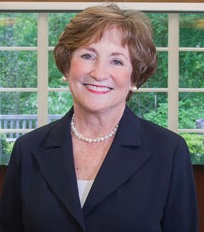
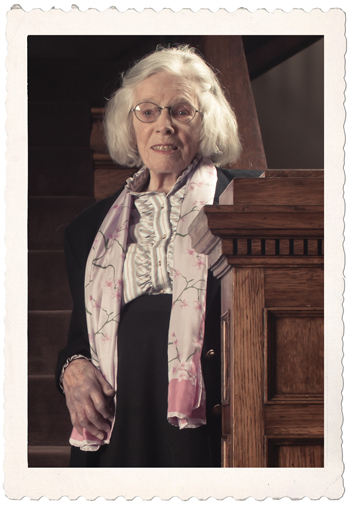
JJLR-MaryWorthen-MayMary Fletcher Worthen has cultivated history and music with the same grace and skill as she has cultivated gardens.

Born outside of Scott, she attended Vassar and Little Rock Junior College. After marrying banker Booker Worthen, she has devoted her life to improving Little Rock. Together with Stella Boyle and George Smith, she and Booker helped found the precursor to the Arkansas Symphony Orchestra.  Through its many iterations, she has been a steadfast supporter and is now a life member of the ASO Board.  She has also been a supporter of many other music organizations in Little Rock including the Chamber Music Society of Little Rock, of which she was a founder.

Another hallmark of her involvement is Mount Holly Cemetery Association.  For over 50 years she has served on the board of this body.  Without notes, she can recite the history of practically every resident buried there.  The tours she would lead with the late Peg Newton Smith were hot commodities when auctioned at fundraisers.  These two loving and lifelong friends would sometimes remember things differently. They playfully prodded and needled each other as they wended and winded their way through the headstones and history regaling rapt audiences with yarns of yore, quips and quotes, plus an anecdote or two.  In the decade since Peg passed, Mary has continued to entertain and engage visitors to the cemetery, especially at the annual Mount Holly Rest in Perpetuity (RIP) picnic.

She has also served on the Old State House Museum Board and the Pulaski County Historical Society Board.  As a historian, she literally wrote the book on Trinity Episcopal Cathedral.  She combined her interest in herb gardening and history with the creation of the Medicinal Garden at Historic Arkansas Museum, which is now named in her honor.

Born in 1917, Mary Worthen continues to learn new facts, share her love of history and music, and works to cultivate the next generations of cultural enthusiasts.
 

LR Cultural Touchstone: Joa Stafford-Humphrey

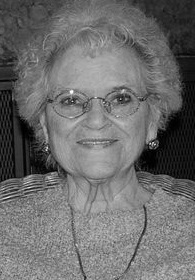
JoaJoa Stafford-Humphrey loved music and poetry.  But her most lasting cultural contribution is the creation of the MacArthur Museum of Arkansas Military History.

She had admired General MacArthur for many years.  In the 1980s, while serving on the Board of the Museum of Science and History, her interest heightened.  The museum (now known as the Museum of Discovery) was at the time located in the Arsenal Building in MacArthur Park. It was in this building that the General had been born.

Later, when the museum was planning to relocate to the River Market district, Joa asked City leaders about the future plans for the building. When there were not any definite plans, she informed them that the building should house a museum about MacArthur and also the state’s military history.  She succeeded in lobbying the Future-Little Rock planning process to include this as plans for the soon-to-be vacant building.

In 1994, the MacArthur Military History Museum commission was established, and Joa was appointed as a founding member.  She led the commission for several years.  Over the years, she lobbied for funds and artifacts as well as recruited other volunteers.  Eventually, the City hired a full-time museum director Stephan McAteer.  The project received a setback in January 1999 when a tornado damaged the building.  However, on May 19, 2001, Joa’s dream became a reality as the new museum opened its doors.

While the museum was important to her, it was not her only interest.  She was active in the Geyer Springs neighborhood and Southwest Little Rock activities. Joa was also known for her New Year’s Day open houses which would attract political leaders as well as her neighbors.

Joa died in July 2013.


LR Cultural Touchstone: Stella Boyle Smith

stellaStella Boyle Smith, who died at the age of 100 in 1994, was well known for her love of music and philanthropy. The Stella Boyle Smith Trust, a trust with a longtime history of supporting the arts and music at the University of Arkansas, has made a $200,000 gift to fund student scholarships.

Stella Boyle Smith was a Little Rock philanthropist and founder of the Arkansas Symphony Orchestra. She lived to be 100, but ensured that her legacy would continue.  In her lifetime, she donated more than $2.5 million to organizations in the music and medical fields.  Since her death, the Stella Boyle Smith Trust has donated more than $5 million.

She was born in Farmington, Mo., into a large, musically inclined family, which moved to Arkansas when she was two. She began singing at the age of three and graduated from high school at 14. In 1922, she moved to Little Rock with her first husband, Dandridge Perry Compton, who died in 1935. Her second husband, George Smith, held various business interests and extensive farms in Woodruff and Arkansas counties, which allowed them to engage in philanthropy. Mr. Smith died in 1946.

In 1923, Smith’s love for music inspired her to start The Musical Group in her living room of her residence at 102 Ridgeway Drive in Little Rock, where she lived until she died. Through several iterations, the group eventually became the Arkansas Symphony Orchestra in 1966. Her initial objective was to establish the symphony as an educational tool for children, and, in 1968, she helped establish the Youth Orchestra. In 1972, the symphony board of directors named her an honorary life member. Smith established a trust fund for the symphony’s permanent endowment in 1985. A loyal friend of music and the symphony, she attended nearly every performance and most rehearsals.

Smith was also a pianist. In 1988, she gave UALR a grand piano as well as an endowed trust of $500,000. UALR renamed its concert hall the Stella Boyle Smith Concert Hall as a tribute to her. That year the university also gave her an honorary doctor of humane letters degree. Interest from the trust provides scholarships each year for music students studying string instruments, piano or voice.

Smith enabled many students around the state to attend college through the more than 200 scholarships that she financed.

Other organizations that have benefited from her generosity include Arkansas Arts Center and Historic Arkansas Museum as well as the University of Arkansas.

LR Cultural Touchstone: Peg Newton Smith

peg_3While the Culture Vulture remains a huge fan of Peg Newton Smith, it is better for this entry to be taken from a tribute written by her longtime friend Bill Worthen.

Peg Newton Smith was a pioneer in the field of history and historic preservation.  A founder of both the Arkansas Museums Association and the Quapaw Quarter Association, Little Rock’s historic preservation organization, she served as a significant resource for many local history researchers and historians.

Born February 10, 1915, Peg Smith came from a family deeply engaged in Arkansas history. Two Arkansas counties – Newton and Hempstead – are named after ancestors.  She married George Rose Smith, himself from a prominent Arkansas family, in 1938. Peg Smith became his most vigorous supporter as George Rose Smith was elected and  reelected to the State Supreme Court, ultimately offering 38 years of service as Associate Justice.

She  enjoyed a sixty-two year career as a volunteer at the Historic Arkansas Museum, where she served as Commission Chair from 1978 to 1983. On the museum’s first day, she was dressed in period garb as a volunteer.  She was named Chair Emerita of the Commission in 2002. Her commitment to history has also included decades of service on the Mount Holly Cemetery Association Board of Directors, where she was famous with Mary Worthen for tours of the cemetery, often hot items at charity auctions.

Because of her instrumental work for the Arkansas Museums Association and the Quapaw Quarter Association, both organizations named significant annual awards after her. She was appointed to the inaugural Review Committee of the State Historic Preservation Program and with architect Edwin Cromwell was the first Arkansan named to the Board of Advisors of the National Trust for Historic Preservation. She was appointed to the Arkansas Bicentennial Commission, was elected president of the Junior League of Little Rock, was a founding member of the Board of the Historic Preservation
Alliance of Arkansas, and was active in the Pulaski County Historical Society.  She also was an early supporter of the MacArthur Museum of Arkansas Military History.

She was honored by many groups, being named 1967 Greater Little Rock Woman of the Year by the Arkansas Democrat, Shield of the Trojan Award winner from the UALR Alumni Association in 1979, Fellow of the Museum of Science and History in 1981, and Candlelight Gala Honoree of the Historic Arkansas Museum in 1994. She became the first recipient of the Lifetime Achievement Award from the Arkansas Museums Association in 2003.

Peg Newton Smith died on July 20, 2003.

Because of her love of Arkansas history and Arkansas art, the Historic Arkansas Museum commissioned the pARTy for Peg sculpture which dances near the north entrance to the museum.  pARTy for Peg is not a portrait of our dear friend—it is a sculpture inspired by her spirit. It had been her brainchild for the museum to have a separate gallery devoted to contemporary Arkansas artists. She also founded the Museum Store, filled with Arkansas crafts.


LR Cultural Touchstone: Margaret Deane Smith Ross

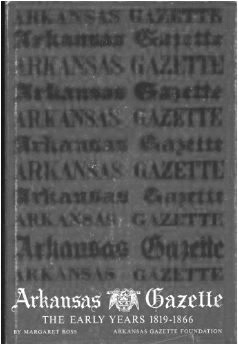
Ross bookMargaret Deane Smith Ross was born August 24, 1922 in Central Arkansas.  She attended both what is now Arkansas Tech University and the University of Arkansas. A journalism major at the latter, she left the university before graduating to marry Captain Edwin L. Ross in September 1942; he was killed in combat in Normandy on July 4, 1944.

Following the death of her husband, she lived in Little Rock and worked as a freelance writer for the Arkansas Democrat. In 1953 she became an associate editor of the Arkansas Historical Quarterly, a position she retained until 1993. She was a charter member of the Pulaski County Historical Society, and from 1953 to 1957 served as its journal’s first editor. From 1954 to 1957 she was a research assistant at Arkansas History Commission.

In 1957 she became the Arkansas Gazette historian and curator of the J.N. Heiskell Collection of Arkansiana; she remained with the Gazette for twenty-seven years. From 1958 to 1968 she wrote a historical column for the Gazette, the “Chronicles of Arkansas.” She was a charter member of the Arkansas Genealogical Society, founded by Walter Lemke in 1962. In 1968 she became a member of the Arkansas Historical Association’s board of directors, a position she occupied until 1980. In 1969 she published a book, Arkansas Gazette: The Early Years, 1819-1866: A History; it received the Award of Merit from the American Association for State and Local History. From 1979 to 1984 she wrote “Grass Roots,” a genealogical column for the Gazette. Also in 1979 she became the first fellow of the Arkansas Museum of Science and History. In April 2000 she received a lifetime achievement award from the Arkansas Historical Association.

As a historian for the Gazette, she became the de facto historian for the State of Arkansas.  Her knowledge of Arkansas history was unsurpassed during her lifetime.  She also served as an unofficial teacher to generations who were interested in learning more about the history of their state, and how to do that research.


She died in Little Rock in December 2002.

LR Cultural Touchstone: Jane Rogers

Jane RogersJane Rogers is a Little Rock native who has had a hand in developing two different cultural entities in her hometown.  She helped organize the first Riverfest to be held in Riverfront Park in 1983.  Continuing her involvement, she later served as the first full-time executive director of Riverfest.  Under her leadership the festival experienced significant growth.  This, in turn, brought more people down to the banks of the Arkansas River and the new Riverfront Park.  Because of this, more people were familiar with the area which helped the fledgling River Market take hold in the mid-1990s.

Shortly after he became Governor, Mike Huckabee tapped her to lead the Department of Arkansas Heritage.  In that capacity, she oversaw the Arkansas Arts Council, Old State House Museum, Historic Arkansas Museum, Delta Cultural Center, Arkansas Historic Preservation Program and Arkansas Natural Heritage Commission.  She served as Director for two years.

In 2003, she was appointed to the University of Arkansas Board of Trustees.  In that capacity, she has been involved in efforts to strengthen cultural offerings and facilities at the various campuses in the University of Arkansas system.

Her most recent cultural endeavor has been as a founder of Sculpture at the River Market.  In 2007, she helped recruit volunteers to create Little Rock’s first nation-wide sculpture invitational show and sale.  Since that time, Sculpture at the River Market has built a $2,000,000+ collection of public sculpture placed in beautiful surroundings along the banks of the Arkansas River in downtown Little Rock.  As a result of pieces of these efforts, the Vogel Schwartz Sculpture Garden was created in Riverfront Park.

LR Cultural Touchstone: Jeannette Edris Rockefeller

J RockefellerJeannette Edris Rockefeller only lived in Arkansas for about fifteen years. But her impact on the cultural life of Little Rock and all of Arkansas continues to be felt today.

Born and raised in Seattle, as a young mother she met Winthrop Rockefeller while both were in New York.  He moved to Arkansas in 1953; after their 1956 marriage, she joined him. They split their time between Little Rock and Petit Jean.

In 1959, she was asked to become involved in plans for a new art museum in Little Rock.  She became a tireless advocate and fundraiser for the new Arkansas Arts Center.   In 1960, she assumed the role of president of the Arkansas Arts Center Board of Trustees, a position she held until 1968.  During that time period she oversaw the planning, construction and opening of the building.  She also invited Townsend Wolfe, who she had met when he taught some classes at the Arts Center, to apply to become the museum’s first executive director.

From 1967 to 1971, she was First Lady of Arkansas.  In that capacity, she supervised renovation of the Governor’s Mansion and started the tradition of displaying art on the walls.

Shortly after her 1971 divorce from Rockefeller, she relocated to California.  She continued to be a supporter of the Arts Center.  One of the galleries in the Arts Center is named in her honor.  In addition, one of the sculptures on the lawn of the Arts Center, Standing Red, was dedicated in 1970 in recognition of her service on the Arts Center Board.