2 PET SEMETARYs for the price of 1 tonight at CALS Ron Robinson Theater

Pet Sematary double featureTonight (November 16), the Stephen King Rules! Book Club and the Bookstore at Library Square present a special double feature screening of the 1989 and 2019 adaptations of Pet Sematary (R). Enjoy both films for the price of one — only $5!

The road in front of Dr. Louis Creed’s rural Maine home frequently claims the lives of neighborhood pets. Louis has recently moved from Chicago to Ludlow with his wife Rachel, their children and pet cat. Near their house, local children have created a cemetery for the dogs and cats killed by the steady stream of transports on the busy highway. Deeper in the woods lies another graveyard, an ancient Indian burial ground whose sinister properties Louis discovers when the family cat is killed.

The 1989 version stars Dale Midkiff, Denise Crosby, and Fred Gwynne while 2019’s version has Jason Clarke, Amy Seimetz and John Lithgow.

Doors open at 4:30 p.m. Pet Sematary (1989, R) starts at 5:30 p.m. Pet Sematary (2019, R) starts at 7:30 p.m. Beer, wine, and concessions will be served!

Little Rock bids “HELLO” to Carol Channing in November 1966

53 years ago tonight, on November 15, 1966, Carol Channing opened a six day stint in HELLO, DOLLY! at Robinson Auditorium.  She would play 8 sold out shows over those six days.

Channing, who had won the 1964 Tony Award for Best Actress in a Musical for her role in this show, had recently returned to the national tour.  She had just wrapped filming THOROUGHLY MODERN MILLIE (for which she would receive an Oscar nomination). She had specifically requested that Little Rock be added to the tour.

Her breakout role was in 1949’s GENTLEMEN PREFER BLONDS. In that show she introduced the song “Little Girl from Little Rock.”  Since it had helped make her a star, she had long felt an affinity for the Arkansas capital.  Therefore when she rejoined the tour, she required that LR be one of her stops before she left the tour.

While in Little Rock, Channing was entertained at the Arkansas Governor’s Mansion and feted at parties.  She was made an honorary citizen of Little Rock, as well.

But she was here to perform. And perform she did. She was rarely known to miss a performance and always gave her utmost.  Bill Lewis, in his review in the ARKANSAS GAZETTE, stated “To hear Channing sing ‘Hello, Dolly!’ Is one of the great experiences of all musical theater to date…”

In assessing the show’s run in Little Rock (which would be seen by more than 20,000 people), Lewis summed up what many felt at the time — and to hear the reminiscences from a half century later, it still is a heartfelt sentiment — “A week’s too little.”

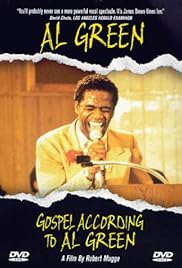
1984 documentary THE GOSPEL ACCORDING TO AL GREEN is being shown at CALS Ron Robinson Theater tonight

Gospel According to Al Green PosterJoin CALS for a rare screening The Gospel According to Al Green, Robert Mugge’s 96-minute portrait of soul singer, gospel preacher, and Arkansas music legend Al Green filmed at a concert in Washington, D.C. and a church service in Memphis, TN.

The 1984 film delves into the tension between the singer’s secular hits and his sanctified calling. As noted in DECIDER: :The film is unobtrusively directed by Robert Mugge, who’s made a career out of documenting the greats of American roots music, and presents Green in a variety of different settings playing music and discussing his life.”

Doors open at 6:00 p.m. Film starts at 7:00 p.m. Beer, wine, and concessions will be available!

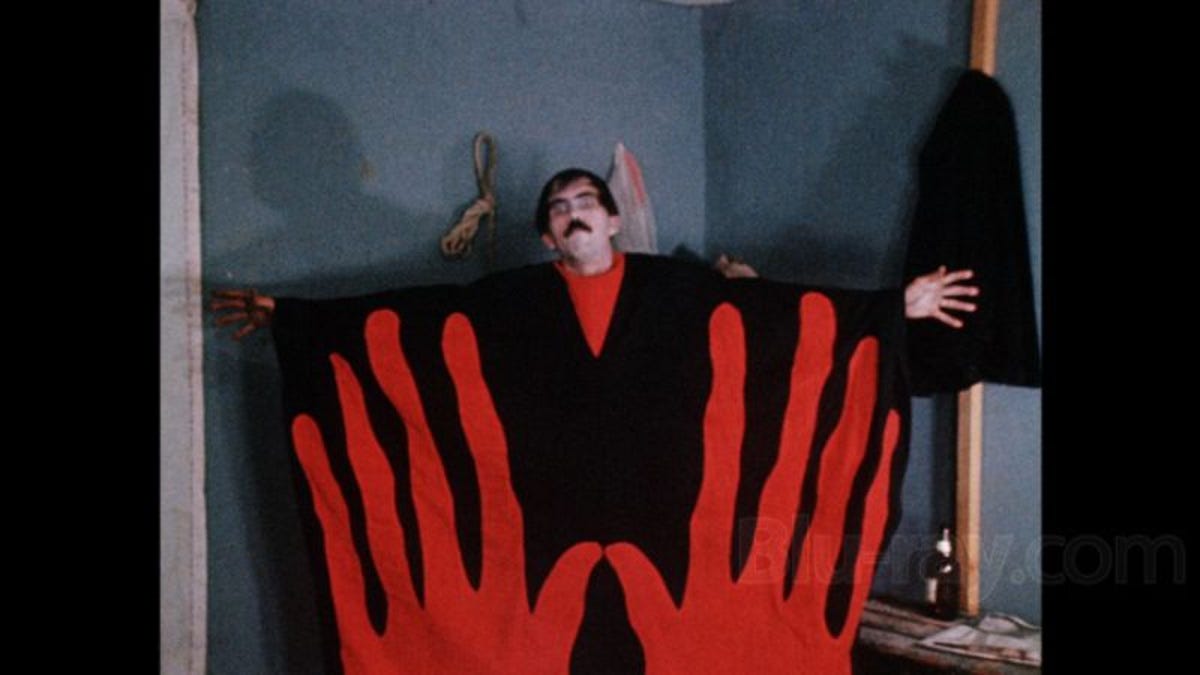
BingoFlix at the CALS Ron Robinson Theater tonight with MANOS: THE HANDS OF FATE

Image result for manos the hands of fate"

BingoFlix returns to the Ron Robinson Theater!

Play bingo to some of the most hilarious movie cliches during a screening of the so-bad-it’s-good film, Manos: The Hands of Fate! Win prizes including free movie and event tickets to upcoming shows at the CALS Ron Robinson Theater!

Doors open at 6:00 p.m. Film starts at 7:00 p.m. Beer, wine, and concessions will be available!

This 1966 American independent horror film revolves around a vacationing family who lose their way on a road trip. After a long drive in the Texas desert, the family finds themselves trapped at a lodge maintained by a polygynous pagan cult, and they attempt to escape as the cult’s members decide what to do with them.

One of the actors, John Reynolds, was on LSD throughout the filming. His incessant twitching may not be the weirdest thing about this movie.

The entire film was shot with a hand-held camera that could only record 32 seconds of film at a time. It was also shot without sound; all the lines were dubbed later by two men and one woman.

The only cast members who were paid for their performances were Jackey Neyman Jones and a Doberman, which got a bag of dog food. The rest of the cast was supposed to receive a cut of the movie’s profits, which never materialized. Director Harold P. Warren also gave the crew shares, instead of a salary.

Isaac Hayes is topic of Old State House Museum Brown Bag lecture today

Some people would remember Isaac Hayes Jr. as a songwriter. He won an Academy Award for the musical score for “Shaft, and “Soul Man” (written with partner David Porter) was one of the most influential songs of the 20th century.

Some people would remember Hayes as a soul singer. His solo albums “Hot Buttered Soul” and “Black Moses” topped the R&B Charts.

Some would remember Hayes as an actor from his roles in “Truck Turner,” “Escape from New York,” “It Could Happen to You,” “Rockford Files” and others. He also voiced the part of Chef in “South Park.”

Arkansan Chris Cockrell, who worked as Hayes’ producer and road manager in the 1990s and early 2000s, remembers Hayes as a grandfatherly figure. “I really admired the man. [Hayes had] integrity and honesty in a business where that isn’t the norm.”

Cockrell is going to share some of his favorite stories about the versatile entertainer during a special Brown Bag Lunch Lecture at 12 p.m. Thursday, Nov. 14.

Admission is free. Guests are welcome to bring their lunch, and the Old State House Museum provides drinks.

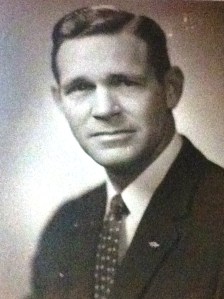
Woodrow Mann, Little Rock’s 53rd Mayor, born on Nov. 13, 1916

Future Little Rock Mayor Woodrow Wilson Mann was born on November 13, 1916, in Little Rock.  His tenure at Little Rock mayor was tumultuous from both things of his doing as well as events that catapulted him onto the international scene.

In 1955, he ran as the Democratic nominee for Mayor of Little Rock and defeated two term incumbent Pratt C. Remmel, a Republican.  He took office in January 1956 and immediately set about to make a lot of changes.  In addition to revitalizing the City’s bus system, and removing some color barriers at City Hall, he oversaw the dismantling of the copper dome on top of Little Rock City Hall (as opposed to the repair of the dome championed by Mayor Remmel).

Mayor Mann was caught up in a grand jury investigation into purchasing practices at City Hall as well as within the City government in North Little Rock.  Partially in response to this, Little Rock voters approved a new form of government in late 1956.  Mayor Mann opposed the switch to the City Manager form and refused to set the election for the new officials but was ultimately compelled to do so.

He was also Mayor during the 1957 integration of Little Rock Central High School.  He sought to keep the peace and to broker a deal between President Dwight Eisenhower and Governor Orval Faubus.  His powers within the city were, no doubt, hampered because of his lame duck status as Mayor.  In November 1957 following the election of the new City Board of Directors, he chaired his last City Council meeting and left office.

In January of 1958, a series of articles written by Mayor Mann detailed his perspective on the events at Central High. These were carried by newspapers throughout the US.

Because of ill will toward him due to the Central High crisis (he was criticized by both sides) and grand jury investigation, Mayor Mann felt it would be difficult to maintain his insurance business in Little Rock. He moved to Texas in 1959 and remained there the rest of his life.  He died in Houston on August 6, 2002.

An entry about Mayor Mann in the Encyclopedia of Arkansas History and Culture can be found here.

Adams Field dedication and opening of first permanent LR Airport Building on Nov. 11, 1941

On November 11, 1941, Adams Field was dedicated in Little Rock.  The ceremony marked the official opening of the airport’s first administration building.  It also marked the official naming of the building in memory of George Geyer Adams.

Adams was captain of the 154th Observation Squadron of the Arkansas National Guard. He also served on the Little Rock City Council from 1927 to 1937.  During that time he helped develop what would become Little Rock’s airport from an airfield first planned in 1929 for military planes to what would become Little Rock’s municipal airport.

Adams left the City Council in April 1937.  Five months later, he was killed in a freak accident when a propeller assembly exploded and sent the propeller careening toward him.

Adams’ family was present at the ceremony on November 11, 1941.  The fact that it was on Armistice Day was no accident.  Little did few realize that US would be plunged into a second world war just a few weeks later.

Top executives from American Airlines came to Little Rock to participate in the festivities.  Others coming to town included members of Arkansas’ congressional delegation.  New Mayor Charles Moyer shared credit for the building with former Mayor J. V. Satterfield who had led the project for most of the time.  (Satterfield would later be the first chairman of the Airport Commission in 1951.) Hundreds turned out for the ceremony.  While they were in town, the congressional delegation and American Airlines executives made the most of interest in them and spoke to various civic clubs and banquets.  They extolled the virtues of airflight and the aircraft industry.

On a personal note:  the terminal building was built by E. J. Carter, a great uncle of the Culture Vulture.