Laughter and Lyrics tonight featuring Phyllis Yvonne Stickney

mtcc nps stickneyThe Central High School National Historic Site and Mosaic Templars Cultural Center present a special program tonight.  The program is “Laughter & Lyrics” and stars acclaimed actress, comedienne and author Phyllis Yvonne Stickney.  The event starts at 6:30 pm tonight at the Mosaic Templars Cultural Center.

Drawing from the words of some of the leading African American female writers and thinkers in the second half of the 20th Century, Stickney has created an evening of thought provoking spoken word, social commentary, live music, and Conscious Comedy. This 90 minute theatrical presentation will draw on the body works of Nikki Giovanni, Maya Angelou, Ruby Dee and feature excerpts from Beah Richards’ “A Black Woman Speaks.”

Phyllis Yvonne Stickney is a world-class artist, producer, director, author, motivational speaker, clothing designer, community activist, businesswoman and surrogate mother to many. Ms. Stickney is best known and respected for her work in film, stage, television and comedy. Her portrayals range from articulate attorney to feisty comedy club diva, to a Jamaican mother of class. She is regarded as one of the most intelligently hilarious comic talents and was recognized by HBO in THE HISTORY OF BLACKS IN COMEDY. Her film credits include NEW JACK CITY, DIE HARD WITH A VENGEANCE, HOW STELLA GOT HER GROOVE BACK, THE INKWELL, WHAT’S LOVE GOT TO DO WITH IT?, MALCOLM X, and the “ABC Afterschool Special,” DADDY’S GIRL. She made television history by portraying an Afrocentric character on THE COSBY SHOW spinoff, A DIFFERENT WORLD.

She also played Lena in Lorraine Hansberry’s award-winning play A RAISIN IN THE SUN at the Arkansas Repertory Theatre. The play was produced in January 2011 and received great reviews and exceeded box office expectations.
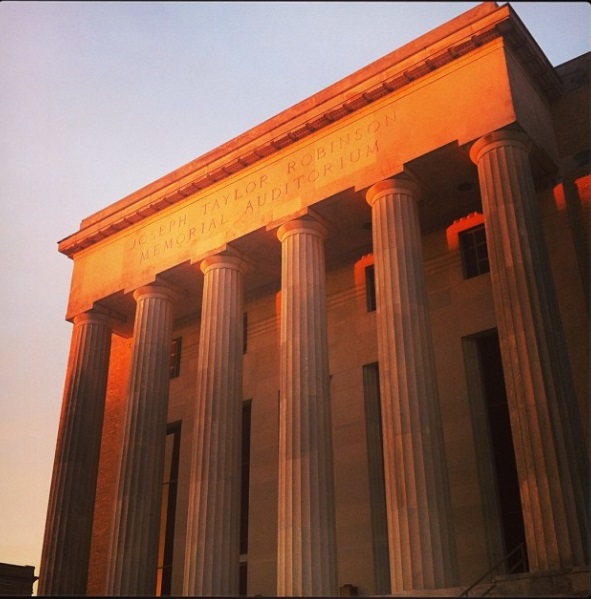
 

Little Rock Look Back: Robinson Auditorium officially opens

auditoriumduskOn February 16, 1940, after three years of planning and construction, the Joseph Taylor Robinson Memorial Auditorium officially opened. It was a cold, rainy night, but those in attendance did not care.

Searchlights painting arcs in the sky greeted attendees. They were borrowed from the Arkansas National Guard. Newspaper accounts noted that only a few of the men who attended were in tuxedos, most were simply in suits. The work to get the building opened had been so harried, that it was discovered there was not an Arkansas flag to fly in front of the building. Mayor Satterfield found one at the last minute courtesy of the Arkansas Department of the Spanish War Veterans.

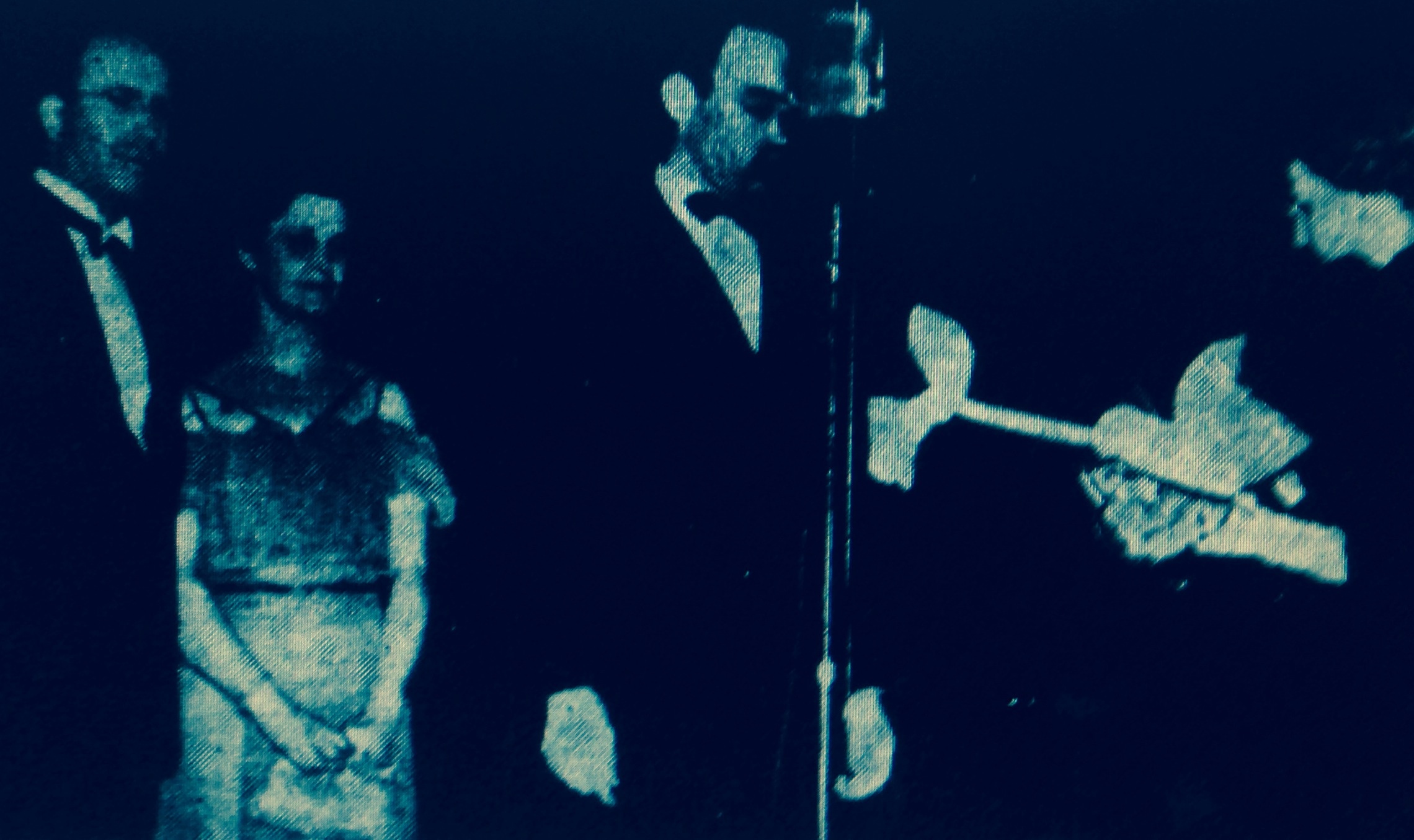
The weather delayed arrivals, so the program started fifteen minutes late. Following a performance of Sibelius’ Finlandia by the fledgling Arkansas State Symphony Orchestra, Mayor J. V. Satterfield, Mrs. Joseph T. Robinson, Mrs. Grady Miller (the Senator’s sister-in-law and a member of the Auditorium Commission) and D. Hodson Lewis of the Chamber of Commerce participated in a brief ribbon cutting ceremony. Mrs Robinson cut the ribbon on her second attempt (once again proving that nothing connected with getting the building open was easy).

The ceremony was originally set to be outside of the building but was moved indoors due to the inclement weather. The ribbon cutting took place on the stage with the ribbon stretched out in front of the curtain. The opening remarks were broadcast on radio station KGHI.

Though he had previously discussed how he had voted against the auditorium in 1937 before entering public life, the mayor’s remarks that evening were appropriately gracious, statesmanlike and a testament to the effort he had invested to get it open upon becoming mayor. “We hope you have a very pleasant evening and hope further that it will be the first in a long series which you will enjoy in this, your auditorium.”

20140215-172047.jpgTickets for the event, advertised as being tax exempt, were at four different pricing levels: $2.50, $2.00, $1.50 and $1.00.

The estimated attendance was 1700. Following the ribbon cutting, the main performance took place. The headliner for the grand opening was the San Francisco Opera Ballet accompanied by the new Arkansas State Symphony Orchestra (not related to the current Arkansas Symphony Orchestra). The featured soloist with the ballet was Zoe Dell Lantis who was billed as “The Most Photographed Miss at the San Francisco World’s Fair.”

At the same time that the gala was going on upstairs in the music hall, a high school basketball double-header was taking place in the downstairs convention hall. North Little Rock lost to Beebe in the first game, while the Little Rock High School Tigers upset Pine Bluff in the marquee game.

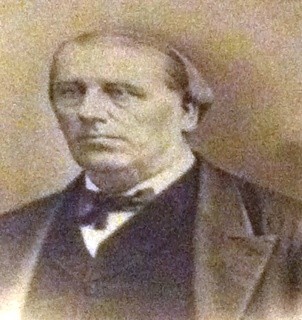
Little Rock Look Back: John Wassell the 27th Mayor of Little Rock

Future Little Rock Mayor John Wassell was born on February 15, 1813 in Kidderminster, England.

In 1829, he came to the United States.  He learned carpentry and construction in Ohio and ended up in Little Rock.  One of his jobs was as the finishing contractor on the State Capitol building, now known as the Old State House.

He later gave up carpentry and became an attorney.  (It is said that he did so after becoming embroiled in a legal dispute arising from one of his construction jobs.) Wassell also served as a judge.

In 1868, he was appointed Mayor of Little Rock by President Andrew Johnson.  He is Little Rock’s only Mayor to have served through a military appointment.  Mayor Wassell died in January 1881 and is buried at Mount Holly Cemetery along with his wife and other family members.  One of his grandsons, Samuel M. Wassell also served as Mayor of Little Rock.

Second 2nd Friday Art Night of 2015

2nd Friday Art NightForget friggatriskaidekaphobia. Don’t think of today as Friday the 13th. Embrace it as the second 2nd Friday Art Night of the year.  Among the highlights for tonight are:

Butler Center
Three exhibits continue at the Butler Center.  Reflections on Line & Mass: Paintings & Sculpture by Robyn Horn in the Butler Center Galleries (through April 24), Of the Soil: Photography by Geoff Winningham in the Butler Center Loft Gallery (through Febraury 28) and Echoes of the Ancestors: Native American Objects from the University of Arkansas Museum (through March 15).

Historic Arkansas Museum
Two exhibit openings – John Harlan Norris: Public Face opens in the Trinity Gallery for Arkansas Artists  and Lisa Krannichfeld: She opens in the Second Floor Gallery.  Live music by Whale Fire and food by The Veg.  As part of the continuing Year of Arkansas Beer, this month features Stones Throw Brewing’s Chocolate Stout.

Old State House Museum
Join violinist Geoff Robson and cellist Felice Farrell for a performance of works for solo strings by J.S. Bach. The performance will begin at 5:00 and last until 6:30. The museum will remain open until 8:00. This is a casual event and guests are welcome to drop in and seat themselves after the music has started.

Magic Lantern Show tonight at the Old State House Museum

OSH logoExperience a Victorian Valentine Magic-Lantern Show tonight at the Old State House Museum at 7:00 p.m.

Travel back in time with the boisterous fun of America’s only Victorian magic-lantern show. An authentic 1890s visual extravaganza projected on a full-sized screen—the kind of show that led to the movies! Valentine stories, animated comedy, and songs—all dramatized on screen by a live showman and singer/pianist.

The audience participates in the fun, creating sound effects, and joining in chants and sing-alongs. ~~ For 22 years, The American Magic-Lantern Theater has delighted audiences from Lincoln Center to Singapore. “What a hoot!” says NEED. “You’ll be enthralled!” says The Family Adventure Guide to Connecticut. But National Public Radio says it best: “It’s an incredible experience . . . Don’t miss them. They’re a living national treasure!” For adults and children 6+.

The Old State House Museum is an agency of the Department of Arkansas Heritage.

Little Rock Look Back: Abraham Lincoln

Abraham_Lincoln_November_1863On February 12, 1809, Abraham Lincoln was born in Kentucky.  One hundred and fifty years ago today, he celebrated his last birthday as he would be assassinated a little over two months later.

Lincoln never visited Arkansas. In the 1860 election, he barely registered on the Arkansas election map. Arkansas counties went strongly for Southern Democratic candidate John Breckinridge.  John Bell, the Constitutional Union/Whig candidate ran strongly in Pulaski County and a scattering of other counties.  Neither Lincoln nor Northern Democratic candidate Stephen Douglas carried a county in Arkansas.  In 1864, though Arkansas was officially under control of the Union forces, the state had not been readmitted. Therefore no Arkansans voted for Lincoln that year.

As President, Lincoln did correspond with several Arkansans.  It is said that the polite written exchanges he had with former Mayors C. P. Bertrand and Gordon Peay were helpful in maintaining a fairly peaceful occupation of Little Rock by federal forces.

In the listing of Presidential Streets of Little Rock, Lincoln is omitted.  On first blush, this might seem to be intentional to skip the name of the President who oversaw the “occupation.”  However, if that were the case, then surely Johnson would have been left out as well since he was President during the final years of the federal military occupation.  In fact, there once was a Lincoln Street. A portion of what is now Cantrell/Highway 10 was named for Lincoln. It predated the other Presidential streets.  At the time the other streets were laid out, Lincoln was skipped because a street already bore the name.

Over time, Highway 10 had been given multiple names for various sections: Lincoln, Q, and Cantrell. In the 1930s, these names were consolidated into Cantrell which was the longest section. The name Lincoln was dropped. There were very few addresses on Lincoln, most of it was railroad property.  The viaduct connecting Highway 10 with LaHarpe still bears the name of Lincoln Avenue.


Little Rock Look Back: President William Henry Harrison

A campaign ribbon from an 1840 Harrison and Tyler rally in Little Rock.

A campaign ribbon from an 1840 Harrison and Tyler rally in Little Rock.

On February 9, 1773, future US President William Henry Harrison was born in Virginia. Though he would later be viewed as a frontiersman (which he was), his early years were spent on a family estate as part of one of the FFV’s (First Families of Virginia).

At the age of 18, he was commissioned in the US Army and began an illustrious military career which spanned the Northwest Indian War and the War of 1812. This career took him into the wilderness areas of the US, which at the time were Indiana and Ohio.

Harrison launched his political career in 1798 when he was appointed treasurer of the Northwest Territory. The next year, he was elected to represent the territory in Congress. In 1801, he was named Governor of the Indiana Territory.  In 1811, while still Governor of Indiana, he led troops to defend against a Shawnee attack in the Battle of Tippecanoe.  The following year, with the outbreak of the War of 1812, he continued to command armies in the northwest areas of the US.  In 1813, he scored a major victory at the Battle of the Thames in Canada.  This solidified him as a war hero with the public.

In 1814, he was appointed by President Monroe to oversee negotiations with Indians. In 1816, he was elected to Congress from Ohio and served until 1819. In 1824, he was elected as a US Senator from Ohio and served until 1828. He was sent as minister to Columbia in 1828 and served until the Presidency of Andrew Jackson in 1829.

220px-William_Henry_Harrison_daguerreotype_editReturning to private life, he ran for President as a Whig in 1836. At the time, the Whigs ran several candidates hoping to split the vote and send the election to Congress. Harrison narrowly lost Pennsylvania and its 30 electoral votes. (Though since the Democrats retained Congress in the election, it was expected that Van Buren still would have won.)  Four years later the Whigs coalesced behind Harrison.

Though his opponents tried to paint him as old, out of touch, and backwoods, he and running mate John Tyler (also a landed gentry from Virginia) embraced the depiction. They felt it helped them relate to the average voters and, in turn, painted Van Buren as out of touch and elitist.  Though Arkansas’ electoral votes went to Van Buren, Harrison ran fairly strong in the state. He narrowly captured Pulaski County and ran strong in the southeast portion of the state.

Harrison served in office only one month.  While at the time it was believed to be related to the weather at his inaugural (and his record-long inaugural address), subsequent analysis has shown it to be due to entric fever, the result of a bacterial infection.

Harrison Street in Little Rock is named for him. His grandson, Benjamin, the only grandson of a President to serve also serve as President, is skipped in the row of Presidential streets.