Little Rock Look Back: President Ronald W. Reagan

RWR 40On February 6, 1911, future U.S. President Ronald Wilson Reagan was born. His life took him from small town Illinois, to Hollywood in the last days of the Golden Age of the studio system, to politics, to the California State House, to the White House.

On November 3, 1984, he became the first sitting U.S. President to spend a night in Little Rock. He stayed at the Excelsior Hotel (now Marriott Downtown) before making a campaign speech on November 4.  His only special requests for the room were jelly beans and ginger ale.  His speech was in the Statehouse Convention Center, which had opened less than two years earlier.

In 1980, Reagan had become only the third Republican to win Arkansas’ electoral votes (after Grant in 1868 and 1872 and Nixon in 1972). He was expected to easily win them again in 1984.  The main purpose of his speech on the Saturday before election Day was to drum up support for other GOP candidates in the state.  While he carried the state and the electoral votes, none of his preferred candidates won their races in 1984.

Four years later, on October 27, 1988, he flew in to Little Rock to make remarks at Central Flying Service. The purpose this time was to campaign on behalf of GOP nominee George H. W. Bush. As Reagan had done in 1980 and 1984, Bush carried the state and won the Presidency.

In 1992, after native son Bill Clinton defeated Bush in his bid for re-election, Reagan welcomed Clinton to his office in Los Angeles.  Having served as Governor of California, he was able to relate to Clinton’s impending transition from Governor to President.

In 2004, months before the Clinton Library opened, Reagan succumbed to the ravages of Alzheimer’s Disease.  He had publicly disclosed he had the illness in 1994 during the second year of Clinton’s first term.  Though the Clinton Library was not open yet, the Clinton Foundation set up a memorial book at Curran Hall for people to stop by and sign. The book was then sent to the Reagan Presidential Library.

Little Rock Look Back: John Herndon Hollis – Acting Mayor of Little Rock in 1908

John Herndon HollisOn February 5, 1870, future Little Rock alderman and acting mayor John Herndon Hollis was born shortly before his family moved to what is now Cleveland County. His parents were originally from Georgia and came from prosperous and longtime families there.

The Hollis family came to Arkansas after the Civil War and settled in Union County. A portion of that county was carved off and became Dorsey County (named after a Republican US Senator from Arkansas) but was renamed Cleveland County after Grover Cleveland was elected President. Cleveland was the first Democrat to be elected President in over 20 years. This name change also reflected the political shift in Arkansas from the Reconstruction-led Republican politics to the Democratic Party politics which would dominate for the next century.

John Herndon Hollis was one of six children, and the only one with a middle name. Herndon had been his mother’s maiden name. As one of his brothers described their childhood in Cleveland County, “they all went to country schools in their home neighborhood, worked hard on the farm in the summertime, and were inside their little Methodist Church every time the doors were open.”

Around 1900, Hollis and his new wife Malinda M. “Linda” Taliaferro Hollis (formerly of Rison) moved to Little Rock.  Together the couple had six children. In Little Rock, Hollis worked in the banking industry. For years he worked for People’s Building and Loan Association.

Hollis was first elected to the Little Rock City Council in April 1904. He would serve as one of the Aldermen from the city’s Fourth Ward until April 1918.  This was on the western border of Little Rock at the time. The family lived at 1510 S. Schiller, which is one block east of Central High, though at the time neither the school nor its predecessor (West End Park) existed.  From 1907 until 1913 he also served on the Little Rock School Board.

In April 1908, at the first City Council meeting in the new City Hall, Mayor W. E. Lenon announced his resignation. Because the resignation was effective immediately, there was a vacancy in the office of mayor.  Hollis was selected by his colleagues to serve as acting mayor until a successor could be elected. So from April 1908 through June 1908, Hollis was the City’s chief political and executive leader.

Though he was never formally mayor (and did not resign his position as alderman), since 1908, Hollis’ name has appeared on the list of mayors of Little Rock. The reason seems to be as a sign of respect since there was a vacancy.

There previously had been acting mayors when the mayor would be absent on business or due to illness. But in those instances, the mayor had not resigned. This is the only instance in Little Rock history when a mayor resigned immediately with no successor in place. So John Herndon Hollis holds a unique role in Little Rock history.

Hollis’ wife died in 1920.  He later married Ann Jewell of Little Rock (who was a distant cousin of his first wife). They were married until his death on October 23, 1941.  Ann Hollis lived in Little Rock until her death in 1980.  The Hollis family is entombed in the mausoleum at Mount Holly Cemetery.

Black History Month Spotlight – Dr. Erma Glasco Davis

Photo by Staton Breidenthal for the Arkansas Democrat-Gazette

Photo by Staton Breidenthal for the Arkansas Democrat-Gazette

Erma Lee Glasco Davis was born in Keo, Arkansas and was reared in south central Little Rock, also known as the South End.  She is a product of the Little Rock Public School System, graduating from Dunbar High School in May, 1945.  She received her Bachelor of Science degree from AM&N College (now the University of Arkansas at Pine Bluff).  A year or so after the Central High desegregation crisis of 1957, she and her husband moved to Detroit, Michigan and the Doctor of Philosophy degree from the University of Michigan at Ann Arbor.

Most of Dr. Davis’ professional career was spent in Detroit, Michigan  as a teacher, counselor and administrator.  She retired from an administrative position in the Detroit Public Schools’ Management Academy.  She also taught as an adjunct professor at Marygrove  College in Detroit.  While in Detroit, Dr. Davis has had a wealth of community involvement, serving in leadership positions on boards and committees and in organizations ranging from the NAACP to Alpha Kappa Alpha sorority.  In 1979, she co-chaired the Mayor’s Education Task Force for Detroit’s International Year of the Child event.  In 1987, she won the Spirit of Detroit Award, the city’s highest community-service award.

Dr. Davis is a past national president of the National Dunbar Alumni Association, and is co-author of a book about the school, Paul Laurence Dunbar High School of Little Rock.  She has been instrumental in marrying the goals of the association with those of the Mosaic Templars Cultural Center, the state-funded museum which showcases the history and achievements of black Arkansans.  A fruit of that marriage is the museum’s Dunbar exhibits on the museum’s first floor.  She is passionate about educating people on Dunbar’s role in the state’s history.

In 1990, Dr. Davis moved back to Arkansas form Michigan.  After her return, she quickly busied herself with community work, sitting on the boards of the Central High Museum and the Arkansas Humanities Council; taking two turns as chairman of the board of the Historic Arkansas Museum Foundation; she also chaired the gala for the opening of the Mosaic Templars Cultural Center.  In addition, Dr. Davis worked nearly four years as a founding volunteer for the Clinton Presidential Central.  In 2005, she was appointed by then-Governor Mike Huckabee to the State Review Committee for Historic Preservation, and reappointed by Governor Mike Beebe in 2007.  In 2009, she was inducted into the Arkansas Black Hall of Fame.

For more on Dr. Davis and other inductees into the Arkansas Black Hall of Fame, visit the permanent exhibit at the Mosaic Templars Cultural Center. That museum is an agency of the Department of Arkansas Heritage.


Play at Arkansas Rep focus of Mosaic Templar Lunchtime Discussion

mosaictemplarsThe Mosaic Templars Cultural Center’s (MTCC) quarterly lunchtime series offers a variety of topics to educate, inspire, and entertain.

“It’s in the Bag” runs today from 11:30 to 12:30 at the MTCC.

Today’s installment will feature the cast of the Arkansas Repertory Theatre’s current play, The Whipping Man. Set at the end of The Civil War in 1865, The Whipping Man is an extraordinary tale of loyalty, deceit and deliverance. The award-winning play opened off-Broadway in 2011 to critical acclaim, winning the 2011 John Gassner New Play Award from the NY Outer Critics Circle and becoming one of the most produced plays in the country.

THEREP_THE WHIPPINGMAN (no credits)-page-001Don’t miss your chance to meet the cast and tour MTCC’s new exhibit, “Freedom! Oh, Freedom!” Arkansas’s People of African Descent and the Civil War: 1861-1866.

Guests are invited to bring their lunch, the museum will provide the drinks.

The Mosaic Templars Cultural Center is an agency of the Department of Arkansas Heritage.

Little Rock Look Back: George Wimberly, LR 59th & 61st Mayor

https://www.meaningfulfunerals.net/fh_live/10300/10306/images/obituaries/1388392.jpgOn February 3, 1920, future Little Rock Mayor George Wimberly was born in Star City. He served his country first in the Civilian Conservation Corps and later aboard a U.S. Naval Department hospital ship in the Pacific during World War II.
Wimberly was first elected to the Little Rock City Board in November 1968.  He was re-elected in November 1972 and served until December 1976.  In January 1971, he was selected to serve as Little Rock Mayor through December 1972.  In a rare move, he was again selected to serve as Mayor from January 1975 through December 1976.  During the era of the City Board selecting one of their own members to serve as Mayor, George Wimberly was the only one selected to two non-sequential terms.

In 1978, he was elected to the State House of Representatives and served until December 1988.  While in the House he led the effort for smoking to be banned in the House chambers (a move that predated many public smoking bans of the 1990s and onward).

For over fifty years he was an employee and later owner of Buice Drugstore located on Markham in the Stifft Station neighborhood. In 1986 he received the Arkansas Pharmacist of the Year Award and the Lifetime Achievement Award in 2009.

Mayor Wimberly died on February 5, 2012, two days after his 92nd birthday.  He was survived by his wife, two sons, a grandson and several other relatives.

Maned Wolf Pups born at Little Rock Zoo

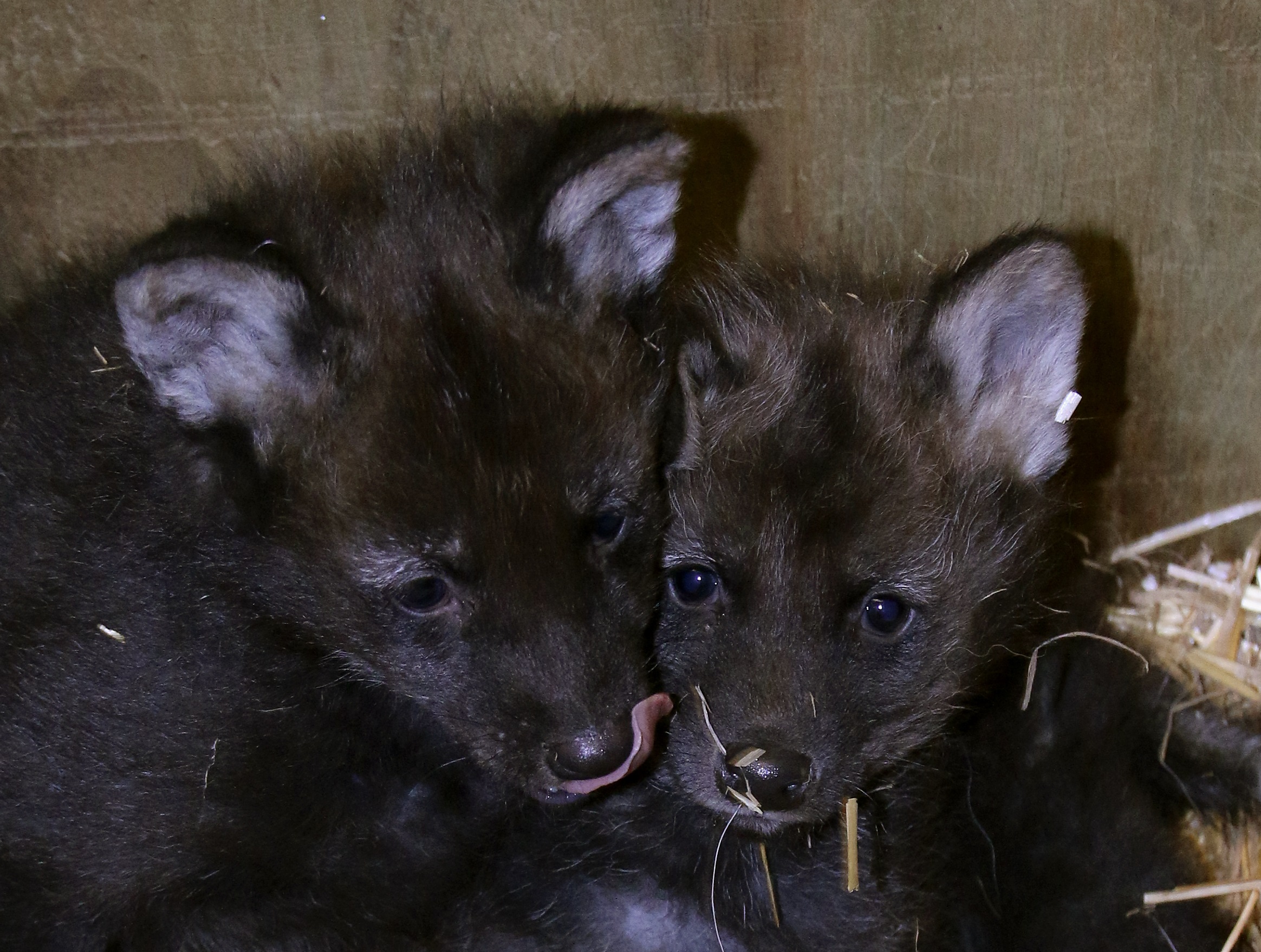
Maned Wolf PupsThe Little Rock Zoo is proud to announce that two maned wolf pups were born Dec. 21 and are growing strong according to Zoo staff.

The pups’ parents are maned wolves Gabby and Diego, two wolves living at the Zoo since 2013.  Maned wolves are known for their tall long legs and reddish-brown coats, but newborn maned wolves have a dark coat that will turn reddish-brown when full-grown. Gabby is now taking her pups out into the yard of her exhibit at the Zoo allowing visitors to catch an occasional glimpse. The pups are expected to fully be out on exhibit in the next two to three months.

The breeding of the maned wolves comes at the recommendation of the Association of Zoos and Aquariums (AZA) Species Survival Plan (SSP). Maned wolves are threatened in their natural habitats in Central and Southeastern Brazil, Paraguay, Eastern Bolivia, and Northern Argentina due to deforestation. Maned wolves are even killed for body parts, due to the belief that they carry “magical properties.” This beautiful animal is at a risk of extinction, but with the help of zoo breeding programs like the SSP, maned wolves can still roam.

In 2007, the Little Rock Zoo was given praise for its maned wolf breeding program. Dr. Nucharin Songsasen, a reproductive advisor to the Maned Wolf SSP of North America, visited the Zoo to collect research from the Zoo’s breeding program, which is considered one of the most successful ones in the country.

Little Rock Look Back: Movie Stars Descend on Robinson Auditorium

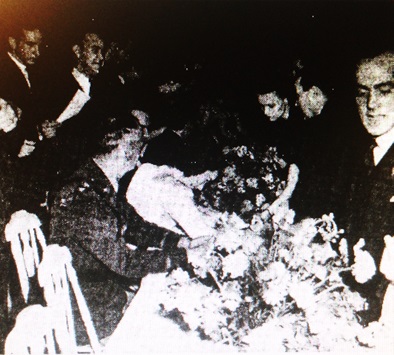
Autograph seekers crowd around the actors at the Movie Ball (photo from Arkansas Gazette)

Autograph seekers crowd around the actors at the Movie Ball (photo from Arkansas Gazette)

As final preparations were being made for the opening of the Joseph Taylor Robinson Municipal Auditorium in early 1940, a glamorous evening took place in Robinson’s lower level convention hall on February 1.

In conjunction with a meeting of film executives and movie theatre owners sponsored by Robb and Rowley Theaters (which later became the United Artists theatre chain), several Hollywood actors were in Little Rock and headlined a Movie Ball. While in Little Rock, Maureen O’Hara, Phyllis Brooks, Arleen Whelan, Tim Holt and Gene Autry had also made a variety of public appearances.

Mr. Autrey had to miss the ball because he had to return to Hollywood early to attend to business matters. Actress Ilona Massey had also been scheduled to attend the events but was unable due to illness.

The quartet who did appear at the Movie Ball caused quite a scene. Upon their entrance, so many of the attendees crowded around for autographs that the evening’s grand march could not take place (a newspaper headline in the Democrat innocently used the word “orgy” to describe the crowd). After two attempts, Little Rock Mayor J. V. Satterfield (who was escorting Miss O’Hara) and the other members of the Little Rock host delegation led the Hollywood foursome to their reserved table. For quite a while that evening, the table was besieged by autograph seekers.

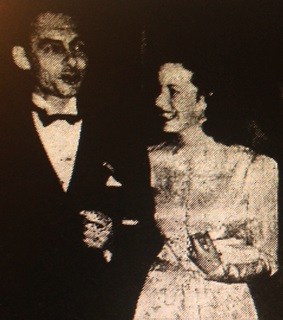
Mayor J V Satterfield escorting actress Maureen O'Hara at the Movie Ball (photo from Arkansas Democrat)

Mayor J V Satterfield escorting actress Maureen O’Hara at the Movie Ball (photo from Arkansas Democrat)

Though it is unknown as to whether he sought an autograph, photos from the evening showed a very satisfied Mayor Satterfield with Miss O’Hara on his arm. Satterfield family lore joked that Mrs. Satterfield (who had stayed home that night to tend to a sick son) was not a fan of Miss O’Hara’s films after that evening.

The Movie Ball showed Little Rock citizens the value of Robinson Auditorium even before it had been officially dedicated. The film industry meetings had taken place at the Albert Pike Hotel which did not feature a ballroom large enough to host the ball. Without the auditorium’s availability for the gala, organizers might not have chosen Little Rock for the meeting.

With the auditorium’s convention hall not attached to any hotel, it opened up the chance for Little Rock to host more events. This had been one of the key arguments for an auditorium since Mayor W. E. Lenon’s first proposal back in 1904. Having a glamorous event this early in the auditorium’s life validated that contention. After having endured the challenges to open the building, it was a nice lagniappe for the auditorium’s proponents who were present.

The actor Tim Holt would again be connected to Little Rock. In September 1951, he tried to obtain a divorce in Arkansas and stated that he had been a resident of the state for at least six weeks. He also had someone else testify to that fact. In October 1951, the divorce was granted. Later Mr. Holt was charged with perjury and fined $200 for falsely representing his length of residence in Arkansas. Judicial sanctions for his legal team, which included a State Senator, were eventually reviewed by the Arkansas Supreme Court.