
Little Rock Look Back: First Little Rock Council Meeting in 1832

On January 16, 1832, Mayor Matthew Cunningham MD presided over Little Rock’s first council meeting.

Since Little Rock did not yet have a government hall, the Mayor and his wife hosted the meeting at their house. The Cunninghams owned the entire block which was bordered by what is now Main Street, 3rd Street, Louisiana Street and 4th Street.

A plaque at 3rd and Main Street commemorates this meeting and was placed at the northeast corner of the block in the 1930s. The Cunningham’s house was likely closer to the southwest corner of the block.  The records of this meeting do not exist, though the Arkansas Gazette did carry brief coverage of it. (The earliest records at City Hall date to November 1835 when Little Rock became a city.)

The plaque is on the Fulk building which now houses CJRW. The block also includes the Mann on Main project, which is comprised of the buildings originally constructed for the Gus Blass Department store.  Bruno’s and Samantha’s are also on the block.

Little Rock was chartered as a town in November 1831 and elections were subsequently held. Dr. Cunningham outpolled Rev. W. W. Stevenson to become the first Mayor. (Rev. Stevenson would be elected the second mayor in January 1833; Mayor Cunningham did not seek re-election.)

Joining Mayor Cunningham at the first meeting were the original four Town Council members – Charles Caldwell, Benjamin Clemens, David Holt and John McLain.  Both Mayor Cunningham and Alderman McLain had served on the Little Rock Board of Trustees, Little Rock’s pre-incorporation governing body.

In 1931 a plaque, as part of Little Rock’s Centennial, a plaque was erected to note the first meeting. The plaque erroneously implies that the first meeting was in 1831. This mistake is understandable since the legislation incorporating Little Rock was approved in November 1831. The plaque also refers to the body as the City Council. It was, in fact, the Town Council. There would not be a City Council until 1835 when Little Rock was elevated to City status.

Tonight at CALS Ron Robinson Theater – John Travolta in THE BOY IN THE PLASTIC BUBBLE

Image result for boy in the plastic bubbleAfter becoming the breakout of “Welcome Back, Kotter,” John Travolta’s first starring role was in the made-for-TV movie The Boy in the Plastic Bubble.  Tonight the CALS Ron Robinson Theater offers the chance to see this movie on the big screen.
It starred Travolta as a teen with immune deficiencies who has spent his life in a germ-free enclosed “bubble.” But after falling in love with the girl next door, he wants to get out of the bubble and experience life on the outside.

In addition to Travolta, the movie starred Glynnis O’Connor (who seemed to appear in every 1970s made-for-TV movie) as the girl next door, Robert Reed (in one of his first post-Mike Brady roles – but still playing a dad), and Diana Hyland. During the filming of the movie, Travolta and Hyland started dating. She was 18 years older than he and played his mom in the movie.

Others in the movie included Buzz Aldrin (as himself), Ralph Bellamy, Karen Morrow, Howard Platt, and John Megna (who had played Dill in the movie version of To Kill a Mockingbird.)

The showing starts at 6:30pm. The cost is $5.00.

The Pen to Podium series kicks off 2019 with HILLBILLY HELLRAISERS

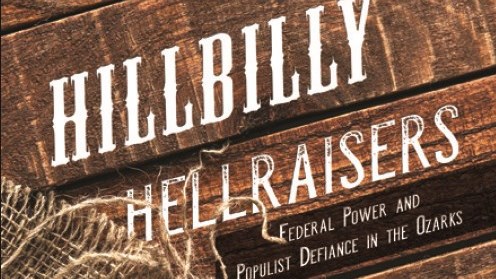
Image result for hillbilly hellraisersThe first Pen to Podium of 2019 is Dr. Blake Perkins discussing Hillbilly Hellraisers at 6:00 p.m.

This program is sponsored by the Arkansas State Archives, a division of the Department of Arkansas Heritage.  It will be held at the DAH headquarters located at 1100 North Street.

The lecture is free and part of the 2019 Historical Writers’ Lecture Series.  The Friends of the Arkansas State Archives plan to host a reception with refreshments 30 minutes before the lecture.

Perkins’ book, Hillbilly Hellraisers: Federal Power and Populist Defiance in the Ozarks, has drawn praise for its insightful look into how rural people in the Ozarks reacted to and resisted federalism in the 19th and 20th centuries.

The Ozarks includes parts of Arkansas and Missouri, where people have a reputation for anti-government sentiment. Perkins’ book asks what role heritage plays in perpetuating that attitude and focuses on real people’s experiences. The book traces social and political changes from the Populist revolt of the 1880s and 1890s to the modern-day Tea Party protests and the popularity of President Donald Trump.

“I think in many ways the Ozarks is an excellent microcosm of rural America in general,” Perkins said.

Perkins was born in the Ozarks and grew up on a fifth-generation farm near the southeastern Ozarks in western Lawrence and Sharp counties. He became interested in his family roots and history in elementary school. He has since become an assistant professor and chair of the History Department at Williams Baptist University in Walnut Ridge. He earned a bachelor’s degree from Lyon College, a master’s degree from Missouri State University and a doctoral degree from West Virginia University.

Perkins said the history behind local politics and its evolution is fascinating. “As I watched anti-Obama, anti-Washington politics surge in Arkansas between 2008 and 2016, I’ve been fascinated to investigate and learn more about rural political and social history,” he said.

One month left to submit for Arkansas Arts Center’s 61st Annual Delta Exhibition

The deadline to submit art for the Arkansas Arts Center’s 61st Annual Delta Exhibition is February 13. That means there is still one month remaining.
The Annual Delta Exhibition presents a vision of contemporary art in the American South. Founded in 1958, the exhibition provides a unique snapshot of the Delta region.

The Delta Exhibition reflects the region’s strong traditions of craftsmanship and observation, combined with an innovative use of materials and an experimental approach to subject matter.

A guest juror will select the artworks to be exhibited and assign the $2500 Grand Award and two $750 Delta Awards. Additionally, a $250 Contemporaries Award will be selected by the Contemporaries, an auxiliary membership group of the Arkansas Arts Center.

The exhibition is open to all artists who live in or were born in one of the following states: Arkansas, Louisiana, Mississippi, Missouri, Oklahoma, Tennessee, and Texas. Art must be original, completed in the last two years, and not previously exhibited at the Arkansas Arts Center.

For guidelines and the entry form, visit here.

Little Rock Look Back: Pulaski Heights officially becomes part of Little Rock

Ninth Ward

On January 13, 1916, the Little Rock City Council formally accepted Pulaski Heights into the City of Little Rock.

The Council had held a regular meeting on Monday, January 10, 1916, which was the same evening as the final meeting of the Pulaski Heights City Council.

Three days later, on Thursday, January 13, 1916, Mayor Charles Taylor again convened the Little Rock City Council to take the steps to officially annex Pulaski Heights into Little Rock.

By Ordinance 2259, the City’s boundaries were increased to include the land which had been Pulaski Heights.  Resolution 918 directed city staff to replat the land, which was necessary to bring the land in accordance with existing city plats and documents.

Resolution 919 set forth January 20 as a special election date to elect the two new members of the Little Rock City Council who would represent the new Ninth Ward of Little Rock.  Those who won would serve until April 1916.  The election would also serve as the primary for the April election.  Back then, winning the Democratic primary for a City race was tantamount to winning the race.  Since there were two seats being created, one would have a two year term, the other would be for only one year.  The candidate receiving the most votes on January 20 would, after April, take up the two year term and be able to run for re-election in April 1918. The candidate with the second highest total of votes would win the one-year term and be up for re-election in April 1917.  At the time, there were three publicly declared candidates for the two seats.  Another had been interested, but dropped out that morning.

Making Pulaski Heights the Ninth Ward was not the only focus of the City Council meeting.  An ordinance was also approved which allocated $438 for the purchase of beds, mattresses, chairs and other furniture for the City hospital.  (That is the equivalent of nearly $10,000 today.)  The Council then reimbursed a doctor the $438, which presumably had been spent on making the purchases.

Book Signing, Art Exhibit celebrating “Winston the Pony” book tonight at CALS Hillary Clinton Children’s Library

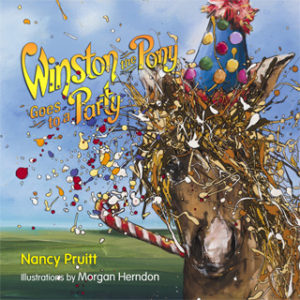
Image result for winston the pony goes to a partyThe CALS Hillary Rodham Clinton Children’s Library and Learning Center is hosting an exhibit opening and book signing this evening from 6:30pm to 8:00pm.
It features Nancy Pruitt and Morgan Herndon, Pruitt is the author of Winston the Pony Goes to a Party. Herndon illustrated the book.

As Pruitt writes, “Winston is a little rescue pony who came to live with us on a snowy January day. It did not take long for him to turn our farm upside down and find his way into our hearts. His big personality and barnyard antics have led to his first book, Winston the Pony Goes to a Party.”

Refreshments will be crafted by Leave It To Liz.

Little Rock Look Back: Basketball comes to Robinson Auditorium

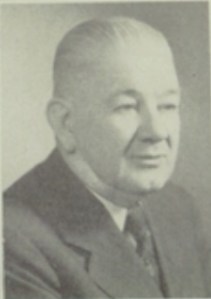
Coach Earl Quigley in the 1940s

While Joseph Taylor Robinson Memorial Auditorium is known today as a performance and meeting venue, in its early days it was also the home to sports. Seventy-eight years ago tonight the first basketball game was played at Robinson.

One of the first regular activities which took place in the lower level exhibition hall was a series of boxing and wrestling matches.  Building on the success of this, basketball came to the convention hall in January 1940.

A series of games featuring Little Rock High School and North Little Rock High School were announced by Tiger Coach Earl Quigley to take place from January 11 through February 16, the official opening day for the facility.

At that time, neither high school had a gymnasium; therefore both schools played their basketball games on their school auditorium stages with fans seated in the audience. The convention hall offered a regulation size floor (made of pecan block parquet) with seating for over 1,300 people along the sidelines and in the balcony.  The first men’s basketball game in Robinson Auditorium took place between the Little Rock High School Tigers and the North Little Rock High School Wildcats on January 11, 1940.

The Tigers lost the game before a crowd estimated to be 1,300.  Earlier in the evening there had been an exhibition between two women’s basketball teams.  The cost for admission to the games was 35 cents for the reserved seating and 25 cents for general admission.