Little Rock Look Back: Rock On!, or the day LaHarpe saw La Petite Roche

IMG_4805On April 9, 1722, French explorer Jean-Baptiste Bénard de La Harpe rounded the bend of the Arkansas River and saw La Petite Roche and Le Rocher Français.  He had entered the mouth of the Arkansas River on February 27 after traveling up the Mississippi River from New Orleans.

Though La Harpe and his expedition are the first Europeans documented to have seen La Petite Roche, the outcropping of rocks was well-known to the Quapaw Indians in the area.  The outcropping jutted out in the Arkansas River and created a natural harbor which provided a perfect place for boats to land.

The rock outcropping is the first one visible along the banks of the Arkansas River.  It marks the place where the Mississippi Delta meets the Ouachita Mountains.  Geologists now believe that the Little Rock is not the same type of rock as the Ouachita Mountains and more closely matches the composition and age of mountains in the western US.

In 1813, William Lewis became the first European settler to live near La Petite Roche but only stayed a few months.  Speculators and trappers continued to visit the area throughout the 1810s. During that time, the outcropping became known informally as the Little Rock.

La Petite Roche had become a well-known crossing when the Arkansas Territory was established in 1819. The permanent settlement of ‘The Rock’ began in the spring of 1820, and the first building has been described as a cabin, or shanty, and was built on the bank of the river near the ‘Rock.’ In March 1820, a Post Office was established at the ‘Rock’ with the name “Little Rock.”

Over the years, La Petite Roche was altered.  In 1872, Congress authorized the building of a railroad bridge. A pier for the bridge was built at the location of the La Petite Roche which caused the removal of several tons of rock.  The bridge was never built.  When the Junction Bridge was built in 1899, even more rock was removed in the process of erecting part of the bridge on top of the rock.  It was not viewed as being disrespectful of the City’s namesake at the time.  Indeed, it was viewed as a testament to the sturdiness of the rock.

In 2010, La Petite Roche plaza opened in Riverfront Park.  It celebrates the history of La Petite Roche and explores its importance to various aspects of Little Rock’s history and geography.

Today is #ArkansasGives Day

Arkansas GivesIf you are like me, you’ve been receiving notifications about Arkansas Gives Day for months.  Well, today is the day!  From 8am until 8pm, you can help grow the love for Arkansas’s nonprofit organizations by making a donation to the charity of your choice.  The event is sponsored by the Arkansas Community Foundation.

As a special incentive to give, each gift made through ArkansasGives on April 7, 2016 will be matched with additional bonus dollars; the more you give, the more bonus dollars your favorite charity will receive.

Nonprofit organizations and other tax-exempt charitable organizations may participate if they:

  • Are headquartered in Arkansas or have a base of operations in Arkansas.
  • Are a member of the Arkansas Nonprofit Alliance.
  • Have 501c3 tax exempt status under IRS code AND are qualified as a 509(a)(1), (a)(2) or (a)(3) organization or as a private operating foundation.

The minimum amount is $25; there is no maximum amount you may give. You may designate up to 10 charities per transaction.

Accepted Forms of Payment: Visa, MasterCard, Discover and American Express credit cards online.
You will receive an email receipt of your gift; please retain it for tax purposes. Unless you choose to remain anonymous, your donor information will be sent to the nonprofits to which you give.

Here is a list of cultural organizations which offer services within the boundaries of the City of Little Rock.

There are MANY MANY MANY other worthy nonprofits which are participating. But since this is a culture blog, only the cultural institutions are listed.  But please consider visiting the website and perusing the entire list.

On Tartan Day, celebrating all things Scottish, visit the Brownlee House at HAM

Photo by Larry Pennington

Photo by Larry Pennington

Today is Tartan Day, designated to celebrate the contributions of Scots everywhere.

One of Little Rock’s oldest structures, the Brownlee House was built by a Scotsman.  The Brownlee House is one of the restored structures at Historic Arkansas Museum.

Robert Brownlee built this Federal style brick house in the late 1840s for his brother and sister-in-law. A Scottish stonemason, Brownlee came to Little Rock in 1837 to help build the State House (now the Old State House Museum). He pursued a number of careers before leaving for California in the 1849 Gold Rush. From the late 1840s through 1852, the home’s residents were James and Isabelle Brownlee and Tabby, a woman enslaved by James Brownlee.

Brownlee had the wooden mantels in the parlor and bedroom marbleized, a popular decorative art of the time. The home’s furnishings reflect the mid-19th century.

This house is a project of The National Society of the Colonial Dames of America in the State of Arkansas.

Historic Arkansas Museum is open seven days a week.  The galleries are free, but the tours of the historic structures have a nominal fee.  It is an agency of the Department of Arkansas Heritage and is celebrating its 75th anniversary this year.

Little Rock Look Back: First play at Robinson Center

RCMH SpringtimeOn April 1, 1940, stage and screen star Edward Everett Horton appeared in the comedy Springtime for Henry in the music hall of Robinson Auditorium. This was the first play to be featured on the stage of the Music Hall which had opened six weeks earlier.

Springtime for Henry was a long-running vehicle for Horton.  He first played its title role in California in 1932 (shortly after its Broadway debut in 1931) and continued to play it across the country for more than 25 years, including in the 1951 Broadway revival.

As it was now springtime for Little Rock, the air conditioning was being used.  The system’s fans made so much noise that echoed through the air ducts it was hard for the audience members to hear the actors.  Once the source of this distraction was discovered, the fans were turned off; the next day plans were made to add acoustical buffering to the ducts to avoid a repeat of the situation.

Little Rock Look Back: Werner Knoop

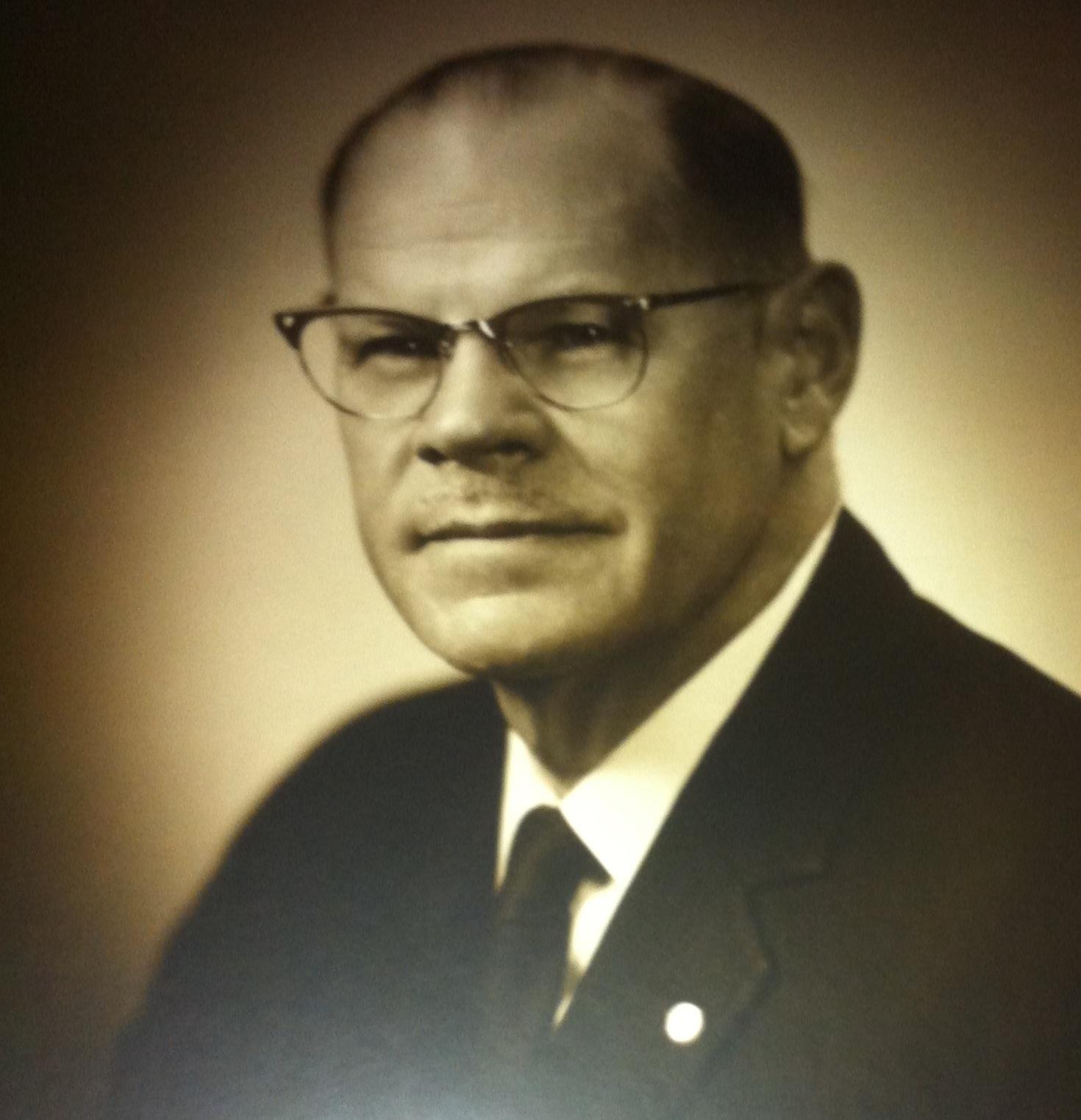
Mayor KnoopTo Little Rock citizens under a certain age, the name Knoop means Knoop Park — a picturesque park tucked away in a pocket of Hillcrest.  There are, however, still many who remember Werner C. Knoop as a business and political leader who helped shape Little Rock as a modern city.

Knoop was born on March 30, 1902.

In 1946, Knoop joined with Olen A. Cates and P. W. Baldwin to form Baldwin Construction Company in Little Rock.  Knoop had previously founded Capital Steel Company and established his business reputation there.  From 1945 through 1951, he served on the Little Rock School Board.

Following a series of political scandals, efforts were undertaken for Little Rock to shift from Mayor-Council to City Manager form of government.  Even before the desegregation of Little Rock Central put the city in the eyes of the world, an election for new leaders had been set for November 1957.  Knoop was on a “Good Government” slate and was one of the members elected.

At the first meeting of the new City Board, Werner C. Knoop was chosen by his fellow directors to serve as Little Rock Mayor.  Knoop served as Mayor until December 1962.  For the first several months in office, Little Rock had no City Manager so Knoop oversaw the transition of City staff as the forms of government changed.

Though City Hall generally stayed out of school district matters, that did not mean that the public viewed the two entities separately.  In September 1959, the Baldwin Construction offices were bombed as part of a series of terrorist activities protesting the desegregated reopening of all Little Rock high schools.

Downtown LR as viewed from Knoop Park

Downtown LR as viewed from Knoop Park

After two terms on the City Board, Knoop decided against seeking a third term.  He concluded his elected public service on December 31, 1962.  Following his time on the City Board, Knoop did not retire from Civic Affairs.  In 1970, he served as Chairman of the Little Rock Chamber of Commerce.   The previous year he served as President of the Arkansas Chapter of Associated General Contractors.

Mayor Knoop died in July 1983.  He is buried at Roselawn Memorial Park next to his wife Faith Yingling Knoop, a renowned author.

In the 1930s, Knoop moved into an Art Moderne house on Ozark Point in Hillcrest.  It was adjacent to Little Rock Waterworks property which was developed around the same time.  Eventually much of the land was deeded to the City for creation of a park.  In 1989, it was named in tribute to long-time neighbor Knoop in honor of his lifetime of service to Little Rock.

Little Rock Look Back: St. Patrick’s Day with Mayor Pat L. Robinson

IMG_4517On this date in 1900, future Little Rock Mayor Pat L. Robinson was born.  While I cannot verify that he was indeed named after St. Patrick, it would be fairly reasonable to assume there might be a connection.

Robinson was a rising star of Little Rock Democratic politics.  In April 1929, just weeks after his 29th birthday, he was elected Mayor.  He had twice been elected as City Attorney (1926 and 1928) and was one of the youngest to serve in that position.

During Mayor Robinson’s tenure, he announced plans to construct a new airport.  That project led to the creation of what is now the Bill and Hillary Clinton National Airport.  Mayor Robinson was also involved in helping Philander Smith College secure the property where it is now located.  In addition, during his tenure, what is now the Museum of Discovery was folded into the City of Little Rock.  Shortly after taking office, he championed several projects for approval by Little Rock voters. The projects he supported were approved; the ones he did not support did not pass.

Single at the time he was in office and generally considered good looking, Mayor Robinson was sometimes referred to as the “Jimmy Walker of the Southwest.” Walker was the handsome and charming Mayor of New York City at the time.

Mayor Robinson ran afoul of some of the Democratic party leaders. Records don’t seem to indicate exactly what actions he took or did not take.  One thing that is brought up is that the City went into financial distress during his tenure.  Considering the Wall Street crash happened shortly after he took office, that financial state was not unique to Little Rock.

IMG_4532During this era in Little Rock, it was customary for an incumbent mayor to be given a second term. But City Clerk Horace Knowlton challenged Robinson in the primary.  It was a bitter campaign with Robinson linking Knowlton to disreputable denizens and Knowlton charging Robinson with “an orgy of spending.”  Robinson initially came out 17 votes ahead. But after a review and a lawsuit, it was found that Knowlton ended up with 10 more votes and became the nominee.  At the time, being the Democratic nominee was tantamount to election.

After he left office, Robinson practiced law for a few years in Little Rock and then left the city.  Records do not indicate where he went but he no longer appeared in the City of Little Rock directory by the early 1940s.  In the 1940 census he is listed as divorced and a lodger living with a couple.

The HAM Nog-Off a finalist for Bootstrap Award

thnogoff_tstHistoric Arkansas Museum’s popular annual Nog-off event was a finalist for the Bootstrap Award at this year’s Arkansas Governor’s Conference on Tourism!

This free annual event has become a success on a bootstrap budget thanks to the hard work, passion and dedication of the museum staff, amazing volunteers, incredible competitors and expert judges both past and present!

HAM will host the 12th Ever Nog-off on December 9, 2016, and they hope to see you there!

Have you ever wondered why they include “Ever” in the title of this annual event? It’s because they began as the First Ever Nog-off almost 12 years ago! Staff thinks it’s been fun to see several knock-off nog-offs appear across the country (after all, imitation is the highest form of flattery); they are proud that Arkansas was the first and it all started at Historic Arkansas Museum!

This event is an ideal example of how HAM pairs Arkansas history and heritage with fun and engaging experiences. They are proud each year to showcase historic eggnog recipes with connections to our historic grounds and early Arkansas as well as innovative recipes from our contemporary culinary masterminds in Arkansas. ‪#‎ArkansasMade‬ ‪#‎AuthenticArkansas‬ ‪#‎HeritageFood‬