Little Rock Women’s History Month – Lucy D. Dixon

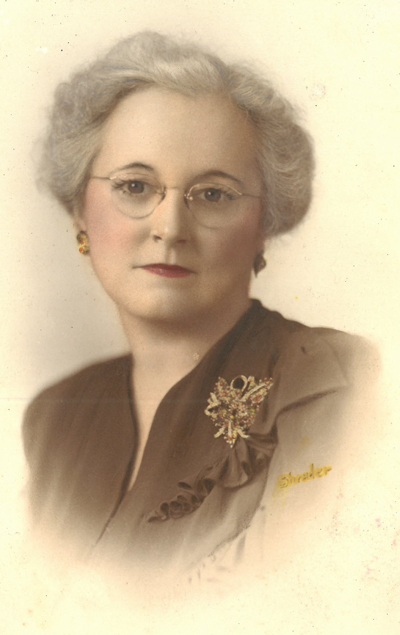
Lucy DixonKnown professionally as Mrs. Edgar F. Dixon (in an era when married women were listed publicly by their husband’s names), Lucy D. Dixon was elected to the Little Rock City Board of Directors in November 1957.  Though not noted at the time, her election was historic.  She was the first woman elected to a municipal office in Little Rock who had not first succeeded her husband.  Prior to her service on the City Board, Mrs. Dixon had served on the Little Rock School Board.  She was secretary of that body during the 1957 desegregation crisis.

Lucy Ann Dulin was born in Hensley in 1904.  She moved to Little Rock and graduated from Little Rock High School (then located on Scott Street) and attended the University of Arkansas.  From 1927 until 1935, she worked for her family’s business – Dulin Bauxite Company.  She returned to the company in 1941 and worked there until 1950.  She later served on the company’s board of directors.

Beginning in 1935, she became involved with the PTA and rose to the position of National Secretary in 1949, serving for three years in that position. As a PTA officer, she visited thirty-six of the then forty-eight states.

Among her other leadership positions were executive vice chair of the Governor’s Advisory Committee on Education, trustee of Little Rock Junior College (now UALR), delegate to the White House Conference on Children and Youth, delegate to White House Conference on Education, Pulaski County Welfare Board, and Little Rock Planning Commission.  She was also active in many Methodist organizations.  In 1953, she was the Arkansas Democrat Woman of the Year.

Married to Edgar F. Dixon, she had three children: Philip Edgar, Barbara and Mimi.  She died in January 1996 at age of 91.

Hillcrest Historic District to be site of 52nd Quapaw Quarter Spring Tour

qqa tourThe Quapaw Quarter Association (QQA) will host its 52nd Spring Tour on Mother’s Day Weekend, May 7-8 in the Hillcrest Historic District.
The Spring Tour of Homes has been held since 1963 with the purpose of fostering appreciation of historic buildings and neighborhoods and the need for their preservation.  The Tour was last year’s recipient of the Grand Old Classic Special Event Award at the Arkansas Department of Parks and Tourism’s Henry Awards.  The 52nd Spring Tour will feature interior access to five historic homes, four of which have never before been on tour.
“The Spring Tour is our best tool to build pride in historic neighborhoods and encourage continued investment in our city’s architectural heritage” said QQA President Jarrod Johnson.  “The Tour is a great way to celebrate Mother’s Day and experience one of Little Rock’s unique neighborhoods.”
The 52nd Spring Tour will feature the homes at 516 Ridgeway, 478 Ridgeway, the Canby House at 420 Midland, the Ashcroft House at 444 Fairfax Avenue, and the Foster-Cochran House at 3724 Hill Road.  Pulaski Heights Elementary and Middle Schools will also be open with student-led tours.  The Candlelight Tour on Saturday evening will include the special additions of the house at 319 Midland, a champagne stop at the Storthz House at 450 Midland, and the chapel at Pulaski Heights Presbyterian Church, followed by a party in the church’s fellowship hall.
In a new addition to the tour this year, the students in the Gifted and Talented Programs at Pulaski Heights Elementary and Middle Schools are doing research on the history of about 100 structures in Hillcrest, many of them the student’s own home.  Signs will be mounted in the yards or windows of these buildings that explain the history of the structure.  The signs will be temporarily posted, creating a walking tour throughout the neighborhood during the weekend of the Spring Tour.  In the process, the students will learn about the history of the community that they live in or utilize every day and how to use primary and historic resources when doing research.  The QQA hopes that residents of Hillcrest and Spring Tour-goers will take advantage of the walking tour to learn more about and appreciate the history of this historic community.
The tour will be open Saturday and Sunday afternoons; tickets may be purchased in advance for $20, or on site for $30.  Kids 10 and under are free.  The Candlelight Tour and Party tickets start at $125 per person and include afternoon tours.  Other activities will be a Sunday Brunch at Curran Hall and specials at neighborhood businesses.
Find more information and tickets at www.quapaw.com or at the Little Rock Visitor Information Center at Historic Curran Hall at 615 E. Capitol Avenue. You may also call 501-371-0075. Proceeds benefit the historic preservation programs of the QQA.
For social media, the QQA encourages attendees to use #QQASpringTour as the official event hashtag.

New HAM exhibit looks at 75 Years of the museum

75thbannerHistoric Arkansas Museum, a museum of the Department of Arkansas Heritage, will host a free opening reception for the museum’s 75th anniversary exhibit A Diamond in the Rough: 75 Years of Historic Arkansas Museum during 2nd Friday Art Night from 5 to 8 pm. The reception will feature a vintage cocktail from 1941, the year the museum was founded, live music by the Delta Brass Combo and a unique 75th anniversary Living History performance featuring portrayals of museum founder Louise Loughborough, as she campaigns the historic structures that are now preserved on the museum grounds, as well as Senator Ed Dillon and Governor Bailey. Refreshments will be available, including the vintage cocktail Millionaire No. 1 which was popular in 1941 – the year Historic Arkansas Museum was founded.

A Diamond in the Rough: 75 Years of Historic Arkansas Museum

Experience 75 years of Historic Arkansas Museum, beginning with the ambitious Louise Watkins Loughborough whose one-woman campaign succeeded in the founding of the museum in 1941. The museum, now a gem of Arkansas history and culture, began as a diamond in the rough; a half-block of dilapidated historic homes—the last remnant of Little Rock’s oldest neighborhood. Loughborough’s passion and vision saved these historic structures and the subsequent contributions of architects and preservationists such as Max Mayer, Ed Cromwell, Parker Westbrook and others succeeded in making Historic Arkansas Museum the historic landmark and vibrant cultural institution it is today.

The anniversary exhibit is a celebration of the museum’s commitment to preserving and exhibiting objects and artworks that illuminate Arkansas’s rich and varied cultural heritage. Learn more about the contributions of pioneering community leaders, reflect on milestones in the museum’s development over 75 years and see many of the most important pieces from the museum’s permanent collection. This exhibit continues in the Horace C. Cabe Gallery through February 2017.

Currently on exhibit:

Historic Arkansas Museum is open 9 a.m. – 5 p.m. Monday through Saturday, 1 – 5 p.m. on Sunday. Admission to the galleries and parking are free; admission to the historic grounds is $2.50 for adults, $1 for children under 18, $1.50 for senior citizens. The Historic Arkansas Museum Store is open 10 a.m. – 4:30 p.m. Monday through Saturday, 1 – 4 p.m. on Sunday.

Historic Arkansas Museum is an agency of the Department of Arkansas Heritage, which was created in 1975 to preserve and enhance the heritage of the state of Arkansas. Other agencies of the department are Delta Cultural Center in Helena, Arkansas Arts Council, Arkansas Natural Heritage Commission, Arkansas Historic Preservation Program, Mosaic Templars Cultural Center and Old State House Museum.

Brown Bag at Old State House today at noon – COURAGE, PROMINENCE, THEN OBSCURITY: THE LIFE OF EDWARD ALLEN FULTON

OSH Brown BagToday (March 10) at noon, Blake Wintory presents the Old State House’s March Brown Bag program on the life of Edward Allen Fulton.
Fulton was an African American leader, politician and newspaper editor in Arkansas during Reconstruction and subsequent years. Born a slave in Kentucky in 1833, Fulton spent his youth as a slave in Missouri before escaping and joining the abolitionist movement in Chicago. During the Civil War he worked as a recruiter for U.S. Colored Troops and arrived in post-war Arkansas in 1866.

In 1870 Drew County elected him to the Arkansas General Assembly as a Republican. Fulton sided with Joseph Brooks’ “Brindletail” or Reform Republicans and often clashed with the Regular Republicans, including Governor Powell Clayton. Throughout his career he championed the rights of African Americans and even led several Drew County families to western Iowa at the height of the Exoduster migration. Despite a colorful life that included an assassination attempt, Fulton died in relative obscurity in St. Louis in 1906.

Blake Wintory received his Ph.D. from the University of Arkansas in 2005. He is the on-site director at the 1859 Lakeport Plantation, an Arkansas State University Heritage Site in Chicot County. He serves on the board of Preserve Arkansas and the Friends of the Arkansas History Commission. In 2015 he published his first book, Images of Chicot County, and has published articles on Arkansas history in the Arkansas Historical Quarterly, the Arkansas Review, and the Encyclopedia of Arkansas History & Culture.

LR Women’s History Month – Ruth May Wassell Gibb

Ruth-May-Wassell-GibbOn August 27, 1944, Ruth May Wassell shattered a bottle on the hull of a new ship and christened it the U.S.S. Little Rock.  Mrs. Wassell, whose husband was Little Rock alderman Sam Wassell, had been designated as the official sponsor for the City of Little Rock by Mayor Charles Moyer.

Ruth May Wassell was more than the wife of a local political leader.  The daughter of Dr. and Mrs. Wiley Singleton May, she moved from Gurdon to Little Rock with her family and graduated from Little Rock High School. She later graduated from Henderson-Brown College and received a law degree from the University of Arkansas.  In 1932, she was admitted to the Arkansas Bar and later was admitted to practice before the Arkansas Supreme Court, one of the first women to receive this designation.

Mrs. Wassell was active in business, serving as president of the Arkansas Lumber Company  and owner of a citrus farm in Texas.  She was also active in civic affairs through involvement with the Arkansas Democratic Women, Boys Club and Second Presbyterian Church.  From 1947 until 1951 she was First Lady of Little Rock when Sam Wassell was elected as Mayor.

Following the December 1954 death of Mayor Wassell, she subsequently married E. W. “Bud” Gibb.  She died in 1964.

On International Women’s Day, see the Dorthea Lange’s America at the Arkansas Arts Center

Today is International Women’s Day. The Arkansas Arts Center currently features several exhibitions celebrating women artists.  One of them is Dorthea Lange’s America.  It is on display through May 8.

Dorothea Lange, American (Hoboken, NJ, 1895 – 1965, San Francisco, CA), Migrant Mother, Nipomo, California, 1936, gelatin silver print, Private Collection, © Dorothea Lange/Oakland Museum of California

Migrant Mother strikes the heart. Dorothea Lange’s iconic image of the Great Depression forces us to confront the humanity and strength of one woman struggling to get her family through the privations they face when there is no money. Dorothea Lange’s America brings together many of the photographer’s images made as she traveled across America during the 1930s documenting the suffering of unemployed or terribly underpaid agricultural workers and their families. Lange took these photographs as part of the photography program connected to the Farm Security Administration, a federal agency formed under the New Deal to assist poor farmers with loans and other programs.

Lange and her fellow FSA photographers recorded the lives of people coping with the dust bowl, bank and business failures, and the loss of their jobs and homes. We see the hopelessness of hungry men in breadlines and the shattered, abandoned cabin of a tenant farmer in the Mississippi Delta. But Americans did not give up. We also see the determination of men doing the grueling work of cutting lettuce for a pittance a day. And there is the radiant smile of an Arkansas mother who went to California to make a new start with her husband and eleven children. Such powerful images helped government agencies and representatives to understand the urgency of helping suffering Americans who had no other place to turn. 80 years later, these black and white documents of American endurance have not lost their impact.

Dorothea Lange’s America includes photographs made by Lange and her FSA colleagues, including Walker Evans, Ben Shahn, and Marion Post Wolcott. Depression-era photographs from photographers outside the FSA give a wider understand of the time. Here are striking visions by Mike Disfarmer, who worked as a portrait photographer in Heber Springs, Arkansas; and documentary images made from Oklahoma to Alabama by photographic artists including Lewis Hine, Doris Ulmann, and Willard Van Dyke. The exhibition continues with photographs Dorothea Lange made in the same spirit after the FSA was disbanded in 1943.

Little Rock Look Back: Count Casimir Pulaski

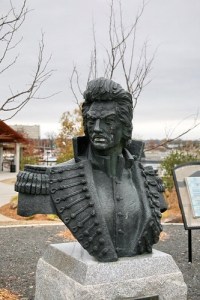
On March 6, 1745, Casimir Pulaski was born in Poland. A Polish nobleman and military commander he has been called a “father of the American cavalry.”

Born in Warsaw, he followed in his father’s footsteps he became involved in the military and the revolutionary affairs in Poland. Pulaski was one of the leading military commanders for the Bar Confederation and fought against Russian domination of Poland. When this uprising failed, he was driven into exile.

Following a recommendation by Benjamin Franklin, Pulaski emigrated to North America to help in the cause of the American Revolutionary War. He distinguished himself throughout the revolution, most notably when he saved the life of George Washington.

Pulaski became a general in the Continental Army, created the Pulaski Cavalry Legion and reformed the American cavalry as a whole. At the Battle of Savannah, while leading a daring charge against British forces, he was gravely wounded, and died shortly thereafter.

Pulaski is one of only eight people to be awarded honorary United States citizenship. He never married and had no descendants.

Arkansas is one of several states to have a county named in honor of Count Pulaski.  Pulaski County was Arkansas’s fifth county, formed on December 15, 1818.