Little Rock Look Back: FDR in LR

FDR Ark100On June 10, 1936, President Franklin D. Roosevelt visited Little Rock as part of a day-long series of appearances in conjunction with the Arkansas Centennial celebration.  (The actual statehood dates is June 15.)

His day started in Memphis before he journeyed by train to Hot Springs. After events there that morning and lunch at Couchwood (his longtime friend Harvey Couch was chairman of the Centennial celebration).  He then traveled to Rockport and Malvern for appearances before arriving in Little Rock.  He made his remarks at the State Fairgrounds in a structure called “Centennial Stadium.”

Following his remarks, which officially kicked off the six month Arkansas Centennial celebration, he retired to Senator Joseph T. Robinson’s house on South Broadway.  He dined with the Robinsons in the house before departing with the Senator at 8:45 that evening.  The Presidential entourage then journeyed to Texas for the next day.

Little Rock Look Back: Truman visits LR

HST in LR2On June 10 and 11, 1949, President Harry S. Truman visited Little Rock.  He was here to participate in activities connected to the reunion of the 35th Division Association.  He had served in that division during World War I.

While he was in Little Rock, President Truman spoke several times.  He generally was accompanied by Governor Sid McMath and Mayor Sam Wassell.

On June 10, he spoke at Robinson Auditorium as part of a welcome ceremony, at a reception at the Hotel Marion and at a ball held at Robinson Auditorium.  His first address was at 3:48 pm and his final one was at 10:15 pm.  The next day he spoke at a breakfast and at a luncheon at the Hotel Marion.  He took pains at these times to stress he was here as a member of the 35th Division.  He also participated in a parade.

In his Presidential role, he spoke at the dedication of War Memorial Park on June 11.  His address took place inside War Memorial Stadium, which had been opened a few months earlier.  It was not a brief dedicatory speech, but instead was a lengthy treatise on foreign affairs.  The address was carried on nationwide radio.  The text of his address can be found here.

President Truman would return to Little Rock in July 1952.  He was in the state to speak at the dedication of Bull Shoals Dam. He did not make any formal remarks in Little Rock while in the city for that visit.


Little Rock Look Back: Mayor and State Rep. Ben D. Brickhouse

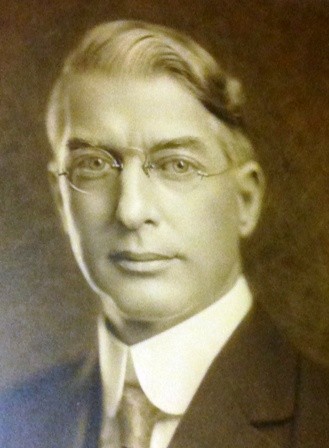
BrickhouseOn June 8, 1873, future Little Rock Mayor Ben D. Brickhouse was born in Virginia.  He moved to Texas as a child before his family settled in Arkansas.

His first job was with the Missouri Pacific Railroad.  He eventually attended law school at the University of Arkansas.  As an attorney, he remained interested in labor relations throughout the rest of his life.

In 1914, Brickhouse was elected to the Little Rock City Council.  He was reelected in 1916.  In 1918, he was appointed Labor Commissioner for the State of Arkansas by Governor Charles Brough.

Brickhouse was elected Mayor of Little Rock in 1919.  He was relected twice (1921 and 1923).  Prior to the change to the City Manager form of government in 1957, other Mayors would seek a third consecutive term, but none would be successful.

Mayor Brickhouse ran for a fourth term as Mayor but was defeated.  In 1923, he had openly opposed the Ku Klux Klan, which was then a major player in Democratic politics in Little Rock, in Arkansas and in the nation. In the next Democratic primary for Mayor, Brickhouse did not secure the nomination.

During Mayor Brickhouse’s tenure the City purchased the land to make Fair Park (now War Memorial Park).  He also served as chair of the State Fairgrounds. Brickhouse remained active in civic affairs, often speaking out in favor or opposition to local issues.

Brickhouse retired from public life in 1925 but returned in 1938 when he was elected to the Arkansas House of Representatives.  He was reelected in 1940.  On June 1, 1941, not long after the conclusion of the legislative session, Brickhouse died.

LR Look Back: The Rice Family and LR Auditorums

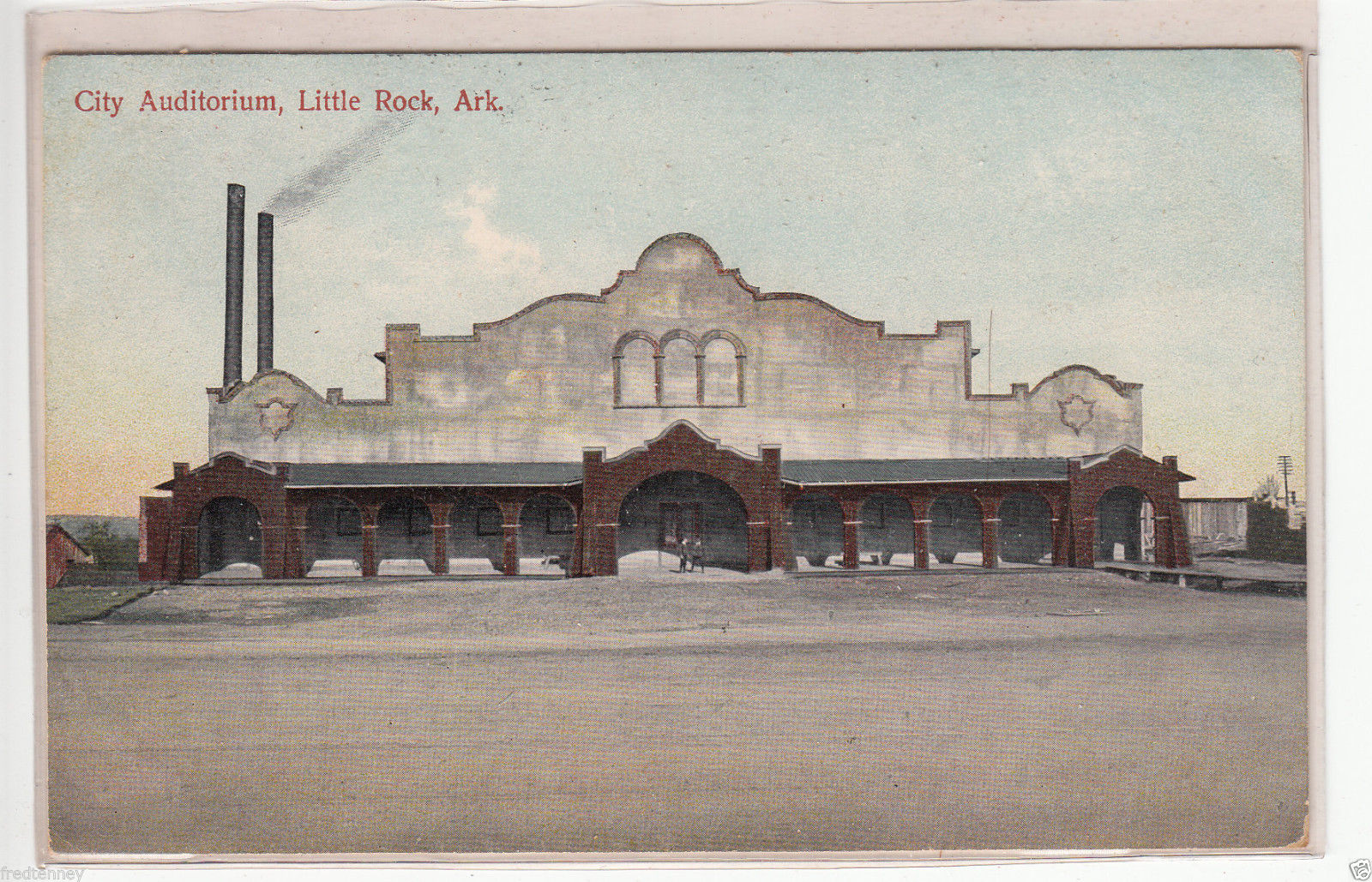
1906 LR auditoriumOn June 7, 1920, the Little Rock City Council finally authorized the demolition of Little Rock’s 1906 temporary auditorium.  The structure had originally been built as a skating rink which, when chairs were added, could be used for public meetings.  Since the mid 1910’s, the City Council had discussed tearing it down over safety concerns.  But since Little Rock had no other structure as a substitute, the Council kept delaying the decision.

J Rice 1920In 1920, though there was not alternative space available, the Council decided that the structure had to come down.  So City Engineer James H. Rice was authorized to have the building removed.

JimRice RobinsonToday, Rice’s grandson, also known as Jim Rice is the COO of the Little Rock Convention & Visitors Bureau.  In that capacity he is overseeing the renovation of Little Rock’s 1940 municipal auditorium – Robinson Center Music Hall.

Sandwich in History today at St. Edward’s Catholic Church

St. Edward Catholic Church_tour_tnThe monthly architectural history program “Sandwiching in History” visits St. Edward Catholic Church, lodated at 801 Sherman Street.

In 1883 Bishop Edward Fitzgerald sanctioned the creation of St. Edward parish to accommodate the growing number of German Catholics in Little Rock. The current church, dedicated in 1905, was designed by Charles L. Thompson in the Gothic Revival style.

Sandwiching in History is a program of the Arkansas Historic Preservation Program, an agency of the Department of Arkansas Heritage.

Tony Awards Week – SOUTH PACIFIC – “How Far Away from Little Rock A-r-k”

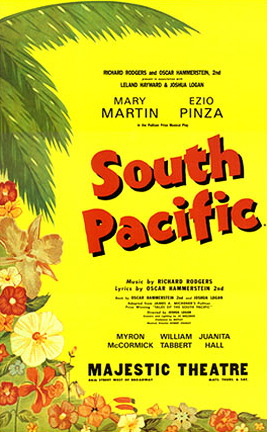
southpacific_obcSeveral Tony Awards have been won by a show with a main character from Little Rock.

South Pacific opened at the Majestic Theatre on April 7, 1949 and settled in for a run of 1925 performances. Based on the James Michener Pulitzer Prize winning novel Tales of the South Pacific, it featured a book by Oscar Hammerstein II and Joshua Logan, songs by Richard Rodgers and Hammerstein and direction by Logan. It was produced by Rodgers, Hammerstein, Logan and Leland Hayward. Set in the titular islands, it concerned the relationships of sailors, nurses, island natives and other island inhabitants.

The musical starred recent Tony winner Mary Martin as Little Rock native Nellie Forbush, opera star Ezio Pinza, stage veterans Myron McCormick and Juanita Hall, and stage newcomers William Tabbert and Betta St. John. Cloris Leachman was Martin’s understudy and would later succeed her in the part of Little Rock native Nellie Forbush.

Like other Rodgers and Hammerstein musicals, this show tackled tough themes – this one being prejudice. That did not set well with some theatergoers. Indeed, some potential investors did not put money into the show because of its stance. But Rodgers, Hammerstein, Logan and Hayward persisted. Their diligence paid off when the musical received the 1950 Pulitzer Prize in Drama, only the second musical to receive this designation. It is also the only Pulitzer Prize for Drama winner to be based on Pulitzer Prize winning source material. This was the first Rodgers & Hammerstein musical to not feature big dance numbers. In fact, there was no choreographer. The dance steps which existed were created by Martin, who had taught dance in her native Texas as a young mother.

Opening late in the season, South Pacific was named the 1949 New York Drama Critics Circle Best Musical, but was not part of the Tony Awards until 1950. (Though Jo Mielziner, who designed the set for South Pacific received a Tony for his set designs of shows during the 1948-49 season and South Pacific was one of the titles listed.) At the 1950 Tonys, it received six Tony Awards: Best Musical, Actor in a Musical (Pinza), Actress in a Musical (Martin), Featured Actor in a Musical (McCormick), Featured Actress in a Musical (Hall), and Director (Logan).

This is the only time that all four acting awards in the musical category went to performers in the same production. In fact, the other two acting trophies that year were incorrectly engraved as being from South Pacific out of habit. Logan’s win was also the first time that the Director Tony went for a musical, since at the time that award was not separated out among plays and musicals. Hall was the first African American to win a Tony Award for Acting.

In 1999 for the 50th anniversary and in 2008 for the opening of the first Broadway revival remaining cast members from the original production had reunions in New York City. At the 50th anniversary ceremony, a proclamation from Little Rock Mayor Jim Dailey was read declaring it South Pacific day in Little Rock and honoring the show. It is interesting to note that in 1949, there were two heroines on the Broadway stage from Little Rock: Nellie Forbush from South Pacific and Lorelei Lee from Gentlemen Prefer Blondes.

In 2008, Lincoln Center Theatre produced the first revival of South Pacific on Broadway. It opened on April 3, just four days shy of the musical’s 59th anniversary.  The cast was led by Paulo Szot, Kelli O’Hara (as Little Rock girl Nellie Forbush), Matthew Morrison (before “Glee”), Danny Burstein and Loretta Ables Sayre.  The production restored a song which had been written for the original Broadway production that had been dropped. “My Girl Back Home” was featured in the movie version and in this Broadway revival. In it O’Hara and Morrison sang of their hometowns of Little Rock and Philadelphia.  The production was nominated for 11 Tony Awards and won 7: Best Musical Revival, Actor in a Musical (Szot), Director of a Musical (Bartlett Sher), Scenic Design (Michael Yeargan), Costume Design (Catherine Zuber), Lighting Design (Donald Holder) and Sound Design (Scott Lehrer).

Sher, Yeargan, Zuber, Holder and Lehrer are all reuniting again next season to work on a revival of Fiddler on the Roof.  One of the producers of that is Little Rock native (and three time Tony winner) Will Trice.

While Trice has not starred in a production of South Pacific, his mother Judy Trice starred in a statewide tour in the 1970s. A few years later, his sister Kathryn Pryor, starred in the Central High production.

Legacies & Lunch Commemorates Roosevelt Thompson

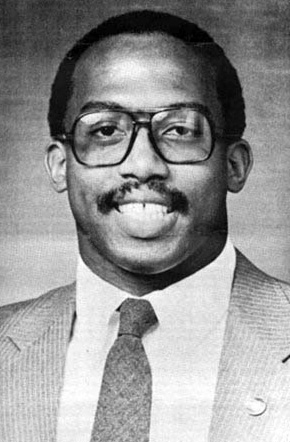
roosevelt_thompson_fRoosevelt Thompson was a gifted young man who had a bright future in public service before his death in an automobile accident in 1984. In honor of the 35th anniversary of Thompson’s graduation from Little Rock Central High School, the Butler Center, a department of the Central Arkansas Library System (CALS), will present a special Legacies & Lunch program, co-hosted by the Clinton School of Public Service, on Wednesday, June 3, from noon-1 p.m. at the CALS Ron Robinson Theater, 100 River Market Ave.

At Central High School, Thompson was student body president, an All-Star football player, and a National Merit Scholar. Thompson went on to attend Yale University, which has established a prestigious prize in his honor. While at Yale, he was selected as a Rhodes Scholar.

At this special Legacies & Lunch program, co-hosted by the Clinton School of Public Service, historic video footage featuring Thompson, Bill and Hillary Clinton, and others, will be shown. A panel, including Elaine Dumas, one of his teachers and mentors; Lee Thompson, his brother; and Beth Felton, his classmate at Central and a staff member at the CALS Roosevelt Thompson Branch Library, will discuss how his memory lives on today. Following this discussion, attendees may share memories and ask questions. After the program, all are invited to send their thoughts to RememberingRosey@cals.org.

Legacies & Lunch is free, open to the public, and sponsored in part by the Arkansas Humanities Council. Attendees are invited to bring a sack lunch; drinks and dessert are provided. For more information, call 501-918-3033.