Bicentennial of Battle of New Orleans

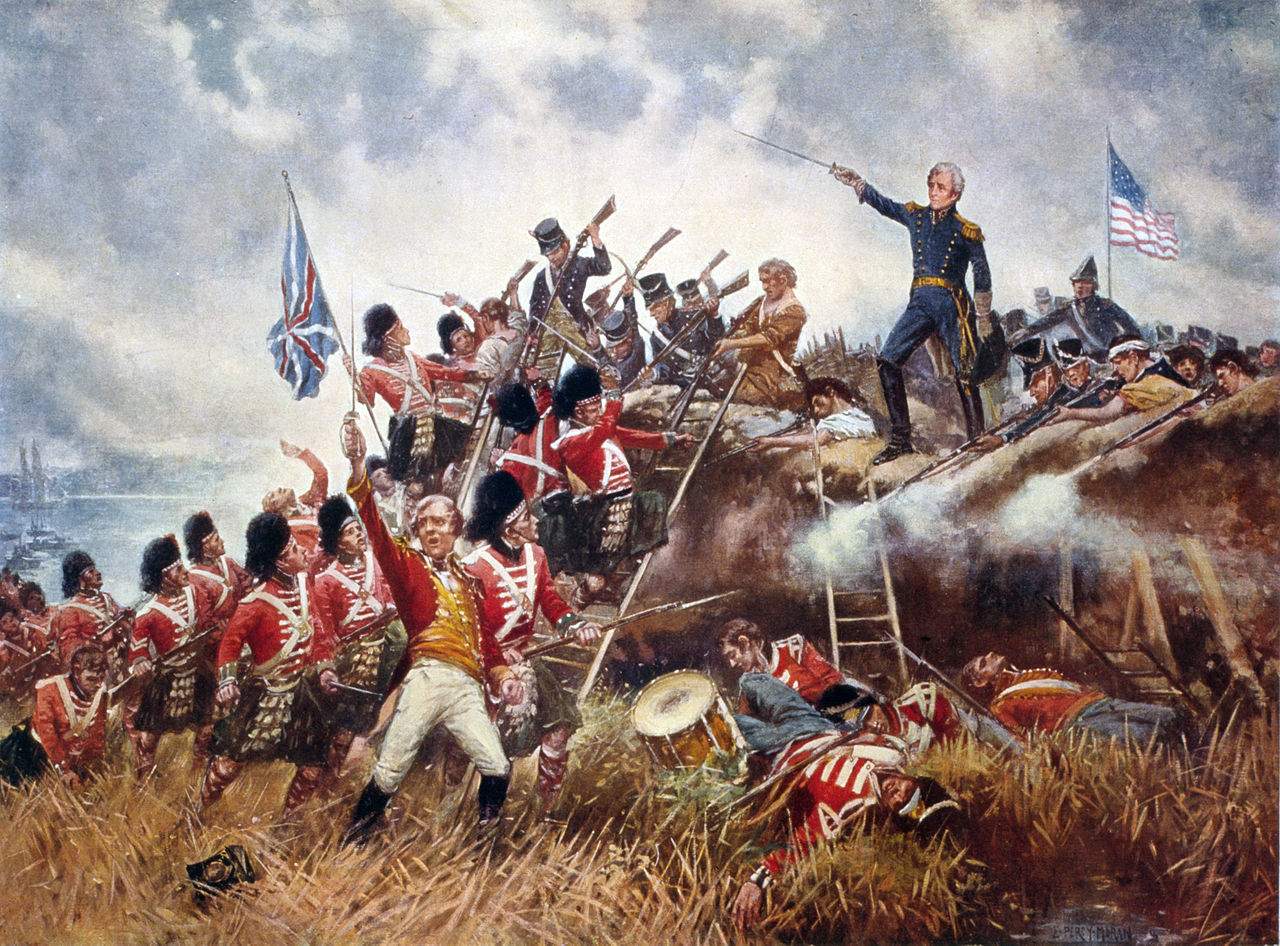
1280px-Battle_of_New_OrleansToday marks the 200th anniversary of the conclusion of the Battle of New Orleans.  It relates to Little Rock in a couple of ways.

First, it made General Andrew Jackson a national hero which helped propel him to the presidency.  It was while he was president that Arkansas was admitted to the Union.

Secondly, one of his soldiers in the battle was a young Roswell Beebe.  Jackson and Beebe became friends and maintained that friendship throughout their lives. Beebe later moved from Louisiana to Arkansas and became a leading citizen of Little Rock.  Using his friendships with Jackson and his successor Martin Van Buren, Beebe was able to navigate the already burgeoning bureaucracy of Washington DC.  Working with the federal government, he was able to straighten out the murky questions of who owned what land in Little Rock.

Beebe received the patent to most of Little Rock’s land. He then laid out streets, set aside land for a state capitol (now the Old State House Museum), set aside land for Mount Holly Cemetery (where he now resides), and sold land at reasonable prices to others.  These actions helped Little Rock continue its momentum as a growing trade town.  Without them, it could have devolved into a frontier town of lawlessness.

Little Rock Look Back: First Council Meeting after Civil War

First 1866 minutesOn January 8, 1866, the Little Rock City Council resumed meeting. This was the first meeting since the body had disbanded in September 1863.

Mayor J. J. McAlmont, a physician, presided. The Council members present were I.A. Henry, Henry Ashley, M.H. Eastman, Richard Bragg, P.O. Hooper, G. S. Morrison, John Collins and Alexander George.  Alderman Henry had actually served on the 1863 City Council which had voted to cease operation.

Thomas C. Scott was named constable and collector, and Augustus F. Woodard was appointed City Attorney.

Mayor McAlmont announced the creation of eight committees: Finance, Streets, Ordinances, Mount Holly, Fire Department, Police, Schools and Gas. Though a police committee was established, at a future meeting the Mayor appointed a committee to visit with the commanding Union officer over Little Rock to discuss the establishment of a police force.

One ordinance was introduced. It would establish a rate for licenses. It was read one time, and would be amended at future Council meetings.

At the conclusion of the meeting, the City Constable was charged with finding a room “for temporary use of the City Council.”

The Council would meet again the next night to continue discussions as they revived a dormant government.

80 Years of Elvis Presley

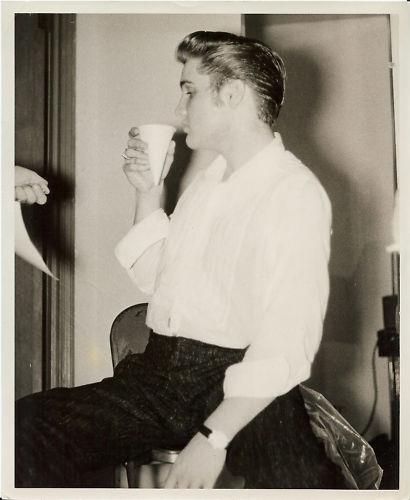
Photo by Wayne Cranford

Photo by Wayne Cranford

Eighty years ago today, Elvis Presley was born in Tupelo, Mississippi.  He would, of course, grow up to become a cultural phenomenon.

Elvis performed in Little Rock throughout his career.  In April 1972, he played at Barton Coliseum (with tickets on the arena floor going for a whopping $10!).  In the 1950s, he played three at Robinson Auditorium. His first appearance was as his career was just starting to take off. The final, a mere 15 months later, was when he had become a national icon.

His first appearance at Robinson was on February 20, 1955.  Billed as the “WSM Grand Ole Opry” show, Elvis Presley was third on the bill behind the Duke of Paducah and Mother Maybelle and the Carter Sisters as he began week long tour of Arkansas and Louisiana.  On this date there were a pair of shows, at 3:00 and 8:15 p.m., at Robinson Auditorium. Tickets were 75-cents in advance, $1.00 at the box office and 50-cents for kids. It is believed that Gladys and Vernon Presley attended this performance, invited by Elvis who wanted to introduce them to the Colonel. Gladys was a big fan of the Duke of Paducah. Elvis Presley, Scotty Moore, and Bill Black receive $350 for these two shows instead of their usual $200 per day.  In August 1955, he returned and played Robinson as part of the All-Star Jamboree.

His third and final appearance at Robinson Auditorium was on May 16, 1956.  This time, the Auditorium was packed. The tickets were $1.50 in advance at Walgreens and $2.00 at the box office.  The ads featured 8 great acts in “his” variety show which consisted of the Jordonaires; Rick and Emil Flaim and their orchestra; vocalists Frankie Conners and Jackie Little and comedian-magician Phil Maraquin. A second show was added to accommodate the ticket demand.  

About 30 minutes late, due to a missed flight, Elvis appeared on stage in a purple blazer and started singing “Heartbreak Hotel.”  The crowd rushed the stage. Little Rock police officers were able to control them eventually and get the teenagers back to their seats.  While the crowd was impressed, the police officers were less so.  One of the patrolmen told the Arkansas Gazette reporter: “I wouldn’t know him if I saw him. And I wouldn’t be here unless I was being paid.”

Little Rock Look Back: Orval Eugene Faubus

FaubusOrval_fOn January 7, 1910, one of the most controversial figures in Arkansas history was born: future Governor Orval Eugene Faubus.

Faubus is today remembered for his role fighting for the continued segregation of the Little Rock public schools.  Raised in a socialist family, his staunch embrace of segregation was a surprise to many who viewed him as more of a moderate on the issue.  At the time, and later, it was viewed as more of an opportunistic move to head off a political challenge from segregationists such as Jim Johnson.  However, throughout the rest of his lifetime, as others such as George Wallace would recant and repent, Faubus continued to maintain he was “merely” upholding the law of the land (the Supreme Court striking down the law a few years earlier, notwithstanding).

Interestingly, Faubus was also known for hiring African Americans in state government for more than menial tasks. He worked to increase funding to historically black colleges and universities in Arkansas. He fought to abolish the predatory poll tax.

His segregation efforts curtailed Arkansas’ business recruitment for a few years in the late 50s and early 60s.  But a few years earlier, in 1955 Faubus had created the Arkansas Industrial Development Commission and appointed Winthrop Rockefeller to lead it.  He also increased teacher pay, overhauled the State Hospital, created the Arkansas Children’s Colony, expanded state parks, and stopped the Army Corps of Engineers from damming the Buffalo River.

In late 1965, by executive order, he created the Arkansas Arts and Humanities Council and funded it with his discretionary funds until the legislature would appropriate money in 1967. He also oversaw the creation of the state’s historic preservation program.

Certainly his efforts to flout federal law have tarnished his image. Looking at his accomplishments in the areas of industry, education reform and culture – one wonders what he could have accomplished if he had exerted even more efforts in those areas instead of fighting Eisenhower.  It is all moot, because he did not.  And the reality is that, yes had he supported Eisenhower, he might well have lost in 1958 to someone like Jim Johnson who would have continued fighting for segregation even more vehemently and would have been unlikely to champion these other issues.

Ed Bethune speaks at Butler Center Legacies & Lunch today

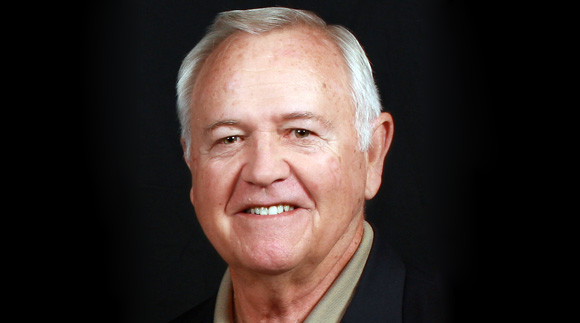
EdBethune-580x323Former Congressman Ed Bethune’s diverse career has included service in the Marine Corps, as a special agent in the FBI, and as a prosecuting attorney.

Bethune will provide an “Arkansas autobiography” at Legacies & Lunch, the Butler Center’s monthly lecture series, on Wednesday, January 7, from noon-1 p.m. in the Main Library’s Darragh Center, 100 Rock Street.

Bethune, a native of Pocahontas who served three terms in the United States House of Representatives, will share details about his childhood during World War II and his career. He will also discuss his family and cultural changes in his lifetime. Finally, Bethune will talk about how he and his wife attempted to sail across the Atlantic Ocean in a 31-foot sailboat, detailed in his memoir, Jackhammered. Copies of Jackhammered and Gay Panic in the Ozarks, a novel by Bethune, will be available for sale; Bethune will sign books after the program.

Legacies & Lunch is free, open to the public, and sponsored in part by the Arkansas Humanities Council. Attendees are invited to bring a sack lunch; drinks and dessert are provided. For more information, contact 501-918-3033.

Little Rock Look Back: John Gould Fletcher, LR 32nd Mayor

IMG_4006Future Little Rock Mayor John Gould Fletcher was born on this date in 1831. The son of Henry Lewis and Mary Lindsey Fletcher, he later served as a Captain in the Capital Guards during the Civil War. One of his fellow soldiers was Peter Hotze.

Following the war, he and Hotze began a general merchandise store in Little Rock. They were so successful that they eventually dropped the retail trade and dealt only in cotton. Peter Hotze had his office in New York, while Fletcher supervised company operations in Little Rock. In 1878 Fletcher married Miss Adolphine Krause, sister-in-law of Hotze.

John Gould Fletcher was elected Mayor of Little Rock from 1875 to 1881. He was the first Mayor under Arkansas’ new constitution which returned all executive powers to the office of the Mayor (they had been split under a reconstruction constitution). Following his service as Mayor, he served one term as Pulaski County Sheriff. Mayor Fletcher also later served as president of the German National Bank in Little Rock.

Mayor and Mrs. Fletcher had five children, three of whom lived into adulthood. Their son was future Pulitzer Prize winning poet John Gould Fletcher (neither father nor son used the Sr. or Jr. designation). Their two daughters who lived to adulthood were Adolphine Fletcher Terry (whose husband David served in Congress) and Mary Fletcher Drennan.

In 1889, Mayor Fletcher purchased the Pike House in downtown Little Rock. The structure later became known as the Pike-Fletcher-Terry House. It was from this house that Adolphine Fletcher Terry organized the Women’s Emergency Committee which worked to reopen the Little Rock public schools during the 1958-1959 school year.

In the 1960s, sisters Adolphine Fletcher Terry and Mary Fletcher Drennan deeded the house to the City of Little Rock for use by the Arkansas Arts Center. For several decades it served as home to the Arts Center’s contemporary craft collection. It now is used for special events and exhibitions.

Mayor Fletcher died in 1906 and is buried in Mount Holly Cemetery along with various members of his family. His grandson William Terry (son of Adolphine Fletcher Terry) and members of his family still reside in Little Rock.

Little Rock Look Back: Pulaski Heights Annexed into Little Rock

On January 4, 1916, voters in Little Rock and Pulaski Heights voted overwhelmingly to annex the latter into the former.

First platted in 1890, Pulaski Heights had been incorporated as a city in August 1905.  By 1915, Pulaski Heights was booming.  It was growing so fast, that its infrastructure and public safety needs were far outpacing the city’s ability to pay for them.  Though there was a ribbon of commercial businesses along Prospect Avenue (now Kavanaugh Boulevard), it did not produce enough sales tax revenue to pay for City services. Then, as now, property taxes were also an important part of city revenue sources but not sufficient without sales taxes.

The City of Little Rock, likewise, was looking for ways to grow physically. At the time, the City was hemmed in by a river to the north and low, marshy land to the east. Current development was to the south, but even that presented limits in the foreseeable future. The best option was to grow to the west, but Pulaski Heights was in the way.  In 1915, Little Rock Mayor Charles Taylor (after failing in a previous attempt to re-annex North Little Rock into Little Rock), approached Pulaski Heights leadership about the possibility of annexation.

In November 1915, there were public meetings in Little Rock and Pulaski Heights to discuss the issue.  As a part of the annexation, Little Rock promised to build a fire station in the area and to install traffic lights, sidewalks and pave more streets.

On January 4, 1916, Little Rock voters approved the annexation of Pulaski Heights by a ten-to-one margin. The majority of Pulaski Heights residents also approved the deal.  The suburb became the city’s ninth ward.

Another special election was held in January 1916 to select the first two aldermen from the 9th Ward.  L. H. Bradley, John P. Streepey and Tom Reaves ran for the two slots. Bradley and Streepey were the top two vote recipients.  Streepey served until April 1921 and Bradley served until April 1928.

This established a couple of precedents for the City of Little Rock which are in effect to this day.  The first is that Little Rock would not be a central city surrounded by a variety of small incorporated towns (in the manner that St. Louis and other cities are).  It was this thought process which has led the City to continue to annex properties.