
31 Days of Arkansas Rep: 1982’s A CHRISTMAS CAROL

Scott Edmonds as Ebenezer Scrooge in “A Christmas Carol” by Charles Dickens – from Developing Character at the Arkansas Rep 1983-1984 by Andrew Kilgore. Arkansas Arts Center Foundation Collection. Gift of Doyne and Margaret Dodd.There were plenty of Christmas carols during the 1982 Arkansas Rep production of A Christmas Carol. This was the first time, in the Rep’s seven Decembers of existence, that a holiday-themed show had been presented in December.

The production was directed by the Rep’s Artistic Associate Montgomery Kuklenski (who is now an entertainment executive in Los Angeles).  After Cliff Fannin Baker decided to produce a stage version of the Charles Dickens chestnut, Kuklenski read over a dozen versions before selecting one by Tom Markus.

Instead of taking place on the Rep’s stage, the production was mounted in the university theatre on the UALR campus.  (With a cast of nearly 40 actors and many special effects, it would have been difficult to produce this at the Rep’s home adjacent to MacArthur Park.)

Scott Edmonds played the title character with other parts being played by Dallas Miles, Jonathan Michaelson, Rebeccas Wilenski, Charles Hatchock, Larry Edwards, Peter White, Jay Kinney, Tommy Cherepski, Ted Eades, and Ronald J. Aulgur.

One of the reasons that the Markus version was selected was that it incorporated numerous Christmas carols into the script both as part of the action and as transitions between scenes. Sharon Douglas served as pianist and music director for the production.

The production ran from December 9 through 18 of 1982.

Several of the actors were captured in Mark Hughes’s costumes by Andrew Kilgore as part of his multi-season Developing Character black and white photo portrait series.  The Arkansas Arts Center has over twenty of these photos in its permanent collection.

The Rep also has many of these photos. As part of 2nd Friday Art Night, the Rep is displaying some of these photos in the lobby of the current building.

31 Days of Arkansas Rep: 1988’s PAGEANT

While originally envisioned as a potential first show in the new Main Street home for Arkansas Rep, the world premiere of the musical PAGEANT took place instead at the Rep’s original home at 11th and McAlmont Streets.  (The new theatre space would not open until October 1988.)

Conceived by Cliff Fannin Baker (who would direct as well), this show featured a series of vignettes exploring a variety of aspects of beauty pageants – competing in them, watching them, having daughters in them, etc. The songs were all written by Michael Rice (who had previously composed The Good Woman of Setzuan at Arkansas Rep). The various scenarios in the libretto were authored by Baker, Jack Heifner, Romulus Linney, Kent R. Brown, Hank Bates, and Mary Rhode.

The seven women in the cast (who were on stage the entire time) were played by Kimberly Ann Cunningham, Brenda Kaye Westbrook, Mimmye Goode, Julianne Griffin, Karen Heck, Vivian Morrison, and Margaret Wyatt-Kinney.  Cunningham and Westbrook had both previously competed in beauty pageants. The creative team included Mike Nichols (sets), Mark Hughes (costumes), and Kathy Gray (lighting).

The production ran from January 21, 1988 through February 21, 1988.

It has since been retitled American Beauty and is available for licensing.

31 Days of Arkansas Rep: 1988’s STEEL MAGNOLIAS

The final Arkansas Rep production in its original home was Robert Harling’s STEEL MAGNOLIAS.  Demand for tickets was so strong that the run was extended by over a week even before the show opened. (Having the next show opening in the new space probably allowed for this extension to be possible because there was not a concern about an overlap of space needs.)
This tale of six Southern women of varying ages featured Victoria Holloway and Casey Alexander as a mother and daughter, Theresa Quick and Francine Thomas as the owner of a beauty salon and her employee, with Francis Kemp and Candyce Hinkle as a pair of lifelong friends rounding out the cast.

Selected by Cliff Fannin Baker, the show was still running Off Broadway and had not yet been made into a movie when it was announced for the Rep’s season.  The show was directed by Cathey Crowell Sawyer.  The creative team included Mike Nichols (set), Mark Hughes (costumes), Robert A. Jones (lighting) and Sheri Bethel (sound).

Nichols and Hinkle would reunite with this title when the Rep mounted it to kick off the 30th season in 2005.

Little Rock Look Back: Mayoral Election of 1866

Following the cessation of Little Rock municipal government in September 1863, there was no mayor of Little Rock for the remainder of the Civil War.

In the late summer of 1865, plans were announced for the resumption of local government, and elections were set for October 16, 1865.  Former mayor William E. Ashley (the first mayor of Little Rock to be born in Little Rock) had expressed his intention to run for the office.  W. S. Oliver had also announced his candidacy. On that day, however, the elections were suspended by military leadership over Arkansas. There were issues related to the governance of Arkansas under Reconstruction.

Details in the Arkansas Gazette were vague. However whatever the actual issues were seem to have been resolved. A new election date was set for January 1, 1866.

On November 4, 1865, William E. Ashley issued a notice that he was withdrawing from the race. He had apparently been in ill health for a period of two months. As he was recovering, he found himself needing to devote his time to his business affairs he had neglected during the illness.

A week later, Ashley was the lead signatory on a letter sent to Dr. J. J. McAlmont (a local physician and pharmacist) asking him to be a candidate for mayor. There were a total of twenty-nine men who signed the letter including several former members of the City Council.  Dr. McAlmont sent a letter accepting the offer and announcing he would be a candidate.  Both letters were printed in the Arkansas Gazette.

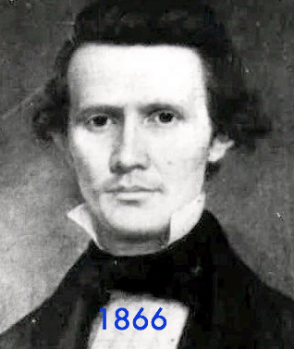
On January 1, 1866, the election took place.  The Gazette reported approximately 600 people voted and that Dr. McAlmont won.  It did not give a vote total for him or any opponents.   He would serve in office for a year.

31 Days of Arkansas Rep: 1986’s ‘NIGHT, MOTHER

An Oscar winner performing on the Arkansas Rep stage is a rarity. To have one playing the same role she played in a national tour — well, that has only happened once.

From April 17 to May 4, 1986, Mercedes McCambridge starred in the Rep’s production of Marsha Norman’s two-hander ‘night, Mother. In 1984, she headlined the national tour of this same production.

McCambridge and Rep founder/Artistic Director Cliff Fannin Baker had been discussing potential project ideas for a few years.  In the mid-1980s, she lived in Little Rock. Though by 1986 she had moved away, she was glad to return for this project.

The show was directed by Baker and co-starred Cathey Crowell Sawyer.  In his Gazette review Jack Weatherly noted that it was Sawyer’s finest performance to date. Of McCambridge he opined she was “lighting up those recesses of our lives with humor and humanity.”

Little Rock Look Back: Mayor W. E. Lenon

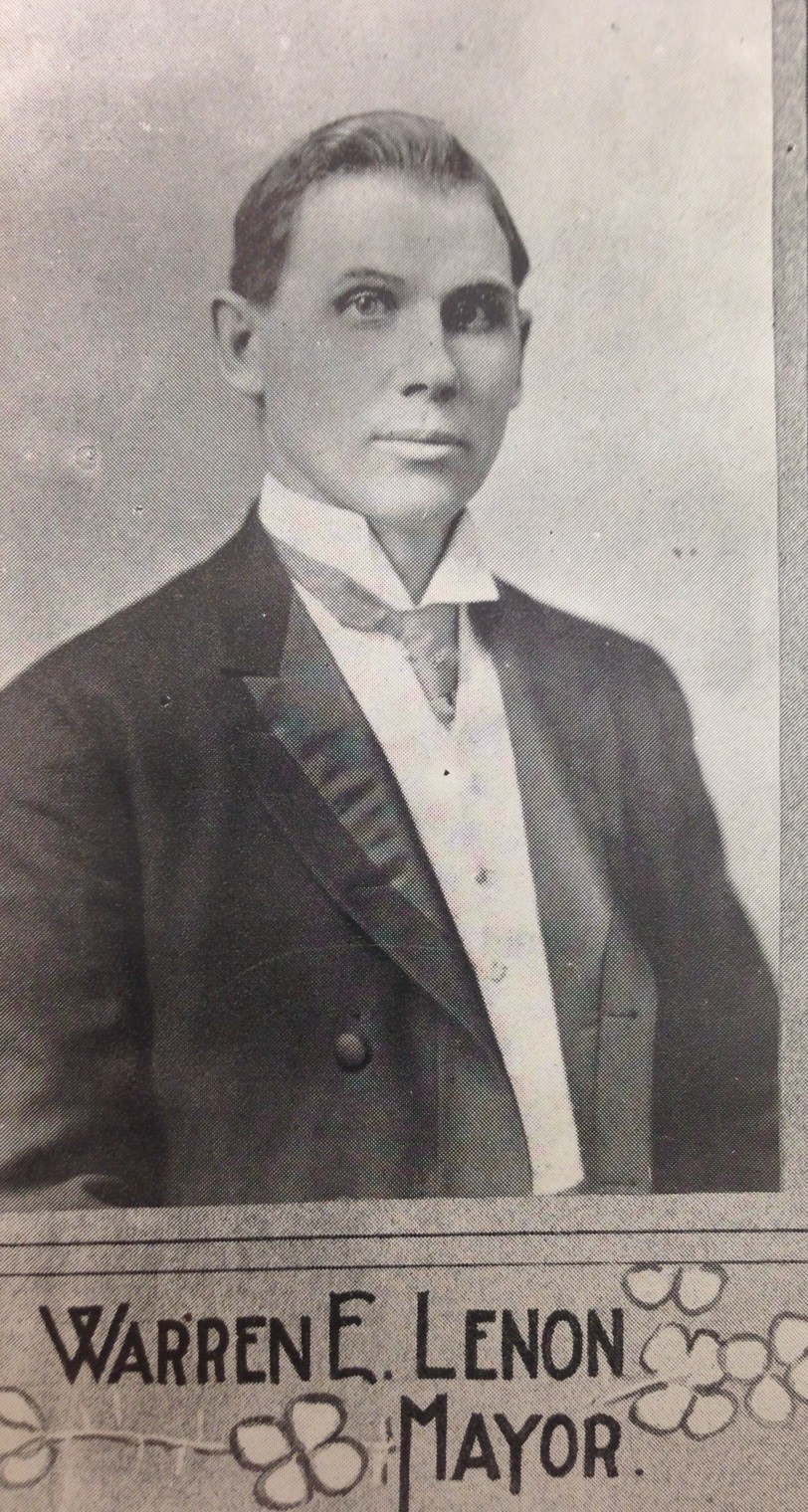
OMayor Lenonn October 8, 1867 in Panora, Iowa, future Little Rock Mayor Warren E. Lenon was born.  He was one of eleven children of John D. and Margaret M. Long Lenon.

Lenon came to Little Rock in 1888 after finishing his schooling in Iowa.  He helped set up an abstract company shortly after his arrival.  In 1902 he organized the Peoples Savings Bank.  Among his other business interests were the City Realty Company, the Factory Land Company, the Mountain Park Land Company, and the Pulaski Heights Land Company.

From 1895 to 1903, he was a Little Rock alderman, and in 1903, he was elected Mayor of the city. A progressive Mayor, he championed the construction of a new City Hall which opened in 1908.  At the first meeting of the City Council in that building, Mayor Lenon tendered his resignation.  His duties in his various business interests were taking up too much of his time.

Mayor Lenon had been a champion for the establishment of a municipal auditorium. He had wanted to include one in the new City Hall complex. But a court deemed it not permissible under Arkansas finance laws at the time.  He also worked to help establish the first Carnegie Library in Little Rock which opened in 1912.

Mayor Lenon continued to serve in a variety of public capacities after leaving office.  In the 1920s, he briefly chaired a public facilities board for an auditorium district. It appeared he would see his dream fulfilled of a municipal auditorium.  Unfortunately the Arkansas Supreme Court declared the enabling legislation invalid.

In 1889, he married Clara M. Mercer.  The couple had three children, two of whom survived him: a son W. E. Lenon Jr., and a daughter Vivion Mercer Lenon Brewer.  Together with Adolphine Fletcher Terry (also a daughter of a LR Mayor), Mrs. Brewer was a leader of the Women’s Emergency Committee.

Mayor Lenon died June 25, 1946 and is buried at Roselawn Cemetery.  Lenon Drive just off University Avenue is named after Mayor Lenon.

31 Days of Arkansas Rep: The 1986 production of THE FOREIGNER

Blasny Blasny.  Larry Shue’s 1984 farce THE FOREIGNER made its first of four appearances on the Arkansas Rep stage in January 1986.

Directed by Cliff Fannin Baker, it featured Terry Sneed as the title character, a mild-mannered man who pretends to be a non-English speaking foreigner to avoid interactions with locals at a small-town hunting resort.

Others in the cast were Steve Wilkerson, Mark Johnson, Ron Aulgur, Scott Edmonds, Natalie Canderday and Jean Lind.

The production ran from January 16 through February 9 of 1986. It was so popular that it sold out its run. Standing room only ticket holders filled all available spaces.  Gov. Bill Clinton called for tickets and could not be accommodated.

It has subsequently been mounted at the Rep three times more: during the 1987/88, 1995/96 and 2008/09 seasons. It is the only play to have been staged that many times in the Rep’s history.

The 1988 staging featured Wilkerson, Sneed, and Johnson reprising their roles.