
 The Pulitzer Prizes are to be announced today. This year marks the 100th anniversary of the prizes, though not all of the current categories have been around since 1917.
Mount Holly Cemetery not only touts that it is the site of a whole host of elected officials, it is also the only place in Arkansas where two Pulitzer Prize recipients are buried. The cemetery is open every day, but a special visit to these two prize winner gravesites can be made on Sunday, April 30, during the Mount Holly Cemetery Association’s annual “Rest in Perpetuity” fundraiser picnic.
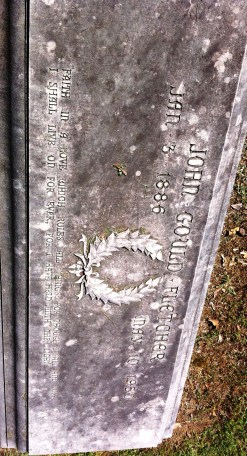
In 1939, John Gould Fletcher became the first Southern poet to win the Pulitzer Prize for Poetry. He was born into a prominent Little Rock family in 1886. Fletcher was awarded the prize for his collection Selected Poems which was published by Farrar in 1938. Two years earlier, he had been commissioned by the Arkansas Gazette to compose an epic poem about the history of Arkansas in conjunction with the state’s centennial.
Fletcher is buried next to his wife, author Charlie May Simon and his parents (his father was former Little Rock Mayor John Gould Fletcher). Other relatives are buried nearby in the cemetery.
 The other Pulitzer Prize winner buried in Mount Holly is J. N. Heiskell, the longtime editor of the Arkansas Gazette. It was Heiskell, in fact, who asked Fletcher to compose the poem about Arkansas. Heiskell served as editor of the Gazette from 1902 through 1972. He died at the age of 100 in 1972.
Under his leadership, the Gazette earned two Pulitzer Prizes for its coverage of the 1957 desegregation of Little Rock Central High. One was for Harry Ashmore’s editorial writing and the other was for Public Service.
Heiskell remained in charge of the Gazette until his death in 1972. He is buried alongside his wife with other relatives nearby. Also not too far from Mr. Heiskell are two of his nemeses, proving that death and cemeteries can be the great equalizer. In the early days of his Gazette stewardship, he often locked horns with Senator (and former Governor) Jeff Davis. Later in Mr. Heiskell’s career, he vehemently disagreed with Dr. Dale Alford, who had been elected to Congress on a segregationist platform.
 If you are like me, you’ve been receiving notifications about Arkansas Gives Day for months. Well, today is the day! From 8am until 8pm, you can help grow the love for Arkansas’s nonprofit organizations by making a donation to the charity of your choice. The event is sponsored by the Arkansas Community Foundation.
 Janis Kearney is the only person to have held the title of U.S. Presidential Diarist. In 1995 she was appointed to that position by President Bill Clinton.
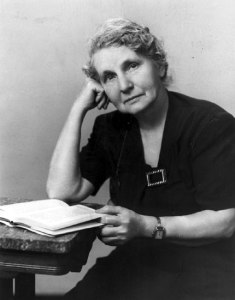 Julia Burnelle “Bernie” Smade Babcock was an author and museum founder. When her husband died, leaving her with five children, she starting writing for money. She published several temperance novels and later wrote for the Arkansas Democrat. She also published a magazine, wrote plays which were performed in New York, and authored a poetry anthology. She later became recognized as an expert on Abraham Lincoln and wrote several books about him, as well as other historical figures. For her writing skills, she became the first Arkansas woman to be included in Who’s Who in America.
 Charlie May Simon is known today for being the eponym of a children’s literature award. But during her lifetime she was a prolific author for children and for adults.
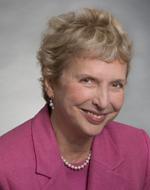 While today, Phyllis D. Brandon is best known for being the first and longtime editor of the Arkansas Democrat-Gazette‘s High Profile section, she actually holds two historic firsts in Arkansas history.
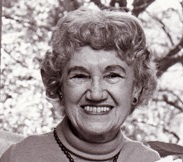 Faith Yingling Knoop was the first Little Rock First Lady during the City Manager era. Her husband, Werner Knoop, served as Mayor from November 1957 until December 1962.
 Little Rock Culture Vulture