
Final days to view INDEPENDENT VISION exhibit at Arkansas Arts Center

Martin with “Teenage Diary” suite of photographs by Judy Dater, 2018

Martin with “Teenage Diary” suite of photographs by Judy Dater, 2018 Photo: Vivian Sachs Image courtesy of Modernism Inc., San Francisco

Sunday, December 30 is the final day to view Independent Vision: Modern and Contemporary Art from the Martin Muller Collection at the Arkansas Arts Center.

San Francisco-based gallerist and collector Martin Muller curated the exhibition from his personal collection as a tribute to Little Rock – the city where he spent his formative early years in America. During those years, Muller discovered an affinity for post-war American painting in the quiet library of the Arkansas Arts Center. It was the beginning of a lifelong, relentless pursuit of new artistic treasures.

“This was the beginning of a rich, colorful, challenging and rewarding journey, started in Little Rock, where I made many lifelong friends,” Muller said.

Independent Vision: Modern and Contemporary Art from the Martin Muller Collection features nearly 90 works from Muller’s personal collection representing his journey through contemporary art. The works in the exhibition represent a range of artistic expression, from American photographers Diane Arbus and Robert Mapplethorpe, modernist masters Pablo Picasso and Henri Matisse, pioneers of the Russian avant-garde Kazimir Malevich, Alexander Bogomazov, and El Lissitzky and pop artists Andy Warhol, Mel Ramos and Edward Ruscha. The show also includes a diverse array of contemporary works by artists such as Joel Besmar, Damian Elwes and Jean-Charles Blais.

Independent Vision draws from Muller’s personal collection – and represents 77 artists he has championed throughout his career. Together, these works form a picture of Muller the collector, on a life-long journey for enlightenment through art and literature.

Born in Switzerland, Muller moved to Little Rock in 1975 to take a job with a Swiss-American company based in Little Rock.

Muller was an avid student of 19th and 20th century Russian literature and art – but developed a fascination with post-war American painting – Abstract Expressionism, Pop Art and Minimalism. While living in Little Rock, he pursued his studies in the Elizabeth P. Taylor library of the Arkansas Arts Center. In 1977, having decided to pursue his passion for art professionally, Muller moved west and opened Modernism, Inc. in San Francisco’s warehouse district South of Market.

“During my trip cross country, I marveled at discovering masterpieces of modern American art, from Edward Hopper to Barnett Newman, Mark Rothko, Jackson Pollock, and later, the Pop and Minimalist artists, especially Donald Judd,” Muller said. “Now, some 40 years later, it gives me great joy to have come full circle back to Little Rock and be able to share at the Arkansas Arts Center some of the wonderful artworks gathered along the way.”

Founded in 1979, Modernism has since presented more than 450 exhibitions, both historical and contemporary, in media ranging from painting to photography, sculpture to performance, by an international roster of artists. Throughout its 39 years, Muller has aspired to keep the gallery’s challenging, museum quality program at the forefront of the art world, with exhibitions encompassing Dada, Cubism, Surrealism, Vorticism and German Expressionism. Muller was also an early promoter and champion of the artists of the Russian Avant-Garde (1910–1930) in the United States. The gallery has held a long list of exhibition “firsts” – in 1980, Modernism held the first exhibition of the Russian Avant-Garde in a West Coast gallery, the first Andy Warhol show in San Francisco in 1982, and in 2003, the first Le Corbusier gallery show in the United States.
Little Rock Look Back: Roswell Beebe born

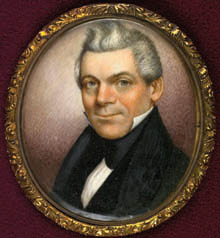
Roswell Beebe, Little Rock’s 16th Mayor

On December 22, 1795, future Little Rock Mayor Roswell Beebe was born in Hinsdale, New York.  His family were wealthy English immigrants.  At seventeen, Beebe went to New Orleans and fought with Andrew Jackson in the 1815 Battle of New Orleans.  He stayed in the Crescent City for the next two decades building successful lumber and brick businesses.

Due to health concerns, he moved north to a drier climate in 1834.  After first stopping in Fulton, Arkansas, he settled in Little Rock in 1835 at the age of forty.  He stayed at the home of Chester Ashley and married Ashley’s sister-in-law, Clarissa Elliott.  He and Clarissa had two children, Roswell and Cora.

For nearly 30 years, Little Rock had a complicated history of deeds, titles and land ownership.  In 1839, Beebe went to Washington DC and received the original patent from President Martin Van Buren.  He then set about clearing up the land and title issues, as well as drawing up a plan for the city and laying off blocks and streets.  Beebe deeded the streets and alleys to the City for a dollar.  He also donated the land on Markham Street for a new State Capitol building (now home of the Old State House Museum).  Along with his brother-in-law Chester Ashley, he donated the land for the establishment of Mount Holly Cemetery.

In 1848, Beebe was elected to the Little Rock City Council.  The following year, he was elected Mayor.  He served as Mayor of Little Rock from April 1849 to February 1850.

While his primary business focus in the 1840s had been real estate, in the 1850s he focused on railroads.  Beebe was named president of the Cairo and Fulton Railroad Company in 1853.

While on a visit to New York, Beebe died on September 27, 1856.  His body was returned to Little Rock, and Roswell Beebe was buried at Mount Holly Cemetery.  The town of Beebe, Arkansas, is named in his honor.

Clinton Center affected by Government Shutdown

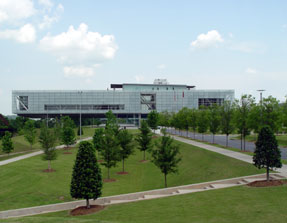
During the Federal Government shutdown, the permanent and temporary exhibits at the Clinton Center are closed.  Likewise access to the National Archives information is closed.
HOWEVER, 42 Bar and Table is still open its usual schedule for lunch, happy hour and dinner.

AND the Clinton Museum Store is open. It is offering special discounts during the shutdown.

Little Rock Look Back: Museum of Discovery is gifted to City in 1929

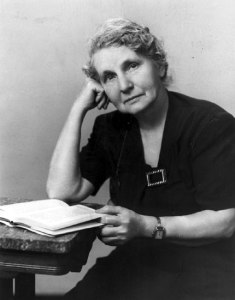
At the City Council meeting on December 19, 1929, Bernie Babcock presented the City of Little Rock with a Christmas present — the Museum of Natural History.

After the meeting was convened, Mrs. Babcock was given permission to make remarks to the City.  According to Council minutes from that meeting, she stated “she was at this time making a Christmas gift to the City of Little Rock in presenting to it the museum located on the third floor of the City Hall, setting forth, at length, the struggles in making the collections of which the museum is composed, and stressing the value of the museum to the city.”

Upon a motion, the museum was accepted by the City.  She then presented letters which formally made the offer to the City and suggested persons for a governing board.

Mrs. Babcock had been trying to get the City to accept the museum for a while.  She had been unsuccessful in getting Mayor Pat L. Robinson to agree to it after he took office in April 1929.  Ever-determined, she circumvented the mayor and went directly to the City Council. By December 1929, they had grown estranged from Mayor Robinson.

Since December 19, 1929, the museum has been affiliated with the City of Little Rock.  During that time, it has had several names and three locations.

9th annual Holiday Music at the Arsenal this afternoon

This afternoon from 2pm to 4pm, visitors to the MacArthur Museum of Arkansas Military History can enjoy a seasonal concert given by pupils of the Margaret Wyatt Vocal and Piano Studios.

Wyatt enjoyed a career in both opera and musical theater, working throughout the United States and locally with the Arkansas Repertory Theater and Arkansas Symphony Orchestra.  She has taught piano and voice in Little Rock for over 25 years.  Included in the concert will be holiday favorites from around the world.  The concert is free and open to the public.

Located in the historic Arsenal Tower in MacArthur Park, the MacArthur Museum of Arkansas Military History honors the Arkansans who have served in the armed forces.  Exhibits feature artifacts, photographs, weapons, documents, uniforms and other military items that vividly portray Arkansas’s military history at home and abroad.

Happy Birthday to Diego Rivera

Today is the birthday of Diego Rivera.  He is one of the Culture Vulture favorite artists, so any excuse to discuss him and his relationship with the Rockefeller family is greatly appreciated.

One of Rivera’s masterpieces is 1914’s Portrait of Two Women which is part of the permanent collection of the Arkansas Arts Center. The official name is Dos Mujeres.  It is a portrait of Angelina Beloff and Maria Dolores Bastian.  The former was Rivera’s first wife.

This oil on canvas stands six and a half feet tall and five and a half feet wide.

Influenced by cubists such as Picasso, Rivera adopted fracturing of form, use of multiple perspective points, and flattening of the picture plane.  Yet his take on this style of painting is distinctive.  He uses brighter colors and a larger scale than many early cubist pictures. Rivera also features highly textured surfaces executed in a variety of techniques.

The painting was a gift to the Arkansas Arts Center by Abby Rockefeller Mauzé, sister of Arkansas Governor Winthrop Rockefeller.  At the 1963 opening of the Arkansas Arts Center, James Rorimer, the director of the Metropolitan Museum of Art, remarked several times to Arts Center trustee Jeane Hamilton that the Met should have that piece. Jeane politely smiled as she remarked, “But we have it.”

Of all her brothers, Abby was closest to Winthrop. The other brothers, at best ignored, and at worst, antagonized the two.  Given the complicated relationship of Rivera with members of the Rockefeller family, it is not surprising that if Abby were to have purchased this piece, she would donate it to a facility with close ties to Winthrop.

(Though the Rockefeller brothers had Rivera’s mural at Rockefeller Center destroyed, he maintained a cordial relationship with their mother Abby Aldrich Rockefeller — well as cordial as an anti-social Communist could be with the doyenne of capitalist NYC Society.)

Diego’s third (and fourth) wife Frida Kahlo will be the feature of an upcoming exhibit at the Arkansas Arts Center.

Little Rock Look Back: Studio Gang announced as lead architect for re-envisioning of Arkansas Arts Center

On December 6, 2016, the Arkansas Arts Center (AAC) announced the selection of Studio Gang as design architect for its upcoming building project.

The five firms selected as finalists were Allied Works (Portland, Ore./New York), Shigeru Ban (New York/Paris/Tokyo, Japan), Studio Gang (Chicago/New York), Thomas Phifer (New York) and Snohetta (Oslo, Norway/New York/San Francisco).

Studio Gang was deemed the best fit for the project due to the firm’s elegant and smart approach to architecture, their understanding of the issues posed by the AAC’s current facility, their vision for the center as a cultural beacon for Central Arkansas and their commitment to sustainability and strength as urban planners.

Founded by MacArthur Fellow Jeanne Gang, Studio Gang is an award-winning architecture and urbanism practice based out of Chicago and New York. A recipient of the 2013 National Design Award, Jeanne Gang was also named the 2016 Archiitect of the Year by the Architectural Review and the firm was awarded the 2016 Architizer A+ award for Firm of the Year.

Studio Gang is recognized internationally for a design process that foregrounds the relationships between individuals, communities and environments. The firm has extensive knowledge in museum, theatre and artist studio spaces, with projects ranging from the Writers Theatre in Glencoe, Ill. to the Aqua Tower in Chicago to the expansion of the American Museum of Natural History in New York.

Since their selection, Studio Gang has brought on a variety of other members of the consultant team including:

In February 2018, Studio Gang released their first designs for the project.