Life of longtime CALS trustee Ira Sanders topic of today’s Legacies & Lunch

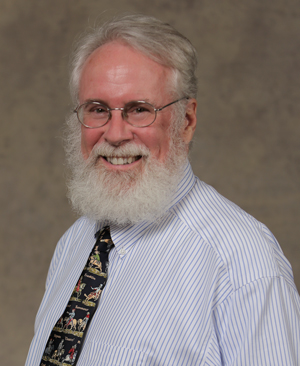
SandersIraE_fToday at noon at the CALS Ron Robinson Theater, the Butler Center for Arkansas Studies and Clinton School for Public Service collaborate on a special Legacies & Lunch.

James Moses, professor of History at Arkansas Tech University, will discuss the life of Ira E. Sanders, who served as rabbi at Congregation B’nai Israel in Little Rock for 38 years and was a legendary champion of social justice in Arkansas and throughout the nation.

Rabbi Sanders was a founder of Arkansas Lighthouse for the Blind, the Arkansas Eugenics Association, and the Urban League of Greater Little Rock. He also served for 40 years on the Central Arkansas Library System’s Board of Trustees. James Moses is writing a book about Rabbi Sanders, to be titled “Life Fire Shut Up in My Bones.”

Legacies & Lunch is free, open to the public, and supported in part by the Arkansas Humanities Council. Programs are held from noon-1 p.m. on the first Wednesday of each month. Attendees are invited to bring a sack lunch; drinks and dessert are provided.


SOCIALIGHT, a lecture by Mark Manack, AIA and Frank Jacobus AIA tonight at 6pm.

Marc Manack (L)  and  Frank Jacobus (R)

ARCHITECTURE AND DESIGN NETWORK presents

 
SOCIALIGHT
a lecture by
 
Marc Manack, AIA, NCARB, Assistant Professor, Fay Jones School of Architecture & Design 
Frank Jacobus, AIA, Associate Professor, Fay Jones School of Architecture & Design
          Principals, SILO AR+D, Fayetteville, AR and Cleveland, OH 
 
Date: Tuesday, November 3, 2015
Place: Arkansas Arts Center lecture hall
Time: 6:00 p.m. preceded by a reception at 5:30 p.m.  
 
Marc Manack and Frank Jacobus, the former a founding principal and the latter a principal of  SILO AR+D, an award winning architectural, research and design collaborative, will share their insights into the evolving role of the architect in relation to contemporary design, technology and changing perceptions of the built environment. 
 
While they, like other architects, still deal with bricks and  mortar, glass, steel and other traditional building elements, the two men have sought out and  experimented in unexpected ways with new, non-traditional  materials and techniques, employing them in the design and making of  temporary as well as permanent  structures, installations and objects. 
 
The work of the two architects has been published widely and has been  featured in ARCHITECTURE, Dwell, Slate, Fast Company and the Wall Street Journal.   
 
Architecture and Design Network (ADN) lectures are free and open to the public. For additional information about this and other ADN programs contact ardenetwork@icloud.com. Supporters of ADN include the Central Section of the Arkansas Chapter of the American Institute of Architects, the UA Fay Jones School of Architecture and Design, the Arkansas Arts Center and friends in the community.

Dr. Clea Hupp of UALR Dept. of History discusses ‘Tribalism, Sectarianism, and Political Islam’ tonight as part of Evenings with History

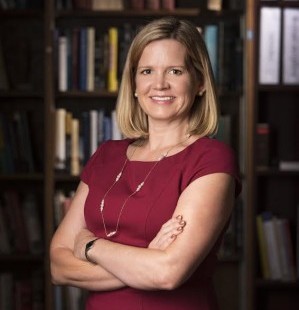
Clea 2015Dr. Clea Hupp, Chair in the UALR Department of History will give a lecture on “‘Tribalism, Sectarianism, and Political Islam” at the 2015-16 Evenings with History Series at 7 p.m. Tuesday, Nov. 3, in the Ottenheimer Auditorium in the at the Historic Arkansas Museum in downtown Little Rock.

Current events in the Middle East are rooted in the politics of the 20th century. Communism, nationalism and imperialism left a footprint on the region and shaped the recent conflicts of the area. To what extent do cultural factors like tribalism and sectarianism influence the people of the Middle East, and how do they intersect with politics?

Dr. Hupp will look at the struggle between secularism and political Islam, and how the philosophical trends of the
region have influenced political movements.

The Evenings with History series is sponsored by the University History Institute and features presentations by UALR faculty members who share their current research.

Unknown-6An individual subscription to the series, at $50 annually, includes these benefits: Admission to all six lectures.

joint subscription to the series, at $90 annually, offers couples and friends a savings of $10.

Fellow of the Institute, at $250 annually, receives admission to the six lectures plus an invitation to special presentations for Fellows only. This often includes a private evening with a noted author.

The Institute also offers a Life Membership at $1,000.

Subscribers to the series help support historical research.  The presenters donate their time, and the University History Institute uses all proceeds from the series to encourage research at the University of Arkansas at Little Rock.  In recent years annual Institute grants, made possible by the Evenings with History series, have made major purchases of historical research materials for UALR.  Subscriptions and donations to the Institute are tax deductible as allowed by law.

For more information about the University History Institute and the full list of lectures and presenters for the 2015-16 series, go to Evenings with History.

Little Rock Look Back: Adolphine Fletcher Terry

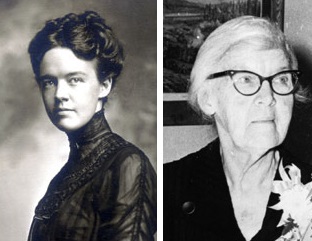
Photos from the collection of the Butler Center

Photos from the collection of the Butler Center

Adolphine Fletcher Terry was born on November 3, 1882 to former Little Rock Mayor John Gould Fletcher and his wife Adolphine Krause Fletcher.

Raised in Little Rock, in 1889 she moved into the Albert Pike House on East 7th Street, when her aunt transferred the title to her father. That house would be her primary residence the rest of her life.  Her sister Mary Fletcher Drennan never lived in Arkansas as an adult after marriage. Her brother John Gould Fletcher spent much of his adulthood in Europe before returning to Little Rock and establishing his own house, Johnswood.

At age 15, Adolphine attended Vassar. She later credited that experience as broadening her views on many issues.  After graduating at age 19, she returned to Little Rock.  Her parents both died prior to her 1910 wedding to David D. Terry, which took place at what was then known as the Pike-Fletcher House (and today is known as the Pike-Fletcher-Terry House).

She is perhaps best known today for establishing the Women’s Emergency Committee in 1958 and for her subsequent deeding of the family house to the City for use by the Arkansas Arts Center.  But her entire life was based on civic engagement.

She was instrumental in establishing the first juvenile court system in Arkansas and helped form the first school improvement association in the state. She was long an advocate for libraries, serving 40 years on the Little Rock public library board.  Through her leadership, the library opened its doors to African Americans in the early 1950s. Today a branch of the Central Arkansas Library System (the successor the Little Rock public library) is named after her.  Another branch is named after her Pulitzer Prize winning brother.

Adolphine formed the Little Rock chapter of the American Association of University Women, the Pulaski County tuberculosis association and the Community Chest.

In 1958, when the Little Rock public high schools were closed instead of allowing them to be desegregated again, she called Harry Ashmore the editor of the Gazette and exclaimed, “the men have failed us…it’s time to call out the women.”  With this, she formed the Women’s Emergency Committee to Open Our Schools. This group played a major role in getting the four high schools open the following year.

From 1933 to 1942, David Terry served in the U.S. Congress. During that time, Adolphine alternated her time between Washington DC and Little Rock. But she spent much time in Little Rock raising her five children.

After her husband’s death in 1963, she continued to remain active in civic affairs. In the 1960’s, she and her sister deeded the Pike-Fletcher-Terry House to the City of Little Rock for use by the Arkansas Arts Center upon both their deaths.  Following Adolphine Fletcher Terry’s death in 1976, Mary turned over the title to the City.

Adolphine Fletcher Terry is buried in Mount Holly Cemetery alongside her husband. Three of her children are also buried in that plot.  Her parents and brother are buried in a nearby plot.

Her son William Terry and his wife Betty continue to be active in Little Rock. Their daughters and their families also carry on Adolphine Fletcher Terry’s commitment to making Little Rock better.

Monday Musings: Bill Worthen

Bill-Worthen_K0A4687-webBill Worthen IS Mr. Little Rock and Arkansas History.  Not only do his family roots (in many branches) go back to the early days of Arkansas, he has overseen Historic Arkansas Museum’s transformation from a sleepy collection of historic structures to a dynamic museum experience.  This week, he and his staff are putting the final touches on Saturday’s Candlelight Gala which will celebrate the 75th anniversary of Historic Arkansas Museum.

-My earliest memory was (age and incident)

With my Grandmother at the train station in Hot Springs, maybe 3?

-When I was in high school and imagined my adulthood, I thought I would be…

In junior high, when required to do a project on a possible career, I interviewed an illustrator/cartoonist, but I never had a solid direction until it was required of me.

-Star Wars, Star Trek, Battle of the Network Stars, or Dancing with the Stars?

Star Wars

-I most identify with the Winnie the Pooh character of…

Tiggerbillworthen

-The performer I’d drop everything to see is…

The Band

-My first paying job was…

Occasional paperboy, paid by my brother, who was the real paperboy

-A book I think everyone should read is….

I usually don’t push my taste on others, but I love Arkansas Folklore, by Masterson.

-My favorite season is…

Spring

-We are all geeks (or experts) about something. My field is….

bowie knife and Arkansas Traveler


Little Rock Look Back: J. N. Heiskell

At the age of 87, J. N. Heiskell in 1960.

At the age of 87, J. N. Heiskell in 1960.

John Netherland (J. N.) Heiskell served as editor of the Arkansas Gazette for more than seventy years.

He was born on November 2, 1872, in Rogersville, Tennessee, to Carrick White Heiskell and Eliza Ayre Netherland Heiskell. He entered the University of Tennessee at Knoxville before his eighteenth birthday and graduated in three years at the head of his class on June 7, 1893.

His early journalism career included jobs with newspapers in Knoxville and Memphis and with the Associated Press in Chicago and Louisville. On June 17, 1902, Heiskell’s family bought controlling interest in the Arkansas Gazette. Heiskell became the editor, and his brother, Fred, became managing editor.

Governor George Donaghey appointed Heiskell to succeed Jeff Davis in the United States Senate after Davis’s death in office. Heiskell served from January 6, 1913, until January 29, 1913, when a successor was elected.

On June 28, 1910, Heiskell married Wilhelmina Mann, daughter of the nationally prominent architect, George R. Mann. The couple had four children: Elizabeth, Louise, John N. Jr., and Carrick.

In 1907, he joined a successful effort to build the city’s first public library. He served on the library board from that year until his death and was issued the first library card.  He also served on the City’s Planning Commission for decades.

In 1912, he was instrumental in bringing John Nolen to Little Rock to devise a park plan. Heiskell was also largely responsible for the location of Robinson Auditorium. When City Council members had competing locations, he advocated for the corner of Markham and Broadway. And kept at it until the site was selected.

In the paper and in his own personal opinions, he crusaded on a variety of progressive causes.  Perhaps the most famous was the Gazette’s stance in the 1957 Central High desegregation crisis.  It was for this effort that the paper received two Pulitzer Prizes.

Although Heiskell stopped going to the office at age ninety-nine, he continued to take an active interest in the newspaper. He began by having a copy of the newspaper delivered to his home by messenger as soon as it came off the press each night. Eventually, he switched to having his secretary call him daily at his home and read the entire newspaper to him. He operated on the premise that “anyone who runs a newspaper needs to know what’s in it, even to the classified ads.”

A few weeks after turning 100, Heiskell died of congestive heart failure brought on by arteriosclerosis on December 28, 1972. He is buried in Little Rock’s Mount Holly Cemetery.  Interestingly, he is buried in the same cemetery as two of his most notable adversaries: Governor Jeff Davis, and segregationist Congressman Dale Alford.

Little Rock Look Back: Little Rock becomes a City

LR sealOn November 2, 1835, the Town of Little Rock became the City of Little Rock upon the signature of Territorial Governor William S. Fulton.  The Town of Little Rock had been established on November 7, 1831.

The new charter deemed that the election of officers (including a Mayor and eight aldermen) would be on November 10 at the Pulaski County Courthouse. To be eligible to serve, candidates had to be free white men who were aged 30 and above.

The charter established a constable and a court system, gave the City the ability to levy fees and fines, and provided the fact that the City would not have responsibility for maintaining county roads.

This transformation, cut short David Fulton’s term as Mayor of Little Rock by two months. James Pitcher would be elected the first Mayor of the City of Little Rock.