Explore the Transformation of Arkansas during Civil War and Reconstruction at Mosaic Templars Cultural Center

MTCC-1Through December 31, Mosaic Templars Cultural Center is featuring the exhibit “Freedom! Oh, Freedom!” Arkansas’s People of African Descent and the Civil War: 1861-1866.

The Civil War radically changed the lives of all Arkansans, especially those of African descent. Across the country freed Africans were no longer property or simply viewed as a part of the South’s agrarian society. The war destroyed a society and an economy that had enslaved Africans and used them as chattel property.

“Freedom! Oh, Freedom!” tells a story of transformation, as it will allow visitors the opportunity to explore the African American perspective of the Civil War from the lens of slavery, the contributions of African American soldiers, and what happened through and after the Reconstruction Era.

The transformation was not swift or seamless as the United States government made empty promises to the newly freed African Americans, however in the aftermath of the Civil War Arkansas’s African Americans seized new opportunities and freedoms to create a new way of life as citizens of the United States. African Americans used the war to participate in their own emancipation. Former enslaved people experienced not only physical liberation from the ties of slavery, but a transformation of the spirit from bondage to freedom.

African American politicians emerged after the war ended and took seats in the state general assembly in 1869. The state general assembly even passed the Arkansas Civil Rights Act of 1873, which provided for equal access to all public institutions and outlawed segregation. However, as Reconstruction came to an end in 1874, Democrats replaced Republicans and began altering the civil rights laws and enacting segregationist policies in their place. African Americans maintained some representation in the general assembly until 1893, but it was nearly a century later when Arkansans elected another African American to the legislature in 1973. The fight for full equality, the fight for justice,and the fight for civil rights had just begun.

This exhibit was made possible through a grant from the Arkansas Natural and Cultural Resource Council, funded by the Arkansas Real Estate Transfer Tax. All pictures are courtesy of the Arkansas History Commission.

The Mosaic Templars Cultural Center is an agency of the Department of Arkansas Heritage.

Tonight’s Oxford American Local Live at South on Main features MellowDee Groove

llsom mellTonight at South on Main at 7:30 PM, this week’s installment of the Local Live concert series features MellowDee Groove presented by the Oxford American magazine.

Local Live showcases the best of local and regional music talent and is always free and open to the public. Call ahead to South on Main to make your reservations and ensure a table: (501) 244-9660. Local Live is made possible by the generous sponsorship of Ben and Jane Hunt Meade.

MellowDee Groove is a Little Rock band that’s been together for two years. They play original neo-soul music infused with rhythm and blues and a touch of funk. The group is fronted by Debra Bell-Willis with backing vocals by Pamela Bailey, Jamaal Lee (drums), Cloyd Willis (bass), Lucas Murray (guitar), Brian Austin (guitar), and Gavin Hawkins (keys).

Women in Bicycling is topic of today’s Old State House Museum Brown Bag lunchtime lecture

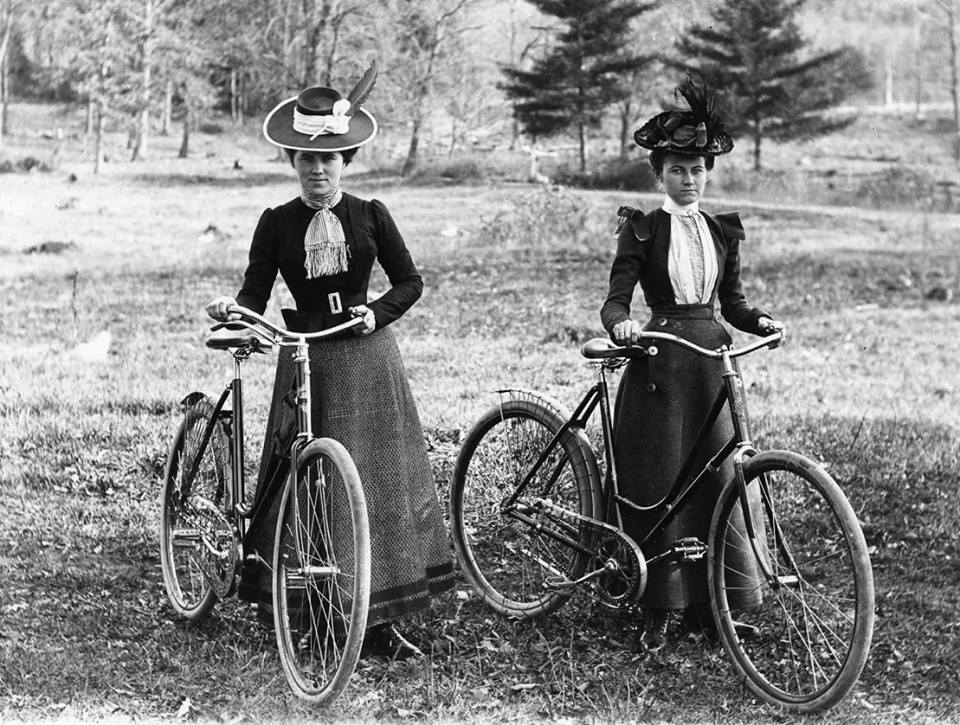
osh bikeToday at noon, the next installment in the Old State House Museum’s Brown Bag series takes place.  Misty Murphy will discuss Women in Bicycling.

The bicycle was one of many factors that helped open the world to women in the 1890’s and early 1900’s.

From changes in clothing styles to increased mobility, the advent of the bicycle marked a turning point in the social life of women around the nation and at home in Arkansas.

Misty Murphy is the regional trails coordinator for the Northwest Arkansas Council. A native of small-town Arkansas, she loves local history and keeping alive the traditions unique to the state.

The Old State House Museum is an agency of the Department of Arkansas Heritage.
The Studio Theatre offers six musicals in 2015-2016; one show still remains in current season

studioThe Studio Theatre has announced the shows for their second season.

Up first, however, is Dogfight which will close out the first season.  Adapted from the 1991 movie of the same name, Dogfight is a story of compassion, heartbreak and redemption. Winner of the Lucille Lortel Award for Best Musical in 2013, Dogfight runs August 20- August 23 at The Studio Theatre located at 320 West 7th Street in downtown.

The 2015-2016 season includes six musicals.  Four of them will be making their Little Rock premieres. One of the other musicals will have its first non-touring production in Little Rock.

The new season kicks off on October 22 with a show filled with scary tales about the evils of doing bad. It is the satire Reefer Madness based on the non-satirical but unintentionally hilarious 1936 movie of the same name.

This musical, written by Kevin Murphy and Dan Studney, premiered in Los Angeles in 1998 and Off Broadway in 2001.  The Studio Theatre production will be directed by Ryan Whitfield.  The show will run from October 22 until October 31.

The Studio Theatre had a hit in 2015 with Jason Robert Brown’s The Last Five Years.  In January 2016, they will present his first musical Songs for a New World.  This song cycle premiered Off Broadway in 1995 and has become a popular show throughout the US.  The musical style of the score varies broadly. The thing that unites the songs is the concept of making a choice or taking a stand.

The production will be directed by Monica Clark Robinson.  Songs for a New World will run January 21 to 24.

Once upon a time, Stephen Sondheim and James Lapine wrote a musical based on the Grimm Brothers’ folk tales.  Into the Woods will be the third show next season.  Opening on Broadway in 1987, it may have lost the Tony for Best Musical to The Phantom of the Opera, but it has not suffered as a popular musical.

This production of Into the Woods will run from March 10 to 26.  It will be directed by Rafael Castanera, who beautifully directed Nine earlier this year.

Based on the Alice Walker novel and the Steven Spielberg movie, The Color Purple will be the fourth musical of the season.  Running from May 12 to 22, it will be directed by Crystal Mercer.

After it premiered in Atlanta in 2004, it made it to Broadway the following year.  The show has a book by Pulitzer winner Marsha Norman. The songs are by Brenda Russell, Allee Willis and Stephen Bray.  The show was nominated for 11 Tonys and won one.

The 1980s hair bands will be honored by the 5th show as Rock of Ages takes the stage. Directed by Justin A. Pike, it will run from July 14 to 24. With a book by Chris D’Arienzo, the musical features songs from Styx, Journey, Bon Jovi, Pat Benatar, Twisted Sister, Steve Perry, Poison and Europe.

Rock of Ages first played Off Broadway before transferring to Broadway.  It closed in January 2015 after playing more than 2300 performances on Broadway.

The final musical of the 2015-2016 season is James and the Giant Peach. Based on the Roald Dahl book, this musical features a score by Benj Pasek and Justin Paul.  The pair were nominated for a Tony for their score of the musical version of A Christmas Story.

This show will run from August 11 to 21.  It will be directed by Mark Burbank.  He is also directing Dogfight which features a score by Pasek and Paul.

(This is not connected to the production offered by the Arkansas Arts Center a few seasons back.)

Little Rock Look Back: Judge Eisele rules HAIR must flow at Robinson Auditorium

Ad for the original production of HAIR in Little Rock. Note the ticket prices. And that they could be purchased at Moses Music Shops.

Ad for the original production of HAIR in Little Rock. 

Forty-four years ago today, on August 11, 1971, Nixon appointee Federal Judge G. Thomas Eisele ruled that the musical Hair must be allowed to play in Little Rock in 1972 at Robinson Auditorium.

In February 1971, a young Little Rock attorney named Phil Kaplan petitioned the Little Rock Board of Censors to see if it would allow a production of Hair to play in the city. He was asking on behalf of a client who was interested in bringing a national tour to Arkansas’ capital city. The show, which had opened on Broadway to great acclaim in April 1968 after an Off Broadway run in 1967, was known for containing a nude scene as well for a script which was fairly liberally sprinkled with four-letter words. The Censors stated they could not offer an opinion without having seen a production.

By July 1971, Kaplan and his client (who by then had been identified as local promoter Jim Porter and his company Southwest Productions) were seeking permission for a January 1972 booking of Hair from the City’s Auditorium Commission which was charged with overseeing operations at Robinson Auditorium. At its July meeting, the Commissioners voted against allowing Hair because of its “brief nude scene” and “bawdy language.”

Kaplan decried the decision. He stated that the body couldn’t “sit in censorship of legitimate theatrical productions.” He noted courts had held that Hair could be produced and that the Auditorium Commission, as an agent for the State, “clearly can’t exercise prior censorship.” He proffered that if the production was obscene it would be a matter for law enforcement not the Auditorium Commission.

The Commission countered that they had an opinion from City Attorney Joseph Kemp stating they had the authority. One of the Commissioners, Mrs. Grady Miller (sister-in-law of the building’s eponym, the late Senator Robinson, she had served on the Commission since 1940), expressed her concern that allowing Hair would open the door to other productions such as Oh! Calcutta!

On July 26, 1971, Southwest Productions filed suit against the Auditorium Commission. Four days later there was a hearing before federal Judge G. Thomas Eisele. At that hearing, Auditorium Commission member Lee Rogers read aloud excerpts from the script he found objectionable. Under questioning from Kaplan, a recent touring production of Neil Simon’s Plaza Suite was discussed. That play has adultery as a central theme of one of its acts. Rogers admitted he found the play funny, and that since the adultery did not take place on stage, he did not object to it. Among those testifying in favor of it was Robert Reddington, who was director of performing arts at the Arkansas Arts Center.

Judge Eisele offered a ruling on August 11 which compelled the Auditorium Commission to allow Hair to be performed. Prior to the ruling, some of the Auditorium Commissioners had publicly stated that if they had to allow Hair, they would close it after the first performance on the grounds of obscenity. To combat this, Judge Eisele stated that the Commission had to allow Hair to perform the entire six day engagement it sought.

Upon hearing of the Judge’s ruling, Commissioner Miller offered a succinct, two word response. “Oh, Dear!”

On January 18, 1972, Hair played the first of its 8 performances over 6 days at Robinson Auditorium.  In his review the next day, the Arkansas Gazette’s Bill Lewis noted that Hair “threw out all it had to offer” and that Little Rock had survived.

Little Rock was by no means unique in trying to stop productions of Hair.  St. Louis, Birmingham, Los Angeles, Tallahassee, Boston, Atlanta, Charlotte NC, West Palm Beach, Oklahoma City, Mobile and Chattanooga all tried unsuccessfully to stop performances in their public auditoriums.  Despite Judge Eisele’s ruling against the City of Little Rock, members of the Fort Smith City Council also tried to stop a production later in 1972 in that city. This was despite warnings from City staff that there was not legal standing.

Youth Artists on display at Butler Center Galleries

cals youth_art_2015School will be starting back soon in Arkansas.  Through the end of this month, there is a chance to see artwork produced by students prior to this school year.

The Butler Center Galleries are showcasing the State Youth Art Show 2015: An Exhibition by the Arkansas Art Educators.  The exhibit is on display through August 29 in the Butler Center Underground Gallery.

This show features dynamic works of art by talented students across Arkansas, from kindergarten through twelfth grade. The works featured are the Best of Show winners from seven regions of the state. The Arkansas Art Educators is a group of art teachers from around the state who work with the Arkansas Department of Education to provide high quality in-service training and to promote student art.

Go to the “Suggin Territory” at Historic Arkansas Museum

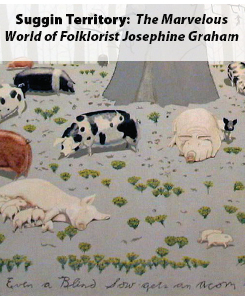
Graham-promoIn this heat, it is nice to be able to travel to a different time and place in the comfort of air conditioning.  Historic Arkansas Museum’s current exhibit “SUGGIN TERRITORY: THE MARVELOUS WORLD OF FOLKLORIST JOSEPHINE GRAHAM” offers a chance to visit a bygone era in Arkansas.

Josephine Graham (1915-1999) a.k.a. “Josus,” was a celebrated artist and folklorist of Arkansas’s White River culture. Her “Suggin” folk paintings depict the Depression-era folk history of the White River region.

Though professionally trained as a painter at Columbia University, Graham’s paintings are intentionally primitive in style, inspired by the stories and lives of “Suggins,” a playful term she used in reference to the people living along the White River.

Through more than twenty exhibitions, over 100 paintings, and a self-published cookbook, she shared the wonder and charm of her native region with the world. Graham was a founding member of the Mid-Southern Watercolorists and founder of the Suggin Folklife Society.

The exhibition continues through November 29, 2015.