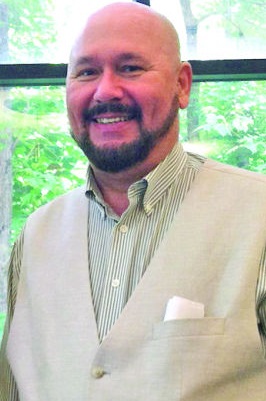
Noon today, the Clinton School and Butler Center’s Legacies & Lunch present Justice Troy Poteete, executive director of the National Trail of Tears Association

PoteeteToday at noon, the Clinton School Speaker Series and the Butler Center’s Legacies & Lunch jointly present a program.  Justice Troy Poteete, executive director of the National Trail of Tears Association will speak at the Ron Robinson Theater.

Troy Poteete was appointed to the Cherokee Nation Supreme Court by Chief Chad Smith in 2007 and is the executive director of the National Trail of Tears Association, an organization he helped found. Justice Poteete also founded the Historical Society in Webbers Falls, Okla., served as executive director of the Cherokee Nation Historical Society, and was a delegate to the Cherokee Nation Constitutional Convention. In 2000, Justice Poteete was appointed executive director of the Arkansas Riverbed Authority, a tribal entity jointly created by the Chickasaw, Choctaw, and Cherokee Nations to administer their interests in the 96-mile section of the Arkansas River between Muskogee, Okla. and Fort Smith, Ark.

The Trail of Tears was actually several trails.  Little Rock is one of the only cities (if not the only city) that members of all six relocated tribes passed through.  Little Rock’s emerging merchant class benefited from the relocation efforts as the Federal government paid for goods and services in Little Rock.

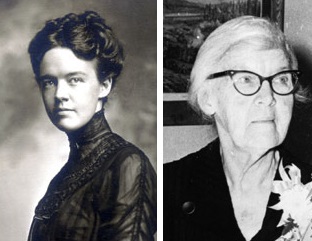
Little Rock Look Back: Adolphine Fletcher Terry

Photos from the collection of the Butler Center

Photos from the collection of the Butler Center

Adolphine Fletcher Terry was born on November 3, 1882 to former Little Rock Mayor John Gould Fletcher and his wife Adolphine Krause Fletcher.

Raised in Little Rock, in 1889 she moved into the Albert Pike House on East 7th Street, when her aunt transferred the title to her father. That house would be her primary residence the rest of her life.  Her sister Mary Fletcher Drennan never lived in Arkansas as an adult after marriage. Her brother John Gould Fletcher spent much of his adulthood in Europe before returning to Little Rock and establishing his own house, Johnswood.

At age 15, Adolphine attended Vassar. She later credited that experience as broadening her views on many issues.  After graduating at age 19, she returned to Little Rock.  Her parents both died prior to her 1910 wedding to David D. Terry, which took place at what was then known as the Pike-Fletcher House (and today is known as the Pike-Fletcher-Terry House).

She is perhaps best known today for establishing the Women’s Emergency Committee in 1958 and for her subsequent deeding of the family house to the City for use by the Arkansas Arts Center.  But her entire life was based on civic engagement.

She was instrumental in establishing the first juvenile court system in Arkansas and helped form the first school improvement association in the state. She was long an advocate for libraries, serving 40 years on the Little Rock public library board.  Through her leadership, the library opened its doors to African Americans in the early 1950s. Today a branch of the Central Arkansas Library System (the successor the Little Rock public library) is named after her.  Another branch is named after her Pulitzer Prize winning brother.

Adolphine formed the Little Rock chapter of the American Association of University Women, the Pulaski County tuberculosis association and the Community Chest.

In 1958, when the Little Rock public high schools were closed instead of allowing them to be desegregated again, she called Harry Ashmore the editor of the Gazette and exclaimed, “the men have failed us…it’s time to call out the women.”  With this, she formed the Women’s Emergency Committee to Open Our Schools. This group played a major role in getting the four high schools open the following year.

From 1933 to 1942, David Terry served in the U.S. Congress. During that time, Adolphine alternated her time between Washington DC and Little Rock. But she spent much time in Little Rock raising her five children.

After her husband’s death in 1963, she continued to remain active in civic affairs. In the 1960’s, she and her sister deeded the Pike-Fletcher-Terry House to the City of Little Rock for use by the Arkansas Arts Center upon both their deaths.  Following Adolphine Fletcher Terry’s death in 1976, Mary turned over the title to the City.

Adolphine Fletcher Terry is buried in Mount Holly Cemetery alongside her husband. Three of her children are also buried in that plot.  Her parents and brother are buried in a nearby plot.

Her son William Terry and his wife Betty continue to be active in Little Rock. Their daughters and their families also carry on Adolphine Fletcher Terry’s commitment to making Little Rock better.


Big Boo!-seum Bash Tonight

BooseumLogo_EventIt’s the 19th Annual Big Boo!-seum Bash, where kids can enjoy a safe and fun Halloween Thursday, Oct. 30 from 6 – 8:30 p.m.  Come out and trick-or-treat, play games and have fun at participating area museums!

There will be free candy and Halloween activities for all ages. Visit every participating location to enter in the drawing for a flat-screen TV or a $100 gift card!

Locations:
* Arkansas Arts Center – 501 East 9th Street

* Historic Arkansas Museum – 200 East 3rd Street

* Little Rock Visitor Center at Curran Hall – 615 East Capitol Avenue
— Arkansas State Capitol will participate on site

* MacArthur Museum of Arkansas Military History – 503 East 9th Street
— Arkansas National Guard Museum will participate on-site

* Mosaic Templars Cultural Center – 9th Street and Broadway
— Little Rock Central High School National Historic Site will participate on-site

* Museum of Discovery – 500 President Clinton Avenue

* Old State House Museum – 300 West Markham Street

* CALS Ron Robinson Theater – 100 River Market Avenue

* Witt Stephens Jr. Central Arkansas Nature Center – 602 President Clinton Avenue
— Arkansas Inland Maritime Museum will participate on-site

Tonight at the Ron Robinson Theater – Arkansas Sounds presents the Lyon College Pipe Band

pipe_bandThe Arkansas Sounds monthly concert series continues with a performance by the Lyon College Pipe Band at the Central Arkansas Library System’s (CALS) Ron Robinson Theater, 100 River Market Ave., on Friday, October 24, at 7 p.m. The doors to the theater will open at 6 p.m. Admission to this concert is free and open to the public; seating is first-come, first-served.

Under the direction of Pipe Major Jimmy Bell, the Lyon College Pipe Band regularly performs at official college functions such as convocations and other ceremonies, in community parades, in concerts around the state of Arkansas, and at festivals throughout the United States and abroad. The pipe band competed at the 2006 World Pipe Band Championships in Glasgow, Scotland, and won in its division. The group also won at competitions in 2013 at Sarasota, Florida, and St. Louis, Missouri, and it is currently placed at 12th in the world in its division.

Arkansas Sounds is a project of the Butler Center for Arkansas Studies focusing on Arkansas music and musicians both past and present. For more information, call 501-918-3033.

Two Literary Prizes to Be Awarded at A Prized Evening – William D. Lindsey and Mara Leveritt will be recognized

Prized EveningTwo Arkansas authors, William D. Lindsey and Mara Leveritt, will be honored at A Prized Evening, the annual awarding of the Worthen and Porter Literary Prizes, on Thursday, October 16, at 6:30 p.m., in the Central Arkansas Library System’s (CALS) Main Library’s Darragh Center, 100 Rock Street. A book signing and reception will follow the presentation, which is free and open to the public. Reservations are appreciated, but not required. RSVP to kchagnon@cals.org or 501-918-3033.

The Butler Center for Arkansas Studies will award the Booker Worthen Literary Prize to William D. Lindsey, an educator and writer, for the book he edited, Fiat Flux: The Writings of Wilson R. Bachelor, Nineteenth-Century Country Doctor and Philosopher. Lindsey is a Little Rock native who holds a B.A. in English from Loyola University, an M.A. in English from Tulane University, and an M.A. and Ph.D. in theology from the University of St. Michael’s College of the Toronto School of Theology. Fiat Flux is the journal of Wilson Bachelor, a country doctor and natural philosopher who chronicled his life from 1870-1902. Bachelor was an avid reader and thoughtful writer, with wide-ranging interests in literature, science, nature, politics, and religion.

Mara Leveritt, a contributing editor to the Arkansas Times, will receive the Porter Fund Literary Prize in recognition of her substantial and impressive body of work. Leveritt has written three nonfiction books about crime and public corruption: The Boys on the Tracks, about murder and prosecutorial corruption in Saline County; Devil’s Knot, about the deeply problematic trials of the teenagers who became known as the West Memphis Three; and Dark Spell, about Jason Baldwin’s West Memphis post-conviction ordeal. A feature film based on Devil’s Knot, starring Colin Firth and Reese Witherspoon, premiered in Little Rock on May 3, 2014.

The Worthen Prize was established by the Central Arkansas Library System (CALS) in 1999 in memory of William Booker Worthen, a longtime supporter of the public library and a twenty-two-year member of CALS Board of Trustees. It is presented annually for the best work by an author or editor living in the CALS service area. The Porter Fund was established in 1985 by Jack Butler and Phillip McMath in honor of Dr. Ben Drew Kimpel, who requested the prize be named for his mother, Gladys Crane Kimpel Porter.

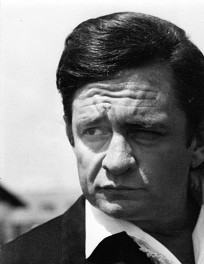
Cleveland County native Johnny Cash is focus of UALR exhibit, concert

cash-image1-1-204x264The Center for Arkansas History and Culture (CAHC) at the University of Arkansas at Little Rock has announced plans to premier a new exhibit on Johnny Cash’s relationship with Arkansas. The exhibit, “Johnny Cash: Arkansas Icon,” will open in the Underground Gallery at the Arkansas Studies Institute on October 10, 2014, and run through January 24, 2015. The physical exhibit will be accompanied by a virtual exhibit with educational materials for teachers.

Opening Night

The exhibit opens Friday, Oct. 10, in the Ron Robinson Theatre.

A free concert will be at 7:30 p.m. featuring the W.S. Holland Band, with special guests Jeff Coleman and the Feedersbeginning at 6:45 p.m. Seating is limited.

Johnny Cash: Arkansas Icon

The exhibit explores the musician’s Arkansas connections over the decades, covering his 1930s childhood in Dyess, Arkansas (though he was born in Kingsland in Cleveland County), through his comeback at the turn of the 21st-century. The exhibit places special emphasis on connections between his Arkansas roots and his music from his first performance in Little Rock in 1955 to a 2002 music video. Though Cash’s career took him far from Arkansas, the exhibit argues, he never quite severed his Arkansas roots. This exhibit tells that story through narrative and archival photographs from CAHC’s own collections, as well as others.

According to Colin Woodward, the CAHC archivist who proposed the exhibit and wrote its narrative, “While writing an article about Johnny Cash’s work with Governor Winthrop Rockefeller on prison reform, I began to see the thread of Arkansas in Cash’s music and life. He was such a dynamic artist, who persevered through many personal and professional challenges. He was a great Arkansan, and I wanted to show that through historical research and archival images.”

The exhibit will cover the walls of the unique Underground Gallery and immerse visitors in an artistic representation of Cash’s life in pictures and text. Designed by Bachelor of Fine Arts student Nick Sosnoski under the direction of Tom Clifton, Department of Art Chair, the exhibit makes use of key design elements like variety, unity, and texture on a large scale. The exhibit uses rare images from family albums and other sources and incorporates Cash’s lyrics into the design. According to Sosnoski, “The design is meant to reflect Johnny Cash as a man who never forgot his roots.”

The accompanying virtual exhibit will offer deeper exploration of the topics covered in the physical exhibit. The website will include a media gallery and behind-the-scenes information on the exhibit development. Educational materials, including full lesson plans and PowerPoint presentations, will be available for Arkansas teachers to use with students before and after visiting the exhibit. Stan James, an undergraduate Social Studies Education major, worked on the project and says, “It was really exciting to be able to prepare materials that will teach students important world concepts, and at the same time, expose them to one of Arkansas’ true treasures, Johnny Cash.  These materials, along with the exhibit and related events, will guide the students through an exciting journey towards learning about key issues in our state and nation, as well as how celebrities use their influence and talent to further issues that are important to them.”

On opening night, the W. S. Holland Band will perform a free concert in the Ron Robinson Auditorium. Holland spent 40 years performing with Cash’s band, Tennessee 3, and is the only band member to stay with the group until Cash’s retirement in 1997. In his long career, Holland has toured with Elvis, Jerry Lee Lewis, Roy Orbison, and Carl Perkins. The Holland Band performance will start at 7:30, following an opening performance by Jeff Coleman and the Feeders at 6:45. Seating is limited. Also on opening night, Shape Note Singers from Mountain Home, Arkansas, will perform for Second Friday Art Night visitors to the Arkansas Studies Institute.

This project is supported in part by a grant from the Arkansas Humanities Council and the National Endowment for the Humanities.

Additional funding provided by the Arkansas Community Foundation. The Arkansas Community Foundation is a nonprofit organization that fosters smart giving to improve communities. The Community Foundation offers tools to help Arkansans protect, grow and direct their charitable dollars as they learn more about community needs. By making grants and sharing knowledge, the Community Foundation supports charitable programs that work for Arkansas and partners to create new initiatives that address the gaps. Contributions to the Community Foundation, its funds and any of its 27 affiliates are fully tax deductible.

The UALR Center for Arkansas History and Culture collects, preserves, and enables access to Arkansas records of enduring value; prepares students and the region for the 21st century through academic leadership and education on archival practices and technologies; and engages the community through outreach, programming, and exhibitions.

For more information on the exhibit or CAHC, contact us atcahc@ualr.edu or 501.320.5780.

RED LINES film shown tonight through partnership of Clinton School and LR Film Festival

redlinesfilmTonight, as part of the new partnership between the Clinton School of Public Service and the Little Rock Film Festival, the film Red Lines will be shown at 6pm in the CALS Ron Robinson Theater.

Red Lines follows the story of two people, Mouaz Moustafa, who was born in a refugee camp near Damascus, raised in Arkansas, schooled in politics on Capitol Hill and by the Libyan uprising, and Razan Shalab-al-Sham. Inspired by the Arab Spring, Razan and Mouaz watched from their two vantage points as, for a hopeful moment, anything seemed possible in Syria. Razan runs a Syria-wide activist network, deeply convinced that democracy is possible with women playing a special role in its realization.

With his contacts in Washington, the Arab world, and the Free Syrian Army, Mouaz becomes a critical link between the rebellion and the West. Their story, “Red Lines,” is about the transformative power of conflict and conscience.

For more information, visit www.redlinesfilm.com

*Reserve your seats by emailing publicprograms@clintonschool.uasys.edu or calling (501) 683-5239