Black History Month Spotlight – Arkansas State Capitol

Arkansas birthdayThe new Arkansas Civil Rights History Audio Tour was launched in November 2015. Produced by the City of Little Rock and the University of Arkansas at Little Rock allows the many places and stories of the City’s Civil Rights history to come to life an interactive tour.  This month, during Black History Month, the Culture Vulture looks at some of the stops on this tour which focus on African American history.

The Arkansas state capitol has been the site of a number of civil rights events over the years. In 1964, Ozell Sutton, a local African American leader, was denied service at the capitol’s basement cafeteria because of his race. The cafeteria then reincorporated as a private members-only club to avoid integration. A number of conflicts occurred when local black students from Philander Smith College and an interracial group of Arkansas Student Nonviolent Coordinating Committee members tried, on several occasions, to desegregate the cafeteria. In 1965, the courts finally ordered the cafeteria to open its doors to blacks and whites on an equal basis.

In 1968, after the assassination of Martin Luther King, Jr., Arkansas governor Winthrop Rockefeller held a memorial service on the capitol steps for the slain civil rights leader—the only southern governor to make such a gesture of reconciliation. His actions are credited with limiting the impact of the violence that rocked other cities in the wake of the King assassination. In 2005, John and Cathy Deering’s “Testament” bronze sculpture of the Little Rock Nine was dedicated on the north side of the building. It was the first civil rights monument erected on the grounds of a southern state capitol.

The app, funded by a generous grant from the Arkansas Humanities Council, was a collaboration among UALR’s Institute on Race and Ethnicity, the City of Little Rock, the Mayor’s Tourism Commission, and KUAR, UALR’s public radio station, with assistance from the Little Rock Convention and Visitors Bureau.

Little Rock Look Back: Bates v. Little Rock US Supreme Court decision

bates daisyOn February 23, 1960, the U. S. Supreme Court handed down a decision in the case of Daisy BATES et al., Petitioners, v. CITY OF LITTLE ROCK et al.  This case had been argued before the Court in November 1959.

Daisy Bates of Little Rock and Birdie Williams of North Little Rock were the petitioners.  Each had been convicted of violating an identical ordinance of an Arkansas municipality by refusing a demand to furnish city officials with a list of the names of the members of a local branch of the National Association for the Advancement of Colored People. The question for decision was whether these convictions can stand under the Due Process Clause of the Fourteenth Amendment to the United States Constitution.

The Little Rock ordinance (10,638) was passed on October 14, 1957. It charged that certain non-profits were actually functioning as businesses and using non-profit status to skirt the law. Therefore it required the non-profits to disclose their members and sources of dues.  North Little Rock passed an identical ordinance.

(Mayor Woodrow Mann was not present at the meeting of the LR Council when the ordinance was passed. But he signed all of the resolutions and ordinances approved that night.  Ordinance 10,638 was the only legislation that night which had also been signed by Acting Mayor Franklin Loy.  Mayor Mann crossed through Loy’s name and signed his own.)

Mrs. Bates and Mrs. Williams as keepers of the records for their respective chapters of the NAACP refused to comply with the law.  While they provided most of the information requested, they contended they did not have to provide the membership rosters and dues paid.

After refusing upon further demand to submit the names of the members of her organization, each was tried, convicted, and fined for a violation of the ordinance of her respective municipality. At the Bates trial evidence was offered to show that many former members of the local organization had declined to renew their membership because of the existence of the ordinance in question. Similar evidence was received in the Williams trial, as well as evidence that those who had been publicly identified in the community as members of the National Association for the Advancement of Colored People had been subjected to harassment and threats of bodily harm.

Each woman was convicted in the court of Pulaski Circuit Court, First Division, William J. Kirby, Judge. They were fined $25 a person.  On appeal the cases were consolidated in the Supreme Court of Arkansas in 1958. The convictions were upheld by five justices with George Rose Smith and J. Seaborn Holt dissenting.

Mrs. Bates and Mrs. Williams then appealed to the U. S. Supreme Court.  The pair’s legal team included Robert L. Carter and George Howard, Jr. (who would later become a federal judge).  Little Rock City Attorney Joseph Kemp argued the case for the City.  The arguments before the U. S. Supreme Court were herd on November 18, 1959.

The SCOTUS decision was written by Associate Justice Potter Stewart.  He was joined by Chief Justice Earl Warren and Associate Justices Felix Frankfurter, Tom C. Clark, John M. Harlan II, William J. Brennan and Charles E. Whittaker.  Justices Hugo Black and William O. Douglas wrote a concurring opinion.

The U. S. Supreme Court reversed the lower courts.

In sum, there is a complete failure in this record to show (1) that the organizations were engaged in any occupation for which a license would be required, even if the occupation were conducted for a profit; (2) that the cities have ever asserted a claim against the organizations for payment of an occupation license tax; (3) that the organizations have ever asserted exemption from a tax imposed by the municipalities, either because of their alleged nonprofit character or for any other reason.

We conclude that the municipalities have failed to demonstrate a controlling justification for the deterrence of free association which compulsory disclosure of the membership lists would cause. The petitioners cannot be punished for refusing to produce information which the municipalities could not constitutionally require. The judgments cannot stand.

In their concurring opinion, Justices Black and Douglas wrote that they felt the facts not only violated freedom of speech and assembly from the First Amendment, but also aspects of the Fourteenth Amendment. They wrote that the freedom of assembly (including freedom of association) was a principle to be applied “to all people under our Constitution irrespective of their race, color, politics, or religion. That is, for us, the essence of the present opinion of the Court.”

Neither the Gazette or Democrat carried any reaction from City leaders. There was a City Board meeting the evening of the decision. If it was mentioned, the minutes from the meeting do not reflect it. 

Arkansas Attorney General Bruce Bennett, on the other hand, was very vocal in his outrage. The city laws were known as Bennett Laws because they had been drafted by him as ways to intimidate African Americans and others he viewed as agitators. 

In 1960 he was challenging Governor Orval Faubus for the Democratic gubernatorial nomination.  In reaction to the to the Supreme Court he vowed that, if elected Governor, he would “de-integrate” (a term he proudly took credit for coining) the state.  

For his part, and not to be outdone by the AG, Faubus fretted that the Court’s decision meant that Communists would be able to give money to the NAACP. 

Black History Month Spotlight – Arkansas Studies Institute

ASI CALS UALRThe new Arkansas Civil Rights History Audio Tour was launched in November 2015. Produced by the City of Little Rock and the University of Arkansas at Little Rock allows the many places and stories of the City’s Civil Rights history to come to life an interactive tour.  This month, during Black History Month, the Culture Vulture looks at some of the stops on this tour which focus on African American history.
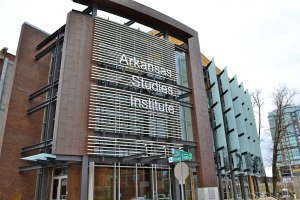

The Arkansas Studies Institute building is a Central Arkansas Library System (CALS) facility. It houses both the Butler Center for Arkansas Studies (a CALS department) and the Center for Arkansas History and Culture, a department of the University of Arkansas at Little Rock (UALR).

Exterior and interior panels are featured showing Arkansas African American life through historic photographs. Both archives offer genealogy and photography collections, and visual, audio and reference materials relating to African American history and civil rights topics in Arkansas. The Encyclopedia of Arkansas History and Culture, a Butler Center project, has many entries on African American history.

The Arkansas Sounds music collection contains materials relating to black musicians William Grant Still, Florence Price, Louis Jordan, Sister Rosetta Tharpe, and Al Bell. The Butler Center’s galleries feature local art, jewelry and crafts, many by Arkansas black artists.

The UALR Center for Arkansas History and Culture contains extensive archives, including virtual exhibits relating to the Civil War, Gov. Winthrop Rockefeller, and the city of Little Rock. Adding another dimension to the struggle for civil rights are documents and art from the World War II Japanese American Relocation Camps at Rohwer and Jerome, Arkansas, and two large Jewish history collections.

The app, funded by a generous grant from the Arkansas Humanities Council, was a collaboration among UALR’s Institute on Race and Ethnicity, the City of Little Rock, the Mayor’s Tourism Commission, and KUAR, UALR’s public radio station, with assistance from the Little Rock Convention and Visitors Bureau.

New movie RACE about Jesse Owens shown tonight at the Ron Robinson Theater

Clinton Center Race filmJoin the Clinton Foundation on Monday, February 22, for a special showing of the new movie Race, in celebration of Black History Month.

Race is based on the incredible true story of Jesse Owens, the legendary athletic superstar whose quest to become the greatest track and field athlete in history thrusts him onto the world stage of the 1936 Olympics, where he faces off against Adolf Hitler’s vision of Aryan supremacy. As a student and athlete in Depression-era America, James Cleveland “Jesse” Owens (portrayed by Stephan James of Selma) bears the weight of family expectations, racial tension at his college Ohio State University, and his own high standards for competition.

Race, MPAA-rated “PG-13,” is an enthralling film about courage, determination, tolerance, and friendship, and an inspiring drama about one man’s fight to become an Olympic legend.

This event is held in partnership with Focus Features and the City of Little Rock.

Ron Robinson Theater

Monday, February 22

Doors open at 5:30 p.m. | Program begins at 6:30 p.m.

Black History Month Spotlight – Old State House Museum

OSH logoThe new Arkansas Civil Rights History Audio Tour was launched in November 2015. Produced by the City of Little Rock and the University of Arkansas at Little Rock allows the many places and stories of the City’s Civil Rights history to come to life an interactive tour.  This month, during Black History Month, the Culture Vulture looks at some of the stops on this tour which focus on African American history.

The 1836 Old State House, the oldest standing state capitol building west of the Mississippi River, was a center of political activity for many years. During the Civil War, Union and Confederate forces alternately occupied it. During Reconstruction, with many black men registering to vote, eight African Americans were delegates to the 1868 Constitutional Convention, held in this building.

The new constitution recognized the equality of all persons before the law, provided suffrage for freedmen, and required a system of free public education for blacks and whites (in separate schools.) By 1874, twenty black men were serving in the Arkansas General Assembly. In 1891, African American Senator George W. Bell and Representative John Grey Lucas gave inspiring speeches against the Separate Coach Law.

Now a museum, the Old State House exhibits include ones relating to African American history. “On the Stump: Arkansas Political History“ explains civil rights issues from statehood (1836) into the twentieth century. Its collections, which are searchable on-line, include quilts by black Arkansans, photographs by African American photographer Geleve Grice, and music by Louis Jordan. Portions of the Arkansas Slave Narratives, collected by the Works Progress Administration in the 1940s, are available on the web-site.

The app, funded by a generous grant from the Arkansas Humanities Council, was a collaboration among UALR’s Institute on Race and Ethnicity, the City of Little Rock, the Mayor’s Tourism Commission, and KUAR, UALR’s public radio station, with assistance from the Little Rock Convention and Visitors Bureau.

Black History Month Spotlight – Historic Arkansas Museum

hamlogoThe new Arkansas Civil Rights History Audio Tour was launched in November 2015. Produced by the City of Little Rock and the University of Arkansas at Little Rock allows the many places and stories of the City’s Civil Rights history to come to life an interactive tour.  This month, during Black History Month, the Culture Vulture looks at some of the stops on this tour which focus on African American history.
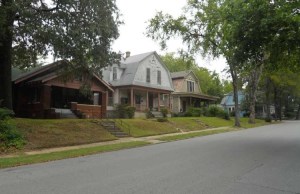
The Historic Arkansas Museum interprets early Arkansas history through Little Rock’s oldest buildings, a medicinal herb garden, and modern exhibits. “Giving Voice” is a permanent memorial to the 138 men, women and children enslaved by Nineteenth Century landowners where the museum now stands. An African American character representing the mid-1800s is regularly included in the living history presentations.

Changing exhibits in the museum’s seven galleries often include ones related to African American history and local artists with African American heritage. On-line exhibits and educational materials relate to this history. “We Walk in Two Worlds,” a permanent exhibit, tells the story of the Caddo, Osage, and Quapaw tribes who first lived in Arkansas. The Native American voice shapes the exhibit, which includes pottery, clothing, and weapons.

The app, funded by a generous grant from the Arkansas Humanities Council, was a collaboration among UALR’s Institute on Race and Ethnicity, the City of Little Rock, the Mayor’s Tourism Commission, and KUAR, UALR’s public radio station, with assistance from the Little Rock Convention and Visitors Bureau.

Black History Month Spotlight – Central High School Neighborhood

CHS neighborhoodThe new Arkansas Civil Rights History Audio Tour was launched in November 2015. Produced by the City of Little Rock and the University of Arkansas at Little Rock allows the many places and stories of the City’s Civil Rights history to come to life an interactive tour.  This month, during Black History Month, the Culture Vulture looks at some of the stops on this tour which focus on African American history.

The Central High School Neighborhood Historic District developed in the late 1880s, after a streetcar company built West End Park there in 1885. The area was a middle-class, interracial, mixed-use neighborhood with large homes and cottages and several schools and churches. Union and Capitol Hill schools educated the African American residents. St. Bartholomew’s Catholic Church and school served an African American congregation. African American and white residents worked as clergymen, barbers, chauffeurs, mail carriers, clerks, and with the railroad and service industries. The neighborhood was also home to white and black lawyers, doctors, teachers and businessmen.

By 1894, West End Park included a baseball field, becoming home to the city’s first minor league baseball team, the Little Rock Travelers. Negro League teams, including the Little Rock Reds, Cadets, and Greys, also played there. In the late 1920s, the park site was chosen for the new Little Rock High School for white students. Quigley Stadium, the school’s football field, was built in 1936 by the Works Progress Administration (WPA), replacing Kavanaugh Baseball Field. The neighborhood continues to have a vibrant mix of working class blacks and whites.

The app, funded by a generous grant from the Arkansas Humanities Council, was a collaboration among UALR’s Institute on Race and Ethnicity, the City of Little Rock, the Mayor’s Tourism Commission, and KUAR, UALR’s public radio station, with assistance from the Little Rock Convention and Visitors Bureau.