Old State House Holiday Open House this afternoon

IMG_9317[1]Today from 1:00 p.m. until 4:30 p.m., the Old State House Museum will host its annual Holiday Open House.

The traditions of joyous family holiday celebrations past can be relived at Holiday Open House. Visitors will find the Old State House colorfully decorated for the season.

Fun, hands-on activities will be available to children; they can create unique holiday cards and more. Delightful carols will be performed by local music groups.

Visitors will also enjoy delicious cookies and punch.

Call (501) 324-9685 for more information. Admission is free.

Two of of the Old State House Museum’s sister institutions, Historic Arkansas Museum and the Mosaic Templars Cultural Center, will also be celebrating the holidays with activities today.  All three museums are agencies of the Department of Arkansas Heritage.

Commemorate Native American Heritage Month at Historic Arkansas Museum

HAMCollectionHeadPotNovember is Native American Heritage Month.  It’s a great time of year to visit Historic Arkansas Museum and explore their permanent exhibit “We Walk In Two Worlds: The Caddo, Osage and Quapaw in Arkansas.”

And remember – Admission to the galleries at Historic Arkansas Museum is FREE!

This exhibit tells the story of Arkansas’s first people–the Caddo, Osage and Quapaw Indian tribes–from early times to today. More than 150 objects, such as pottery, clothing and weapons, are on display.

The exhibit has six thematic areas that are arranged chronologically.  Along with objects and a historical timeline are passages of relevant research from archeologists, historians and ethnographers.

Throughout the exhibit, is the dominant presence of the Native American voice, from each of Arkansas’s three prominent tribes. During the two years of exhibit development, many tribal members were interviewed and it is this voice that informs, educates and guides visitors through the exhibit. Historic Arkansas Museum chief curator and deputy director Swannee Bennett said, “What makes this exhibit unique is that it is a story of the Arkansas Native American told in large part with an Indian voice.”

This permanent exhibit enables the museum to tell the bigger story of Arkansas’s frontier history. “We Walk in Two Worlds is a milestone as the State of Arkansas officially partners with the Caddo, Osage and Quapaw Nations and the Smithsonian’s National Museum of the American Indian to tell this story of struggle and endurance.” said museum director Bill Worthen.

“Racial Redistricting in Little Rock, Arkansas” is the focus of tonight’s UALR Evenings with History

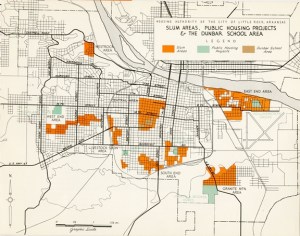
Slum-AreaswebTonight Dr. John Kirk and Dr. Jess Porter discuss racial separation in Little Rock’s history as part of the 2014-2015 UALR Evening’s with History series.

This year marks the 24th year for the History Institutes’ Evenings with History.  This nationally recognized series has featured a variety of subjects.  The sessions take place at the Ottenheimer Auditorium of Historic Arkansas Museum. Refreshments are served at 7 with the program beginning at 7:30 pm. The cost is $50 for admission to all six programs.

The contemporary urban landscape of Little Rock evokes questions of racial separation because of the persistently high rates of ethnic separation in housing and a public-private race cleavage in the local schools. How can these patterns be explained? Has it always been this way? Is the 1957 desegregation crisis at Central High School a reason for the persistent patterns of geographic separation between African Americans and whites within the city?

In fact, the story of ethnic separation in Little Rock begins prior to the Central High Crisis. This talk begins with an examination of spatial patterns of racial segregation in the first half of the 20th century. It then discusses these patterns as they evolved in Little Rock and shows, in particular, the role of urban renewal in the mid-century decades in producing the separation of races that came into existence.

John A. Kirk joined the department as Chair and Donaghey Professor of History in 2010. He was born in Rochdale, Lancashire, in the United Kingdom, and holds an undergraduate degree in American Studies from the University of Nottingham and a PhD in American History from the University of Newcastle upon Tyne. Dr. Kirk taught at the University of Wales, Lampeter (1994-99) and Royal Holloway, University of London (1999-2010) before coming to UALR.

Dr. Kirk’s research focuses on the history of the civil rights movement in the United States, the South, and Arkansas, and the history of post-New Deal southern politics, society and culture. He has published five books and written in a wide variety of journals, edited book collections, and popular history magazines including BBC History, History Today and Historically Speaking. He has won a number of awards for his research including the F. Hampton Roy Award (1993) from the Pulaski County Historical Association, and the Walter L. Brown Award (1994), the J. G. Ragsdale Book Award (2003), and the Lucille Westbrook Award (2005) from the Arkansas Historical Association.

Jess Porter came to UALR in 2009 and holds a PhD from Oklahoma State University where he was awarded with the Susan Shaull Medal for Excellence in Teaching Geography. Prior to UALR, Dr. Porter taught at Oklahoma State University, developed and implemented geospatial curriculum for rural schools, worked as an environmental analyst and mapping specialist in the oil and gas industry, and was employed by an adventure tourism company in Colorado.

Dr. Porter’s research interests include the American Dust Bowl, geospatial technology education, and urban geography. His research on the Dust Bowl was featured in an episode of The Weather Channel’s When Weather Changed History. He has published four, interactive textbooks in the Encounter Geography series.

Friday, Eldredge, & Clark and the Union Pacific Railroad help make these lectures possible. Other sponsors are the Ottenheimer Library, University of Arkansas at Little Rock; Historic Arkansas Museum, a museum of the Department of Arkansas Heritage; UALR Public Radio—KUAR-KLRE; UALR public television; and Grapevine Spirits.

LR Cultural Touchstone: Mary Fletcher Worthen

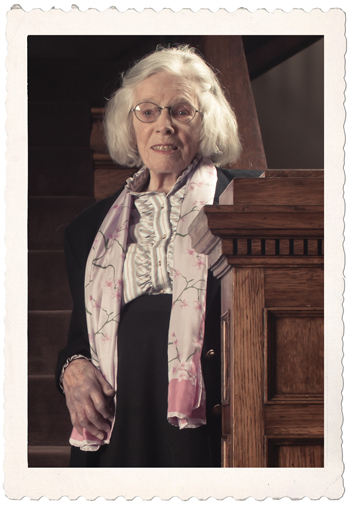
JJLR-MaryWorthen-MayMary Fletcher Worthen has cultivated history and music with the same grace and skill as she has cultivated gardens.

Born outside of Scott, she attended Vassar and Little Rock Junior College. After marrying banker Booker Worthen, she has devoted her life to improving Little Rock. Together with Stella Boyle and George Smith, she and Booker helped found the precursor to the Arkansas Symphony Orchestra.  Through its many iterations, she has been a steadfast supporter and is now a life member of the ASO Board.  She has also been a supporter of many other music organizations in Little Rock including the Chamber Music Society of Little Rock, of which she was a founder.

Another hallmark of her involvement is Mount Holly Cemetery Association.  For over 50 years she has served on the board of this body.  Without notes, she can recite the history of practically every resident buried there.  The tours she would lead with the late Peg Newton Smith were hot commodities when auctioned at fundraisers.  These two loving and lifelong friends would sometimes remember things differently. They playfully prodded and needled each other as they wended and winded their way through the headstones and history regaling rapt audiences with yarns of yore, quips and quotes, plus an anecdote or two.  In the decade since Peg passed, Mary has continued to entertain and engage visitors to the cemetery, especially at the annual Mount Holly Rest in Perpetuity (RIP) picnic.

She has also served on the Old State House Museum Board and the Pulaski County Historical Society Board.  As a historian, she literally wrote the book on Trinity Episcopal Cathedral.  She combined her interest in herb gardening and history with the creation of the Medicinal Garden at Historic Arkansas Museum, which is now named in her honor.

Born in 1917, Mary Worthen continues to learn new facts, share her love of history and music, and works to cultivate the next generations of cultural enthusiasts.


Big Boo!-seum Bash Tonight

BooseumLogo_EventIt’s the 19th Annual Big Boo!-seum Bash, where kids can enjoy a safe and fun Halloween Thursday, Oct. 30 from 6 – 8:30 p.m.  Come out and trick-or-treat, play games and have fun at participating area museums!

There will be free candy and Halloween activities for all ages. Visit every participating location to enter in the drawing for a flat-screen TV or a $100 gift card!

Locations:
* Arkansas Arts Center – 501 East 9th Street

* Historic Arkansas Museum – 200 East 3rd Street

* Little Rock Visitor Center at Curran Hall – 615 East Capitol Avenue
— Arkansas State Capitol will participate on site

* MacArthur Museum of Arkansas Military History – 503 East 9th Street
— Arkansas National Guard Museum will participate on-site

* Mosaic Templars Cultural Center – 9th Street and Broadway
— Little Rock Central High School National Historic Site will participate on-site

* Museum of Discovery – 500 President Clinton Avenue

* Old State House Museum – 300 West Markham Street

* CALS Ron Robinson Theater – 100 River Market Avenue

* Witt Stephens Jr. Central Arkansas Nature Center – 602 President Clinton Avenue
— Arkansas Inland Maritime Museum will participate on-site

LR Cultural Touchstone: Stella Boyle Smith

stellaStella Boyle Smith, who died at the age of 100 in 1994, was well known for her love of music and philanthropy. The Stella Boyle Smith Trust, a trust with a longtime history of supporting the arts and music at the University of Arkansas, has made a $200,000 gift to fund student scholarships.

Stella Boyle Smith was a Little Rock philanthropist and founder of the Arkansas Symphony Orchestra. She lived to be 100, but ensured that her legacy would continue.  In her lifetime, she donated more than $2.5 million to organizations in the music and medical fields.  Since her death, the Stella Boyle Smith Trust has donated more than $5 million.

She was born in Farmington, Mo., into a large, musically inclined family, which moved to Arkansas when she was two. She began singing at the age of three and graduated from high school at 14. In 1922, she moved to Little Rock with her first husband, Dandridge Perry Compton, who died in 1935. Her second husband, George Smith, held various business interests and extensive farms in Woodruff and Arkansas counties, which allowed them to engage in philanthropy. Mr. Smith died in 1946.

In 1923, Smith’s love for music inspired her to start The Musical Group in her living room of her residence at 102 Ridgeway Drive in Little Rock, where she lived until she died. Through several iterations, the group eventually became the Arkansas Symphony Orchestra in 1966. Her initial objective was to establish the symphony as an educational tool for children, and, in 1968, she helped establish the Youth Orchestra. In 1972, the symphony board of directors named her an honorary life member. Smith established a trust fund for the symphony’s permanent endowment in 1985. A loyal friend of music and the symphony, she attended nearly every performance and most rehearsals.

Smith was also a pianist. In 1988, she gave UALR a grand piano as well as an endowed trust of $500,000. UALR renamed its concert hall the Stella Boyle Smith Concert Hall as a tribute to her. That year the university also gave her an honorary doctor of humane letters degree. Interest from the trust provides scholarships each year for music students studying string instruments, piano or voice.

Smith enabled many students around the state to attend college through the more than 200 scholarships that she financed.

Other organizations that have benefited from her generosity include Arkansas Arts Center and Historic Arkansas Museum as well as the University of Arkansas.

LR Cultural Touchstone: Jane Rogers

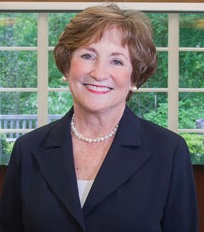
Jane RogersJane Rogers is a Little Rock native who has had a hand in developing two different cultural entities in her hometown.  She helped organize the first Riverfest to be held in Riverfront Park in 1983.  Continuing her involvement, she later served as the first full-time executive director of Riverfest.  Under her leadership the festival experienced significant growth.  This, in turn, brought more people down to the banks of the Arkansas River and the new Riverfront Park.  Because of this, more people were familiar with the area which helped the fledgling River Market take hold in the mid-1990s.

Shortly after he became Governor, Mike Huckabee tapped her to lead the Department of Arkansas Heritage.  In that capacity, she oversaw the Arkansas Arts Council, Old State House Museum, Historic Arkansas Museum, Delta Cultural Center, Arkansas Historic Preservation Program and Arkansas Natural Heritage Commission.  She served as Director for two years.

In 2003, she was appointed to the University of Arkansas Board of Trustees.  In that capacity, she has been involved in efforts to strengthen cultural offerings and facilities at the various campuses in the University of Arkansas system.

Her most recent cultural endeavor has been as a founder of Sculpture at the River Market.  In 2007, she helped recruit volunteers to create Little Rock’s first nation-wide sculpture invitational show and sale.  Since that time, Sculpture at the River Market has built a $2,000,000+ collection of public sculpture placed in beautiful surroundings along the banks of the Arkansas River in downtown Little Rock.  As a result of pieces of these efforts, the Vogel Schwartz Sculpture Garden was created in Riverfront Park.