
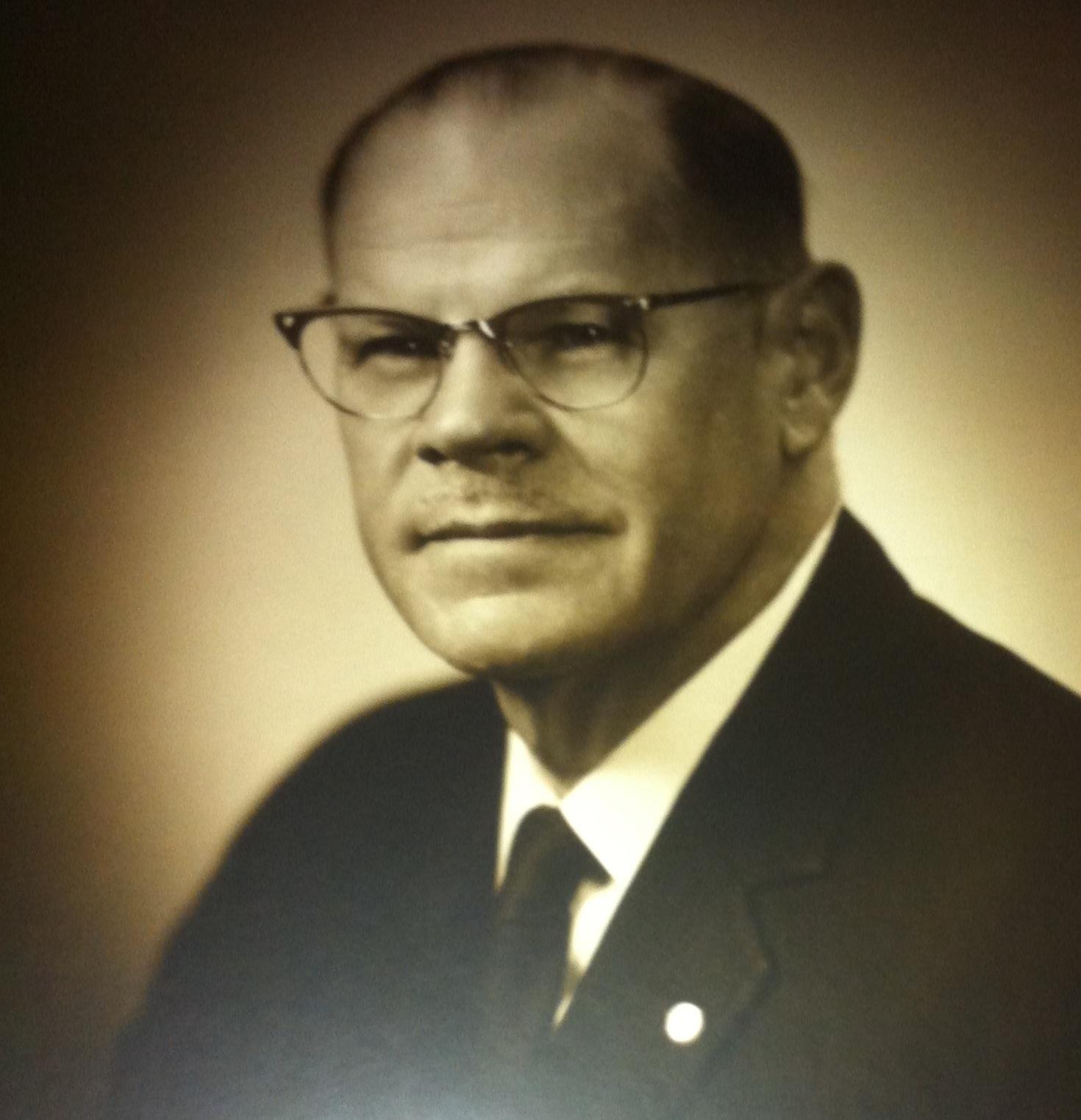
Little Rock Look Back: Werner Knoop

Mayor KnoopTo Little Rock citizens under a certain age, the name Knoop means Knoop Park — a picturesque park tucked away in a pocket of Hillcrest.  There are, however, still many who remember Werner C. Knoop as a business and political leader who helped shape Little Rock as a modern city.

Knoop was born on March 30, 1902.

In 1946, Knoop joined with Olen A. Cates and P. W. Baldwin to form Baldwin Construction Company in Little Rock.  Knoop had previously founded Capital Steel Company and established his business reputation there.  From 1945 through 1951, he served on the Little Rock School Board.

Following a series of political scandals, efforts were undertaken for Little Rock to shift from Mayor-Council to City Manager form of government.  Even before the desegregation of Little Rock Central put the city in the eyes of the world, an election for new leaders had been set for November 1957.  Knoop was on a “Good Government” slate and was one of the members elected.

At the first meeting of the new City Board, Werner C. Knoop was chosen by his fellow directors to serve as Little Rock Mayor.  Knoop served as Mayor until December 1962.  For the first several months in office, Little Rock had no City Manager so Knoop oversaw the transition of City staff as the forms of government changed.

Though City Hall generally stayed out of school district matters, that did not mean that the public viewed the two entities separately.  In September 1959, the Baldwin Construction offices were bombed as part of a series of terrorist activities protesting the desegregated reopening of all Little Rock high schools.

Downtown LR as viewed from Knoop Park

Downtown LR as viewed from Knoop Park

After two terms on the City Board, Knoop decided against seeking a third term.  He concluded his elected public service on December 31, 1962.  Following his time on the City Board, Knoop did not retire from Civic Affairs.  In 1970, he served as Chairman of the Little Rock Chamber of Commerce.   The previous year he served as President of the Arkansas Chapter of Associated General Contractors.

Mayor Knoop died in July 1983.  He is buried at Roselawn Memorial Park next to his wife Faith Yingling Knoop, a renowned author.

In the 1930s, Knoop moved into an Art Moderne house on Ozark Point in Hillcrest.  It was adjacent to Little Rock Waterworks property which was developed around the same time.  Eventually much of the land was deeded to the City for creation of a park.  In 1989, it was named in tribute to long-time neighbor Knoop in honor of his lifetime of service to Little Rock.

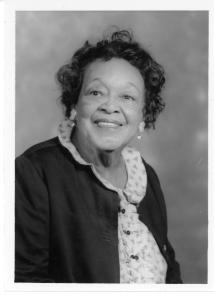
Little Rock Women’s History Month – Lucy D. Dixon

Lucy DixonKnown professionally as Mrs. Edgar F. Dixon (in an era when married women were listed publicly by their husband’s names), Lucy D. Dixon was elected to the Little Rock City Board of Directors in November 1957.  Though not noted at the time, her election was historic.  She was the first woman elected to a municipal office in Little Rock who had not first succeeded her husband.  Prior to her service on the City Board, Mrs. Dixon had served on the Little Rock School Board.  She was secretary of that body during the 1957 desegregation crisis.

Lucy Ann Dulin was born in Hensley in 1904.  She moved to Little Rock and graduated from Little Rock High School (then located on Scott Street) and attended the University of Arkansas.  From 1927 until 1935, she worked for her family’s business – Dulin Bauxite Company.  She returned to the company in 1941 and worked there until 1950.  She later served on the company’s board of directors.

Beginning in 1935, she became involved with the PTA and rose to the position of National Secretary in 1949, serving for three years in that position. As a PTA officer, she visited thirty-six of the then forty-eight states.

Among her other leadership positions were executive vice chair of the Governor’s Advisory Committee on Education, trustee of Little Rock Junior College (now UALR), delegate to the White House Conference on Children and Youth, delegate to White House Conference on Education, Pulaski County Welfare Board, and Little Rock Planning Commission.  She was also active in many Methodist organizations.  In 1953, she was the Arkansas Democrat Woman of the Year.

Married to Edgar F. Dixon, she had three children: Philip Edgar, Barbara and Mimi.  She died in January 1996 at age of 91.

Black History Month Spotlight – Sue Cowan Williams Library

sue_cowan_williamsThe new Arkansas Civil Rights History Audio Tour was launched in November 2015. Produced by the City of Little Rock and the University of Arkansas at Little Rock allows the many places and stories of the City’s Civil Rights history to come to life an interactive tour.  This month, during Black History Month, the Culture Vulture looks at some of the stops on this tour which focus on African American history.

In 1945, Sue Cowan Williams successfully sued the Little Rock School District for equal pay for black and white teachers. The existing inequality in pay clearly did not meet the stipulation of “separate but equal” treatment of African Americans required by the law.

Williams was chair of the English Department at Dunbar High School. She had attended Spelman College in Atlanta, Talladega College in Alabama, and the University of Chicago. These impressive credentials made her an ideal standard bearer for the suit. Local lawyers, along with the NAACP’s Thurgood Marshall, successfully appealed Williams’ case to the Eighth Circuit Court of Appeals in St. Louis. In the meantime, however, Williams’ contract was not renewed at Dunbar.

After working several other jobs, she was eventually rehired in 1952. She remained at Dunbar until her retirement in 1974. Williams died in 1994. In 1997, the tenth library in the Central Arkansas Library System was dedicated as the Sue Cowan Williams Library in her honor.

The app, funded by a generous grant from the Arkansas Humanities Council, was a collaboration among UALR’s Institute on Race and Ethnicity, the City of Little Rock, the Mayor’s Tourism Commission, and KUAR, UALR’s public radio station, with assistance from the Little Rock Convention and Visitors Bureau.

Black History Month Spotlight – Mt Zion Baptist Church

Mount Zion Baptist Church, Little Rock, AR.JPGThe new Arkansas Civil Rights History Audio Tour was launched in November 2015. Produced by the City of Little Rock and the University of Arkansas at Little Rock allows the many places and stories of the City’s Civil Rights history to come to life an interactive tour.  This month, during Black History Month, the Culture Vulture looks at some of the stops on this tour which focus on African American history.

Mt. Zion Baptist Church was organized in 1877 and is one of the earliest black congregations in Little Rock. The church was rebuilt in its current location in 1927 under the leadership of Rev. Fred T. Guy. From the late 1800s to the present, local church leaders, their congregants, grassroots groups, civic organizations, fraternal societies, and black business owners fought for equal rights.

A warrior in the community and tireless human rights advocate, Rev. Fred T. Guy, Mr. Zion’s pastor, challenged Superintendent of Schools Virgil Blossom and the Little Rock School Board to desegregate schools in 1957. “Next to the law of God, the Constitution of the United States means the most to me. When you start to tinker with the Constitution, it becomes awfully important to us,” said Rev. Guy.

The app, funded by a generous grant from the Arkansas Humanities Council, was a collaboration among UALR’s Institute on Race and Ethnicity, the City of Little Rock, the Mayor’s Tourism Commission, and KUAR, UALR’s public radio station, with assistance from the Little Rock Convention and Visitors Bureau

Little Rock Look Back: Acting Mayor John Herndon Hollis

John Herndon HollisOn February 5, 1870, future Little Rock alderman and acting mayor John Herndon Hollis was born shortly before his family moved to what is now Cleveland County. His parents were originally from Georgia and came from prosperous and longtime families there.

The Hollis family came to Arkansas after the Civil War and settled in Union County. A portion of that county was carved off and became Dorsey County (named after a Republican US Senator from Arkansas) but was renamed Cleveland County after Grover Cleveland was elected President. Cleveland was the first Democrat to be elected President in over 20 years. This name change also reflected the political shift in Arkansas from the Reconstruction-led Republican politics to the Democratic Party politics which would dominate for the next century.

John Herndon Hollis was one of six children, and the only one with a middle name. Herndon had been his mother’s maiden name. As one of his brothers described their childhood in Cleveland County, “they all went to country schools in their home neighborhood, worked hard on the farm in the summertime, and were inside their little Methodist Church every time the doors were open.”

Around 1900, Hollis and his new wife Malinda M. “Linda” Taliaferro Hollis (formerly of Rison) moved to Little Rock.  Together the couple had six children. In Little Rock, Hollis worked in the banking industry. For years he worked for People’s Building and Loan Association.

Hollis was first elected to the Little Rock City Council in April 1904. He would serve as one of the Aldermen from the city’s Fourth Ward until April 1918.  This was on the western border of Little Rock at the time. The family lived at 1510 S. Schiller, which is one block east of Central High, though at the time neither the school nor its predecessor (West End Park) existed.  From 1907 until 1913 he also served on the Little Rock School Board.

In April 1908, at the first City Council meeting in the new City Hall, Mayor W. E. Lenon announced his resignation. Because the resignation was effective immediately, there was a vacancy in the office of mayor.  Hollis was selected by his colleagues to serve as acting mayor until a successor could be elected. So from April 1908 through June 1908, Hollis was the City’s chief political and executive leader.

Though he was never formally mayor (and did not resign his position as alderman), since 1908, Hollis’ name has appeared on the list of mayors of Little Rock. The reason seems to be as a sign of respect since there was a vacancy.

There previously had been acting mayors when the mayor would be absent on business or due to illness. But in those instances, the mayor had not resigned. This is the only instance in Little Rock history when a mayor resigned immediately with no successor in place. So John Herndon Hollis holds a unique role in Little Rock history.

Hollis’ wife died in 1920.  He later married Ann Jewell of Little Rock (who was a distant cousin of his first wife). They were married until his death on October 23, 1941.  Ann Hollis lived in Little Rock until her death in 1980.  The Hollis family is entombed in the mausoleum at Mount Holly Cemetery.

Both of John Herndon Hollis’ wives are distant cousins of the Culture Vulture, so he is particularly fond of John Herndon Hollis.

Little Rock Look Back: Little Rock Public Library opens in 1910

On February 2, 1910, the Little Rock Public Library officially opened its doors.  There had been an open house the night before, but this was the first day of acquiring a library card and checking out books.

Various private libraries had existed sporadically in Little Rock throughout the 19th Century.  In November 1900, a Little Rock School District committee made the first inquiry into the the creation of a Carnegie Library in Little Rock.  Over the next several years, numerous entreaties were made, but funding for the City’s portion was an obstacle.  On December 17, 1906, the Little Rock City Council passed an ordinance to move forward with building, furnishing and equipping a library.  Finally, in February 1908, the City approved acceptance of $88,100 from Andrew Carnegie.  The building would be designed by Edward Tilton, who designed Carnegie libraries, working with local architect Charles Thompson.

Mary Maud Pugsley was hired as the first librarian for Little Rock in May 1909. She began her duties on September 15, 1909, in order to get ready for the opening of the library at the southwest corner of 7th and Louisiana Streets.

On February 2, 1910, formal circulation of books began.  J. N. Heiskell was issued library card number 1.  He was secretary of the Library’s Board of Trustees and had long been an advocate for a public library in Little Rock.  He had often used his bully pulpit as editor of the Arkansas Gazette to advocate for a public library since arriving in Little Rock in 1902.  (Years later — he lived until 1972 — he received a replica of the library card made out of gold.)

That first day of operation, 500 people had applied for library cards. The application process required one to be a Little Rock property owner or to have a property owner sign the application.

Within the first year of operation, 2.5% of Little Rock’s population of 45,951 had applied for a library card.

For more on the history of the transformation of the Little Rock Public Library into the Central Arkansas Library System, read Shirley Schuette and Nathania Sawyer’s From Carnegie to Cyberspace — 100 Years at the Central Arkansas Library System, published by Butler Center Books.

Little Rock Look Back: Congressman David D. Terry

david_terry_fOn January 31, 1881, future U.S. Congressman David Dickson Terry was born in Little Rock.  He was the son of William Leake Terry, who would serve in Congress from 1891 until 1901.  At the time David was born, his father was Little Rock City Attorney.  His mother was Mollie C. Dickson Terry. His parents also had two other sons, and after his mother’s death and his father’s remarriage, David had a half-sister.  He attended school in Virginia, and studied law in Little Rock and Chicago.

In 1910, he married Adolphine Fletcher, daughter of a former Little Rock mayor.  They had four children: David, Sarah, William and Mary. They later adopted a fifth child, Joseph.  The family lived in the Albert Pike Mansion, now known today as the Pike-Fletcher-Terry House.

In 1918, at the age of 37, David enlisted for service in World War I.  During the war, he would remain stateside.  Due to some family health issues, after the war he split his time between Little Rock and Massachusetts.  By the late 1920s, he had returned to Little Rock pretty much full time.

Continuing with his family’s commitment to public service, he served as president of the Little Rock Boys Club beginning in 1928. He oversaw a fundraising drive which raised $150,000 to replace a building destroyed by fire in 1930.  From 1929 until 1933, he served on the Little Rock School Board.

In 1933, David began service in the Arkansas House of Representatives.  The next year, he was elected to Congress to fill a vacancy in a hotly-contested election.  After the primary, he had barely made it into a runoff with Brooks Hays. But he ended up defeating Hays by 625 votes. Hays and his supporters protested due to election irregularities in Yell County, but David Terry was declared the winner.

Though he often was fiscally very conservative, he was also a strong advocate for the New Deal. His first bill in congress was to provide relief for financially strapped Arkansas schools.  In 1942, he decided to run for the Senate, but lost to John L. McClellan.  He ran unsuccessfully for Governor in 1944.  The winner that year, Ben Laney, appointed David Terry to lead the Flood Control, Water and Soil Conservation office. He held this position until 1953.

In later years, he kept a lower profile, even as his wife continued to raise her profile.  Arguably more people in Little Rock today are familiar with Adolphine Fletcher Terry and her efforts to reopen the Little Rock public schools than with the Congressman.

He died on October 6, 1963 and is buried at Mount Holly Cemetery.

The Terry Lock and Dam and the Little Rock School District’s Terry Elementary are both named for the former Congressman.