2015 In Memoriam – Mary Fletcher Worthen

In these final days of 2015, we pause to look back at 15 who influenced Little Rock’s cultural scene who left us in 2015.

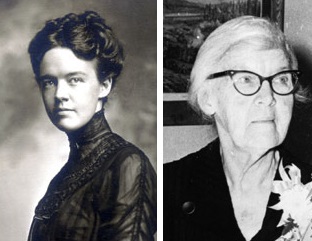
1515 WorthenMary Fletcher Worthen cultivated history and music with the same grace and skill as she cultivated gardens.

Born outside of Scott, she attended Vassar and Little Rock Junior College. After marrying banker Booker Worthen, she devoted her life to improving Little Rock. Together with Stella Boyle and George Smith, she and Booker helped found the precursor to the Arkansas Symphony Orchestra.  Through its many iterations, she was a steadfast supporter and later was named a life member of the ASO Board.  She was also a supporter of many other music organizations in Little Rock including the Chamber Music Society of Little Rock, of which she was a founder.

Another hallmark of her involvement was Mount Holly Cemetery Association.  For over 50 years she served on the board of this body.  Without notes, she could recite the history of practically every resident buried there.  The tours she led with the late Peg Newton Smith were hot commodities when auctioned at fundraisers.  These two loving and lifelong friends would sometimes remember things differently. They playfully prodded and needled each other as they wended and winded their way through the headstones and history regaling rapt audiences with yarns of yore, quips and quotes, plus an anecdote or two.

She also served on the Old State House Museum Board and the Pulaski County Historical Society Board.  As a historian, she literally wrote the book on Trinity Episcopal Cathedral.  She combined her interest in herb gardening and history with the creation of the Medicinal Garden at Historic Arkansas Museum, which is now named in her honor.

Born in 1917, up until her final days Mary Worthen continued to learn new facts, share her love of history and music, and work to cultivate the next generations of cultural enthusiasts.
Little Rock Look Back: LR Mayor Roswell Beebe

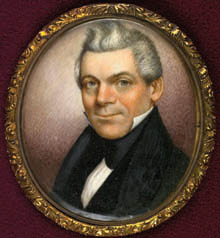
Mayor BeebeOn December 22, 1795, future Little Rock Mayor Roswell Beebe was born in Hinsdale, New York.  His family were wealthy English immigrants.  At seventeen, Beebe went to New Orleans and fought with Andrew Jackson in the 1815 Battle of New Orleans.  He stayed in the Crescent City for the next two decades building successful lumber and brick businesses.

Due to health concerns, he moved north to a drier climate in 1834.  After first stopping in Fulton, Arkansas, he settled in Little Rock in 1835 at the age of forty.  He stayed at the home of Chester Ashley and married Ashley’s sister-in-law, Clarissa Elliott.  He and Clarissa had two children, Roswell and Cora.

For nearly 30 years, Little Rock had a complicated history of deeds, titles and land ownership.  In 1839, Beebe went to Washington DC and received the original patent from President Martin Van Buren.  He then set about clearing up the land and title issues, as well as drawing up a plan for the city and laying off blocks and streets.  Beebe deeded the streets and alleys to the City for a dollar.  He also donated the land on Markham Street for a new State Capitol building (now home of the Old State House Museum).  Along with his brother-in-law Chester Ashley, he donated the land for the establishment of Mount Holly Cemetery.

In 1848, Beebe was elected to the Little Rock City Council.  The following year, he was elected Mayor.  He served as Mayor of Little Rock from April 1849 to February 1850.

While his primary business focus in the 1840s had been real estate, in the 1850s he focused on railroads.  Beebe was named president of the Cairo and Fulton Railroad Company in 1853.

While on a visit to New York, Beebe died on September 27, 1856.  His body was returned to Little Rock, and Roswell Beebe was buried at Mount Holly Cemetery.  The town of Beebe, Arkansas, is named in his honor.

Little Rock Look Back: Mayor C. P. Bertrand

Bertra1On November 23, 1808, future Mayor Charles P. Bertrand was born in New York.  He was the son of Pierre and Eliza Wilson Bertrand; his father died in 1809 in an uprising in Haiti and his mother eventually remarried.  With her new husband, Dr. Matthew Cunningham, she and the family moved to Little Rock in 1820.

After apprenticing with family friend William Woodruff at the Arkansas Gazette, Bertrand opened the Arkansas Advocate newspaper.  He later studied law under Robert Crittenden and entered the legal profession.

In 1835-1836, he served as State Treasurer for the Arkansas Territory, and in 1836 as secretary for the first constitutional convention. He was a member of the Arkansas House of Representatives from 1840-1841 and 1844-1849.

Bertrand followed in his stepfather’s footsteps and became Mayor of Little Rock.  (Dr. Cunningham had been the first Little Rock Mayor in 1831.)  He was in office from January 1855 through January 1857, serving two one-year terms.  He later served on the City Council and filled in as acting mayor. (Another influence on his upbringing was studying under future Mayor Jesse Brown who taught at the first school in Little Rock.)

Bertrand, as acting mayor, was involved in the negotiations of the surrender of Little Rock to federal troops in 1863.  He also later corresponded with President Lincoln on behalf of Little Rock citizens.

Though a staunch Confederate, his good will toward the Union soldiers and federal officials is credited with helping to save Little Rock from the destruction which befell many other Southern cities.  He is also credited with delaying the start of the Civil War.  Prior to the attack on Fort Sumner, members of the Arkansas Militia were planning to attack the Federal Arsenal at Little Rock during the absence of Governor Rector.  This would have been viewed as an act of war.  Bertrand was able to dissuade them from the attack.  Had he been unsuccessful, the Civil War would have likely started in Arkansas instead of South Carolina.

He had put his considerable fortune into Confederate money during the war. At the Civil War’s conclusion, the family was financially ruined. Though they had vast land holdings, those would be sold off in parcels to pay for taxes.

Bertrand died August 27, 1865, shortly after the conclusion of the Civil War.  He, like his mother, step-father, and several other relatives, is buried in Mt. Holly Cemetery.

Little Rock Look Back: Adolphine Fletcher Terry

Photos from the collection of the Butler Center

Photos from the collection of the Butler Center

Adolphine Fletcher Terry was born on November 3, 1882 to former Little Rock Mayor John Gould Fletcher and his wife Adolphine Krause Fletcher.

Raised in Little Rock, in 1889 she moved into the Albert Pike House on East 7th Street, when her aunt transferred the title to her father. That house would be her primary residence the rest of her life.  Her sister Mary Fletcher Drennan never lived in Arkansas as an adult after marriage. Her brother John Gould Fletcher spent much of his adulthood in Europe before returning to Little Rock and establishing his own house, Johnswood.

At age 15, Adolphine attended Vassar. She later credited that experience as broadening her views on many issues.  After graduating at age 19, she returned to Little Rock.  Her parents both died prior to her 1910 wedding to David D. Terry, which took place at what was then known as the Pike-Fletcher House (and today is known as the Pike-Fletcher-Terry House).

She is perhaps best known today for establishing the Women’s Emergency Committee in 1958 and for her subsequent deeding of the family house to the City for use by the Arkansas Arts Center.  But her entire life was based on civic engagement.

She was instrumental in establishing the first juvenile court system in Arkansas and helped form the first school improvement association in the state. She was long an advocate for libraries, serving 40 years on the Little Rock public library board.  Through her leadership, the library opened its doors to African Americans in the early 1950s. Today a branch of the Central Arkansas Library System (the successor the Little Rock public library) is named after her.  Another branch is named after her Pulitzer Prize winning brother.

Adolphine formed the Little Rock chapter of the American Association of University Women, the Pulaski County tuberculosis association and the Community Chest.

In 1958, when the Little Rock public high schools were closed instead of allowing them to be desegregated again, she called Harry Ashmore the editor of the Gazette and exclaimed, “the men have failed us…it’s time to call out the women.”  With this, she formed the Women’s Emergency Committee to Open Our Schools. This group played a major role in getting the four high schools open the following year.

From 1933 to 1942, David Terry served in the U.S. Congress. During that time, Adolphine alternated her time between Washington DC and Little Rock. But she spent much time in Little Rock raising her five children.

After her husband’s death in 1963, she continued to remain active in civic affairs. In the 1960’s, she and her sister deeded the Pike-Fletcher-Terry House to the City of Little Rock for use by the Arkansas Arts Center upon both their deaths.  Following Adolphine Fletcher Terry’s death in 1976, Mary turned over the title to the City.

Adolphine Fletcher Terry is buried in Mount Holly Cemetery alongside her husband. Three of her children are also buried in that plot.  Her parents and brother are buried in a nearby plot.

Her son William Terry and his wife Betty continue to be active in Little Rock. Their daughters and their families also carry on Adolphine Fletcher Terry’s commitment to making Little Rock better.

Little Rock Look Back: J. N. Heiskell

At the age of 87, J. N. Heiskell in 1960.

At the age of 87, J. N. Heiskell in 1960.

John Netherland (J. N.) Heiskell served as editor of the Arkansas Gazette for more than seventy years.

He was born on November 2, 1872, in Rogersville, Tennessee, to Carrick White Heiskell and Eliza Ayre Netherland Heiskell. He entered the University of Tennessee at Knoxville before his eighteenth birthday and graduated in three years at the head of his class on June 7, 1893.

His early journalism career included jobs with newspapers in Knoxville and Memphis and with the Associated Press in Chicago and Louisville. On June 17, 1902, Heiskell’s family bought controlling interest in the Arkansas Gazette. Heiskell became the editor, and his brother, Fred, became managing editor.

Governor George Donaghey appointed Heiskell to succeed Jeff Davis in the United States Senate after Davis’s death in office. Heiskell served from January 6, 1913, until January 29, 1913, when a successor was elected.

On June 28, 1910, Heiskell married Wilhelmina Mann, daughter of the nationally prominent architect, George R. Mann. The couple had four children: Elizabeth, Louise, John N. Jr., and Carrick.

In 1907, he joined a successful effort to build the city’s first public library. He served on the library board from that year until his death and was issued the first library card.  He also served on the City’s Planning Commission for decades.

In 1912, he was instrumental in bringing John Nolen to Little Rock to devise a park plan. Heiskell was also largely responsible for the location of Robinson Auditorium. When City Council members had competing locations, he advocated for the corner of Markham and Broadway. And kept at it until the site was selected.

In the paper and in his own personal opinions, he crusaded on a variety of progressive causes.  Perhaps the most famous was the Gazette’s stance in the 1957 Central High desegregation crisis.  It was for this effort that the paper received two Pulitzer Prizes.

Although Heiskell stopped going to the office at age ninety-nine, he continued to take an active interest in the newspaper. He began by having a copy of the newspaper delivered to his home by messenger as soon as it came off the press each night. Eventually, he switched to having his secretary call him daily at his home and read the entire newspaper to him. He operated on the premise that “anyone who runs a newspaper needs to know what’s in it, even to the classified ads.”

A few weeks after turning 100, Heiskell died of congestive heart failure brought on by arteriosclerosis on December 28, 1972. He is buried in Little Rock’s Mount Holly Cemetery.  Interestingly, he is buried in the same cemetery as two of his most notable adversaries: Governor Jeff Davis, and segregationist Congressman Dale Alford.

Little Rock Look Back: LR Mayor Donald Mehlburger

Mayor D L MehlburgerOn October 19, 1937, future Little Rock Mayor Donald Lee Mehlburger was born in Little Rock.  His parents were Max A. Mehlburger and Mary Lou Covey Mehlburger who also had another son Max C. Mehlburger.

Mehlburger’s first run for the City Board of Directors was in November 1968 when there was an open seat.  At the time he was 30, the youngest one could be and be elected to the City Board.  He lost that race, but eight years later ran again.  This time Mehlburger won the race.  At his first meeting on the City Board, Mehlburger was selected as Mayor of Little Rock by his colleagues.

Prior to running for the City Board the second time, Mehlburger had been appointed to the Planning Commission.  Planning and growth were two important emphases for Mayor Mehlburger, in addition to public safety.  He stressed the importance of quality growth in the edges of the city and a push for a revitalized downtown.  Mayor Mehlburger was also an advocate for public mass transit.

Due to business interests taking up too much of his time, he resigned from the City Board a few months before his term was up.  But he remained engaged in civic affairs.  Historic preservation was important to Mehlburger.  In addition to owning historic properties, he was a founding board member of the Historic Preservation Alliance of Arkansas.  He had graduated from the University of Arkansas and was a member of Trinity Episcopal Cathedral.  He had also been active with the Junior Chamber of Commerce (Jaycees) and Rotary Club 99.

Mehlburger died on May 25, 1992 and was buried at Mount Holly Cemetery.  His grave marker features an engraved sextant which pays tribute to his career as an engineer.  It also notes that he was Mayor of Little Rock.  Mayor Mehlburger was survived by his wife Susan and his three children – Donald Lee Jr., Harry and Katherine.

Tales of the Crypt tonight at Mount Holly Cemetery

talescryptThe ghosts of Little Rock past will arise tonight at Mt. Holly Cemetery for the 21st Annual Tales of the Crypt.

Held the second Tuesday of October, Tales of the Crypt is an annual Mount Holly event.  Founded by Fred Boosey and Judy Goss, it is now under the direction of Tamara Zinck.  Drama students from Parkview Arts & Science Magnet High School are each given a person buried in the cemetery to research. They then prepare short monologues or dialogues, complete with period costumes, to be performed in front of the researched person’s grave.

Award-winning local costumer Debi Manire will once again provide the wonderful historical characters’ costumes.  Audiences are led through the cemetery from grave to grave by guides with candles. Although it takes place around the same time as the American holiday Halloween, the event is meant to be historic rather than spooky.  Many local teachers award extra credit to students who attend.

Student tour guides will escort groups of approximately 15 from grave site to grave site to learn more about those who shaped central Arkansas in to what it is today.

The Mount Holly residents will greet you are:

  • Dr. Isaac Folsom (Peyton Hooks)
  • Mrs. Sallie Folsom (Rahlea Zinck)
  • David O. Dodd (Cameron Minor)
  • Mary Dodge (Delaney Robertson)
  • Dovenia (Dovie) Kirby (Emily Gardner)
  • Samuel B. Kirby (Brock Tittle)
  • Captain Benjamin Shattuck (Micah Patterson)
  • Anne Warren (Isha Horton)
  • Quatie Ross (Michelle Mora Dominguez)
  • Katherine Eller Henderson (Mikala Hicks)
  • Juliet Neill Peay  (Emorie Mansur)
  • Mary E. Gaines Belding (Abigail Mansur)
  • Albert Stocking (Tre’Vaughn Whitley)
  • Mollie Stocking (Taylar Hasberry)
  • George Borland (Harrison Wyrick)
  • Eleanor Counts (Stephanie Schoonmaker)
  • Edward Payson Washburn (Will Frueauff)
  • Lillian Scott (Sidney Kelly)
  • James Robbins (George Patterson)
  • Maria Rebecca Craigen (Angelique Camper)

(The names of the Parkview students portraying the residents are in parentheses.)

The Twenty-first Annual “Tales of the Crypt” is sponsored by Mount Holly Cemetery Association and Parkview Arts-Science Magnet High School.

The event will be held  at Mount Holly Cemetery, 1200 South Broadway, Little Rock, from 5:30 pm until 8:30 pm.  Admission is free to the public, however donations to Mount Holly Cemetery are appreciated and aid in the maintenance of the cemetery.