
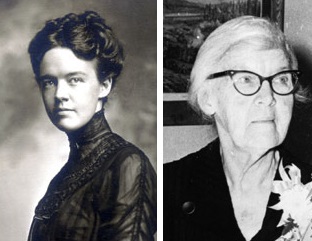
Little Rock Look Back: Adolphine Fletcher Terry

Photos from the collection of the Butler Center

Photos from the collection of the Butler Center

Adolphine Fletcher Terry was born on November 3, 1882 to former Little Rock Mayor John Gould Fletcher and his wife Adolphine Krause Fletcher.

Raised in Little Rock, in 1889 she moved into the Albert Pike House on East 7th Street, when her aunt transferred the title to her father. That house would be her primary residence the rest of her life.  Her sister Mary Fletcher Drennan never lived in Arkansas as an adult after marriage. Her brother John Gould Fletcher spent much of his adulthood in Europe before returning to Little Rock and establishing his own house, Johnswood.

At age 15, Adolphine attended Vassar. She later credited that experience as broadening her views on many issues.  After graduating at age 19, she returned to Little Rock.  Her parents both died prior to her 1910 wedding to David D. Terry, which took place at what was then known as the Pike-Fletcher House (and today is known as the Pike-Fletcher-Terry House).

She is perhaps best known today for establishing the Women’s Emergency Committee in 1958 and for her subsequent deeding of the family house to the City for use by the Arkansas Arts Center.  But her entire life was based on civic engagement.

She was instrumental in establishing the first juvenile court system in Arkansas and helped form the first school improvement association in the state. She was long an advocate for libraries, serving 40 years on the Little Rock public library board.  Through her leadership, the library opened its doors to African Americans in the early 1950s. Today a branch of the Central Arkansas Library System (the successor the Little Rock public library) is named after her.  Another branch is named after her Pulitzer Prize winning brother.

Adolphine formed the Little Rock chapter of the American Association of University Women, the Pulaski County tuberculosis association and the Community Chest.

In 1958, when the Little Rock public high schools were closed instead of allowing them to be desegregated again, she called Harry Ashmore the editor of the Gazette and exclaimed, “the men have failed us…it’s time to call out the women.”  With this, she formed the Women’s Emergency Committee to Open Our Schools. This group played a major role in getting the four high schools open the following year.

From 1933 to 1942, David Terry served in the U.S. Congress. During that time, Adolphine alternated her time between Washington DC and Little Rock. But she spent much time in Little Rock raising her five children.

After her husband’s death in 1963, she continued to remain active in civic affairs. In the 1960’s, she and her sister deeded the Pike-Fletcher-Terry House to the City of Little Rock for use by the Arkansas Arts Center upon both their deaths.  Following Adolphine Fletcher Terry’s death in 1976, Mary turned over the title to the City.

Adolphine Fletcher Terry is buried in Mount Holly Cemetery alongside her husband. Three of her children are also buried in that plot.  Her parents and brother are buried in a nearby plot.

Her son William Terry and his wife Betty continue to be active in Little Rock. Their daughters and their families also carry on Adolphine Fletcher Terry’s commitment to making Little Rock better.

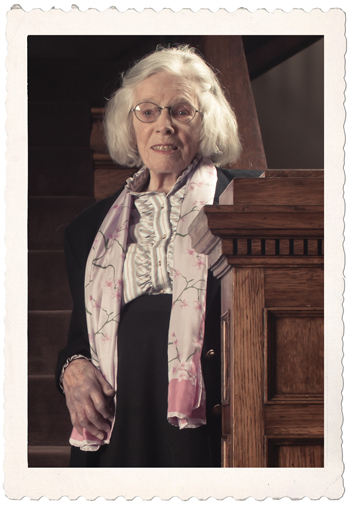
 

Little Rock Look Back: J. N. Heiskell

At the age of 87, J. N. Heiskell in 1960.

At the age of 87, J. N. Heiskell in 1960.

John Netherland (J. N.) Heiskell served as editor of the Arkansas Gazette for more than seventy years.

He was born on November 2, 1872, in Rogersville, Tennessee, to Carrick White Heiskell and Eliza Ayre Netherland Heiskell. He entered the University of Tennessee at Knoxville before his eighteenth birthday and graduated in three years at the head of his class on June 7, 1893.

His early journalism career included jobs with newspapers in Knoxville and Memphis and with the Associated Press in Chicago and Louisville. On June 17, 1902, Heiskell’s family bought controlling interest in the Arkansas Gazette. Heiskell became the editor, and his brother, Fred, became managing editor.

Governor George Donaghey appointed Heiskell to succeed Jeff Davis in the United States Senate after Davis’s death in office. Heiskell served from January 6, 1913, until January 29, 1913, when a successor was elected.

On June 28, 1910, Heiskell married Wilhelmina Mann, daughter of the nationally prominent architect, George R. Mann. The couple had four children: Elizabeth, Louise, John N. Jr., and Carrick.

In 1907, he joined a successful effort to build the city’s first public library. He served on the library board from that year until his death and was issued the first library card.  He also served on the City’s Planning Commission for decades.

In 1912, he was instrumental in bringing John Nolen to Little Rock to devise a park plan. Heiskell was also largely responsible for the location of Robinson Auditorium. When City Council members had competing locations, he advocated for the corner of Markham and Broadway. And kept at it until the site was selected.

In the paper and in his own personal opinions, he crusaded on a variety of progressive causes.  Perhaps the most famous was the Gazette’s stance in the 1957 Central High desegregation crisis.  It was for this effort that the paper received two Pulitzer Prizes.

Although Heiskell stopped going to the office at age ninety-nine, he continued to take an active interest in the newspaper. He began by having a copy of the newspaper delivered to his home by messenger as soon as it came off the press each night. Eventually, he switched to having his secretary call him daily at his home and read the entire newspaper to him. He operated on the premise that “anyone who runs a newspaper needs to know what’s in it, even to the classified ads.”

A few weeks after turning 100, Heiskell died of congestive heart failure brought on by arteriosclerosis on December 28, 1972. He is buried in Little Rock’s Mount Holly Cemetery.  Interestingly, he is buried in the same cemetery as two of his most notable adversaries: Governor Jeff Davis, and segregationist Congressman Dale Alford.

LR Cultural Touchstone: Mary Fletcher Worthen

JJLR-MaryWorthen-MayMary Fletcher Worthen has cultivated history and music with the same grace and skill as she has cultivated gardens.

Born outside of Scott, she attended Vassar and Little Rock Junior College. After marrying banker Booker Worthen, she has devoted her life to improving Little Rock. Together with Stella Boyle and George Smith, she and Booker helped found the precursor to the Arkansas Symphony Orchestra.  Through its many iterations, she has been a steadfast supporter and is now a life member of the ASO Board.  She has also been a supporter of many other music organizations in Little Rock including the Chamber Music Society of Little Rock, of which she was a founder.

Another hallmark of her involvement is Mount Holly Cemetery Association.  For over 50 years she has served on the board of this body.  Without notes, she can recite the history of practically every resident buried there.  The tours she would lead with the late Peg Newton Smith were hot commodities when auctioned at fundraisers.  These two loving and lifelong friends would sometimes remember things differently. They playfully prodded and needled each other as they wended and winded their way through the headstones and history regaling rapt audiences with yarns of yore, quips and quotes, plus an anecdote or two.  In the decade since Peg passed, Mary has continued to entertain and engage visitors to the cemetery, especially at the annual Mount Holly Rest in Perpetuity (RIP) picnic.

She has also served on the Old State House Museum Board and the Pulaski County Historical Society Board.  As a historian, she literally wrote the book on Trinity Episcopal Cathedral.  She combined her interest in herb gardening and history with the creation of the Medicinal Garden at Historic Arkansas Museum, which is now named in her honor.

Born in 1917, Mary Worthen continues to learn new facts, share her love of history and music, and works to cultivate the next generations of cultural enthusiasts.


LR Cultural Touchstone: Peg Newton Smith

peg_3While the Culture Vulture remains a huge fan of Peg Newton Smith, it is better for this entry to be taken from a tribute written by her longtime friend Bill Worthen.

Peg Newton Smith was a pioneer in the field of history and historic preservation.  A founder of both the Arkansas Museums Association and the Quapaw Quarter Association, Little Rock’s historic preservation organization, she served as a significant resource for many local history researchers and historians.

Born February 10, 1915, Peg Smith came from a family deeply engaged in Arkansas history. Two Arkansas counties – Newton and Hempstead – are named after ancestors.  She married George Rose Smith, himself from a prominent Arkansas family, in 1938. Peg Smith became his most vigorous supporter as George Rose Smith was elected and  reelected to the State Supreme Court, ultimately offering 38 years of service as Associate Justice.

She  enjoyed a sixty-two year career as a volunteer at the Historic Arkansas Museum, where she served as Commission Chair from 1978 to 1983. On the museum’s first day, she was dressed in period garb as a volunteer.  She was named Chair Emerita of the Commission in 2002. Her commitment to history has also included decades of service on the Mount Holly Cemetery Association Board of Directors, where she was famous with Mary Worthen for tours of the cemetery, often hot items at charity auctions.

Because of her instrumental work for the Arkansas Museums Association and the Quapaw Quarter Association, both organizations named significant annual awards after her. She was appointed to the inaugural Review Committee of the State Historic Preservation Program and with architect Edwin Cromwell was the first Arkansan named to the Board of Advisors of the National Trust for Historic Preservation. She was appointed to the Arkansas Bicentennial Commission, was elected president of the Junior League of Little Rock, was a founding member of the Board of the Historic Preservation
Alliance of Arkansas, and was active in the Pulaski County Historical Society.  She also was an early supporter of the MacArthur Museum of Arkansas Military History.

She was honored by many groups, being named 1967 Greater Little Rock Woman of the Year by the Arkansas Democrat, Shield of the Trojan Award winner from the UALR Alumni Association in 1979, Fellow of the Museum of Science and History in 1981, and Candlelight Gala Honoree of the Historic Arkansas Museum in 1994. She became the first recipient of the Lifetime Achievement Award from the Arkansas Museums Association in 2003.

Peg Newton Smith died on July 20, 2003.

Because of her love of Arkansas history and Arkansas art, the Historic Arkansas Museum commissioned the pARTy for Peg sculpture which dances near the north entrance to the museum.  pARTy for Peg is not a portrait of our dear friend—it is a sculpture inspired by her spirit. It had been her brainchild for the museum to have a separate gallery devoted to contemporary Arkansas artists. She also founded the Museum Store, filled with Arkansas crafts.


LR Cultural Touchstone: Louise Loughborough

louise_loughborough_fLouise Loughborough could be called the mother of historic preservation and history museums in Arkansas.

Born Louisa Watkins Wright in Little Rock 1881, her ancestors included many early Arkansas leaders. At age 21 she married attorney J. Fairfax Loughborough.  She became active in several organizations including the Little Rock Garden Club, Colonial Dames and Mount Vernon Ladies Association.

Her involvement in historic structures in Little Rock began when the Little Rock Garden Club sought to improve the appearance of the War Memorial Building (now known as the Old State House Museum) in 1928. The grounds were littered with signs and monuments, and the roof of the Greek Revival building sported figurative statues of Law, Justice, and Mercy, which had been installed above the pediment after being salvaged from the Arkansas exhibit at the Philadelphia Centennial of 1876. To take the façade of the edifice back to its original 1830s appearance, Loughborough had the statues removed—without the permission of the War Memorial Commission, which had legal authority over the building.

In 1935, Loughborough was appointed to the Little Rock Planning Commission, and it was in this role that she first heard about the plan to condemn the half-block of houses that she had grown up admiring on Cumberland and East Third streets. Although the neighborhood had fallen on hard times, becoming a red-light district and slum, Loughborough feared the loss of several historic structures, including the Hinderliter House, the oldest building in Little Rock and thought to be Arkansas’s last territorial capitol. She mobilized a group of civic leaders to save these buildings. She enlisted the aid of prominent architect Max Mayer and coined the term “town of three capitols” to try to capture the imagination of potential supporters, grouping the “Territorial Capitol” with the Old State House and the State Capitol.

In 1938, Loughborough secured a commitment from Floyd Sharp of the federal WPA to help with the project, on the condition that the houses be owned by a governmental entity. She persuaded the Arkansas General Assembly to create and support, with general revenues, the Arkansas Territorial Capitol Restoration Commission (Act 388 of 1939). This satisfied Sharp’s condition, and the WPA provided labor and material for the new historic house museum. A private fundraising campaign brought in the remaining monetary support necessary for the completion of the project.

The Arkansas Territorial Restoration opened on July 19, 1941. The project was the first Arkansas agency committed to both the restoration of structures and the interpretation of their history, and it served as a model and inspiration for historic preservation in the state. Around the same time, she was a moving force behind the creation of a museum at the Old State House as well.  Today both Historic Arkansas Museum (as the Territorial Restoration is now known) and the Old State House Museum are agencies of the Department of Arkansas Heritage.

As founding Chairman of the Arkansas Territorial Restoration Commission, Louise Loughborough provided daily direction for the museum house complex through the first twenty years of its existence, yielding her authority to architect Edwin B. Cromwell only as her health began to fail. She died in Little Rock on December 10, 1962 and was buried at Mount Holly Cemetery.

Little Rock Look Back: Donald Mehlburger, LR’s 62nd Mayor

Mayor D L MehlburgerOn October 19, 1937, future Little Rock Mayor Donald Lee Mehlburger was born in Little Rock.  His parents were Max A. Mehlburger and Mary Lou Covey Mehlburger who also had another son Max C. Mehlburger.

Mehlburger’s first run for the City Board of Directors was in November 1968 when there was an open seat.  At the time he was 30, the youngest one could be and be elected to the City Board.  He lost that race, but eight years later ran again.  This time Mehlburger won the race.  At his first meeting on the City Board, Mehlburger was selected as Mayor of Little Rock by his colleagues.

Prior to running for the City Board the second time, Mehlburger had been appointed to the Planning Commission.  Planning and growth were two important emphases for Mayor Mehlburger, in addition to public safety.  He stressed the importance of quality growth in the edges of the city and a push for a revitalized downtown.  Mayor Mehlburger was also an advocate for public mass transit.

Due to business interests taking up too much of his time, he resigned from the City Board a few months before his term was up.  But he remained engaged in civic affairs.  Historic preservation was important to Mehlburger.  In addition to owning historic properties, he was a founding board member of the Historic Preservation Alliance of Arkansas.  He had graduated from the University of Arkansas and was a member of Trinity Episcopal Cathedral.  He had also been active with the Junior Chamber of Commerce (Jaycees) and Rotary Club 99.

Mehlburger died on May 25, 1992 and was buried at Mount Holly Cemetery.  His grave marker features an engraved sextant which pays tribute to his career as an engineer.  It also notes that he was Mayor of Little Rock.  Mayor Mehlburger was survived by his wife Susan and his three children – Donald Lee Jr., Harry and Katherine.

Mount Holly Cemetery Comes Alive Tonight with Tales of the Crypt

A Parkview student portraying former LR Mayor Woodson.

A Parkview student portraying former LR Mayor Woodson.

The ghosts of Little Rock past will arise tonight at Mt. Holly Cemetery for the 20th Annual Tales from the Crypt.

Held the second Tuesday of October, Tales of the Crypt is an annual Mount Holly event.  Under the direction of Fred Boosey & Tamara Zinck, drama students from Parkview Arts & Science Magnet High School are each given a person buried in the cemetery to research. They then prepare short monologues or dialogues, complete with period costumes, to be performed in front of the researched person’s grave.

Former Little Rock Mayor James Woodson, and Juliet Neill Peay (whose family has been involved in Little Rock politics for 190 years) are two of the featured residents.  Others include Eleanor Counts, Albert DeShon,  David O. Dodd, Senhora Dodd, Sallie and Dr. Isaac Folsom, Katherine Eller Henderson, Mary Eliza Knapp, Eliza Miller, James Robbins, Quatie Ross, Lillian Scott, Albert Stocking, Mollie Stocking, Anne Warren, Edward Payson Washburn, Mary & Edward Wiegel.

Award-winning local costumer Debi Manire will once again provide the wonderful historical characters’ costumes.  Audiences are led through the cemetery from grave to grave by guides with candles. Although it takes place around the same time as the American holiday Halloween, the event is meant to be historic rather than spooky.  Many local teachers award extra credit to students who attend.

The Twentieth Annual “Tales of the Crypt” will be sponsored by Mount Holly Cemetery Association and Parkview Arts-Science Magnet High School.

The event will be held  at Mount Holly Cemetery, 1200 South Broadway, Little Rock, Arkansas on from 5:30 pm until 8:30 pm.  Admission is free to the public, however donations to Mount Holly Cemetery are appreciated and aid in the maintenance of the cemetery.