Artober – Arts After Dark

October is Arts and Humanities Month nationally and in Little Rock. Americans for the Arts has identified a different arts topic to be posted for each day in the month.  Next up is “Arts after Dark”

This theme, like many of them, could go in many different directions.  I’ve chosen to highlight some cultural institutions lit up at night.

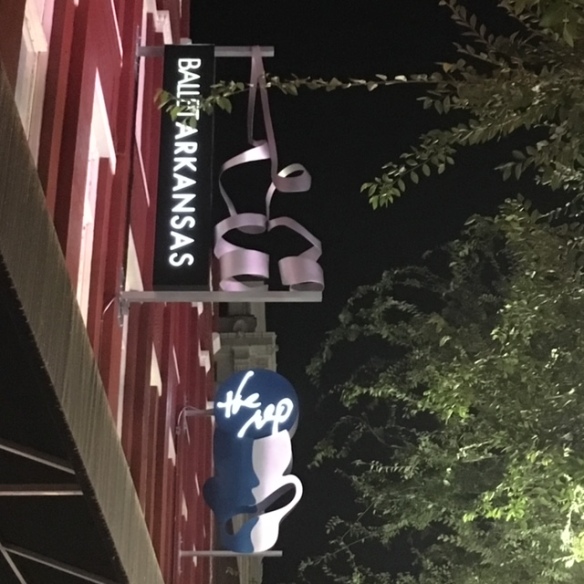
Ballet Arkansas and the Annex of Arkansas Rep on Main Street

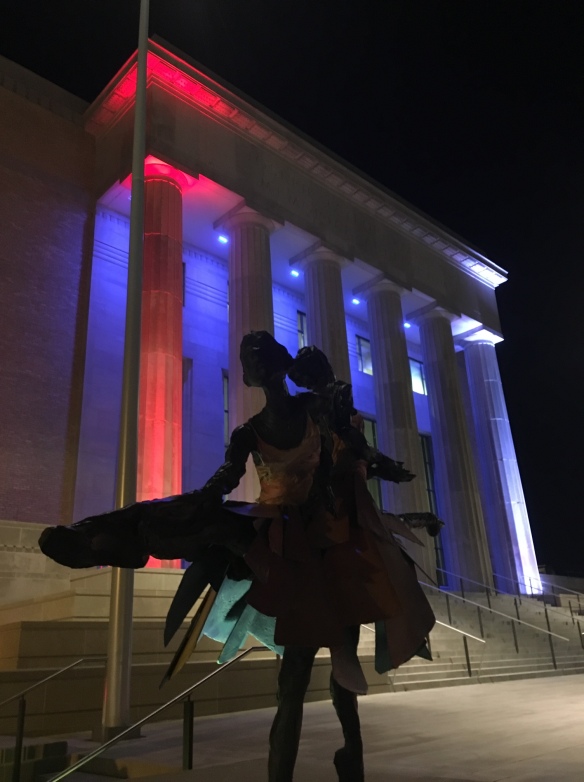
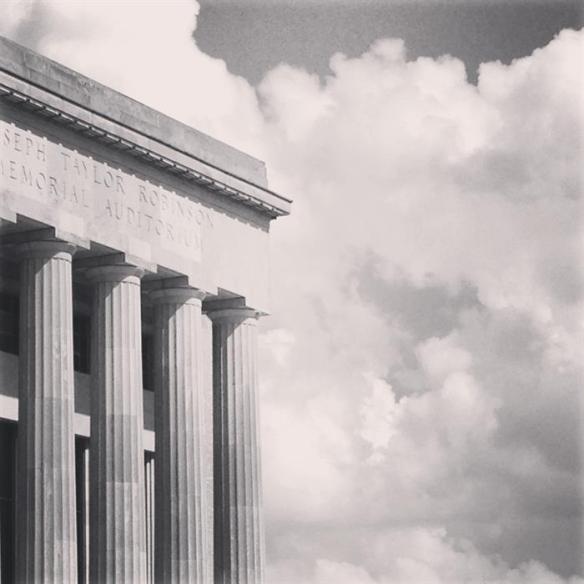
Jane DeDecker and Alyson Kinkade’s IN THE WINGS in front of Robinson Center Performance Hall.

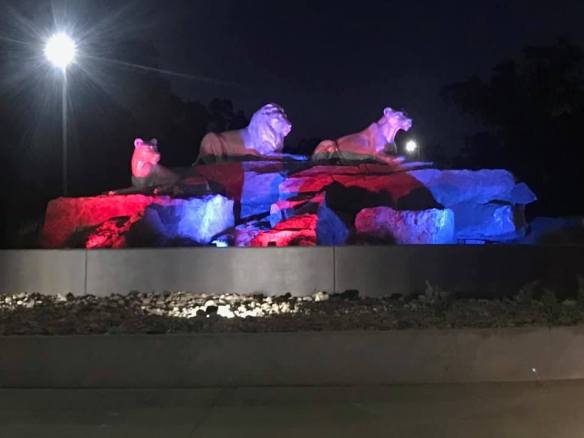
Darrell Davis’ Lions Pride in War Memorial Park


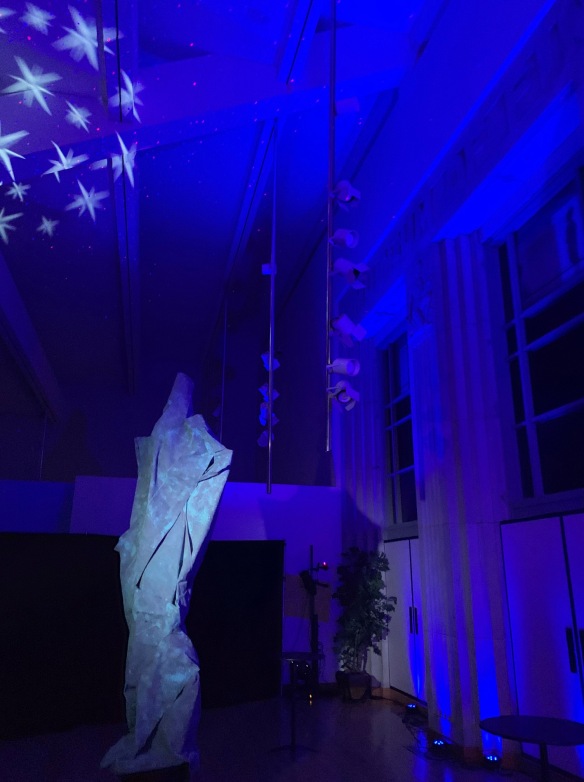
Lastly, while this photo took place indoors, it is a recreation of what the entrance to the Arkansas Arts Center will look like in 2022 when Henry Moore’s STANDING FIGURE KNIFE’S EDGE is located in front of the 1937 entrance to the AAC, which will once again be the main entrance. This was created for the AAC’s Farewell Party in August 2019.

Once and Future Arkansas Arts Center 9th Street entrance

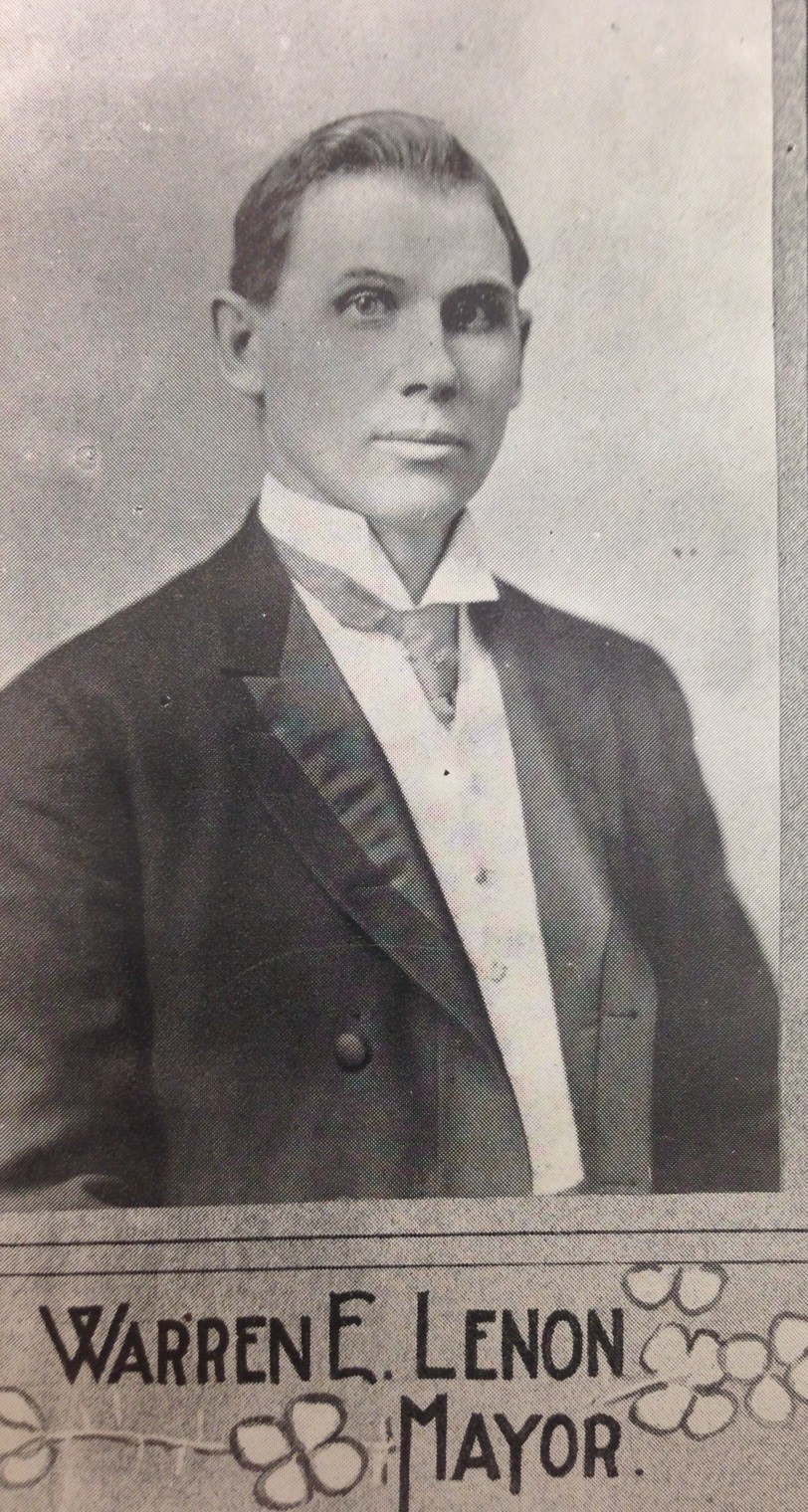
Birth of Little Rock’s 39th Mayor, W. E. Lenon, on October 8, 1867

OMayor Lenonn October 8, 1867 in Panora, Iowa, future Little Rock Mayor Warren E. Lenon was born.  He was one of eleven children of John D. and Margaret M. Long Lenon.

Lenon came to Little Rock in 1888 after finishing his schooling in Iowa.  He helped set up an abstract company shortly after his arrival.  In 1902 he organized the Peoples Savings Bank.  Among his other business interests were the City Realty Company, the Factory Land Company, the Mountain Park Land Company, and the Pulaski Heights Land Company.

From 1895 to 1903, he was a Little Rock alderman, and in 1903, he was elected Mayor of the city. A progressive Mayor, he championed the construction of a new City Hall which opened in 1908.  At the first meeting of the City Council in that building, Mayor Lenon tendered his resignation.  His duties in his various business interests were taking up too much of his time.

Mayor Lenon had been a champion for the establishment of a municipal auditorium. He had wanted to include one in the new City Hall complex. But a court deemed it not permissible under Arkansas finance laws at the time.  He also worked to help establish the first Carnegie Library in Little Rock which opened in 1912.

Mayor Lenon continued to serve in a variety of public capacities after leaving office.  In the 1920s, he briefly chaired a public facilities board for an auditorium district. It appeared he would see his dream fulfilled of a municipal auditorium.  Unfortunately the Arkansas Supreme Court declared the enabling legislation invalid.

In 1889, he married Clara M. Mercer.  The couple had three children, two of whom survived him: a son W. E. Lenon Jr., and a daughter Vivion Mercer Lenon Brewer.  Together with Adolphine Fletcher Terry (also a daughter of a LR Mayor), Mrs. Brewer was a leader of the Women’s Emergency Committee.

Mayor Lenon died June 25, 1946 and is buried at Roselawn Cemetery.  Lenon Drive just off University Avenue is named after him..

Artober – Music. The sounds of the Arkansas Symphony Orchestra

Image may contain: one or more people, people on stage and indoor

Little Rock has a thriving music scene from jazz to blues to r&b to rock to soul to gospel to, well, you name it.

For over 50 years, the Arkansas Symphony Orchestra has been playing a pivotal role in that scene.  While they play programs that are largely classical music, they also incorporate many different styles of music into their offerings.  Last night, they played a concert with Tony and Grammy winner Heather Headley which spanned numerous musical genres.  The ASO is led by Interim Music Director Geoffrey Robson and Executive Director Christina Littlejohn.

Incorporated in 1966, the ASO now performs more than 60 concerts per season, which includes the Masterworks and Pops Concerts. In addition, the orchestra has a Chamber Series, River Rhapsodies, at the Clinton Presidential Center, ASO, I.N.C.: Intimate Neighborhood Concerts, and a busy schedule of statewide touring and educational performances in numerous venues, along with collaborations with Ballet Arkansas and the Arkansas Repertory Theatre. Integral to the ASO’s activities are its resident string quartets, the Rockefeller and Quapaw Quartet; The ASO Brass Quintet, ASO Big Band, and the Arkansas Symphony Youth Ensembles, which comprises two string-only ensembles and two full orchestras. Through ASO education programs over 40,000 children each year experience the magic of music.

Distinguished guest artists including Bill Clinton, Itzhak Perlman, Yo Yo Ma, Mignon Dunn, Marilyn Horn, Andre Watts, Maureen McGovern, Bernadette Peters, Maya Angelou, and Doc Severinsen, among others, have appeared in concert with the orchestra in Arkansas.

Comprised of the state’s most sought after professional musicians, the Arkansas Symphony Orchestra is heard by more than 165,000 Arkansans each year, and consistently plays to high critical praise.

TV’s Annie Oakley – Little Rock native Gail Davis born on October 5, 1925

Gail Davis is best known as TV’s Annie Oakley.  She was born Betty Jeanne Grayson on October 5, 1925. Her mother was a homemaker and her father, W. B. Grayson, was a physician in McGehee (Desha County), which did not have a hospital, so her birth took place in Little Rock (Pulaski County).

When her father became the state health officer, the family moved from McGehee to Little Rock, where Grayson attended Little Rock High School. Grayson rode horses and was a tomboy growing up. Grayson also held various beauty titles in high school and college, and she sang and danced in local shows from the time she was eight.

While studying dramatics at the University of Texas in Austin, she married Robert Davis in 1945, with whom she had a daughter, Terrie (the couple divorced in 1952). After World War II, they moved to Hollywood, where she worked as a hatcheck girl until being discovered by an agent who obtained an MGM screen test for her. She was signed to a contract, with her first appearance in 1947’s The Romance of Rosy Ridge, starring Van Johnson.

She worked steadily in movies, including fourteen films with Gene Autry in the late 1940s and early 1950s. He was impressed with her, changed her name to Gail Davis, and cast her as the star of the Annie Oakley TV show, which he produced. The show ran for eighty-one episodes from 1954 through 1956.

After her TV series ended, she appeared as Annie Oakley in the 1959 film Alias Jesse James starring Bob Hope. In that film, she appears in an uncredited role along with such other stars, also uncredited, as Gary Cooper, Bing Crosby, Roy Rogers, James Garner (as Bret Maverick), and Fess Parker (as Davy Crockett).

Her television appearances include guest roles on The Lone Ranger, The Gene Autry Show, The Cisco Kid, and Death Valley Days, as well as a 1961 episode of the Andy Griffith Show (Episode 37, “The Perfect Female”), her final appearance as a performer and in which she demonstrated her trademark sharpshooting.

Gail toured with Gene Autry’s Wild West show and made appearances as herself on TV programs such as Wide, Wide World: “The Western” (1958) with fellow Arkansan Ben Piazza. For her work in television, she was awarded a star on the Hollywood Walk of Fame, located at 6385 Hollywood Boulevard, and in 2004, she was inducted posthumously into the National Cowgirl Hall of Fame.

Gail Davis died of cancer in Los Angeles on March 15, 1997, and is buried in Hollywood’s Forest Lawn cemetery.  In 2007, she was posthumously inducted into the Arkansas Entertainer’s Hall of Fame.  In 2016, a room was named in her memory at the newly renovated Robinson Center.

Three months before construction complete, first event held in Robinson Auditorium on October 4, 1939

In October 1939, it looked as if Robinson Auditorium would never open.  The construction had run out of money.  But in an effort to generate a little revenue and give the public the chance to see the building, a few events were booked in the lower level.

At the time, the entrance to the lower level was off of Garland Street which ran to the north of the structure.

While Mayor J. V. Satterfield and other leaders were in Washington seeking additional funding, the Joseph Taylor Robinson Memorial Auditorium hosted its first event.  On October 4, 1939, the convention hall on the lower level was the site of a preview dance.  The pecan block flooring had been installed just the week before.

RC-dance-orchestraThe first four people to enter the building as paying guests were Mr. and Mrs. Alfred Wilheim, Frances Frazier and Bill Christian.  Reports estimated 3,200 people attended and danced to the music of Jan Garber and His Orchestra.

By happenstance, Garber and his musicians had also played in Little Rock on January 26, 1937, the date of the election which approved the auditorium bonds.  Since Little Rock then did not have a suitable space, that appearance had been on the stage of the high school auditorium.

The dance was a success.  But as the building had no heating or cooling mechanism at the time, there were limits as to how long even the lower level could be in use.  After a few weeks, the PWA, which was still in charge of the construction site, halted all future bookings.