Black History Month Spotlight – West Ninth Street

BHM16 W9thThe new Arkansas Civil Rights History Audio Tour was launched in November 2015. Produced by the City of Little Rock and the University of Arkansas at Little Rock allows the many places and stories of the City’s Civil Rights history to come to life an interactive tour.  This month, during Black History Month, the Culture Vulture looks at some of the stops on this tour which focus on African American history.

As early as the 1840s and reaching 1880, the businesses of both black and white races existed in what is now known as Downtown Little Rock. In the last years of the 1800s, a prolific business broker and social center for African Americans dominated West Ninth Street.

In 1898, D. B. Gaines, a local black doctor who also served as pastor of the Mt. Pleasant Baptist Church, wrote a book called Racial Possibilities as Indicated by the Negroes of Arkansas. The last chapter, “Colored Business Directory of Little Rock,” documents the existence of a vibrant commercial center with almost twenty churches and hundreds of dealers of black people.

The black district was home to doctors, dentists, lawyers and entrepreneurs such as restaurant owners, newspaper editors, pharmacists, barbers, tailors, and merchants.

This city within a city, met the needs of the black community since the early 1880 to the 1950s. West Ninth Street saw its peak between 1870 and 1950. Since the 1960s, a number of factors including desegregation, urbanization, urban renewal and the construction of I-630 caused its decline.

The app, funded by a generous grant from the Arkansas Humanities Council, was a collaboration among UALR’s Institute on Race and Ethnicity, the City of Little Rock, the Mayor’s Tourism Commission, and KUAR, UALR’s public radio station, with assistance from the Little Rock Convention and Visitors Bureau.

LR Look Back: HAIR flows at Robinson Auditorium in 1972

Ad for the original production of HAIR in Little Rock. Note the ticket prices. And that they could be purchased at Moses Music Shops.

Ad for the original production of HAIR in Little Rock. Note the ticket prices. And that they could be purchased at Moses Music Shops.

Forty-four years ago today, on January 18, 1972, the musical Hair settled in for a week-long run at Robinson Auditorium.  The saga to bring the national tour to Little Rock had actually begun eleven months earlier.

In February 1971, a young Little Rock attorney named Phil Kaplan petitioned the Little Rock Board of Censors to see if it would allow a production of Hair to play in the city. He was asking on behalf of a client who was interested in bringing a national tour to Arkansas’ capital city. The show, which had opened on Broadway to great acclaim in April 1968 after an Off Broadway run in 1967, was known for containing a nude scene as well for a script which was fairly liberally sprinkled with four-letter words. The Censors stated they could not offer an opinion without having seen a production.

By July 1971, Kaplan and his client (who by then had been identified as Southwest Productions) were seeking permission for a January 1972 booking of Hair from the City’s Auditorium Commission which was charged with overseeing operations at Robinson Auditorium. At its July meeting, the Commissioners voted against allowing Hair because of its “brief nude scene” and “bawdy language.”

Kaplan decried the decision. He stated that the body couldn’t “sit in censorship of legitimate theatrical productions.” He noted courts had held that Hair  could be produced and that the Auditorium Commission, as an agent for the State, “clearly can’t exercise prior censorship.” He proffered that if the production was obscene it would be a matter for law enforcement not the Auditorium Commission.

The Commission countered that they had an opinion from City Attorney Joseph Kemp stating they had the authority. One of the Commissioners, Mrs. Grady Miller (sister-in-law of the building’s namesake the late Senator Robinson, she had served on the Commission since 1940), expressed her concern that allowing Hair would open the door to other productions such as Oh! Calcutta!

On July 26, 1971, Southwest Productions filed suit against the Auditorium Commission. Four days later there was a hearing before federal Judge G. Thomas Eisele. At that hearing, Auditorium Commission member Lee Rogers read aloud excerpts from the script he found objectionable. Under questioning from Kaplan, a recent touring production of Neil Simon’s Plaza Suite was discussed. That play has adultery as a central theme of one of its acts. Rogers admitted he found the play funny, and that since the adultery did not take place on stage, he did not object to it. Among those testifying in favor of it was Robert Reddington, who was director of performing arts at the Arkansas Arts Center.

Judge Eisele offered a ruling on August 11 which compelled the Auditorium Commission to allow Hair to be performed. Prior to the ruling, some of the Auditorium Commissioners had publicly stated that if they had to allow Hair, they would close it after the first performance on the grounds of obscenity. To combat this, Judge Eisele stated that the Commission had to allow Hair to perform the entire six day engagement it sought.

Upon hearing of the Judge’s ruling, Commissioner Miller offered a succinct, two word response. “Oh, Dear!”

In the end, the production of Hair at Robinson would not be the first performance in the state.  The tour came through Fayetteville for two performances in October 1971 at Barnhill Arena.

On January 18, 1972, Hair played the first of its 8 performances over 6 days at Robinson Auditorium.  In his review the next day, the Arkansas Gazette’s Bill Lewis noted that Hair “threw out all it had to offer” and that Little Rock had survived.

The ads promoting the production carried the tagline “Arkansas will never be the same.”  Tickets (from $2 all the way up to $8.50) could be purchased at Moses Melody Shops both downtown and in “The Mall” (meaning Park Plaza). That business is gone from downtown, but the scion of that family, Jimmy Moses, is actively involved in building downtown through countless projects. His sons are carrying on the family tradition too.

Little Rock was by no means unique in trying to stop productions of Hair.  St. Louis, Birmingham, Los Angeles, Tallahassee, Boston, Atlanta, Charlotte NC, West Palm Beach, Oklahoma City, Mobile and Chattanooga all tried unsuccessfully to stop performances in their public auditoriums.  Despite Judge Eisele’s ruling against the City of Little Rock, members of the Fort Smith City Council also tried to stop a production later in 1972 in that city. This was despite warnings from City staff that there was not legal standing.

Within a few years, the Board of Censors of the City of Little Rock would be dissolved (as similar bodies also were disappearing across the US). Likewise, the Auditorium Commission was discontinued before Hair even opened with its duties being taken over by the Advertising and Promotion Commission and the Convention & Visitors Bureau staff.  This was not connected to the Hair decision; it was, instead, related to expanding convention facilities in Robinson and the new adjacent hotel.  Regardless of the reasons for their demise, both bygone bodies were vestiges of earlier, simpler and differently focused days in Little Rock.

2015 In Memoriam – Parker Westbrook

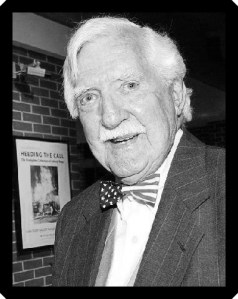
1515 WestbrookParker Westbrook WAS Mr. Preservation for Arkansas. But even though he is gone, it does not mean that preservation efforts in Arkansas are dormant.  Quite the contrary.  Like any good teacher, Parker used his knowledge to inspire others to share his interest in preservation.

It is no surprise that the organization he helped found, the Historic Preservation Alliance of Arkansas (now called Preserve Arkansas), names its lifetime achievement award after him.  He was not only the founding President of Preserve Arkansas, he was active in it until his final days.  It was not his only founding: he was a founder of Pioneer Washington Foundation (the oldest historic preservation organization in the state), the Main Street Arkansas Advisory Board, Historic Arkansas Museum Commission, the Arkansas State Capitol Association, and the Arkansas State Review Board for Historic Preservation. He served on the latter board from 1975 until his death this year, with the exception of five years from 2002 to 2007.  In recognition of his work in the field of heritage tourism, he was a 2007 inductee into the Arkansas Department of Parks and Tourism’s Hall of Fame.

His work was not limited by the boundaries of his home state.  He was an Advisor Emeritus to the National Trust for Historic Preservation and a 2001 recipient of a Preservation Honor Award from the Trust. Rep. Mike Ross declared him a “National Treasure” in the Congressional Record. He also served for two terms on the President’s Advisory Council on Historic Preservation and was named Chairman of the Committee on National Historic Landmarks on the National Park System Advisory Board.

A public servant, he worked for several federal officials from Arkansas, most notably Senator J. William Fulbright. He returned to Arkansas to work for Governor David Pryor.  But whether he worked in Washington DC; Little Rock; or his beloved hometown of Nashville, he was always interested in ensuring the past came alive. It might be through historic preservation, or it might be recounting a colorful moment of Arkansas history. Either way, Parker was a proponent of living history. He did not want it to be relegated to a musty, dusty book or building.
In 2007, he donated papers collected by his late sister Lucille and himself. The Lucille and Parker Westbrook Arkansas and Genealogy Collection is housed in the $20 million Arkansas Studies Institute, a joint project of the Central Arkansas Library System (CALS) and the University of Arkansas at Little Rock.  This collection has three parts: the first part focuses on Southwest Arkansas and contains genealogical sources and 3,000 historic photographs; the second highlights his public service and political career including much about the state’s architectural history; the third part consists of family papers, letters and photographs which document the Westbrooks’ deep roots in Arkansas.
He was the epitome of the Southern gentleman.  Not only did he look the part, he acted it. He was gracious in sharing credit with others; generous with his time, labor and talent; and did his best to keep up the lost art of writing letters and notes.

2015 In Memoriam – Susan Purvis

1515 PurvisRemembering Susan Turner Purvis, Artist and Teacher – by Judy Baker Goss

From the bulletin, “A Service of Resurrection and Thanksgiving to God for Susan Turner Purvis:”

In our life there is a single color, as on an artist’s palette, which provides the meaning of life and art. It is the color of love. 

-Marc Chagall

On July 22, there were many reasons that an overflowing crowd filled the sanctuary of Pulaski Heights United Methodist Church to memorialize the radiant life of Susan Turner Purvis. I believe that her large heART was the root of them all. A native of Hope who lived in Little Rock over forty years, Susan’s love deeply touched family, friends, fellow teachers and artists, and students.

Fortunately, I knew Susan for half a century. We met as Hendrix freshmen living in Galloway Hall, where she was the ringleader for fun. Packed three girls to a room, we were the last class to endure Hendrix’s version of orientation “hazing.” When commanded, “Button, Freshman,” we fell to a knee in dresses, one hand touching beanie cap, and sounded off, “Good afternoon, Miss Jones, m’am, I’m freshman Susan Turner from Hope, Arkansas, m’am.”  An “upperclasswoman” told Susan and her roomies to “fly like birds” into the dining hall for supper, but Susan topped that comical idea. Looking adorably innocent, Susan’s impulses were extremely impish. She made bloody bandages from huge gauze pads dripping with red lipstick blood, which they taped to their knees. They boldly flapped in that evening, giggling in front of the astonished crowd! Wherever Susan went, there was laughter, and many anecdotes prove that she never sought sainthood. The blessings she showered on others, however, gave her the aura of cherished guardian angel.

Susan knew she was an artist in college, as I was stepping into theatre, and she always encouraged my dreams. We know this was her nature, too. During her twenty-eight year career as Art Specialist at Gibbs International Studies Magnet School, which she began with no classroom and, rather, one table and a box of Mardi Gras beads, she not only provided excellent art education, but she aligned her efforts with others, enhancing the creative potential of all.  Discovering that a former Gibbs custodian, Eddie Lee Kendrick, was a self-taught artist, she facilitated his joining her for a year at Gibbs and then co-curated a show of his work with the New Orleans Museum of Art and the Arkansas Arts Center. When she worked with a project of the Rockefeller Foundation, UALR and the Japanese-American Museum in Los Angeles dealing with the Japanese-Americans who were relocated during World War II, especially to the Arkansas camps at Jerome and Rowher, she co-wrote curriculum for social studies and art teachers based on those internees’ experiences. Her Gibbs students made a wonderful quilt reflecting their encounters with this curriculum. Susan brought people together to move forward, through art, to greater human understanding.

Her approach to learning always demonstrated curiosity and creativity, making something new from what was at hand. By no accident did her methods produce remarkable results time and again. Her students won many awards, some in the exclusive International Children’s Art Exhibition sponsored by Pentel.  In nineteen of the twenty-six years that Gibbs students’ work was accepted in the Young Arkansas Artists (YAA) exhibition through the Arkansas Arts Center, they won “Best in Class.” In 2015, Susan’s retirement year, two Gibbs group projects won awards. Also beloved by her professional peers, she was twice named Arkansas Elementary Art Educator of the Year and once as Arkansas Art Educator of the Year.

Bright and well-educated, Susan’s contributions were never limited to theory; her talented efforts blossomed through personal relationships: Susan provided her full self. She convinced students that they were artists by opening their hearts to believe it and coaxing their visions into art objects, the solid evidence. She presented core ideas which students could research and expand and for which they could imagine inclusive group participation to produce results. Their remarkable achievements sprang from authentic shared creativity. I agreed with Susan that there is no higher educational goal. The outpouring on Facebook by young adults whom Susan taught at Gibbs often referenced specific examples of her inspired teaching, which still nurtures them today.

One of my happiest memories of Susan is a joyful collaboration on a music and arts project with other young mothers at our church in 1986. We guided elementary students, including our children, to create their own Christmas pageant.  They wrote a script from Bible stories, selected songs, built props and acted the play in the sanctuary. Susan and I loved the children’s interpretations, especially their decision that someone should BE the star of Bethlehem, and “it should move.” With Susan’s direction, they created a stunning orb, which was carried atop a pole down the center aisle, one of the high points in “Starry, Starry Night.” Yes, think Van Gogh, too, for Susan added art history along the way. It’s apt to say we followed Susan, our star.

Time and again, I saw that Susan’s vision of the power of self-expression was all-encompassing. It mattered to her how others experience the world, and her empathy for them, especially for children, opened the heavens for us all.

Great grief pours from great joy and love, and though the light of her life will not fade, Susan is deeply missed in this community. I treasure reminders of Susan: the faces of her family and friends, the photos and stories we’ll share over and over, her voice in my mind’s ear, and her artist’s spirit tucked deep in my heart.

2015 In Memoriam – Mary Fletcher Worthen

In these final days of 2015, we pause to look back at 15 who influenced Little Rock’s cultural scene who left us in 2015.

1515 WorthenMary Fletcher Worthen cultivated history and music with the same grace and skill as she cultivated gardens.

Born outside of Scott, she attended Vassar and Little Rock Junior College. After marrying banker Booker Worthen, she devoted her life to improving Little Rock. Together with Stella Boyle and George Smith, she and Booker helped found the precursor to the Arkansas Symphony Orchestra.  Through its many iterations, she was a steadfast supporter and later was named a life member of the ASO Board.  She was also a supporter of many other music organizations in Little Rock including the Chamber Music Society of Little Rock, of which she was a founder.

Another hallmark of her involvement was Mount Holly Cemetery Association.  For over 50 years she served on the board of this body.  Without notes, she could recite the history of practically every resident buried there.  The tours she led with the late Peg Newton Smith were hot commodities when auctioned at fundraisers.  These two loving and lifelong friends would sometimes remember things differently. They playfully prodded and needled each other as they wended and winded their way through the headstones and history regaling rapt audiences with yarns of yore, quips and quotes, plus an anecdote or two.

She also served on the Old State House Museum Board and the Pulaski County Historical Society Board.  As a historian, she literally wrote the book on Trinity Episcopal Cathedral.  She combined her interest in herb gardening and history with the creation of the Medicinal Garden at Historic Arkansas Museum, which is now named in her honor.

Born in 1917, up until her final days Mary Worthen continued to learn new facts, share her love of history and music, and work to cultivate the next generations of cultural enthusiasts.

15 Highlights of 2015 – New Visual Arts Building Announced for UALR thanks to gift from Windgate Foundation

Entry DriveFor the final fifteen days of 2015, a look back at some of the cultural highlights of 2015.

Up next–

In May, UALR announced plans for a new Visual Arts Building.  With a target date to open in fall 2017, the University of Arkansas at Little Rock’s newest building will be among the finest higher education facilities in the country for visual arts education.

UALR unveiled the design concept for the 71,636 square-foot building during a news conference in the Stella Boyle Smith Concert Hall. The visual arts building will be funded by a $20.3 million grant award approved by the Trustees of the Windgate Charitable Foundation, headquartered in Siloam Springs. The grant, designated for building construction and equipment, is the second largest gift in UALR’s history.

UALR serves about 1,000 students each year who are enrolled in visual arts classes. This semester, 180 students have designated visual arts as their major, and there are 16 full-time faculty devoted to visual arts programs.

The new facility, to be located on the UALR campus at 28th Street and East Campus Drive, will bring together under one roof the applied design program currently located at University Plaza and the art history and studio arts programs currently in the Fine Arts Building, a structure built in 1977 to house the departments of art and music.

The new building will integrate UALR’s Applied Design, Art History and Studio Arts classes into a facility that promotes collaboration and creativity between students, faculty and guests under one roof. Drawing/Painting/Printmaking/Art History and 2D Design and Illustration classrooms will be located on the north side of the building to make use of the large expanse of glass along 28th Street.

Faculty and administrative offices will be oriented on the south side to take advantage of the campus and natural plaza views. Photography and Graphic Design spaces will complete the programs that are housed within the visual arts track.

Students and visitors have the opportunity to experience two generous art galleries within the building showcasing both permanent and transitional exhibits or attend a guest lecturer speaking in the 80-seat lecture hall and reception venue on the ground floor.

The Applied Design spaces will be organized within a single story industrial high bay section of the building to take advantage of the expansive volumes of space necessary for Sculpture/Metalsmithing/Furniture Design /3D Craft & Fibers/Ceramics. Each of these spaces has access to an outdoor studio space that allows work on large pieces with natural ventilation and sunlight.

The building will be designed to achieve a LEED Silver rating with the USGBC LEED (Leadership in Energy and Environmental Design) rating system.

The Bachelor of Fine Arts (BFA) in Art/Applied Design track, a unique program in Arkansas, primarily serves students interested in the study of traditional arts and crafts representative of the South Central region of the U.S., with particular emphasis upon craft practices within Arkansas.

“The vision of the Department of Art is to be a destination center for students intent on pursuing lifelong careers in the visual arts,” said department chair Tom Clifton. “This new facility will enable the department to embrace traditional, contemporary, and technological approaches to the visual arts in central Arkansas and provide opportunities for students throughout the southern region of the United States.

The Windgate Charitable Foundation has provided consistent and visionary support of the UALR Department of Art through scholarships, program support, visiting artists, workshops and gallery exhibitions.

Dr. Susanah Shaw Romney, UALR History Professor, receives NEH fellowship

Susanah Shaw Romney, assistant professor of history at the University of Arkansas at Little Rock, received a $50,400 fellowship award from the National Endowment for the Humanities to conduct research on the Dutch empire.

Dr. Susanah Shaw Romney, UALR

Dr. Susanah Shaw Romney, UALR professor and author, lands National Endowment for the Humanities Fellowship.

Romney was awarded the maximum amount under the Fellowships for University Teachers category to pursue her project titled “Personal Interactions and Imperial Geographies in Early Modern Dutch Colonies.”

In addition to Romney, the NEH awarded 294 other projects, for a total of $21.8 million in grants. Only two projects from Arkansas received NEH funding.

“NEH provides support for projects across America that preserve our heritage, promote scholarly discoveries, and make the best of America’s humanities ideas available to all Americans,” said NEH Chairman William D. Adams.

Romney, who plans to write a book based on her research, will conduct a comparative study of the early modern Dutch empire in North and South America, southern Africa, and southeast Asia.

“This fellowship lets me do new research on people and places that I haven’t encountered before. It gives me a chance to read records about Munsee Indians in the Hudson Valley, Khoekhoe people of southern Africa, Dutch traders in Guyana, and South Asian slaves on Java,” said Romney.

“I’ll be able to bring that new perspective to students in my classes at UALR and to the scholarly community through the book that I will write,” she added.                                                  

Romney’s previous book on the Dutch empire, “New Netherland Connections: Intimate Networks and Atlantic Ties in Seventeenth-Century America” garnered several awards, including the 2014 Berkshire Conference of Women Historians Book Prize.

Susanah Shaw Romney is originally from California, and did her undergraduate work in history at UC Santa Cruz. She received her Ph.D. from Cornell University, where she worked with Prof. Mary Beth Norton on women in Colonial America. Her research focuses on gender, race, and the fur trade in the seventeenth-century Dutch colony that later became New York. Her book is the winner of the 2014 Berkshire Conference of Women Historians First Book Prize, 2013 Jamestown Prize (given every two years by the Omohundro Institute of Early American History and Culture), and the 2013 Hendricks Prize from the New Netherland Institute. She is now at work on a new project looking at gender, settlement, and land claims in the seventeenth-century Dutch empire in North America, Guyana, South Africa, and Java. Her research has taken her from the Huntington Library in California, to the Stadsarchief in Amsterdam, to the Western Cape Archives in South Africa. She offers classes at UALR on the colonial period, slavery, the frontier, pirates, gender, and other topics.

For more information about recently awarded NEH grants, go to www.neh.gov/news.

About the National Endowment for the Humanities

Created in 1965 as an independent federal agency, the National Endowment for the Humanitiessupports research and learning in history, literature, philosophy, and other areas of the humanities by funding selected, peer-reviewed proposals from around the nation. Additional information about the National Endowment for the Humanities and its grant programs is available at www.neh.gov.