Rediscovering Fourche Bottoms is focus tonight at studioMAIN

20140508-222311.jpgTonight from 5pm to 9pm, studioMAIN (1423 South Main Street) will be showcasing “Unearthed: rediscovering the Fourche Bottoms.” It is an exhibition of work created by 3rd and 4th year landscape architecture students at the University of Arkansas.

The work addresses the potential of the Fourche Bottoms as a resource for the city of Little Rock. One of the largest urban wetlands in the country, the Fourche Bottoms serves as a drainage basin for over 90% of Little Rock and provides a wealth of ecosystem services such as reduced flooding, improved air quality, and important habitat for fish and wildlife.

This exhibition showcases a range of projects that represent ongoing research and an expanded vision for community access, recreational opportunities, improved water quality and habitat, and increased public awareness and enjoyment of the Fourche Bottoms.

It is Spring – Fly a Kite (or see art about it)

Today marks the first day of spring aka the Vernal Equinox.  It is a good day to go kite flying.

Next season the Arkansas Rep will be presenting Mary Poppins with its song about flying a kite.  The original Broadway Mary Poppins, Ashley Brown, will be performing with the Arkansas Symphony as well next season.

But this year, on the Arkansas Arts Center website, you can see art from their collection which features kites.

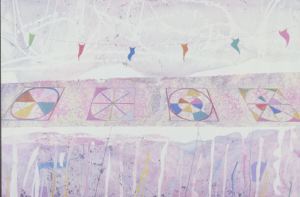
Alice Andrews - Kite Flying - from collection of Arkansas Arts Center

Alice Andrews – Kite Flying – from collection of Arkansas Arts Center

The first is Alice Andrews’ Kite Flying.  This 1978 watercolor on paper depicts a kite being flown in a field. The perspective is from above the kite looking down on it and the ground below. The artwork measures 21.5 by 29.5 inches.  It was a gift to the Arkansas Arts Center in 1978 by the Mid-Southern Watercolorists.

Alice Andrews lives in an old white farmhouse built in the 1800’s in the Boxley Valley in Newton County, Arkansas. Boxley is full of clear rocky creeks and pastures and is surrounded by mountains. It has the feeling of being back in time about one hundred years, and has more cow residents than people.

Alice works in both oils and pastels. Her subject matter ranges from landscapes and paintings of her home and garden, to paintings of dreams, of allegory and of pure abstraction. Alice has been awarded residency at The Helene Wurlitzer Foundation in Taos, New Mexico, and the respected pastel artist Wolf Kahn personally awarded her a residency at the prestigious Vermont Studio Center in Johnson, Vermont.

She is a graduate of Henderson State University and the Maryland Institute College of Art in Baltimore.

Lothar Krueger's Day of the Great Kite Race - from collection of Arkansas Arts Center

Lothar Krueger’s Day of the Great Kite Race – from collection of Arkansas Arts Center

Another piece in the Arts Center collection is Lothar Krueger’s Day of the Great Kite Race.  This 1980 drawing is chalk and colored pencil on paper. The art measures 21 7/8  by 34 inches.  It was purchased by the Arkansas Arts Center Foundation after the 13th Annual Prints, Drawings and Crafts Exhibition.

Lothar Krueger, was a native of Two Rivers, WI.  Born in 1909, he became interested in art in Washington High School where he was “considered one of the greatest all-round football players in that school’s history.” He received his B.S. degree in art from Milwaukee State Teachers College in 1942 when he was drafted into the army. After officers training he took part in the World War II.  In the war, he took part in the D-Day invasion of Normandy and received two Purple Hearts, a Silver Star and a Bronze Star.  In 1947, he had one of his first art shows at the Wisconsin Historical Museum in Madison.

Krueger joined the faculty of the University of Arkansas. During his tenure on the art faculty at the university, he established himself as a major artist in Arkansas and in the regional and national art scene by winning numerous awards and honors. He taught Art, Art Education, and Art Criticism from 1953 until 1981, and also served as acting chairman of the art department for a year. After his retirement from the university, he continued to live in Fayetteville.   He died in January 2009 at the age of 89.

ChildrenKites1960

Children Flying Kites by Manfred Schwartz – from collection of Arkansas Arts Center

Manfred Schwartz’s Children Flying Kites is also in the Arkansas Arts Center collection. This 1960 oil on canvas measures 42 by 34 inches. It was a gift to the Arkansas Arts Center in 2005 from Janice M. Ireland.

In Manfred Schwartz’s lifetime, he produced a significant and varied oeuvre, and was extolled by art critics and museums. Born in Poland in 1909, he emigrated to New York in 1920 at the age of 11, and was something of a child prodigy. Early in his career he showed side by side with Maurice Vlaminck, Bernard Buffet, Edward Hopper, and Andrew Wyeth.

In 1929 he moved to Paris. There his art gained a new sense of freedom, which he expanded for the next forty years.  Educated at the Sorbonne in Paris, the Academie de la Grande Chaumiere in Paris, the Art Students League in New York, and the National Academy of Design in New York. Studied with Charles Hawthorne in Provincetown, John Sloan, and Bridgemen.

Manfred Schwartz created a sensational body of work; oils, pastels, lithographs, and we can see his evolution within three major periods that span fifty years of work.  His earliest paintings were portraits and still-lifes. The colors were deep and muted, he preferred the umbers to the yellows. By 1940 he began to paint in a more abstract manner. His colors intensified and his images seemed ahead of their time.

Schwartz died in New York in 1970.


Architecture critic Mark Lamster featured tonight at Architecture & Design Network

Smark-lamster-presented-dallas-archit-66IZING UP ARCHITECTURE: A Critic’s View

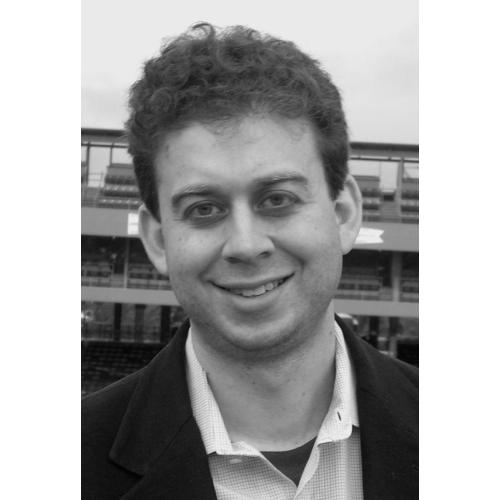
Mark Lamster
Architecture Critic | Dallas Morning News 
Assistant Professor and Dillon Center Fellow | School of Architecture University of Texas Arlington

DATE: Tuesday, March 18, 2014
TIME: 6:00 pm, preceded by a reception at 5:30
PLACE: Arkansas Arts Center lecture hall

Architecture critics are a rare breed in this part of the country. Mark Lamster, a recent arrival at the Dallas Morning News, offers a perspective on the built environment that enables others to see and talk about their surroundings in new and different ways. Lamster, who also teaches a graduate seminar on criticism and critical writing at the University, has, according to the newspaper’s editor, Bob Mong, a “range of interests that rivals those of any architecture critic in the country.” His background in art as well as architecture informs his writing. A contributing editor to Architectural Review and Design Observer, his work has appeared in the New York Times, the Los Angeles Times, the Wall Street Journal and many other national publications. Lamster is currently at work on a definitive new biography of the late architect Philip Johnson who, among his many accomplishments, established the architecture department at New York’s Museum of Modern Art. The book is to be published by Little Brown.

For more than a decade, Lamster served as editor of the Princeton Architecture Press. He is the author of several books including Master of Shadows (2009) a political biography of the painter Peter Paul Rubens. Baseball fans may be familiar with his first book, Spalding’s World Tour, the story of a group of all-star baseball players who circled the globe in the 19th Century. That work was a New York Times Editor’s selection. Lamster, a native of New York City, has a B.A. from Johns Hopkins University and an M.A. from Tufts.

Supporters of the Architecture and Design Network lecture series include the Arkansas Arts Center, the Central Arkansas Chapter of the American Institute of Architecture and the University of Arkansas Fay Jones School of Architecture. All Network lectures are free and open to the public. For further information, contact ardenetwork@icloud.com.

Architect Michael Rotondi discusses Hybrid of Extremes tonight

RotondiTonight at the Arkansas Arts Center, the latest in the continuing series of lectures about architecture. HYBRID OF EXTREMES, a lecture by Michael Rotondi, FAIA, architect and educator. He is founding partner and principal of RoTo Architects, Los Angeles, and a Professor in Practice of the Arizona State University School of Architecture.

Based in Los Angeles, Michael Rotondi has been the co-founder of two esteemed architectural firms. He and Thom Mayne, with whom he had a productive partnership, founded Morphosis in 1975. Almost two decades later he established RoTo Architects, a firm committed to enlarging the scope of architectural practice to include issues of socio-economic concern and the environment.

The 2009 recipient of the Los Angeles Chapter the American Institute of Architects gold medal for creating a body of work of lasting influence on the theory and practice of architecture, Rotondi has emphasized  architecture’s role  in “making the world a better place”. He has stressed the importance of architects being aware of the impact of their work on people, places and communities.

Rotondi and a group of friends were instrumental in the 1972 founding of the Los Angeles based California Institute of Architecture (SCI-Arc). Among the school’s first graduates, the innovative young architect who had earned a degree from California State Polytechnic University in 1971, later served as SCI-Arc’s director (1987-1997). Currently a member of its Board of Trustees, he also teaches there. Rotondi has lectured and taught all over the world.

Rotondi’s participation in Architecture and Design Network’s 13/14 lecture series has been made possible by the Fayetteville based University of Arkansas Fay Jones School of Architecture where he ls this year’s John G. Williams Distinguished Visiting Professor.

In addition to the School of Architecture, Network supporters include the Arkansas Arts Center and the Central Arkansas Chapter of the American Institute of Architects. All ADN lectures are free and open to the public. For additional information contact ardenetwork@icloud.com.

Little Rock Look Back: HAIR comes to LR in 1972

Ad for the original production of HAIR in Little Rock. Note the ticket prices. And that they could be purchased at Moses Music Shops.

Ad for the original production of HAIR in Little Rock. Note the ticket prices, and that they could be purchased at Moses Melody Shops.

It seems fitting that a touring production of Hair is the final Broadway show at Robinson Center Music Hall before it is closed for a two year renovation. The first time the show played at Robinson, it caused quite a stir. To be fair, the actual production in January 1972 did not cause a stir, it was the process leading up to it that was the source of much ado.

In February 1971, a young Little Rock attorney named Phil Kaplan petitioned the Little Rock Board of Censors to see if it would allow a production of Hair to play in the city. He was asking on behalf of a client who was interested in bringing a national tour to Arkansas’ capital city. The show, which had opened on Broadway to great acclaim in April 1968 after an Off Broadway run in 1967, was known for containing a nude scene as well for a script which was fairly liberally sprinkled with four-letter words. The Censors stated they could not offer an opinion without having seen a production.

By July 1971, Kaplan and his client (who by then had been identified as local promoter Jim Porter and his company Southwest Productions) were seeking permission for a January 1972 booking of Hair from the City’s Auditorium Commission which was charged with overseeing operations at Robinson Auditorium. At its July meeting, the Commissioners voted against allowing Hair because of its “brief nude scene” and “bawdy language.”

Kaplan decried the decision. He stated that the body couldn’t “sit in censorship of legitimate theatrical productions.” He noted courts had held that Hair could be produced and that the Auditorium Commission, as an agent for the State, “clearly can’t exercise prior censorship.” He proffered that if the production was obscene it would be a matter for law enforcement not the Auditorium Commission.

The Commission countered that they had an opinion from City Attorney Joseph Kemp stating they had the authority. One of the Commissioners, Mrs. Grady Miller (sister-in-law of the building’s namesake the late Senator Robinson who had served on the Commission since 1939), expressed her concern that allowing Hair would open the door to other productions such as Oh! Calcutta!

On July 26, 1971, Southwest Productions filed suit against the Auditorium Commission. Four days later there was a hearing before Judge G. Thomas Eisele. At that hearing, Auditorium Commission member Lee Rogers read aloud excerpts from the script he found objectionable. Under questioning from Kaplan, a recent touring production of Neil Simon’s Plaza Suite was discussed. That play has adultery as a central theme of one of its acts. Rogers admitted he found the play funny, and that since the adultery did not take place on stage, he did not object to it. Among those testifying in favor of it was Robert Reddington, who was director of performing arts at the Arkansas Arts Center.

Judge Eisele offered a ruling on August 11 which compelled the Auditorium Commission to allow Hair to be performed. Prior to the ruling, some of the Auditorium Commissioners had publicly stated that if they had to allow Hair they would close it after the first performance on the grounds of obscenity. To combat this, Judge Eisele stated that the Commission had to allow Hair to perform the entire six day engagement it sought.

Upon hearing of the Judge’s ruling, Commissioner Miller offered a succinct, two word response. “Oh, Dear!”

In the end, the production of Hair at Robinson would not be the first performance in the state.  The tour came through Fayetteville for two performances in October 1971. It played Barnhill Arena.

On January 18, 1972, Hair played the first of its 8 performances over 6 days at Robinson Auditorium.  In his review the next day, the Arkansas Gazette’s Bill Lewis noted that Hair “threw out all it had to offer” and that Little Rock had survived.

The ads promoting the production carried the tagline “Arkansas will never be the same.”  Tickets (from $2 all the way up to $8.50) could be purchased at Moses Melody Shops both downtown and in “The Mall” (meaning Park Plaza). That business is gone from downtown, but the scion of that family, Jimmy Moses, is actively involved in building downtown through countless projects. His sons are carrying on the family tradition too.

Little Rock was by no means unique in trying to stop productions of Hair.  St. Louis, Birmingham, Los Angeles, Tallahassee, Boston, Atlanta, Charlotte NC, West Palm Beach, Oklahoma City, Mobile and Chattanooga all tried unsuccessfully to stop performances in their public auditoriums.  Despite Judge Eisele’s ruling against the City of Little Rock, members of the Fort Smith City Council also tried to stop a production later in 1972 in that city. This was despite warnings from City staff that there was not legal standing.

Within a few years, the Board of Censors of the City of Little Rock would be dissolved (as similar bodies also were disappearing across the US). Likewise, the Auditorium Commission was discontinued before Hair even opened with its duties being taken over by the Advertising and Promotion Commission and the Convention & Visitors Bureau staff.  This was not connected to the Hair decision; it was, instead, related to expanding convention facilities in Robinson and the new adjacent hotel.  Regardless of the reasons for their demise, both bygone bodies were vestiges of earlier, simpler and differently focused days in Little Rock.

Over the years, Hair has returned to the Little Rock stage.  UALR has produced it at least twice.  The Weekend Theater has also mounted a production. By 2014, Hair is a period piece. For some, a wistful look at their long-gone youth while for others a romanticized time when disparate spirits could band together and change the world.

Lineup for April’s 11th Annual Arkansas Literary Festival Announced

1359064160-litfest_logoAs winter drones on, a person’s fancy may turn to thoughts of spring. Or to a good book to read by candlelight to pass the time in winter.

In any way, a certain harbinger of warmer weather will be the presence in April of the 11th annual Arkansas Literary Festival.

Prestigious award-winners, big names, writers for television shows, journalists, and artists are among the diverse roster of presenters who will be providing sessions at the eleventh annual Arkansas Literary Festival, April 24-27, 2014. The Central Arkansas Library System‘s Main Library campus and many other Little Rock venues are the sites for a stimulating mix of sessions, panels, special events, performances, workshops, presentations, opportunities to meet authors, book sales, and book signings. Most events are free and open to the public.

The Arkansas Literary Festival, the premier gathering of readers and writers in Arkansas, will include more than 80 presenters including featured authors Catherine Coulter, who has more than seventy million books in print; Congressman John Lewis, one of the key figures in the civil rights movement; best-selling authors Mary Roach, ReShonda Tate Billingsley, Curtis Sittenfeld, and artist/illustrator Kadir Nelson; musician Rhett Miller; and education expert David L. Kirp.

This year’s Festival authors have won an impressive number and variety of distinguished awards, including ten Emmy awards, multiple National Endowment for the Arts fellowships and grants, two Pulitzer Prizes, the MacArthur Foundation Fellowship (the Genius Grant), the National Book Award, the Coretta Scott King Award, the Caldecott Honor, an NAACP Image Award, an Eisner Award, a Ford Foundation Fellowship, the American Book Award, the O. Henry Prize, recognition as one of the National Book Foundation’s 5 Under 35, and much more.

Their works have been included in the New York TimesRolling Stone, Bon Appétit, Glamour, Playboy, Esquire, Vanity Fair, Slate, Mother Jones, and the Washington Post, among others.

Special events for adults during the Festival include a cocktail reception with the authors, a writing workshop with Catherine Coulter, a concert by Rhett Miller, and a presentation by an art historian which includes an Artists Buffet. Panels and sessions include genres and topics such as chocolate, lucid dreaming, graphic novels, the war in Iraq, short stories, Arkansas food, murder mysteries, football, dinosaurs, and gangsters.

Children’s special events include a storytime on the lawn of the Governor’s Mansion, a treasure hunt, a play based on The Little Engine That Could, and a Lego exhibit. Festival sessions for children will take place at both the Hillary Rodham Clinton Children’s Library and Learning Center, 4800 10th Street, and the Youth Services Department at the Main Library, 100 Rock Street.

At Level 4, the Main Library’s teen center, special events for teens include a robotics demonstration and a panel on comic book conventions.

Through the Writers In The Schools (WITS) initiative, the Festival will provide presentations by several authors for Pulaski county elementary, middle, and senior high schools and area colleges.

Support for the Literary Festival is provided by sponsors including Central Arkansas Library System; Friends of Central Arkansas Libraries (FOCAL); Arkansas Humanities Council; Department of Arkansas Heritage; Fred K. Darragh Jr. Foundation; Mosaic Templars Cultural Center; ProSmart Printing; KUAR FM 89.1; Little Rock Convention and Visitors Bureau; Arkansas Democrat Gazette; Sync; Arkansas Life; William J. Clinton Presidential Center; Oxford American; Landers FIAT of Benton; MacArthur Museum of Arkansas Military History; Arkansas Times; Wright, Lindsey & Jennings LLP; University of Arkansas Clinton School of Public Service; Historic Arkansas Museum ; Christ Church, Little Rock’s Downtown Episcopal Church; Witt Stephens Jr. Central Arkansas Nature Center; Arkansas Library Association; Goss Management Company, LLC; Henderson State University; Hendrix College Project Pericles Program; Pulaski Technical College; Arkansas Arts Center; River’s Edge Media; Arkansas Shakespeare Theatre; Rockefeller Elementary School; Gibbs Elementary School; Hemingway-Pfeiffer Museum and Educational Center; Writers’ Colony at Dairy Hollow; Arkansas Governor’s Mansion; Hendrix College Creative Writing; University of Arkansas at Little Rock English Department; University of Arkansas at Little Rock Department of Rhetoric and Writing; Pyramid Art, Books & Custom Framing/Hearne Fine Art; Stickyz Rock ‘n’ Roll Chicken Shack; Literacy Action of Central Arkansas; National Park Service Central High School National Historic Site; Tales from the South; and Power 92 Jams. The Arkansas Literary Festival is supported in part by funds from the Arkansas Humanities Council and the National Endowment for the Humanities.

Author! Author!, a cocktail reception with the authors, will be Friday, April 25, at 8 p.m.; tickets are $25 in advance, and $40 at the door, and go on sale at ArkansasLiteraryFestival.org beginning Tuesday, April 1. Author! Author! tickets will also be available for purchase at the Main Library and River Market Books & Gifts, 120 River Market Avenue.

The Arkansas Literary Festival is a project of the Central Arkansas Library System. The Festival’s mission is to encourage the development of a more literate populace. A group of dedicated volunteers assists Festival Coordinator Brad Mooy with planning the Festival. Jay Jennings is the 2014 Festival Chair. Other committee chairs include Katherine Whitworth, Talent Committee; Lisa Donovan, Youth Programs; and Amy Bradley-Hole, Moderators.

For more information about the 2014 Arkansas Literary Festival, visit ArkansasLiteraryFestival.org, or contact Brad Mooy at bmooy@cals.org or 501-918-3098. For information on volunteering at the Festival, contact Angela Delaney atadelaney@cals.org or 501-918-3095.

Little Rock Look Back: Webb Hubbell, Little Rock’s 64th Mayor

https://i0.wp.com/www.webbhubbell.com/wp-content/uploads/2009/12/Webb_0951-240x155.jpgOn January 18, 1948, future Little Rock Mayor Webster “Webb” Hubbell was born. After playing football in high school, he played for the University of Arkansas Razorbacks.  He also received his law degree from the U of A.

At the age of 30, already a successful attorney, Hubbell was appointed to the Little Rock City Board of Directors to fill a vacancy in September 1978.  In 1980, he was elected to a four year term on the City Board.

In June 1979, there was a vacancy in the office of Mayor of Little Rock.  Hubbell was selected by his fellow City Directors to serve as Mayor until December 1980.  In January 1981, he was selected to serve another term as Mayor.  In June 1981, he stepped down as Mayor but continued to serve on the City Board of Directors.

In 1984, Hubbell was appointed to serve as Chief Justice of the Arkansas Supreme Court to finish out the term of Richard B. Adkisson.  Following his service on the court, he returned to the practice of law at the Rose Law Firm.  He later served as the Associate Attorney General in the Justice Department during the Clinton administration.

Hubbell resigned from the Justice Department due to an investigation of his billing practices at the Rose Law Firm, which stemmed from the Whitewater investigation.  Following conviction, he served time in prison.  Since his release he has been an author and management consultant.  His novel, When Men Betray, will be published by Beaufort Books in May 2014.