Sculpture Vulture: Harriet Tubman

With news that Harriet Tubman will replace Andrew Jackson on the $20, it is a good chance to revisit Little Rock’s Harriet Tubman sculpture.

In preparation for the opening of the Clinton Library in 2004, a series of sculptures were placed which linked a walkway between the River Market and the Clinton Presidential Park.

One of these sculptures is entitled Harriet Tubman.  Since she was from the era of President Lincoln, it seems fitting to feature this sculpture on this, Lincoln’s birthday.

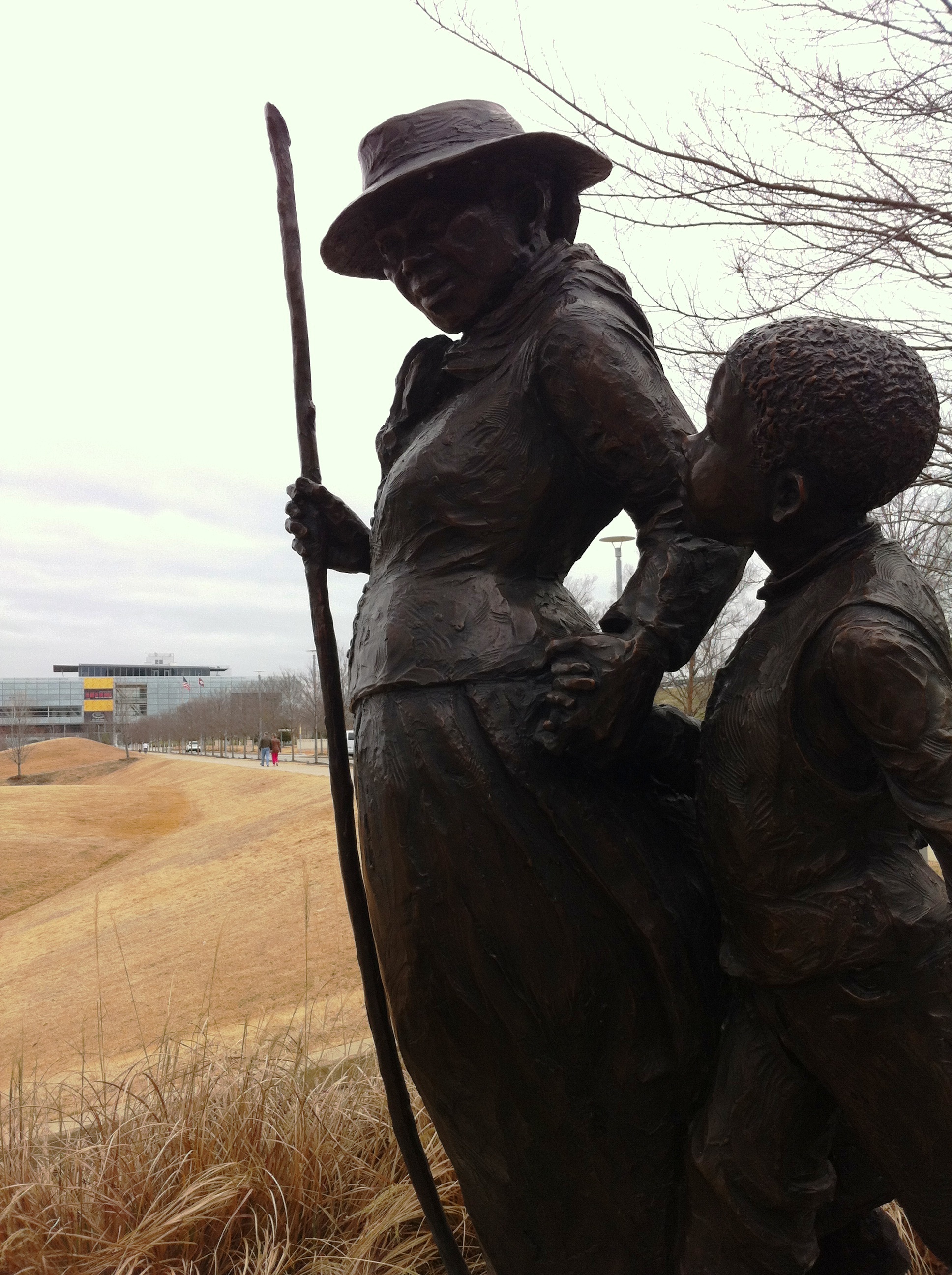
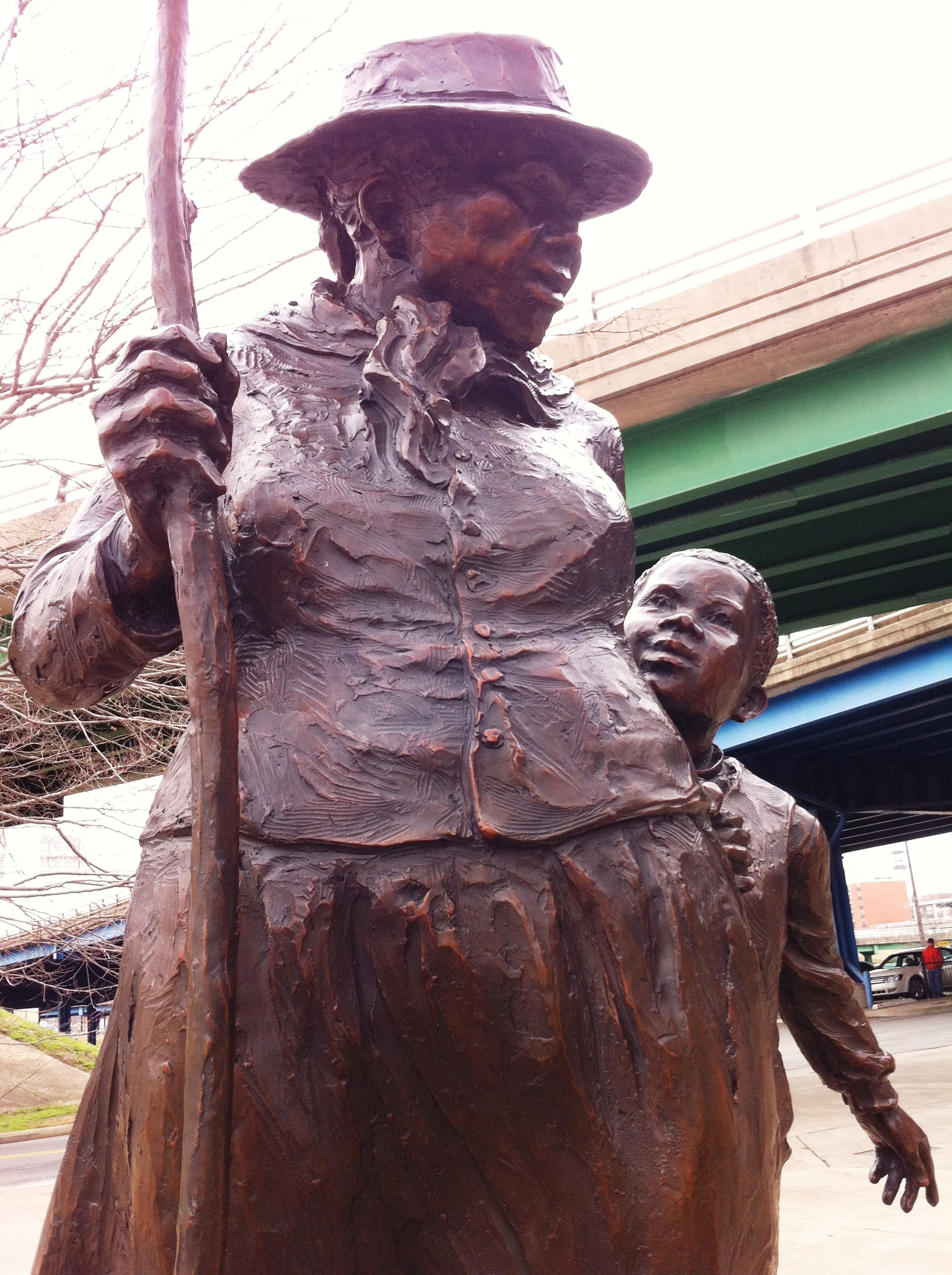
The bronze sculpture, by Jane DeDecker, depicts Miss Tubman grasping the hand of a young boy and leading him on a walk.  DeDecker captures both compassion and a steely determination in the features of Miss Tubman’s face.  The folds of their clothes indicate that they are on a journey.

Whether their walk is a part of the Underground Railroad or simply a walk along the path in post-war times is immaterial. Miss Tubman understood that there is always some form of oppression one must struggle against.

Etched into the base of the statue (and repeated on plaque on the pedestal) is a quote attributed to Miss Tubman.  “Children, if you are tired, keep going; if you’re hungry, keep going; if you’re scared, keep going. If you want a taste of freedom, keep going.”

The statue was originally located in Riverfront Park near the site of the current Game and Fish Nature Center.  It was relocated during the construction of that facility and now anchors the entrance to Clinton Presidential Park.  Harriet Tubman was a gift of Haskell and Peggy Dickinson to the City of Little Rock.

Prizing Mount Holly Cemetery on Pulitzer Day

The Pulitzer Prizes are to be announced today.  This year marks the 100th announcement of the prizes, though not all of the current categories have been around since 1917.

Mount Holly Cemetery not only touts that it is the site of a whole host of elected officials, it is also the only place in Arkansas where two Pulitzer Prize recipients are buried. The cemetery is open every day, but a special visit to these two prize winner gravesites can be made next Sunday during the Mount Holly Cemetery Association’s annual “Rest in Perpetuity” fundraiser picnic.

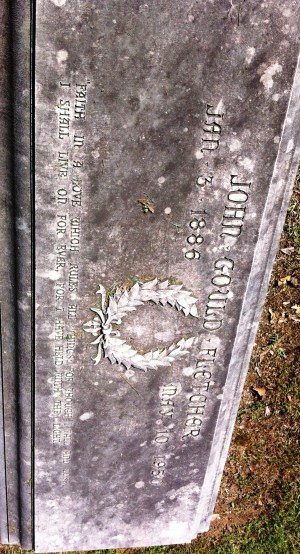
In 1939, John Gould Fletcher became the first Southern poet to win the Pulitzer Prize for Poetry.  He was born into a prominent Little Rock family in 1886.  Fletcher was awarded the prize for his collection Selected Poems which was published by Farrar in 1938.  Two years earlier, he had been commissioned by the Arkansas Gazette to compose an epic poem about the history of Arkansas in conjunction with the state’s centennial.

Fletcher is buried next to his wife, author Charlie May Simon and his parents (his father was former Little Rock Mayor John Gould Fletcher).  Other relatives are buried nearby in the cemetery.

The other Pulitzer Prize winner buried in Mount Holly is J. N. Heiskell, the longtime editor of the Arkansas Gazette.  It was Heiskell, in fact, who asked Fletcher to compose the poem about Arkansas.  Heiskell served as editor of the Gazette from 1902 through 1972.  He died at the age of 100 in 1972.

Under his leadership, the Gazette earned two Pulitzer Prizes for its coverage of the 1957 desegregation of Little Rock Central High.  One was for Harry Ashmore’s editorial writing and the other was for Public Service.

Heiskell remained in charge of the Gazette until his death in 1972.  He is buried alongside his wife with other relatives nearby.  Also not too far from Mr. Heiskell are two of his nemeses, proving that death and cemeteries can be the great equalizer. In the early days of his Gazette stewardship, he often locked horns with Senator (and former Governor) Jeff Davis. Later in Mr. Heiskell’s career, he vehemently disagreed with Dr. Dale Alford, who had been elected to Congress on a segregationist platform.

Little Rock City Hall – 108 years at Markham and Broadway

108 years ago today, Little Rock City Hall officially opened at the corner of Markham and Broadway.

On April 15, 1908, the Italian Renaissance Revival style building, which had been designed by local architect Charles Thompson, played host to an open house. Staff had started moving into the building in March of that year.   This was, as often is the case, behind schedule.  The date in the cornice toward the top of the building is 1907, but the building was not completed until 1908.

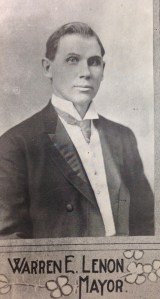
An open house took place on April 15, 1908, presided over by Acting Mayor John Herndon Hollis and his wife as well as former Mayor W. E. Lenon and his wife.

In 1903, W. E. Lenon became Mayor of Little Rock. Back then, the terms were two-year terms.  Before the start of his second term in 1905, he realized that the City was outgrowing City Hall, which was, at the time, on the northeast corner of Markham and Louisiana – where part of the Statehouse Convention Center sits today.

In February 1906, Mayor Lenon appointed a committee of five aldermen to over see the planning for the building of a new City Hall. In July 1906, the City Council approved plans, which called for a City Hall with an municipal auditorium wing. There was some hue and cry about the cost spending and a resulting lawsuit, so, in September 1906, those plans were scrapped and a simpler City Hall was approved for the cost of $175,000.

The last resolution in the old City Hall called for the banning of smoking in the new Council Chambers – while the Council was in session. This may well have been the first smoking ban in a public government building in the history of Arkansas.

When the building opened, the third floor was not finished out. The space was not needed. When the Museum of Natural History and Antiquities (now the Museum of Discovery) moved into City Hall in 1929, they had to finish out their space.

In 1913, the new Central Fire Station, designed in the Beaux Arts style, was constructed adjacent to City Hall. During the 1930s, as the City grew, more space was needed. A garage, designed in the “austere, utilitarian” style was built in 1936 and a City Jail Annex, built by the WPA in the modified Art Deco style was built in 1938.
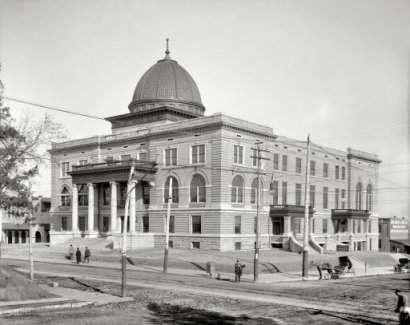
City Hall prior to 1912

By 1955, the copper-clad dome which sat on top of City Hall needed severe repairs. The wooden supports and the copper cladding were both in dire shape. Mayor Pratt Remmel set aside money for the dome to be repaired. After defeating Remmel in his bid for a third term, Mayor Woodrow Mann scrapped plans for the repair and, indeed, scrapped the dome.

Following the lead of County Judge Arch Campbell who had removed the tower at the County Courthouse, Mann proposed removal of the dome. He had an informal survey which had three options: repair the dome, replace the dome with an aluminum one, or remove it. This was open to anyone to respond – voting eligibility or Little Rock residency did not matter. By a slim margin, remove the dome won – so the dome was removed.

In 1960, as air conditioning was installed, windows were bricked in to promote energy efficiency. At the time, the feeling was that a new City Hall would be constructed in the 1970s somewhere more central to the growing city. Relocation talk persisted throughout the 1970s and early 1980s. By that time, City Hall had been modified a great deal – with no thought about historic preservation. When the Police and Fire Department had moved out into their new facilities, their old spaces had become storage.

By 1984, the decision was made to stay at Markham and Broadway. An extensive renovation and restoration effort was undertaken. In 1988, the building reopened, and the interior had been restored to its 1908 appearance.

Little Rock Look Back: First plans for a Municipal Auditorium

Mayor LenonOn April 12, 1904, Mayor W. E. Lenon made what was the first official proposal for a municipal auditorium in Little Rock.  Little did he know at the time that it would take from April 1904 until February 1940 to make this dream a reality.

Elected as a progressive, Lenon was focused on not just providing city services, but also had an interest in initiatives which would move the city forward.  With that background it is not surprising that Mayor Lenon would be a champion for the construction of both a new city hall as well as a municipal auditorium building.  During his first annual address to the City Council in April 1904 he noted:

Recently a number of our citizens have taken an active interest in building an auditorium in our city.  This being a project of such worthy consideration should not go unnoticed by us.  Apparently this is one of the greatest needs.  Our business, social, commercial and financial interests, in fact, our entire city, would be benefitted by the building of same.  It has therefore occurred to me that an auditorium might be built in conjunction with a new city hall.

The mayor further discussed that these new structures could either be built on the site of the current City Hall or at a new location.  He also touched on possible financing options including the collection of a one percent assessment.

The mayor would bring this up again in his 1905 annual address.  It would not be until December 1905 that the City Council would officially take any action on the plan.

Sculpture at the River Market launches #LRSculpture Selfie Contest

Sculpture at the River MarketThe Sculpture in the River Market Show and Sale is ushering in a new feature for its ninth year that encourages the public to explore, appreciate, and share public art offerings in Little Rock through social media.

The selfie with a sculpture contest will begin April 11 and continue through April 21. The concept is simple: A person finds their favorite sculpture in Little Rock, takes a photo with it, and tells why it’s a special sculpture while using the hashtag #LRSculpture on either Instagram or Twitter.

“Sculptures are such wonderful art pieces because of their accessibility. Everyone seems to have one that really resonates with them,” Sculpture at the River Market committee member Scott Whiteley Carter said. “We have over 100 sculptures in public places all around the City in addition to hundreds in private homes and businesses, so we’re excited to see what gets selected and shared.”

Photos showing misuse of a sculpture will not be considered.

Winners will be announced April 21. The grand prize includes tickets to the Sculpture Show Preview Party on April 22 at 6:30 p.m. Three additional prizes will be given.

Guests attending the Preview Party will view and vote on the seven semi-finalist proposals for the next public monument sculpture winner to help select the top three finalists. The winner of that competition will be announced Sunday, April 24.

The ninth Sculpture at the River Market Invitational Show and Sale takes place from April 22 – 24, 2016.

Over 800 sculptures will be on display in the River Market pavilions and in the adjacent area of Riverfront Park on those three days in April. The works featured will include all types of media, style, subject matter, and size.

Sculpture at the River Market will be open in the River Market pavilions from 9 a.m. until 5 p.m. Saturday, April 23, and from 10 a.m. until 4 p.m. Sunday, April 24.  In addition to the opportunity to view the sculptures and meet with the sculptors, there are a variety of activities planned throughout the two days.

Docent led tours of the Vogel Schwartz Sculpture Garden will be available at 2 p.m. Saturday, April 23 and Sunday, April 24. Andina’s Café & Coffee Roastery will be set up at the sculpture show Sunday beginning at 10 a.m.  From 11 a.m. until 3 p.m. Sunday, Southern Salt and Southern Gourmasian food trucks will be set up at the River Market.

More information is available at sculptureattherivermarket.com/

Little Rock Look Back: Rock On!, or the day LaHarpe saw La Petite Roche

IMG_4805On April 9, 1722, French explorer Jean-Baptiste Bénard de La Harpe rounded the bend of the Arkansas River and saw La Petite Roche and Le Rocher Français.  He had entered the mouth of the Arkansas River on February 27 after traveling up the Mississippi River from New Orleans.

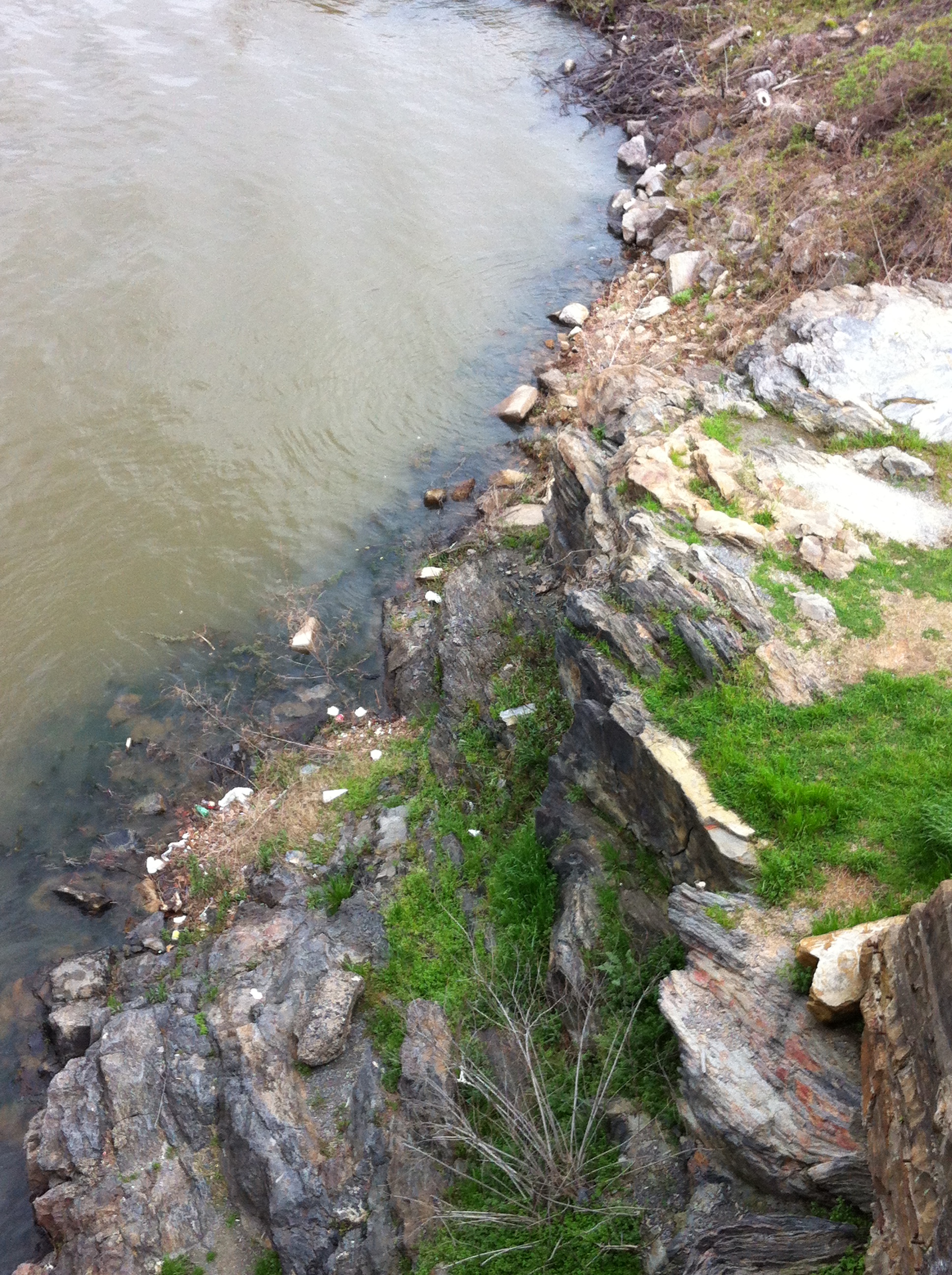
Though La Harpe and his expedition are the first Europeans documented to have seen La Petite Roche, the outcropping of rocks was well-known to the Quapaw Indians in the area.  The outcropping jutted out in the Arkansas River and created a natural harbor which provided a perfect place for boats to land.

The rock outcropping is the first one visible along the banks of the Arkansas River.  It marks the place where the Mississippi Delta meets the Ouachita Mountains.  Geologists now believe that the Little Rock is not the same type of rock as the Ouachita Mountains and more closely matches the composition and age of mountains in the western US.

In 1813, William Lewis became the first European settler to live near La Petite Roche but only stayed a few months.  Speculators and trappers continued to visit the area throughout the 1810s. During that time, the outcropping became known informally as the Little Rock.

La Petite Roche had become a well-known crossing when the Arkansas Territory was established in 1819. The permanent settlement of ‘The Rock’ began in the spring of 1820, and the first building has been described as a cabin, or shanty, and was built on the bank of the river near the ‘Rock.’ In March 1820, a Post Office was established at the ‘Rock’ with the name “Little Rock.”

Over the years, La Petite Roche was altered.  In 1872, Congress authorized the building of a railroad bridge. A pier for the bridge was built at the location of the La Petite Roche which caused the removal of several tons of rock.  The bridge was never built.  When the Junction Bridge was built in 1899, even more rock was removed in the process of erecting part of the bridge on top of the rock.  It was not viewed as being disrespectful of the City’s namesake at the time.  Indeed, it was viewed as a testament to the sturdiness of the rock.

In 2010, La Petite Roche plaza opened in Riverfront Park.  It celebrates the history of La Petite Roche and explores its importance to various aspects of Little Rock’s history and geography.

Today is #ArkansasGives Day

Arkansas GivesIf you are like me, you’ve been receiving notifications about Arkansas Gives Day for months.  Well, today is the day!  From 8am until 8pm, you can help grow the love for Arkansas’s nonprofit organizations by making a donation to the charity of your choice.  The event is sponsored by the Arkansas Community Foundation.

As a special incentive to give, each gift made through ArkansasGives on April 7, 2016 will be matched with additional bonus dollars; the more you give, the more bonus dollars your favorite charity will receive.

Nonprofit organizations and other tax-exempt charitable organizations may participate if they:

  • Are headquartered in Arkansas or have a base of operations in Arkansas.
  • Are a member of the Arkansas Nonprofit Alliance.
  • Have 501c3 tax exempt status under IRS code AND are qualified as a 509(a)(1), (a)(2) or (a)(3) organization or as a private operating foundation.

The minimum amount is $25; there is no maximum amount you may give. You may designate up to 10 charities per transaction.

Accepted Forms of Payment: Visa, MasterCard, Discover and American Express credit cards online.
You will receive an email receipt of your gift; please retain it for tax purposes. Unless you choose to remain anonymous, your donor information will be sent to the nonprofits to which you give.

Here is a list of cultural organizations which offer services within the boundaries of the City of Little Rock.

There are MANY MANY MANY other worthy nonprofits which are participating. But since this is a culture blog, only the cultural institutions are listed.  But please consider visiting the website and perusing the entire list.